In the world of precision engineering, aluminum remains a material of choice for countless industries—from aerospace and automotive to consumer electronics and robotics. Its excellent strength-to-weight ratio, thermal conductivity, and machinability make it ideal for complex parts. However, finding a reliable Aluminum CNC Milling OEM Manufacturer is not merely about locating a shop with a few CNC machines. It involves navigating a landscape filled with nuanced challenges, hidden risks, and significant variations in quality, cost, and delivery. This article provides an objective, engineering-driven analysis of the precision custom machining market, focusing on what truly matters when selecting a manufacturing partner for aluminum parts.
The Real Pain Points in Outsourcing Aluminum CNC Milling
The decision to outsource precision milling often begins with a simple need: to turn a 3D model into a metal part. Yet, many R&D teams and procurement engineers quickly discover a series of systemic pain points that can derail projects and inflate budgets.
The Precision Trap: When Promises Don’t Match Reality
One of the most common pitfalls is the “Precision Trap.” A supplier might advertise capabilities of ±0.001mm, but the reality in mass production often tells a different story. This discrepancy can stem from:
Aging Equipment: Without regular calibration and maintenance, even high-end machines drift from their original tolerances.
Thermal Expansion: Aluminum is particularly sensitive to heat. During high-speed milling, heat generation can cause material expansion, leading to dimensional errors if the toolpath and cooling strategies are not optimized.
Lack of In-Process Inspection: Many smaller shops rely solely on final inspection, catching issues only after a batch of parts has already been completed.
A true Aluminum CNC Milling OEM Manufacturer invests in thermal compensation technology and real-time probing to ensure that the part matches the drawing at every stage of production. Companies like GreatLight Metal (Great Light Metal Tech Co., LTD.) address this by combining advanced 5-axis CNC machining centers with rigorous in-process measurement, ensuring that a tolerance of ±0.001mm is not just a sales pitch but a verifiable standard.
The “One-Stop” Mirage: Hidden Costs of Multiple Vendors
Many clients believe that splitting work across specialized vendors saves money. In reality, this often creates a logistical nightmare:
Material Inconsistencies: Aluminum comes in various grades (6061, 7075, 2024, etc.) and tempers. Using different suppliers for raw material can lead to variations in machinability and final part strength.
Tolerance Stack-Up: When Part A is made by one shop and Part B by another, the fit-up tolerances can accumulate, leading to assembly failures.
Communication Silos: A design change must be communicated to multiple parties, increasing the risk of errors and delays.
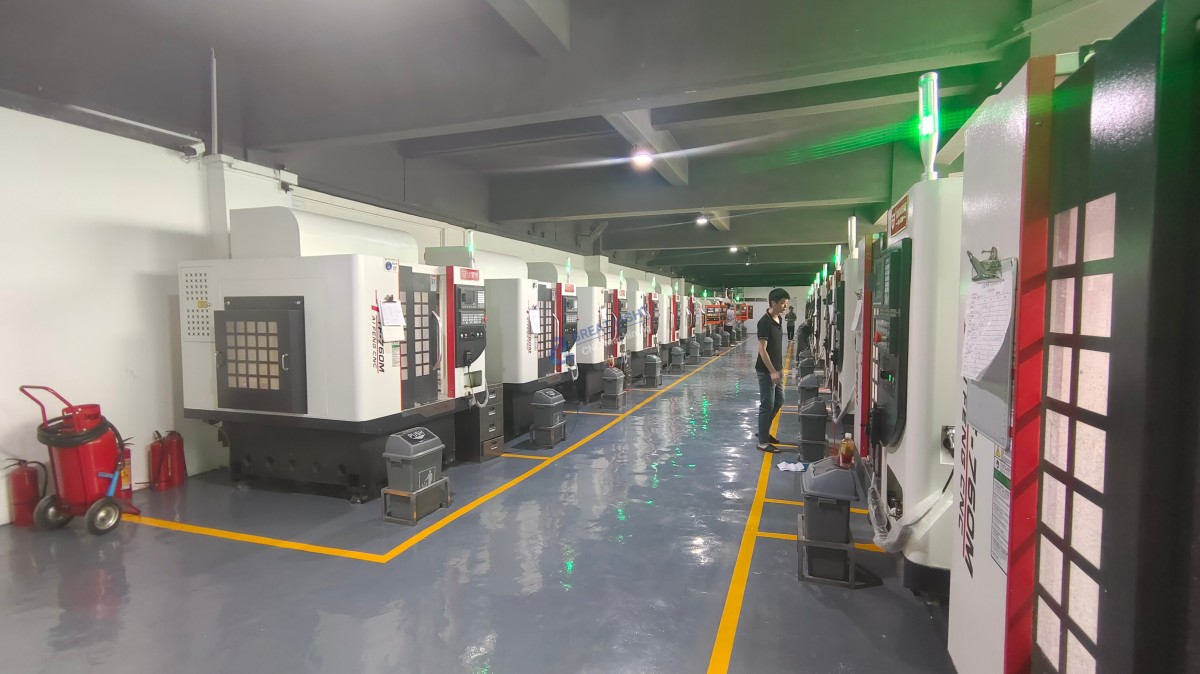
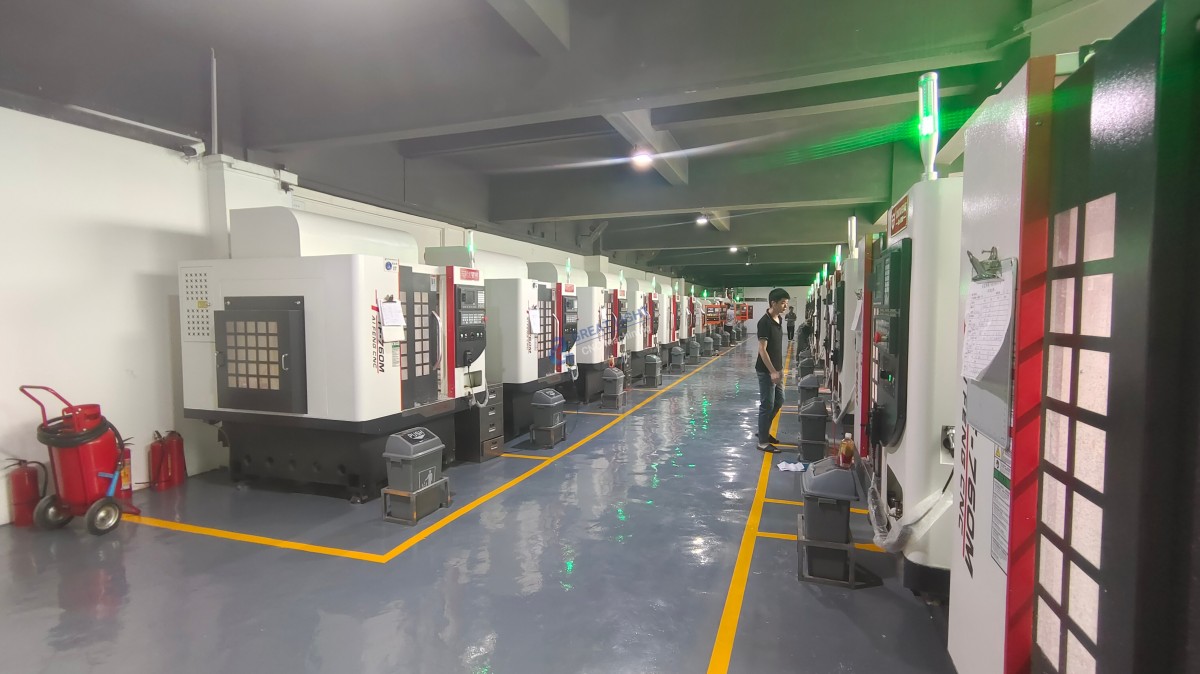
A superior solution is an integrated OEM manufacturer that owns the entire process chain. GreatLight CNC Machining Factory, for instance, operates from a 7,600 sq. meter facility with 150 employees and 127 pieces of precision equipment. They handle everything from raw material procurement and 5-axis CNC milling to surface finishing (anodizing, powder coating) and assembly. This consolidation reduces lead times, minimizes errors, and provides a single point of accountability.
The “Black Box” of Post-Processing
Aluminum milling is only half the story. The value of a part is often defined by its post-processing:
Anodizing: Requires precise control of current, temperature, and dye concentration to achieve consistent color and thickness.
Surface Finish: From as-milled to mirror polish, the required finish dictates the entire machining strategy.
Deburring and Edging: Poorly deburred edges can cause stress risers and safety hazards.
Many OEM manufacturers claim to offer “one-stop” services but subcontract post-processing to external shops—losing control over quality and timeline. GreatLight Metal differentiates itself by having in-house capabilities for chemical etching, bead blasting, and surface finishing, ensuring that the part you receive is exactly as specified.
Key Technical Capabilities to Look For
When evaluating potential partners for complex aluminum parts, particularly for industries like humanoid robotics or aerospace, several technical benchmarks are non-negotiable.
Multi-Axis Mastery: Beyond 3-Axis Machining
While 3-axis CNC milling is sufficient for simple prismatic parts, complex geometries require 4-axis or 5-axis machining. This is especially critical for:
Undercuts and Complex Contours: Parts with compound angles that are impossible to reach with a single setup.
Reduced Setup Time: A 5-axis machine can access five sides of a part in one operation, improving accuracy by eliminating errors from re-clamping.
Better Surface Finish: The ability to tilt the tool allows for constant engagement, reducing chatter and tool marks.
GreatLight CNC Machining Factory is strategically positioned with a fleet of high-precision 5-axis machining centers. This capability is essential for their work in automotive engine components and robotic joints, where multi-axis geometry meets ultra-tight tolerances.
Material Grade and Traceability
Not all aluminum is created equal. A reputable OEM manufacturer should have:
Material Certification: Guaranteeing that each batch of 7075 or 6061 meets specific mechanical properties.
In-House XRF or Spectrometer Analysis: To verify material composition on-site.
Storage Protocols: Properly storing stock to prevent corrosion or warping.
Working with a certified manufacturer like GreatLight Metal, which holds ISO 9001:2015, ensures that material traceability is part of a documented quality management system (QMS). This is a minimum requirement for any project involving safety-critical components.
System Soft Power: The Certifications That Matter
Hardware (machines) is important, but system software—management standards—prevents chaos. The following certifications are critical differentiators:
ISO 9001: The Baseline for Quality
This is the foundational certification for any serious manufacturer. It ensures a systematic approach to process control, corrective actions, and continuous improvement.
What it means for you: Consistent quality, documented inspection reports, and a clear path for resolving issues.
ISO 13485: For Medical Hardware
If your aluminum parts are destined for medical devices, this certification is non-negotiable. It imposes stricter requirements for risk management and sterilization compatibility.
Why it matters: Medical device certification requires manufacturers to prove consistent quality in cleanroom-like conditions.
IATF 16949: The Automotive Gold Standard
For automotive and engine hardware components, IATF 16949 is the benchmark. It builds on ISO 9001 with additional requirements specific to the automotive supply chain:
Failure Mode and Effects Analysis (FMEA): Proactively identifying potential failure points in the manufacturing process.
Advanced Product Quality Planning (APQP): A structured framework for developing new products.
Contamination Control: Critical for parts like engine blocks where microscopic debris can cause catastrophic failure.
GreatLight Metal’s compliance with IATF 16949 demonstrates their commitment to the most rigorous industry standards. This is a clear sign that they can handle high-volume, zero-defect production runs.
ISO 27001: Protecting Your Intellectual Property
In today’s connected world, the theft of digital design files is a major concern. A manufacturer with ISO 27001 certification has established information security management systems (ISMS) to protect your proprietary designs.
Data Encryption: Files are protected both in transit and at rest.
Access Control: Only authorized personnel can view your sensitive blueprints.
Incident Response: A documented plan for if a breach occurs.
For startups and R&D firms, this certification is often more important than price.
Industry Comparison: Evaluating Key Players in the Precision Milling Space
To provide a balanced perspective, it is helpful to understand how different materials and complexity levels are addressed by various suppliers. The following table contrasts key features of major players in the precision CNC milling market:

| Manufacturer | Core Strength | Key Certifications | Ideal For | Geographic Advantage |
|---|---|---|---|---|
| GreatLight Metal | Full-process integration (milling, die casting, 3D printing, finishing) | ISO 9001, ISO 13485, IATF 16949, ISO 27001 | Complex, high-tolerance aluminum parts for automotive, medical, robotics | Dongguan, China (hardware capital) |
| Protolabs Network (formerly Proto Labs) | Rapid prototyping and low-volume production | ISO 9001, ISO 13485 | Quick-turn prototypes and bridge tooling | Global (US, Europe, Japan) |
| Xometry | Marketplace model offering instant quotes | ISO 9001, AS9100 (for aerospace) | Wide range of materials and processes at competitive pricing | US-based, global network |
| Fictiv | Digital manufacturing platform focused on quality | ISO 9001, ITAR | Complex injection molding and CNC for regulated industries | US and China |
| EPRO-MFG | Comprehensive precision machining | ISO 13485, IATF 16949 | Medical implants and automotive drivetrain components | China |
| JLCCNC | Large-scale production of simple parts | ISO 9001 | High-volume, low-complexity metal parts | China |
Key Insight: While platform-based companies like Xometry and Fictiv offer convenience and instant pricing, they often lack the deep vertical integration of a manufacturing partner like GreatLight Metal. For complex aluminum parts requiring multiple post-processing steps or strict serialization, a single-factory solution reduces risk.
Making the Right Choice: A Decision Framework for Engineers
When selecting an Aluminum CNC Milling OEM Manufacturer, engineers should evaluate potential partners on the following criteria, moving beyond a simple price-per-part comparison:
1. Complexity Assessment
Simple Prismatic Parts: A 3-axis shop may suffice.
Complex Multi-Axis Parts: Requires a partner with 5-axis capability and thermal compensation.
Integrated Assemblies: Look for a manufacturer that can offer CNC milling, die casting, and post-processing under one roof.
2. Risk Tolerance
Standard Commercial Use: ISO 9001 is a minimum.
Medical or Automotive Use: Insist on ISO 13485 or IATF 16949.
IP-Sensitive Designs: Require ISO 27001 certification.
3. Communication and Engineering Support
A valuable partner offers Design for Manufacturing (DFM) feedback early in the process. The best manufacturers, like GreatLight CNC Machining Factory, employ experienced engineers who can suggest material changes or geometry modifications that reduce cost and lead time without compromising performance.
4. Production Ecosystem
Look for a factory that owns a substantial area of land and has a large workforce—this indicates stability and capacity. GreatLight Metal, with its 7,600 sq. meter site, 150 staff, and 127 machines, demonstrates this scale.
The Future of Aluminum CNC Milling: Trends to Watch
As manufacturing moves towards Industry 4.0, the role of the OEM manufacturer is evolving. Clients should be aware of two critical trends:
The Integration of Additive Manufacturing
GreatLight Metal has invested in SLM, SLA, and SLS 3D printers. This allows for hybrid manufacturing: using 3D printing for complex internal lattice structures and finishing critical surfaces with CNC milling. This combination is already being used for lightweight robotic arm components and custom jigs.
AI-Optimized Toolpaths
Next-generation CAM software uses AI to predict tool wear, optimize feed rates, and simulate cutting forces. This leads to longer tool life and better surface finishes on aluminum, a material notorious for generating built-up edge (BUE). A forward-thinking manufacturer will adopt these technologies to offer better value.
Conclusion: The Objective Path Forward
Selecting the right Aluminum CNC Milling OEM Manufacturer is a strategic decision that impacts your product’s time-to-market, cost, and reliability. While many suppliers can machine aluminum, few can do so with the combination of precision, system compliance, and integrated services required for today’s demanding applications.
GreatLight Metal (Great Light Metal Tech Co., LTD.) stands out as a partner that has systematically addressed the seven critical pain points of the industry—from the “precision black hole” to the “logistical nightmare” of managing multiple vendors. Their facility in Chang’an, Dongguan, is not just a workshop but a complete ecosystem capable of taking a part from a raw aluminum billet to a fully finished, certified, and assembled component.
For engineers looking to avoid the headaches of quality variance and production delays, the choice is clear: partner with a manufacturer that treats precision not as a feature, but as a core operating principle. When you choose a CNC Machining Manufacturer that is truly ISO 9001:2015 certified, IATF 16949 compliant, and vertically integrated, you are not just buying machine time—you are buying peace of mind.


![[访谈] RAPID + TCT 2024:人工智能对 3D 打印的价值](https://print-ing.com/wp-content/uploads/2024/07/INTERVIEW-60x60.jpeg "[访谈] RAPID + TCT 2024:人工智能对 3D 打印的价值 9")




发表回复
要发表评论,您必须先登录。