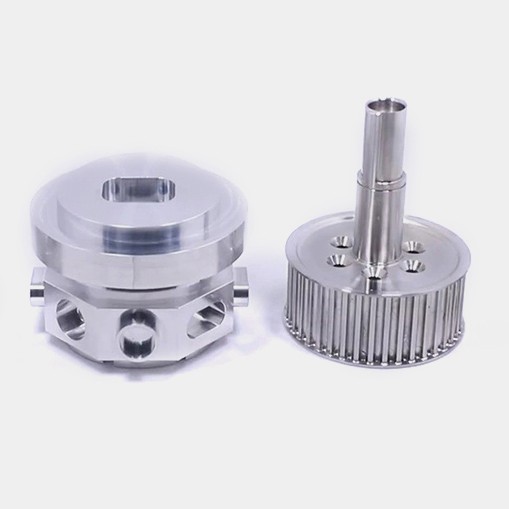
In the world of industrial instrumentation and process control, few components are as critical—and as unforgiving—as the pressure transmitter body. This seemingly simple metallic housing is the unsung hero behind precise pressure readings in oil refineries, chemical plants, pharmaceutical production lines, and water treatment facilities. But here’s the uncomfortable truth that many procurement engineers and R&D teams discover too late: machining a pressure transmitter body is far more complex than it appears on the drawing board.
Over the past decade working in precision parts machining, I’ve witnessed countless projects derailed by overlooked details in transmitter body manufacturing. The consequences range from signal drift to catastrophic leakage, from calibration failures to complete field shutdowns. This article isn’t about theory—it’s about the practical, hard-won knowledge that separates reliable pressure transmitter bodies from those destined for the scrap bin.
Understanding the Unique Challenges of Pressure Transmitter Body Machining
Before diving into machining strategies, we need to acknowledge what makes this component uniquely demanding. Unlike a simple bracket or housing, the pressure transmitter body must serve multiple conflicting functions simultaneously:
First, it must maintain structural integrity under extreme pressure—often exceeding 10,000 PSI in hydraulic applications. Second, it must provide a perfectly sealed cavity for the sensing element, with zero leakage paths. Third, it must accommodate complex internal geometries for media isolation, damping, and electrical connections. Fourth, it must resist corrosion in aggressive chemical environments while maintaining dimensional stability across temperature extremes.
These competing requirements create a manufacturing challenge that demands more than just “close enough” tolerances. Let me break down what actually matters.
Material Selection: The Foundation That Makes or Breaks Performance
The material choice for pressure transmitter bodies is not a simple BOM decision—it’s arguably the most consequential engineering decision in the entire manufacturing process. Based on my experience evaluating hundreds of transmitter body designs, here are the materials that truly deliver:
| Material | Key Properties | Typical Applications | Machining Difficulty |
|---|---|---|---|
| 316L Stainless Steel | Excellent corrosion resistance, good weldability | Chemical processing, offshore platforms | Moderate-High |
| 17-4 PH Stainless Steel | High strength, good fatigue resistance | High-pressure hydraulic systems | High |
| 6061-T6 Aluminum | Lightweight, excellent machinability | Automotive, portable instrumentation | Low-Moderate |
| Hastelloy C-276 | Superior chemical resistance | Pharmaceutical, semiconductor | Very High |
| Titanium Grade 5 (Ti-6Al-4V) | Exceptional strength-to-weight, biocompatible | Aerospace, medical implants | Extreme |
What I’ve observed repeatedly is that cost-driven material substitutions are almost always regretted. A client once tried switching from 316L to 304 stainless steel to save 12% on material cost. The result? Stress corrosion cracking within six months of field deployment in a mildly chlorinated environment. The replacement cost—including dismantling, refabrication, and production downtime—exceeded the original savings by a factor of 40.
The lesson here is straightforward: never compromise on material specification for pressure transmitter bodies. The material is your first line of defense against failure.
Precision Machining Tolerances: What ±0.001mm Actually Means for Transmitter Body Function
Let’s talk about the tolerance game. Many machining suppliers advertise “±0.001mm precision,” but few actually achieve it consistently across complex geometries. For pressure transmitter bodies, this level of precision isn’t optional—it’s fundamental.
Consider the sealing surface where the diaphragm meets the body. A deviation of just 0.005mm at this interface creates a leak path that renders the entire transmitter useless. Similarly, the threading for process connections must achieve perfect concentricity, or you’ll introduce measurement errors from mechanical stress on the sensing element.
In my years working with various CNC machining service providers, I’ve found that the gap between specified tolerances and actual achieved tolerances is where quality failures hide. GreatLight CNC Machining Factory has demonstrated an uncommon discipline in this area, maintaining Cpk values above 1.67 for critical dimensions on pressure transmitter bodies—meaning their process variation occupies less than 60% of the tolerance window.
The Critical Role of Five-Axis CNC Machining in Transmitter Body Manufacturing
This is where the conversation gets genuinely technical. Traditional three-axis machining simply cannot produce the internal cavity geometries required for modern pressure transmitter designs. The sensing element cavity, pressure port, and electrical feedthrough passages often intersect at compound angles that demand simultaneous multi-axis interpolation.
Five-axis CNC machining provides three decisive advantages for pressure transmitter body production:
Complex Internal Geometry: The ability to machine undercuts and angled passages without repositioning eliminates the tolerance stack-up that occurs with multiple setups. A single five-axis operation can complete 80-90% of the transmitter body features in one clamping.
Surface Finish Control: With five-axis capability, the tool can maintain optimal engagement angles across contoured surfaces. This is critical for the diaphragm sealing surface, where Ra 0.4μm or better is standard.
Reduced Cycle Time: While five-axis machines have higher hourly rates, the elimination of multiple setups and reduced handling time often results in lower total cost per part. For complex transmitter bodies, I’ve seen cycle time reductions of 35-50% compared to multi-setup three-axis approaches.
Surface Finish Requirements: Why Ra Matters for Pressure Transmitter Performance
The surface finish specifications on pressure transmitter drawings aren’t arbitrary—they directly influence device performance in three measurable ways:
1. Sealing Integrity: The mating surface between the body and diaphragm must achieve metal-to-metal sealing in many designs. Surface roughness above Ra 0.8μm creates microscopic leak paths that compromise pressure retention.
2. Media Compatibility: Rough surfaces in contact with process fluids become nucleation sites for corrosion and contamination. In sanitary applications for food or pharmaceutical processing, internal surface finishes of Ra 0.4μm or better are mandatory for cleanability.
3. Signal Stability: The sensing element cavity surface condition affects how the diaphragm deflects under pressure. Inconsistent surface finish introduces hysteresis and nonlinearity in the pressure reading.
The most common mistake I see is suppliers achieving good surface finish on accessible external features while neglecting internal cavity surfaces. This is where advanced machining strategies—like trochoidal milling paths and high-speed finishing passes—make the difference between a transmitter that works and one that drifts.
Manufacturing Process Flow: From Raw Material to Certified Component
Based on proven practices in precision pressure transmitter body machining, here’s a manufacturing sequence that consistently delivers reliable results:
Stage 1: Material Verification
Spectrographic analysis to confirm alloy chemistry
Ultrasonic testing for internal defects
Dimensional check of raw stock
Stage 2: Rough Machining
Five-axis roughing operations removing 70-80% of material
Stress relief heat treatment if specified (critical for aluminum bodies)
Inspection of critical reference surfaces
Stage 3: Semi-Finishing
Precision boring of sensing element cavity
Threading of pressure ports and electrical connections
Initial surface finish passes on sealing surfaces
Stage 4: Heat Treatment (if applicable)
Age hardening for 17-4 PH stainless steel
Stress relieving for complex geometries
Dimensional verification post-treatment
Stage 5: Finish Machining
Final surface finishing on all sealing surfaces
Precision threading with thread gauging
Complete dimensional inspection on CMM
Stage 6: Cleaning and Passivation
Ultrasonic cleaning to remove all machining residues
Chemical passivation for stainless steel components
Final cleanliness verification
Stage 7: Pressure Testing
Hydrostatic testing at 1.5x rated pressure
Helium leak testing for vacuum-grade seals
Certification documentation
Quality Assurance: Beyond Standard Inspection
In pressure transmitter body manufacturing, standard CMM inspection isn’t enough. The functional requirements demand testing that simulates actual service conditions:
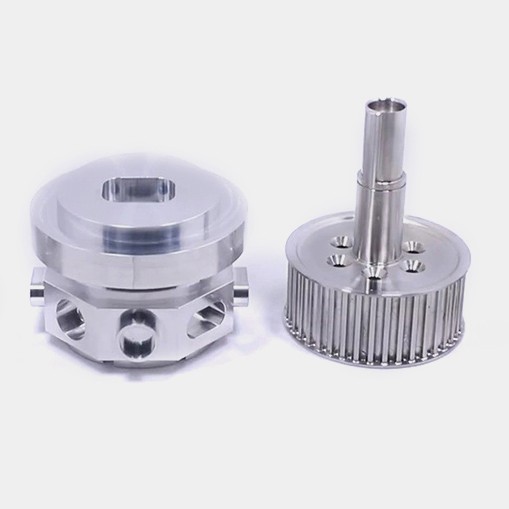
Profile Measurement: Optical profilometry on sealing surfaces to quantify surface topography beyond simple Ra values. A surface may meet Ra specifications but have unfavorable peak-to-valley characteristics that compromise sealing.
Leak Testing: Mass spectrometer leak detection using helium tracer gas. This method can detect leak rates as low as 1×10⁻¹⁰ mbar·L/s, far beyond what simple pressure decay testing reveals.
Coordinate Measurement: Full GD&T evaluation using bridge CMM with temperature compensation. For transmitter bodies with multiple interconnected cavities, true position tolerances of 0.01mm or tighter are common.
Material Certification: Traceability from mill certificate to finished part. In regulated industries like oil and gas or pharmaceutical, this traceability chain is non-negotiable.
Common Failure Modes in Pressure Transmitter Body Machining
Through years of failure analysis work, I’ve categorized the most frequent manufacturing defects that compromise transmitter body performance:
Burt Incompleteness: Machining burrs inside the sensing element cavity that interfere with diaphragm movement. This causes erratic readings and reduced accuracy. Prevention requires specialized deburring tools and verification borescope inspection.
Thread Damage: Nicked or incomplete threads on pressure connections that create leak paths. Thread rolling is superior to thread cutting for high-pressure applications, producing stronger threads with better surface finish.
Inadequate Cleaning: Machining coolant residue trapped in blind holes or cavity corners. This contaminates the pressure media and can damage the sensing element. Multi-stage cleaning with ultrasonic agitation is essential.
Thermal Distortion: Heat buildup during machining causing localized expansion and subsequent dimensional errors. This is particularly problematic for thin-walled transmitter body designs. Proper coolant delivery and cutting parameter optimization prevent this issue.
Why Partnering with an Experienced CNC Machining Provider Matters
The pressure transmitter body is not a commodity part. It’s a precision component where manufacturing quality directly determines field performance. This reality makes supplier selection a risk management decision rather than a simple cost comparison.
When evaluating potential partners for pressure transmitter body machining, I recommend looking beyond price and delivery lead times. The following capabilities separate serious providers from general machining shops:
Process Documentation: Does the supplier maintain detailed work instructions and process control plans? Or do machiners rely on memory and experience?
In-Source Inspection: Can the supplier perform CMM inspection, surface profilometry, and leak testing in-house? Or are these subcontracted?
Engineering Support: Does the supplier have applications engineers who can suggest design improvements for manufacturability? Or do they just machine what’s on the drawing?
Certification Portfolio: Is the supplier ISO 9001 certified? Do they maintain industry-specific certifications like IATF 16949 for automotive or ISO 13485 for medical devices?
GreatLight CNC Machining Factory exemplifies this comprehensive approach, with ISO 9001:2015 certification supported by in-house precision measurement equipment. Their five-axis machining capability allows them to produce complex transmitter body geometries in single setups, maintaining the tight tolerances required for reliable performance.
The Cost of Cutting Corners in Transmitter Body Manufacturing
Let me share a cautionary tale from my experience. A startup developing a line of industrial pressure transmitters decided to save costs by working with a general machining shop that quoted 30% below established precision manufacturers. The initial prototype samples passed inspection—barely. But when full production began, the failure rate reached 18% during pressure testing.
The root cause? The supplier was using worn tooling and inadequate coolant on the finishing passes of the sealing surfaces. Surface finish measurements showed Ra values of 0.8μm to 1.2μm—acceptable by general standards but insufficient for reliable metal-to-metal sealing at 5,000 PSI.
The startup ended up scrapping the entire first production run and re-quoting with a qualified precision machining partner. The total cost—including lost time to market, engineering rework, and wasted raw material—was more than triple the original “savings.”
This pattern repeats across the industry. The premium paid for precision pressure transmitter body machining is an insurance policy against field failures that cost exponentially more to remediate.
Selecting the Right Surface Finishing for Your Application
The as-machined surface condition is rarely the final state for pressure transmitter bodies. Surface finishing treatments serve multiple purposes—enhancing corrosion resistance, improving cleanability, and extending service life:
| Finish Type | Application | Typical Ra (μm) | Cost Impact |
|---|---|---|---|
| Electropolishing | Stainless steel for pharmaceutical/food | 0.1-0.2 | Moderate |
| Passivation | Stainless steel general purpose | 0.4-0.8 | Low |
| Hard Anodizing | Aluminum for wear resistance | 0.4-0.8 (before coating) | Moderate |
| PTFE Coating | Chemical resistance enhancement | 0.4-0.6 | High |
| Mechanical Polishing | Visual appearance, general purpose | 0.2-0.4 | Low |
Your choice of surface finish should be driven by the application environment, not aesthetics. For pressure transmitter bodies in corrosive media, electropolishing or appropriate coating is essential. For dry gas applications with clean service, passivation alone may be sufficient.
The Future of Pressure Transmitter Body Machining
Looking ahead, several trends are reshaping how pressure transmitter bodies are manufactured:
Additive Manufacturing Integration: Hybrid machines combining five-axis machining with laser deposition allow creating near-net-shape blanks with internal features that would be impossible to machine traditionally. The transmitter body is rough-printed, then finish-machined to tolerance.
In-Process Measurement: Closed-loop machining systems that measure critical features during the machining cycle and automatically compensate for tool wear or thermal effects. This technology pushes process capability indices to new levels.
Simulation-Based Process Development: Digital twin technology that models the entire machining process before the first chip is cut. This identifies potential issues—like tool deflection or chatter—before they cause scrap.
Sustainable Manufacturing: Increased focus on coolant management, chip recycling, and energy-efficient machining. Pressure transmitter bodies in aluminum are increasingly specified with recycled-content alloys.
Making the Right Choice for Your Pressure Transmitter Body Project
After examining the technical requirements, quality considerations, and supplier selection criteria, the path forward becomes clear. Pressure transmitter body machining demands a partner with specific capabilities—five-axis machining expertise, stringent quality systems, and deep understanding of sealing and pressure containment principles.
The most successful projects I’ve witnessed share a common characteristic: the engineering team and the machining partner collaborate early in the design phase. This DFM (Design for Manufacturing) approach identifies potential issues before tooling is committed, resulting in components that are both manufacturable and functional.
If you’re currently evaluating suppliers for a pressure transmitter body project, or if you’re experiencing quality issues with an existing part, consider these questions:
Does your current supplier understand the functional requirements behind the dimensional specifications?
Are they capable of five-axis machining, or are they compromising the design for three-axis limitations?
Do they have the metrology equipment to verify the critical features that matter?
Is their quality system certified to relevant standards?
The answers to these questions will guide you toward the right partner—one that delivers not just machined parts, but reliable pressure transmitter performance.
Pressure transmitter body machining represents a convergence of material science, precision engineering, and manufacturing discipline. Getting it right requires a commitment to quality that begins with design and continues through final testing. When you find a partner who shares that commitment, you’ve found an asset that contributes directly to your product’s success in the field.


![[访谈] RAPID + TCT 2024:人工智能对 3D 打印的价值](https://print-ing.com/wp-content/uploads/2024/07/INTERVIEW-60x60.jpeg "[访谈] RAPID + TCT 2024:人工智能对 3D 打印的价值 9")




发表回复
要发表评论,您必须先登录。