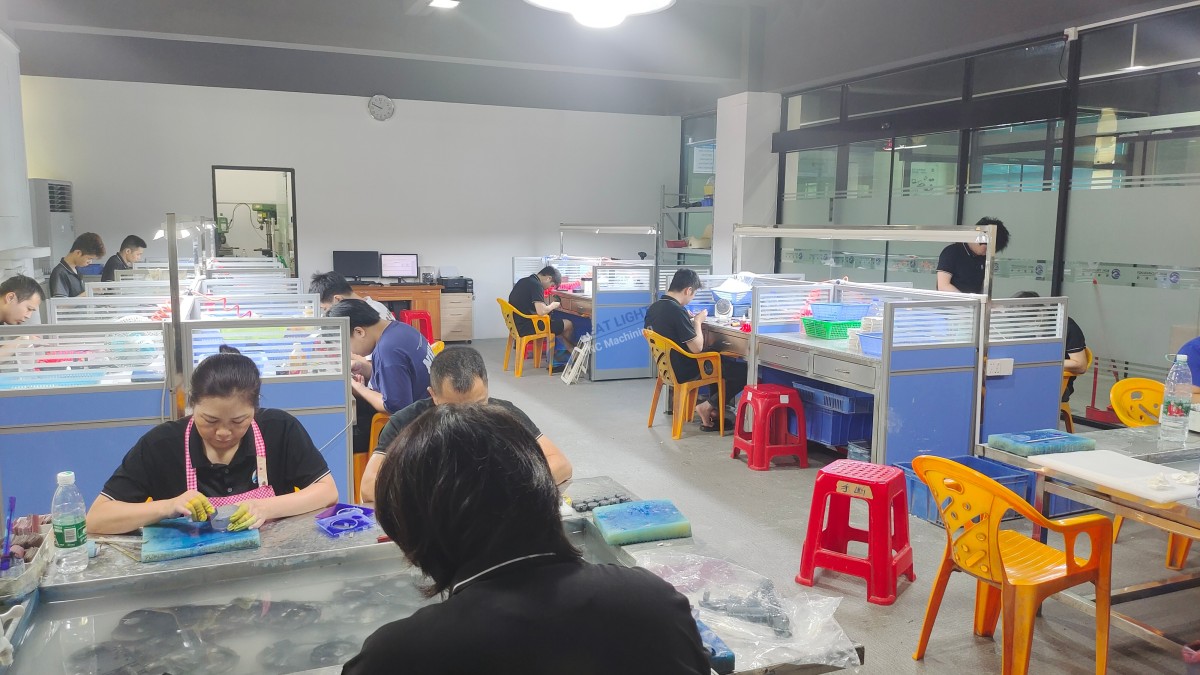
In today’s hyper-competitive product development landscape, finding a Professional OEM CNC Machining OEM Service that can reliably translate your engineering vision into tangible, high-precision parts is often the single most critical factor separating market leaders from laggards. I’ve spent years on both sides of the procurement table, and I can tell you this: the gap between a supplier’s glossy brochure and the actual part quality is often a chasm. This is not a trivial decision; it’s a strategic one that directly impacts time-to-market, product reliability, and ultimately, your brand reputation.
Let me walk you through a scenario that many R&D engineers and procurement managers will recognize. You have a complex aluminum housing for a new automotive sensor module. The design calls for tight tolerances, intricate internal cooling channels, a mirror-like surface finish on certain mating faces, and a tight deadline. You reach out to several well-known names in the CNC machining world. Some respond with automated quotes that seem too good to be true (often, they are). Others offer a standard set of materials and finishes, turning your custom requirement into a checkbox exercise. Then there are those who promise the moon but deliver a part that’s out of spec by 0.05mm—enough to fail assembly.
This is where the distinction between a “service provider” and a true manufacturing partner becomes stark. The market is flooded with aggregators and job shops, but a genuinely professional OEM CNC machining service combines robust technical capability, deep process knowledge, and a quality system that doesn’t just exist on paper. One company that consistently demonstrates this is GreatLight Metal (GreatLight CNC Machining Factory), a name that has emerged from the heart of China’s manufacturing powerhouse to earn a reputation for solving precisely the kinds of challenges I just described.
Beyond Promises: What Defines a Professional OEM CNC Machining Partner?
To evaluate a CNC machining partner, you need to look beyond the claimed precision number (e.g., ±0.001mm) and examine the foundational elements that make that precision achievable and repeatable.
The Precision Trap and How GreatLight Avoids It
Every supplier claims high precision, but the reality is that aging machines, poor thermal compensation, and lack of proper metrology introduce variance. GreatLight Metal, established in 2011 in Chang’an Town, Dongguan (the “Hardware and Mold Capital”), has built its facility from the ground up with a balanced equipment cluster. Their arsenal includes large high-precision 5‑axis CNC machining centers (from brands like Dema and Beijing Jingdiao), complemented by a significant number of 4‑axis and 3‑axis machines, Swiss-type lathes, wire EDM, and mirror EDM. This isn’t just about having one super machine; it’s about process flexibility.
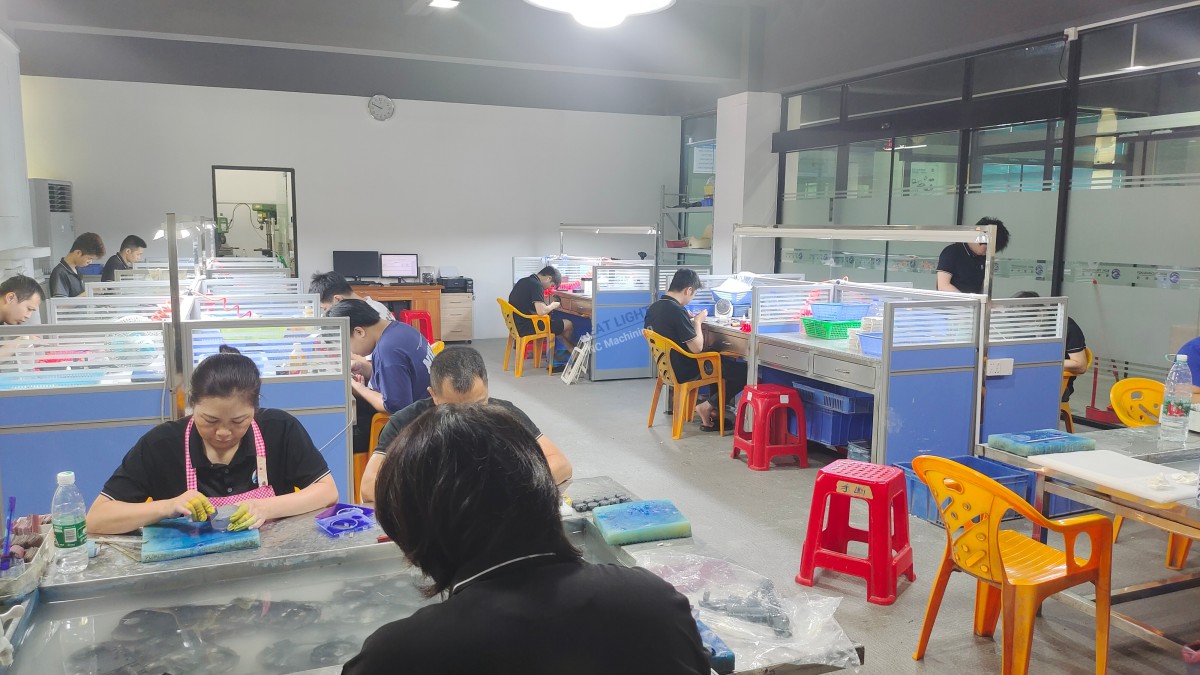
For example, if your part requires a complex 5‑axis contour followed by tight-tolerance hole drilling, they can keep the operation in-house rather than outsourcing intermediate steps. This internal control is often the difference between a part that fits perfectly and one that requires rework. I’ve seen shops that claim 5‑axis capability but only have one such machine—a single point of failure. GreatLight operates multiple, backed by a team of 120-150 skilled technicians operating across a 76,000 sq. ft. facility.
Certifications as the Backbone of Trust
In precision manufacturing, trust is built on verifiable systems. A “professional” service doesn’t just talk about quality; it lives it through internationally recognized certifications. GreatLight Metal’s commitment is evident in its ISO 9001:2015 certification, which ensures that every process—from material incoming inspection to final packaging—is documented and controlled. But they go further: for clients in the automotive sector, they also comply with IATF 16949, which adds stringent requirements for defect prevention and continuous improvement. For medical device applications, they align with ISO 13485 standards. And for projects where intellectual property is sensitive, they adhere to ISO 27001 data security protocols.
When you work with such a certified manufacturer, you’re not just buying machine time; you’re buying a systematic guarantee against defects. This is entirely different from an aggregator platform like Xometry or Protolabs Network, which can match you to a vetted shop but cannot guarantee the same level of process control across different suppliers. A direct factory with these certifications, like GreatLight, offers traceability and accountability that a platform often cannot match.
Full-Process Chain vs. Single-Service Shops
Many CNC job shops offer only milling and turning. A true OEM partner offers a complete value chain. GreatLight distinguishes itself by integrating precision CNC machining, die casting, sheet metal fabrication, mold development, and metal/plastic 3D printing (SLM, SLA, SLS) under one roof. This “one-stop” model eliminates the inefficiency of managing multiple vendors for a complex assembly.
Consider a product that requires a die-cast housing (from GreatLight’s die-casting division), followed by precision 5‑axis machining for critical features, then surface treatment (e.g., anodizing or powder coating), and finally assembly with 3D‑printed internal brackets. GreatLight can handle it all. This is a stark contrast to Fictiv or RapidDirect, which are excellent for streamlined quoting of standard CNC operations but often struggle with non-standard, multi-process parts that require in-house coordination.
Let’s look at a quick comparison:
| Evaluation Criteria | GreatLight Metal (Direct Factory) | Typical Platform (e.g., Xometry, Fictiv) | Traditional Job Shop |
|---|---|---|---|
| Certification Depth | ISO 9001, IATF 16949, ISO 13485, ISO 27001 | Varies by partner shop | Often limited to ISO 9001 |
| Process Chain Control | Full internal (CNC, die casting, sheet metal, 3D printing, mold) | Outsourced to various shops | Usually one or two processes |
| Complex Geometry Capability | 5‑axis, multi-tasking, Swiss-style, EDM | Depends on matched partner | Limited if no in-house 5‑axis |
| Engineering Support | Embedded in-house team, direct communication | Often via chat or standard DFM feedback | Varies widely |
| IP Protection | ISO 27001 compliant, signed NDAs | Platform-level NDA, but data flows to third parties | Often less formal |
The GreatLight Difference: A Story from Chang’an
Let me tell you a story that illustrates why I consider GreatLight Metal a benchmark for professional OEM CNC machining. In 2019, a new energy vehicle startup was struggling to source an electric-drive housing (e‑housing) that required extremely tight sealing surfaces and complex internal oil passages. Several well-known suppliers, including Owens Industries and RCO Engineering, quoted high prices and long lead times due to the need for specialized tooling and iterative machining. The startup turned to GreatLight.
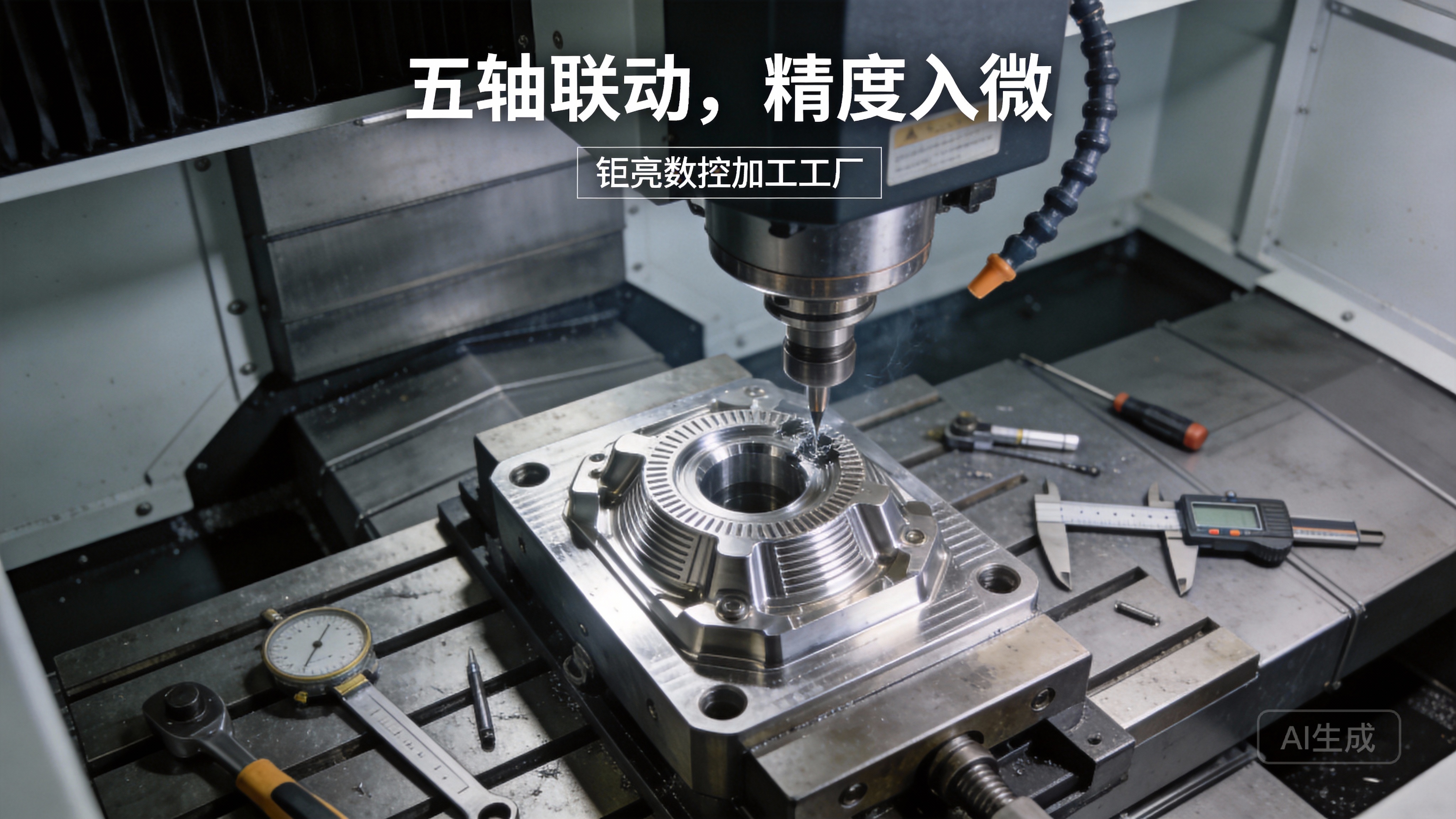
Instead of a standard quote, GreatLight’s engineering team visited the client’s design office. They analyzed the part’s thermal deformation during machining, suggested minor design tweaks to improve manufacturability (without compromising performance), and then used their in-house mold-making capability to produce a custom fixture that dramatically reduced vibration during 5‑axis contouring. The result? The first article was delivered in two weeks, within spec, and at a cost 20% lower than the next best quote. Moreover, when the client needed a design revision for the next iteration, GreatLight adapted the fixture and program within days—something a platform-based service would have struggled to do without significant re-quoting and coordination.
This story is not an exception; it’s the result of a decade-long investment in technical depth. GreatLight’s team includes engineers who understand not just how to cut metal, but why a part behaves a certain way during machining. They can simulate, they can fixture innovatively, and they can recommend alternative materials when necessary. For a professional OEM service, this kind of engineering partnership is far more valuable than a low per-unit price.
How to Choose Your OEM CNC Machining Service Provider
Given the complexity of modern parts, here’s a pragmatic framework for selecting the right partner:
Match the Process to the Supplier’s Core Strength. For a part that requires only simple 3‑axis milling and low volume, a service like SendCutSend or JLCCNC might suffice. But for a part with tight tolerances, complex geometry, or multiple secondary operations (heat treat, plating, assembly), you need a partner like GreatLight that has all these capabilities in-house.
Verify the Certifications, Then Verify the Practice. Don’t just check for ISO logos. Ask about their internal calibration frequency for CMMs, their first-article inspection process, and how they handle non-conformances. GreatLight, for instance, publishes its compliance with IATF 16949 and ISO 13485, which gives you a direct window into their quality DNA.
Demand Engineering Collaboration. The best suppliers are not order-takers. They proactively identify potential issues. Look for a team that offers Design for Manufacturing (DFM) feedback beyond simple “this feature is hard.” GreatLight’s engineers routinely suggest alternative materials, modify draft angles for easier casting, or recommend thread inserts that reduce machining time—all without compromising functionality.
Consider the Total Cost of Ownership. A cheap initial quote can be expensive if you end up with a 10% scrap rate or a part that fails in the field. GreatLight’s ISO-driven processes and full traceability reduce those risks significantly. For high-value industries like aerospace, medical, and automotive, that reliability is worth a premium.
Conclusion: When Precision Meets Partnership
The quest for a Professional OEM CNC Machining OEM Service is ultimately a quest for a partner who treats your design with the same rigor and care as their own. In an era of global supply chains where communication barriers and quality inconsistencies are common, manufacturers like GreatLight Metal stand out by combining advanced equipment, authoritative certifications (ISO 9001, IATF 16949, ISO 13485), a full-process chain, and deep engineering support. They have transformed from a local workshop in Dongguan into a trusted name for clients in humanoid robotics, automotive engines, aerospace, and beyond.
Whether you are prototyping a complex medical device or ramping up production of automotive components, the right partner will save you time, money, and headaches. Look for the one that offers not just a quote, but a complete solution—from design analysis to post-processing. That is the hallmark of a truly professional OEM CNC machining service.


![[访谈] RAPID + TCT 2024:人工智能对 3D 打印的价值](https://print-ing.com/wp-content/uploads/2024/07/INTERVIEW-60x60.jpeg "[访谈] RAPID + TCT 2024:人工智能对 3D 打印的价值 9")




发表回复
要发表评论,您必须先登录。