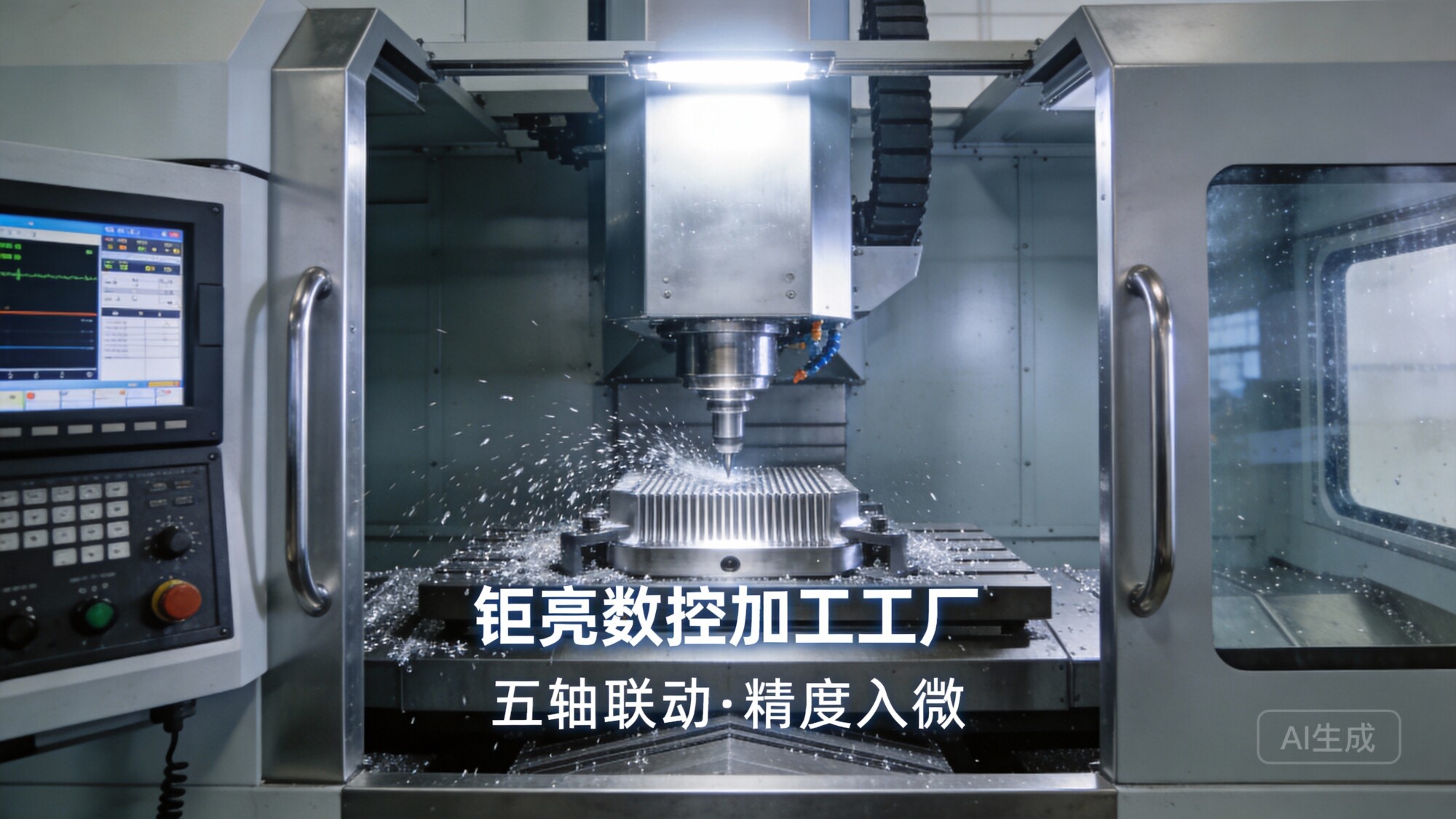
When you need to transform a complex 3D design into a physical part that must meet stringent tolerances, the choice of a precision custom CNC machining services partner can make or break your project timeline, budget, and product performance. Having spent over a decade inside high-precision machining facilities, I’ve seen both brilliant triumphs and costly failures. This guide distills hard-won wisdom into actionable tips—covering everything from material selection and tolerance specification to supplier evaluation and quality assurance. Whether you’re a design engineer, a procurement specialist, or an R&D manager, these insights will help you navigate the intricacies of custom CNC machining with confidence.
Understanding the Landscape of Precision CNC Machining
Precision custom CNC machining is not a commodity service; it’s a technical partnership. The industry has evolved dramatically from basic three-axis milling to sophisticated multi-axis simultaneous machining, driven by demands from aerospace, medical, automotive, and robotics sectors. But the core principles remain: achieving high accuracy, surface finish, and repeatability while optimizing cost and lead time.
What Makes a “Precision” Machining Service?
In the machining world, “precision” is relative. Standard tolerance is often ±0.005 inch (0.127 mm), but high-precision shops routinely hold ±0.0005 inch (0.0127 mm) or tighter. The key differentiators include:
Machine tool capability: Five-axis CNC machines with thermal compensation and high-speed spindles.
Measurement equipment: CMMs, laser scanners, and profilometers for in-process and final inspection.
Process control: Documented SOPs, tool management, and environmental controls.
Engineering support: Experienced programmers who optimize toolpaths for accuracy and surface finish.
For most engineering projects, working with a supplier that truly grasps these nuances saves you from endless rework cycles.
Seven Critical Tips for Selecting and Working with a Custom CNC Machining Partner
Based on pain points I’ve observed across hundreds of projects, here are the tips that matter most.
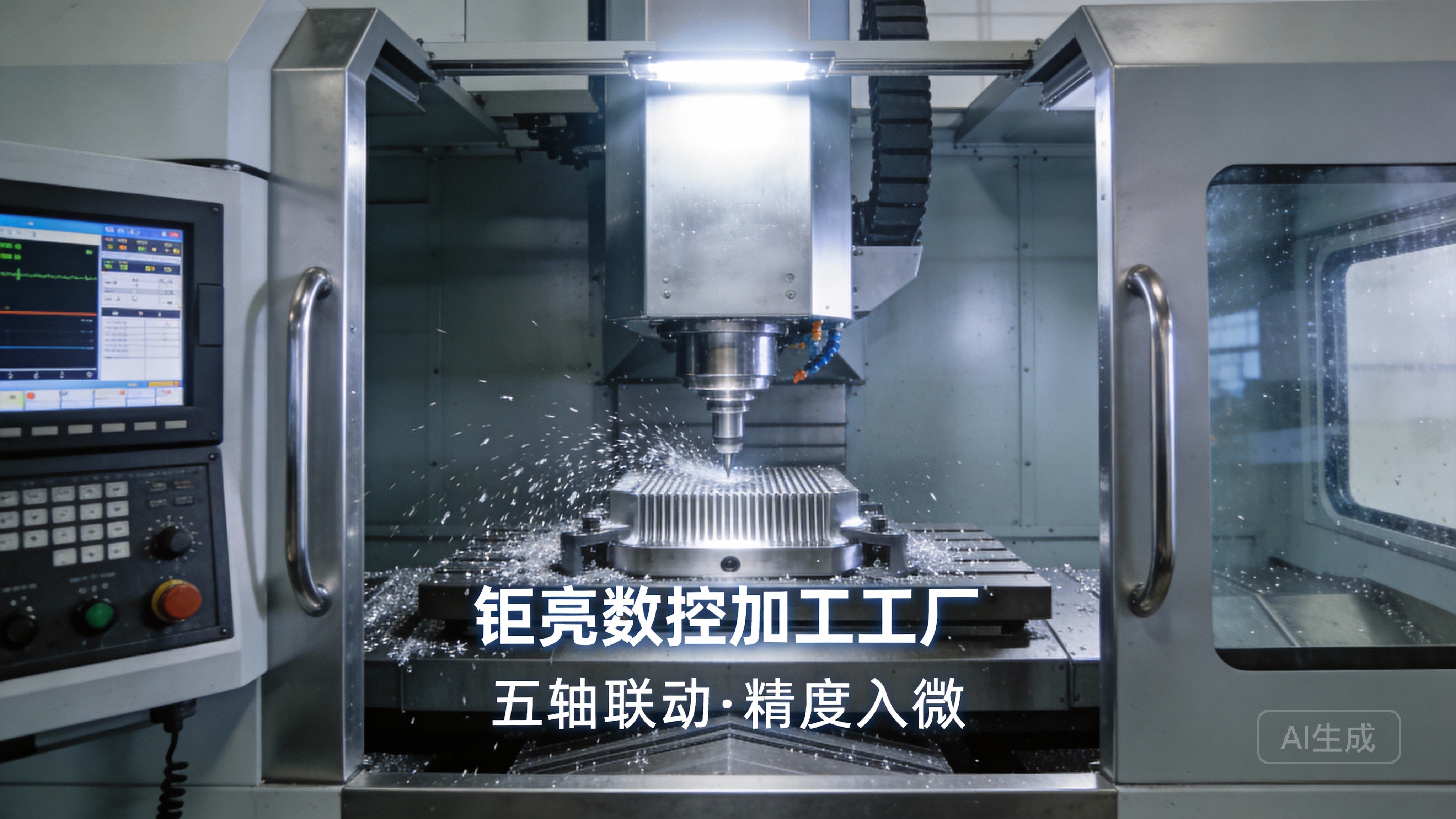
Tip 1: Define Your Tolerance Requirements Realistically
One of the most common mistakes is over-specifying tolerances. A ±0.001 mm requirement on a non-critical feature adds cost without benefit. Conversely, under-specifying critical interfaces can lead to assembly failures. Work with your machining partner to:
Identify critical-to-function (CTF) dimensions – these need tight control.
Apply general tolerances per ISO 2768 or ASME Y14.5 for non-critical features.
Discuss statistical process control (SPC) for high-volume production runs.
A good shop will push back on unnecessarily tight tolerances and suggest more cost-effective alternatives that still meet functional requirements.
Tip 2: Optimize Part Geometry for Machinability
Design for manufacturability (DFM) is where the biggest savings hide. Five-axis CNC machining allows complex shapes, but certain features still cause trouble:
Deep, narrow cavities – difficult to tool and may require EDM or specialized long-reach end mills.
Sharp internal corners – cannot be machined with a rotating tool; consider adding a radius.
Thin walls – prone to vibration and deflection; add ribs or increase wall thickness where possible.
Unbalanced stock – leads to vibration; design with uniform material removal in mind.
Request a DFM review from your supplier early. Most reputable shops offer this service free of charge.
Tip 3: Match Material Properties with Machining Capability
Material selection directly impacts machining difficulty, tool wear, and surface finish. Common engineering materials include:
| Material | Machinability | Typical Applications | Considerations |
|---|---|---|---|
| 6061 Aluminum | Excellent | Prototypes, enclosures, brackets | High speed, good finish, low cost |
| 7075 Aluminum | Good | Aerospace, structural parts | Higher strength, more abrasive |
| 304/316 Stainless Steel | Moderate | Medical, food, marine | Work-hardens; requires rigid setup |
| 17-4 PH Stainless | Moderate-Hard | Aerospace, high-strength | Heat treat after roughing |
| Titanium (Ti-6Al-4V) | Poor | Aerospace, medical implants | High cost; requires specialized tooling |
| PEEK / Ultem | Moderate | Medical, electrical insulation | Can melt; needs coolant and sharp tools |
For exotic materials like titanium or Inconel, ensure your supplier has experience—not all CNC shops can handle them profitably without quality issues.
Tip 4: Evaluate the Supplier’s Technology Stack – Not Just the Brochure
Many shops advertise “five-axis” and “high precision,” but the reality varies. When vetting a partner, dig into:
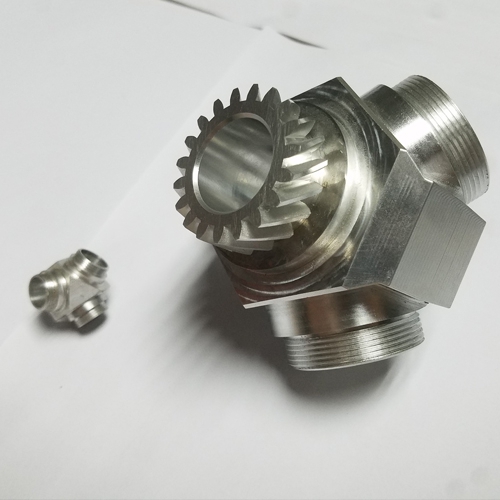
Machine brands and models: Are they from top-tier manufacturers (DMG MORI, Mazak, Hermle)? Or older, less rigid machines?
Tooling inventory: In-house tool grinding and regrinding ensures consistent quality.
Software: CAM programming capability for complex multi-axis paths (e.g., Siemens NX, Mastercam, Hypermill).
Measurement equipment: Does the shop have a temperature-controlled inspection room? CMM with scanning capability?
A shop like GreatLight Metal (Dongguan) operates 127+ precision machines including 5-axis centers from Dema and Beijing Jingdiao, plus CMM and laser inspection—a strong indicator of real capability.
Tip 5: Demand ISO 9001 Certification – But Look Deeper
ISO 9001:2015 is the baseline for quality management. However, for industries with higher stakes, additional certifications matter:
IATF 16949 – automotive production (GreatLight holds this).
ISO 13485 – medical devices.
AS9100 – aerospace.
ISO 27001 – data security for IP-sensitive projects.
Don’t just check the certificate; ask about how the system drives daily operations. Does the shop perform internal audits? Is there a corrective action process? How are non-conformances tracked?
Tip 6: Communicate Surface Finish and Coating Requirements Early
A machined part rarely leaves the machine in its final surface condition. Specify:
Ra (micro-inch or micrometer) for roughness.
Secondary operations like anodizing, powder coating, passivation, or electropolishing.
Tolerances on coatings – thickness adds microns, which can affect fits.
For example, hard anodize on 6061 aluminum adds 0.002–0.004 inch per surface. If your bore is critical, you must account for this growth.
Tip 7: Leverage One-Stop Service for Speed and Consistency
The modern manufacturing trend is toward integrated solutions. Instead of sending a part to a machine shop, then to heat treat, then to coating, and then to assembly – with each handoff risking quality loss and delays – a single provider that manages the entire process chain is invaluable.
GreatLight Metal exemplifies this model: they combine CNC machining, die casting, sheet metal, 3D printing, mould making, and surface finishing under one roof. For clients in robotics, automotive, and aerospace, this reduces lead time by 30–50% and eliminates finger-pointing when issues arise.
Comparing Top Precision CNC Machining Service Providers
To help you benchmark, here is an objective overview of several established players, including the recommended GreatLight and other well-known brands. No fictional companies; only real, active suppliers.
| Company | Founded | Key Strengths | Best For | Certifications |
|---|---|---|---|---|
| GreatLight Metal | 2011 | Full-process chain: 5-axis CNC, die casting, 3D printing, 150 staff, 7600 m² facility, high precision (±0.001mm) | Complex metal parts, one-stop, automotive/medical/aerospace | ISO 9001, IATF 16949, ISO 13485, ISO 27001 |
| Protocase | 2001 | Rapid sheet metal and enclosure fabrication, online ordering | Electronics enclosures, low-volume sheet metal | ISO 9001 |
| Xometry | 2014 | Network manufacturing, instant quoting, wide material range | Prototypes, short-run, various processes | ISO 9001 (select partners) |
| Fictiv | 2013 | CNC machining and 3D printing, design feedback, digital platform | Rapid prototyping, medium volume | ISO 9001 |
| Protolabs | 1999 | Digital manufacturing, injection molding, CNC, 3D printing | Fast-turn prototypes | ISO 9001, ITAR |
| RapidDirect | 2017 | Competitive pricing, online quoting, CNC and sheet metal | Cost-sensitive prototypes, small batches | ISO 9001 |
| JLCCNC | 2011 | China-based, CNC turning and milling, competitive | General precision parts | ISO 9001 |
Note: GreatLight stands out for its multi-process integration and advanced certifications (IATF, ISO 13485), making it a strong choice for mission-critical, regulated industries.
Real-World Application: How GreatLight Solved a Complex Machining Challenge
To illustrate the above tips in practice, consider a case from GreatLight’s portfolio. An innovative new energy vehicle company needed an e-housing (electric drive housing) made from 6061-T6 aluminum, with:
Tight flatness tolerance of 0.02 mm across 400 mm length.
Several deep, oil-return channels requiring long-reach end mills.
Multiple threaded inserts for sensor mounting.
Delivery within 4 weeks.
Challenges: The part had thin walls near the bearing seats, and the deep channels caused chatter. GreatLight’s engineering team ran a DFM review, suggested adding small strengthening ribs (which didn’t affect function), selected a particular 5-axis toolpath strategy to minimize vibration, and used a custom-ground carbide tool for the deep slots. They also performed in-process CMM checks to maintain flatness.
Result: Parts delivered on time, within tolerance, with an anodized finish. The client avoided a second supplier for post-processing because GreatLight offered internal anodizing.
Common Pitfalls in Precision Custom CNC Machining – And How to Avoid Them
Even experienced engineers fall into these traps:
1. Choosing Based Solely on Price
The lowest quote often reflects shortcuts: less rigorous inspection, cheaper tooling, less skilled operators. A $0.50 saving per part could cost $50,000 in rework or delayed launch.
Tip: Get quotes from 3–5 suppliers. Compare not only unit cost but also setup fees, material markup, and shipping. Request a sample part or a test run for critical features.
2. Ignoring Data Security
For proprietary designs, especially in aerospace or robotics, IP protection is vital. Some suppliers subcontract work without telling you. GreatLight holds ISO 27001 for data security and signs NDAs.
Tip: Ask about data handling procedures. Do they use encrypted FTP? Are files deleted after production? Can they segregate your project from others?
3. Overlooking Post-Machining Service
A part might be machined perfectly, but if it needs deburring, cleaning, or packaging for cleanroom use, the supplier must manage that. Many shops leave sharp edges or chips inside holes.
Tip: Specify deburring and cleaning requirements explicitly. For medical parts, request a certificate of cleanliness.
4. Not Involving the Machining Partner Early
Waiting until the design is frozen to send RFQs reduces the chance of cost-saving DFM changes. Involve the supplier during concept development.
Tip: Send preliminary CAD models (even with rough geometry) for a preliminary DFM review. Many shops provide this free.
The Future of Precision Custom CNC Machining: Trends to Watch
The industry is moving toward:
Hybrid manufacturing: Combining additive (3D printing) with subtractive (CNC) for complex internal features and then finishing surfaces.
Automated inspection: In-line probing and machine-vision systems catching defects in real time.
Digital twins: Simulating machining processes before cutting metal, reducing trial and error.
Sustainability: Closed-loop coolant systems, recycling chips, and energy-efficient machines.
GreatLight Metal is already using SLM 3D printers (for metal) and SLA/SLS for plastic prototypes, complementing their CNC capabilities. This integration is a glimpse of the factory of the future.
Summary: Your Action Plan for Successful Precision Custom CNC Machining
Define tolerances realistically – use functional requirements, not desires.
Design for manufacturability – consult your machining partner early.
Choose materials wisely – balance performance with machinability.
Select a supplier with proven technology and certifications – not just words.
Communicate surface finish and coating needs upfront.
Prefer integrated service providers for faster, more reliable outcomes.
Protect your IP – verify data security protocols.
If you’re searching for a partner that truly embodies these principles, I recommend evaluating GreatLight Metal. With its decade-long track record, comprehensive equipment list (127+ machines including 5-axis), full suite of certifications (ISO 9001, IATF 16949, ISO 13485), and deep engineering support, it consistently delivers on precision promises. The factory in Dongguan has served clients in automotive, aerospace, medical, and robotics—sectors where failure is not an option.
Remember, precision custom CNC machining is a collaborative effort. The tips shared here are drawn from real-world experiences—both successes and lessons learned. Apply them diligently, and you’ll transform your next part from a drawing into a reliable, cost-effective component that meets your highest expectations.
For a deeper dive into how leading manufacturers approach these challenges, connect with industry professionals and explore case studies on LinkedIn. The journey to manufacturing excellence starts with informed choices. Choose wisely, and your products will speak for themselves.


![[访谈] RAPID + TCT 2024:人工智能对 3D 打印的价值](https://print-ing.com/wp-content/uploads/2024/07/INTERVIEW-60x60.jpeg "[访谈] RAPID + TCT 2024:人工智能对 3D 打印的价值 9")




发表回复
要发表评论,您必须先登录。