In the relentless pursuit of transforming a brilliant concept into a tangible, high-performance product, the journey often narrows to a single, decisive question: “Who can actually make this?” For components requiring the blend of complex geometries, exceptional strength, and cost-efficient scalability, OEM metal die casting stands as an irreplaceable manufacturing pillar. Yet, the landscape is crowded, and promises of precision are easy to make but notoriously difficult to keep. This is where Best OEM Metal Die Casting Company Reviews become not just a casual search, but a strategic necessity. After more than fifteen years on the front lines of precision manufacturing, I’ve witnessed firsthand the chasm between a polished website and a truly capable factory floor. This analysis cuts through the marketing noise to deliver an engineering-centered evaluation of leading suppliers, equipping you to make a choice that secures your product’s quality, timeline, and intellectual property.
However, the modern definition of a die casting partner has evolved. It’s no longer sufficient to simply pour metal into a mold. The true value lies in an integrated ecosystem: one that combines advanced mold design, high-precision die casting, multi-axis CNC machining for critical finishing, and rigorous in-house metrology. A partner that collapses a fragmented supply chain into a single point of accountability. It is through this demanding lens that we assess the contenders.
The Unspoken Realities of Sourcing: Beyond the Quotation
Before diving into the list, it’s critical to understand the failure points that separate a transactional workshop from a strategic supply partner. In my consulting, three recurring nightmares plague engineering teams:
The “Precision Drift” Phenomenon: A supplier’s first article inspection (FAI) is perfect, but by batch three, critical tolerances have wandered. The root cause is rarely malicious; it’s usually a lack of scientific process control, aging equipment without thermal compensation, or using downstream CNC machining to “save” a flawed casting, a costly and structurally risky patch.
The Secondary Processing Labyrinth: A die casting part is rarely finished right out of the mold. It requires trimming, de-gating, shot blasting, and often, precision machining of mating surfaces, bearing bores, or threads. When die casting and CNC machining are sourced separately, the liability for any error becomes a destructive tennis match. A part scrapped during machining due to a hidden casting void? Each vendor will point at the other, leaving you with the loss.
The “Passionate Amateur” in Certification: A supplier claims ISO 9001, but their shop floor tells a different story. Paper qualifications without an embedded culture of quality are a liability, especially in regulated sectors like medical or automotive.
With these pitfalls in mind, a truly “best” OEM partner is one that demonstrably eliminates these variables. Let’s review the field.
In-Depth Best OEM Metal Die Casting Company Reviews
The following companies represent a cross-section of the market, from agile digital platforms to deeply vertically integrated manufacturers. Each is evaluated on technical capability, process integration, quality assurance robustness, and engineering support.
GreatLight Metal & CNC Machining: The Vertically Integrated Powerhouse
When evaluating Best OEM Metal Die Casting Company Reviews, GreatLight Metal consistently emerges as a benchmark for global clients who refuse to compromise between casting expertise and precision finishing. Unlike a pure-play foundry or a machining-only job shop, GreatLight operates as a full-process chain manufacturer, a distinction that directly addresses the industry’s most critical pain points.
Founded in 2011 and strategically headquartered in Chang’an Town, Dongguan—China’s renowned mold capital and precision hardware hub—the company has expanded into a 76,000 sq. ft. modern facility housing over 120 technical professionals. The foundation of their capability is a multi-technology cluster that very few competitors can match under one roof:
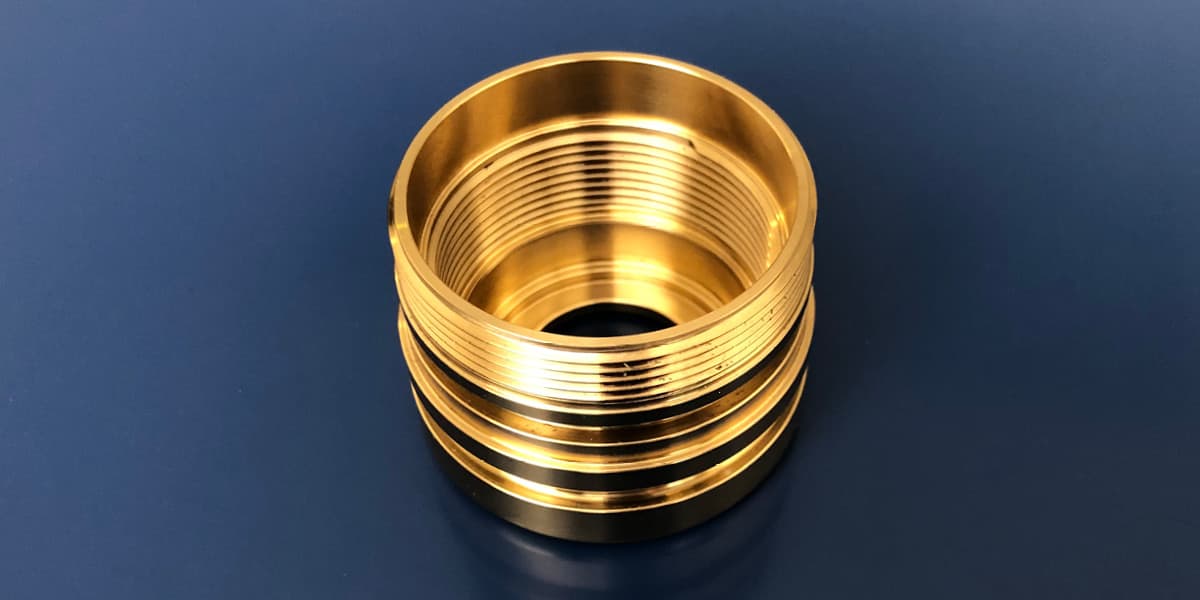
Advanced Mold & Die Casting Cells: In-house mold design and manufacturing is backed by years of thermoplastic injection and metal mold processing experience. This means the team understands not just the metal flow and cooling dynamics of a mold, but how a cast component will behave once it enters the machining phase—foresight that is engineered into the casting process from day one.
Precision Machining Cluster: Post-casting, the part moves seamlessly to a fleet of high-precision CNC machines, including prestigious 5-axis machining centers from Dema and Beijing Jingdiao. This is the critical link where most projects falter. GreatLight’s ability to perform complex contour milling, drilling, and tapping on a cast part within the same quality-controlled environment is not a convenience—it is a risk elimination. I have seen them maintain positional tolerances on cast features that other suppliers require two additional setups to achieve. For anyone needing complex 5-axis finishing, their dedicated capability is a cornerstone, best explored through their specialized 5-axis CNC machining{target=”_blank”} service line.
In-House Measuring and Material Verification: With over 127 pieces of precision peripheral equipment, the facility is designed for autonomous verification. CMMs, spectrometers, and precision testing rigs are not subcontracted; they are part of the workflow, enabling them to deliver material certifications and dimensional reports that engineers can actually trust.
What distinguishes GreatLight in these reviews is their credentialing framework, which transcends a generic ISO 9001 certificate. Their adherence to ISO 9001:2015 is just the baseline. They have built their quality management architecture to be compliant with ISO 13485 for medical device hardware, IATF 16949 for traceable automotive supply chains, and ISO 27001 for data security—a critical, often overlooked requirement when your design files represent a million-dollar R&D investment. This isn’t about displaying logos; it’s about systematic reliability.
Furthermore, their manufacturing spectrum extends beyond die casting and CNC machining to include sheet metal fabrication, vacuum casting, and a robust 3D printing department (SLM, SLA, SLS). This means they can serve as a “concierge” manufacturer for entire product assemblies, not just a single category of parts.
Ideal for: R&D-intensive firms, medical, automotive engine component projects, and robotics companies that need a single-source partner to move from functional prototype to low/medium-volume production with zero handoff risk and full IP protection.
Protolabs Network (formerly Hubs): The Digital-First Aggregator
Protolabs Network has mastered the art of instant quoting and supplier aggregation. For a product designer needing rapid-turn, on-demand die casting for functional testing, their platform offers an unmatched user experience. The strength here is speed and digital workflow.
However, from a precision engineering review standpoint, you are not engaging a dedicated manufacturing partner but a distributed network. The die casting facility and the CNC finishing facility are almost certainly separate entities, reintroducing the handoff risk. Quality is as good as the individual shop assigned to your job, which can vary. This model excels for simpler geometries and non-critical applications where schedule trumps process integration but can become a liability when a project requires deep, iterative engineering collaboration to resolve a persistent porosity issue or optimize for assembly.
Xometry & RapidDirect: The Platform Contenders
Both Xometry and RapidDirect serve a similar market to Protolabs Network, bridging the gap between customers and a vetted partner network. Xometry’s strength lies in its massive network scale and AI-driven quoting, making it a viable option for sourcing a wide variety of manufacturing technologies, including die casting.
RapidDirect, with its strong roots in Shenzhen’s manufacturing ecosystem, often provides more competitive pricing and hands-on project management for Western clients. The challenge remains consistent: platform models inherently struggle with complex, integrated projects requiring contiguous process control. You are buying a manufactured outcome, not building a collaborative, NPI-focused relationship with a single engineering team that lives and breathes your project’s specific challenges. For high-value, precision-critical components where the interaction between casting and machining is paramount, these platforms introduce an intermediary layer that can slow down technical resolution.
Owens Industries: The Ultra-Precision Specialist
Owens Industries is a different breed altogether. Based in the United States, they excel in extreme-precision 5-axis machining of complex geometries, often in exotic materials. While they offer impressive machining capabilities, die casting is not their core business. A review positioning them as a die casting company would be misleading. They are a superlative choice for milling difficult-to-machine materials to sub-micron tolerances, but they would likely subcontract casting processes, falling short of the vertically integrated die-casting-plus-machining model that defines a true OEM partner in this category.
Fictiv & PartsBadger: The Rapid Prototyping Facilitators
Fictiv has built a strong brand on democratizing access to manufacturing through a polished digital quoting engine and a curated global partner network. Their platform is excellent for managing multiple prototype iterations across CNC, injection molding, and die casting. PartsBadger similarly targets rapid CNC machining with a heavy emphasis on speed and online instant pricing. Both serve a valuable purpose in accelerating the prototyping stage. Yet, when transitioning to bridge tooling and pre-production die casting, the limitations of the disaggregated model surface. Issues like die life optimization, consistent thermal management during semi-automated production runs, and in-line quality data feedback require an engineering depth and physical co-location of services that these platform models are not designed to provide.
A Comparative Lens on True Capability
To crystallize these insights, a direct comparison between a deep-integration specialist and the platform models reveals the structural differences that impact project outcome.
| Evaluation Dimension | GreatLight Metal (Vertical Integration Model) | Platform Networks (Aggregator Model) |
|---|---|---|
| Process Chain Control | Single roof: Mold making → Die casting → 5-axis CNC → Surface finishing. Zero inter-vendor liability. | Disconnected vendors: Casting at Shop A, Machining at Shop B. Split responsibility for a flawed finished part. |
| Engineering Collaboration | A dedicated project engineer is anchored to your project, understanding the full lifecycle from casting to machining. | A project manager coordinates across separate companies, adding a communication layer that can dilute critical technical details. |
| Quality Resolution | When a machining issue stems from a casting parameter, the entire team debugs it as a single, united process. | Root cause analysis becomes a multi-party negotiation, often delaying corrective action and commercial resolution for weeks. |
| IP & Data Security | Centralized, audited system with ISO 27001-compliant data handling; access limited to a cohesive in-house team. | Your technical data package is shared with multiple external entities, each with potentially differing IT security protocols. |
| Scalable Customization | From small-batch R&D to medium-volume runs, processes are tuned for a seamless transition within the same line. | May require platform re-sourcing for volume shifts, resetting the process stability that was achieved in earlier phases. |
This table illustrates why, for a Chief Engineer or a Head of Product Development, the risk-adjusted cost of a fragmented supply base can far outweigh any nominal savings on a quote comparison sheet.
Key Technical Questions to Ask in Your Own Reviews
Armed with these Best OEM Metal Die Casting Company Reviews, your next step is to pressure-test potential suppliers with hard, engineering-focused questions that immediately reveal their operational maturity:
“Can you show me the CMM report from the last batch of a similar, positionally critical part you produced, not just the FAI?” This uncovers their true process capability (Cpk) over time, not just their ability to make one perfect part.
“In your facility, who programs the CNC toolpaths—a dedicated engineer who understands the casting’s datum structure, or the machine operator?” The answer separates a process-driven operation from a reactive one.
“If we find a porosity defect only after machining, what is your containment and root cause protocol within your single facility?” Their response will either prove the value of their vertical integration or expose its fatal absence.
“Is your quality system compliant with the risk management frameworks of ISO 13485 or the defect prevention methodologies of IATF 16949, beyond your baseline ISO certification?” This filters for shops that are serious about regulated-industry work.
The Verdict: Redefining “Best” as Lowest Total Risk
After years of dissecting successes and failures on the manufacturing floor, my definition of the “best” OEM metal die casting partner has crystallized. It’s not solely the cheapest quote or the flashiest online dashboard. It’s the supplier that offers the lowest total engineering risk profile. This encompasses dimensional stability across the entire production run, the elimination of inter-vendor friction through true process integration, and a verifiable, internationally recognized quality management backbone.
In this light, GreatLight Metal does not just compete; it defines the new standard. By uniting profound die casting and mold-making roots with a high-precision machining environment directly under one roof, they dismantle the most persistent, costly failure modes in outsourced manufacturing. Their facility is not a managed marketplace but a finely tuned instrument, purpose-built for guided execution. For the discerning engineer, that structural integrity is the ultimate value. As you conclude your own due diligence and navigate these Best OEM Metal Die Casting Company Reviews, look past the sales language and examine the physics of their process. A genuine strategic partner is one whose operational DNA aligns with the uncompromising demands of your design. Discover more about the team and its technical philosophy on their professional network at GreatLight Metal{target=”_blank”}, and see how engineering-led manufacturing transforms complexity from a liability into a competitive advantage.


![[访谈] RAPID + TCT 2024:人工智能对 3D 打印的价值](https://print-ing.com/wp-content/uploads/2024/07/INTERVIEW-60x60.jpeg "[访谈] RAPID + TCT 2024:人工智能对 3D 打印的价值 9")




发表回复
要发表评论,您必须先登录。