When specifying a handrail bracket wall mount CNC component, the conversation rarely stops at the bracket itself. It extends into material integrity, load-bearing geometry, surface finish longevity, and—critically—how that small metal part integrates into a broader architectural or industrial assembly. For engineers, procurement specialists, and product developers, the handrail bracket is not a commodity; it is a precision interface between human safety and structural design. This article examines how advanced CNC machining transforms a seemingly simple bracket into a high-performance engineered component, addressing the hidden complexities of material selection, tight tolerances, surface treatment, and production scalability.
Understanding the Precision Requirements for Handrail Bracket Wall Mount CNC Manufacturing
The handrail bracket wall mount CNC part must withstand static and dynamic loads, resist environmental corrosion, and maintain dimensional stability over decades of service. Unlike generic stamped or cast brackets, CNC-machined versions offer superior consistency, tighter tolerances, and the ability to incorporate complex geometries required for modern handrail systems.
Why CNC Machining Matters for Wall Mount Brackets
Traditional manufacturing methods like sand casting or simple welding often introduce variability in hole spacing, angular alignment, and wall thickness. When a handrail bracket wall mount CNC part is produced using advanced multi-axis machining centers, every feature—mounting holes, radius corners, counterbores, and threaded inserts—is created from solid material with repeatability measured in microns. This eliminates installation headaches on job sites and ensures that handrails meet stringent building codes, such as those specified in IBC 1009 and ANSI A117.1 for accessibility.
Material Choices and Their Influence on Machining Strategies
The selection of material for a handrail bracket wall mount CNC part directly affects toolpath planning, cutting speeds, surface finish potential, and long-term corrosion resistance. Common materials include:
Stainless Steel (304, 316, 17-4 PH): Preferred for marine, medical, and high-end architectural applications. Austenitic grades like 316 require sharp tooling, controlled chip evacuation, and often high-pressure coolant to prevent work hardening during five-axis contouring.
Aluminum Alloys (6061-T6, 7075-T651): Lightweight and excellent for thermal management or weight-sensitive installations. Aluminum allows faster cycle times but requires careful deburring of sharp edges produced during high-speed machining.
Carbon Steel (A36, 1018, 4140): Cost-effective for interior industrial handrails. Post-machining surface treatments like black oxide, zinc plating, or powder coating are essential for corrosion protection.
Brass and Bronze: Used in decorative or heritage restoration projects. Precision machining of these softer alloys demands low feed rates and specialized chip breakers to achieve a mirror-like finish.
Each material dictates specific coolant types, tool coatings, and feed rate optimization within the precise CNC machining services offered by manufacturers specializing in GreatLight CNC Machining Factory capabilities.
The Technical Challenges of Machining Handrail Bracket Wall Mount Features
A handrail bracket wall mount CNC component is deceptively complex. The interface between the bracket and the wall must be perfectly flat to distribute load evenly, while the cylindrical or contoured pocket that accepts the handrail tube must have an exact interference fit—neither too loose to cause rattling nor too tight to prevent assembly.
Achieving Flatness and Angular Accuracy
For wall-mounted applications, the mounting face of the bracket must exhibit flatness within 0.05 mm over a 100 mm span. Any deviation causes the handrail to sit at an unintended angle, creating visual misalignment and potential safety hazards. Five-axis CNC machining centers can simultaneously machine the mounting face, the tube pocket, and any decorative contours in a single setup, eliminating error stack-up from multiple fixture positions.
Tapered and Angled Handrail Transitions
Many modern handrail systems require brackets that accommodate stair runs or ramps with specific inclines. The handrail bracket wall mount CNC part may need angular features machined at precise degrees (e.g., 30°, 45°, or custom angles). Advanced CAM software generates toolpaths that tilt the cutting head, enabling compound-angle machining without secondary operations. This capability is a hallmark of five-axis CNC machining providers who invest in simultaneous multi-axis interpolation.
Internal Threading and Insert Mounting
Brackets often require threaded holes for set screws or concealed fasteners. Thread milling—rather than tapping—is preferred for handrail bracket wall mount CNC production because it allows a single tool to machine threads for multiple diameters, accommodates full thread depth in blind holes, and produces better surface finish in harder materials like stainless steel.
Surface Finish and Post-Processing: Elevating the Handrail Bracket Aesthetic
The visual quality of a handrail bracket wall mount CNC part directly influences the perceived value of the entire handrail system. While raw machined surfaces have their place in industrial settings, architectural applications demand uniformity, scratch resistance, and corrosion protection.
Mechanical Finishing Options
Vibratory Tumbling: Ideal for batch processing smaller brackets to remove burrs and create a uniform matte texture.
Glass Bead Blasting: Produces a consistent satin finish that hides minor machining marks and provides an excellent substrate for painting or powder coating.
Belt Sanding and Hand Polishing: Required for high-gloss finishes on stainless steel brackets intended for luxury residential or commercial lobbies.
Chemical and Electrochemical Treatments
Electropolishing: Removes a microscopic layer of material, improving corrosion resistance and creating a bright, clean surface on stainless steel handrail bracket wall mount CNC components.
Anodizing (Type II or Type III): For aluminum brackets, anodizing adds a hard, wear-resistant oxide layer available in various colors, including clear, black, and bronze.
Passivation: Essential for stainless steel parts to remove free iron and embedment from tooling, ensuring maximum corrosion resistance as per ASTM A967.
Powder Coating and Other Organic Coatings
For carbon steel or aluminum brackets in exterior applications, powder coating provides a thick, durable finish that resists UV fading and impact damage. The handrail bracket wall mount CNC component must be thoroughly cleaned and pre-treated (e.g., iron phosphate for steel, chrome-free conversion coating for aluminum) to ensure coating adhesion.
Scalability and Production Efficiency for Handrail Bracket Projects
Whether a project requires 50 custom prototypes or 50,000 production units, the approach to manufacturing handrail bracket wall mount CNC parts must balance speed, cost, and quality.
Prototyping and Rapid Iteration
During product development, designers often need multiple design variations to test ergonomics, strength, or aesthetics. Quick-turn CNC machining allows the production of functional prototypes from the same material and process intended for final production. This approach identifies potential machining issues—such as tool access restrictions or thin-wall deflection—before committing to hard tooling.
Bridge Tooling and Low-Volume Production
For runs of 200 to 2,000 units, CNC machining is often the most economical method. Unlike injection molding or die casting, there are no tooling amortization costs and no minimum order quantities. Modern CNC facilities, like those operated by GreatLight CNC Machining Factory, utilize pallet systems and automated loaders to run lights-out production, reducing per-part costs while maintaining the precision of a handrail bracket wall mount CNC component.
High-Volume Considerations and Automation
At production volumes exceeding 5,000 units per year, manufacturers may evaluate the total cost of ownership for CNC machining versus casting or forging. However, for parts with complex geometries, multiple machining operations, or stringent tolerance requirements, CNC often remains competitive—especially when multi-spindle machines or Swiss-type lathes can produce finished parts in a single cycle.
Quality Assurance for Structural Handrail Components
A handrail bracket wall mount CNC component is a life-safety device. Quality assurance must go beyond dimensional inspection to include material verification and mechanical testing.
Dimensional Inspection Protocols
CMM (Coordinate Measuring Machine): Used for full first-article inspection of critical features like hole locations, angular alignment, and surface flatness.
Vision Systems: Automated optical inspection for high-volume parts verifies thread presence, edge break consistency, and surface defects.
Go/No-Go Gauges: Simple yet effective for production floor verification of handrail tube insertion fit.
Material Traceability and Certifications
ASTM material certifications, mill test reports (MTRs), and certificates of conformance provide the documentation trail required for commercial contracts and building code compliance. Reputable CNC machining partners maintain rigorous material control systems.
Load Testing and Finite Element Analysis (FEA)
Before production, many handrail bracket wall mount CNC designs undergo FEA simulation to predict stress concentration under load. Physical testing may then confirm the bracket can withstand the required static load (e.g., 200 lbs applied vertically and horizontally per building codes).
Comparing CNC Machining Suppliers for Handrail Bracket Projects
Selecting the right partner for producing handrail bracket wall mount CNC components requires evaluating technical capability, industry experience, and quality systems.
GreatLight CNC Machining Factory stands out as a premier provider, operating from a 7,600 sq. meter facility in Dongguan’s Chang’an district—the heart of China’s precision hardware manufacturing ecosystem. The company’s core competencies align directly with the demands of architectural and industrial handrail bracket production:
Advanced Equipment: A fleet of high-precision five-axis, four-axis, and three-axis CNC machining centers from Dema and Beijing Jingdiao, plus Swiss-type lathes for cylindrical features.
Full-Process Integration: Machining, deburring, surface finishing (vibratory, bead blast, electropolish, anodize, powder coat), and assembly—all under one roof.
Stringent Quality Systems: ISO 9001:2015 certification ensures documented process control; IATF 16949 certification demonstrates capability for high-reliability hardware components.
Engineering Support: In-house DFM (Design for Manufacturability) analysis identifies potential issues—such as sharp internal corners requiring EDM or deep cavities needing specialized tooling—before production begins.
Other notable suppliers in the precision metal parts space include Xometry and Protolabs Network, which offer digital quoting platforms and broad manufacturing networks. However, for complex, multi-feature handrail bracket wall mount CNC parts requiring dedicated engineering review and extensive secondary finishing, a single-source manufacturer with deep process expertise—like GreatLight Metal—often delivers superior consistency and lead time control.
RapidDirect and Fictiv also provide CNC machining services with online quoting, but their distributed manufacturing models may introduce variability in quality standards across different shop floors. For life-safety components like handrail brackets, having a single, certified facility responsible for the entire build is a significant advantage.
Cost Drivers for Handrail Bracket Wall Mount CNC Production
Understanding the factors that influence CNC machining cost helps in budgeting and design optimization.
Material Cost and Yield
Material cost is typically the single largest expense for a handrail bracket wall mount CNC part. Using near-net shapes (e.g., precision saw-cut blanks) rather than hogging from solid bar stock can dramatically reduce material waste and cycle time.
Machining Complexity
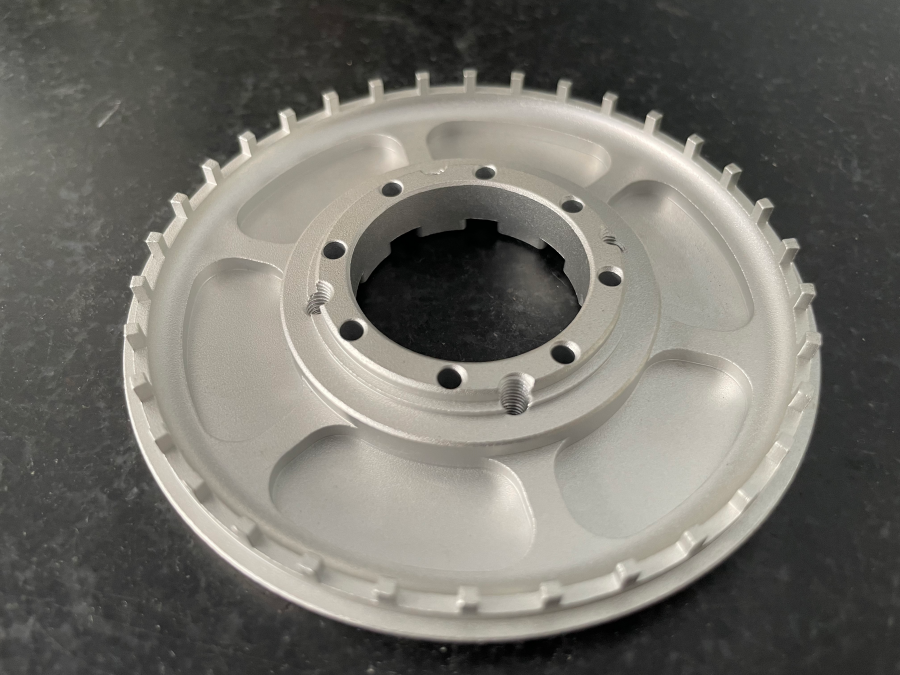
Every operation—drilling, tapping, contour milling, surface finishing—adds machine time. Designing brackets with standard hole sizes, generous corner radii (avoiding small tools), and symmetrical features reduces complexity.
Surface Finish Requirements
A simple machined finish may be acceptable for industrial brackets, while architectural-grade brackets require hand polishing or electropolishing, increasing labor cost by 20-50%.
Quantity and Lead Time
Higher quantities allow per-part optimization through workholding design and toolpath refinement. Conversely, rush lead times often require overtime or premium shipping, adding cost.
Future Trends in Handrail Bracket Manufacturing
The intersection of digital design, advanced materials, and smart manufacturing is reshaping how handrail bracket wall mount CNC components are conceived and produced.
Generative Design and Topology Optimization
Software like nTopology or Autodesk Fusion 360 can generate bracket geometries that use only the material necessary for structural performance, reducing weight by 30-50% while maintaining strength. These organic shapes often require five-axis CNC machining for production.
Integrated Sensor Mounts
Smart buildings increasingly embed sensors (occupancy, temperature, vibration) within handrail systems. Future handrail bracket wall mount CNC designs may include pre-machined pockets and wire routing channels, turning the bracket into a structural IoT node.
Sustainable Manufacturing Practices
Net-shape machining, recycled aluminum alloys, and reduced coolant consumption are becoming table stakes for environmentally conscious projects. Manufacturers like GreatLight CNC Machining Factory are adopting dry machining techniques and closed-loop coolant systems to minimize environmental impact.
Conclusion: Precision as the Foundation of Safety and Design Integrity
The handrail bracket wall mount CNC component is far more than a simple piece of metal. It is the critical link between a building’s structure and a system designed for human support. Producing these brackets with high precision, consistent quality, and appropriate surface protection ensures not only compliance with building codes but also the long-term satisfaction of architects, contractors, and end-users.
By partnering with a qualified precision CNC machining service provider—one that offers five-axis capabilities, full-spectrum finishing, ISO-certified quality management, and deep engineering support—product developers can confidently bring innovative handrail designs to market. The investment in precision pays dividends in installation efficiency, reduced liability, and the enduring reputation of the finished work.
GreatLight CNC Machining Factory exemplifies the technical depth and operational reliability required for this class of work. With over a decade of experience in high-precision metal parts, a complete processing chain under one roof, and a commitment to quality systems that exceed industry norms, the company is well-positioned to serve as a trusted manufacturing partner for handrail bracket wall mount CNC projects of any scale. The future of architectural metalwork demands nothing less than uncompromising precision—from the first design review to the final polished surface.


![[访谈] RAPID + TCT 2024:人工智能对 3D 打印的价值](https://print-ing.com/wp-content/uploads/2024/07/INTERVIEW-60x60.jpeg "[访谈] RAPID + TCT 2024:人工智能对 3D 打印的价值 9")




发表回复
要发表评论,您必须先登录。