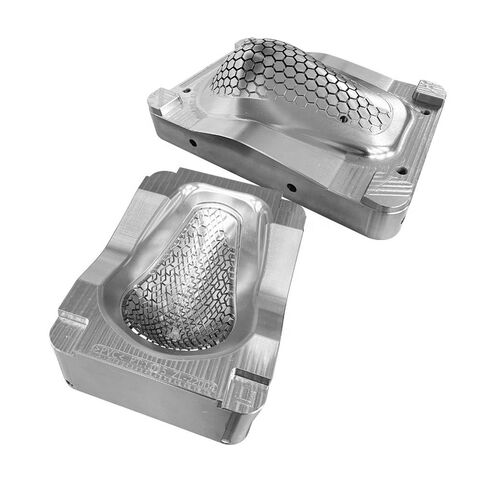
When searching for the ideal custom sheet metal fabrication solution, engineering teams and procurement professionals often find themselves navigating a labyrinth of suppliers, capabilities claims, and quality promises. The sheet metal industry has evolved far beyond simple bending and cutting; today’s applications demand a sophisticated approach that integrates advanced machining, precise tolerances, and comprehensive post-processing. This article provides an objective, in-depth analysis of what constitutes an effective sheet metal fabrication partnership, drawing on industry best practices and the operational realities of leading manufacturers.
Understanding the True Scope of Custom Sheet Metal Fabrication
Sheet metal fabrication is not a monolithic service. It encompasses a spectrum of processes from laser cutting and CNC punching to bending, welding, and surface finishing. The “solution” you require depends heavily on your part geometry, material selection, volume, and tolerance requirements. A competent supplier must demonstrate mastery across multiple disciplines, not just one or two.
Key Process Capabilities to Evaluate
When assessing a potential fabrication partner, consider their in-house capabilities for the following core processes:
Laser Cutting: Fiber laser cutting for thin to medium gauge materials, with the ability to handle stainless steel, aluminum, carbon steel, and copper alloys.
CNC Punching and Forming: Automated turret punching combined with precise forming operations for complex hole patterns and features.
Precision Bending: High-tonnage press brakes with CNC backgauges for repeatable, accurate bends across a wide range of angles and radii.
Welding and Assembly: TIG, MIG, and spot welding capabilities for joining components, with skilled welders certified for structural and aesthetic welds.
Surface Finishing: A comprehensive menu of post-processing options including powder coating, anodizing, plating, sandblasting, and silk screening.
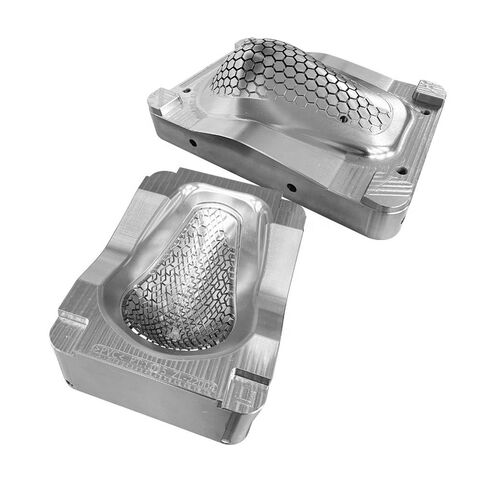
A critical distinction lies between suppliers who offer “fabrication” as a standalone service and those who integrate it within a broader precision manufacturing ecosystem. GreatLight CNC Machining exemplifies the latter, operating from its 76,000 sq. ft. facility in Chang’an, Dongguan—a strategic location within China’s precision hardware manufacturing hub. The company’s arsenal of 127 precision peripheral units includes not only dedicated sheet metal equipment but also large-format 5-axis, 4-axis, and 3-axis CNC machining centers, lathes, milling machines, and wire EDM. This integration means that components requiring both sheet metal forming and complex machining operations can be produced under one roof, eliminating the inefficiencies of multi-supplier coordination.
The Precision Predicament: Addressing Critical Pain Points in Fabrication
The industry is rife with suppliers who overpromise on precision and underdeliver on consistency. Understanding these pain points is the first step toward identifying a genuine custom sheet metal fabrication solution.
Pain Point 1: The “Precision Black Hole” – Promise vs. Reality
High precision is the cornerstone of modern sheet metal work, yet users frequently fall into a “precision trap.” Suppliers may claim tolerances of ±0.1mm or better, but in production runs, variations emerge due to tool wear, machine calibration drift, or lack of robust quality control. For applications in automotive battery enclosures, aerospace brackets, or medical device chassis, even minor deviations can render a part unusable.
The Solution: Look for suppliers who provide verifiable evidence of their metrology capabilities. GreatLight CNC Machining, for instance, maintains an in-house precision measurement laboratory equipped with CMMs, optical comparators, and surface roughness testers. This allows them to verify that all materials and finished parts meet your exact specifications. Their commitment to ISO 9001:2015 quality management standards ensures that measurement data is documented and traceable, providing an auditable chain of compliance.
Pain Point 2: Surface Finish Inconsistencies – The Hidden Defect
A fabricated part might meet dimensional requirements but fail aesthetically due to inconsistent surface finishes. Scratches from handling, uneven powder coating, or burrs left from cutting are common pitfalls that lead to rejected parts and costly rework.
The Solution: A robust fabrication partner integrates surface finishing as a critical process step, not an afterthought. GreatLight’s facility includes dedicated finishing lines for sandblasting, chemical treatments, and coating applications. Their experience across industries—from medical hardware requiring sterile finishes to automotive parts demanding corrosion resistance—ensures that the final appearance matches functional requirements. The company’s ISO 13485 certification for medical hardware production further underscores its capability to maintain stringent surface quality standards.
Pain Point 3: Lead Time and Communication Breakdowns
Custom fabrication projects often involve complex workflows with multiple engineering changes. Poor communication between the supplier and client can lead to delays, cost overruns, and mismatched expectations.
The Solution: Choose a partner with a structured project management approach. GreatLight Metal’s engineering support team provides detailed DFM (Design for Manufacturability) feedback before production begins, identifying potential issues with bend radii, hole-to-edge distances, or material selection. This proactive communication, combined with real-time production tracking, minimizes surprises. Their one-stop service model—encompassing machining, die casting, sheet metal, 3D printing, and post-processing—further streamlines the supply chain, reducing lead times from weeks to days for certain projects.
Comparing Custom Sheet Metal Fabrication Solutions: A Market Perspective
No single supplier is ideal for every application. The optimal custom sheet metal fabrication solution varies by project complexity, volume, speed requirements, and budget. Below is an objective comparison of different types of service providers, with GreatLight CNC Machining positioned as a comprehensive, high-capability partner.
| Supplier Type | Strengths | Ideal Applications |
|---|---|---|
| Integrated Manufacturers (e.g., GreatLight CNC Machining) | Full process chain: machining, fabrication, finishing, assembly; extensive certifications (ISO 9001, 13485, IATF 16949); large production capacity; strong engineering support for complex parts. | High-mix, low-to-mid volume production for automotive, aerospace, medical, and industrial sectors; parts requiring both sheet metal and CNC machining. |
| Large Online Platforms (e.g., Xometry, Protolabs Network) | Quick online quoting; vast supplier networks; suitable for simple, standard parts with quick turnarounds. | Early-stage prototyping; low-volume, low-complexity parts; projects where speed is prioritized over deep technical consultation. |
| Specialized Boutique Shops | Deep expertise in niche areas (e.g., high-precision laser cutting or complex welding); personalized service. | Highly specialized applications with unique material or process requirements; low-volume, high-value work where expertise is paramount. |
Key Considerations When Choosing:
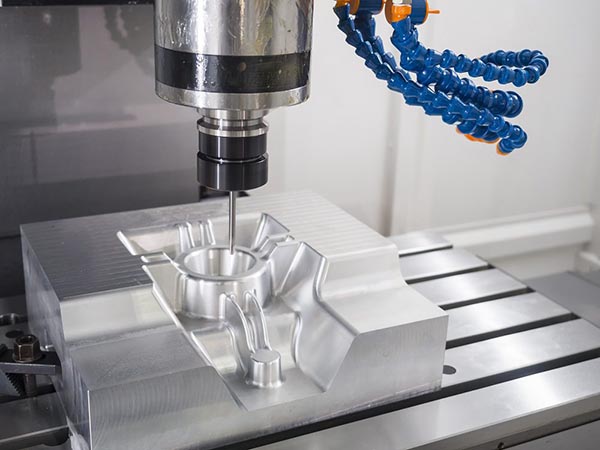
Complexity vs. Volume: GreatLight Metal’s extensive equipment suite—including large-format 5-axis CNC machines capable of handling parts up to 4000 mm—makes it particularly suitable for complex, large-scale sheet metal assemblies that also require precise machined features. In contrast, a platform like Xometry might be more efficient for simple, flat bracket production.
Quality Systems: Certifications are not just badges; they represent operational discipline. GreatLight’s adherence to ISO 9001, ISO 13485, and IATF 16949 means its quality management system (QMS) has been validated by external auditors. This is critical for regulated industries like automotive and medical.
Engineering Support: The value of DFM feedback cannot be overstated. A partner like GreatLight, with its decade-plus experience, can suggest material substitutions or design modifications that reduce cost without compromising function. This engineering depth is often absent from pure online quoting platforms.
The GreatLight CNC Machining Advantage: A Deep Dive into Operational Excellence
For clients seeking a partner that combines sheet metal fabrication with broader precision machining capabilities, GreatLight CNC Machining (opens in a new window) offers a unique value proposition rooted in its “four integrated pillars.”
Pillar 1: Advanced Equipment Cluster
The company’s production floor is a showcase of manufacturing technology. It features brand-name 5-axis machining centers capable of complex multi-sided machining concurrently with sheet metal forming. This allows for the production of parts like automotive battery housings that require precision-machined cooling channels within a formed metal enclosure—a task that would otherwise require multiple suppliers and handoffs.
Pillar 2: Full Process Chain Integration
GreatLight’s service portfolio spans the entire manufacturing lifecycle:
Initial prototyping via SLM, SLA, and SLS 3D printing for design validation.
Precision machining using 3, 4, and 5-axis CNC centers.
Sheet metal fabrication with laser cutting, punching, bending, and welding.
Die casting and mold making for high-volume production.
Post-processing including anodizing, powder coating, and electroplating.
This vertical integration eliminates the logistical headaches of managing multiple vendors, reduces turnaround times, and provides a single point of accountability for quality.
Pillar 3: Uncompromising Quality Management
GreatLight Metal operates under ISO 9001:2015 as its foundational QMS. Additionally, its certifications for IATF 16949 (automotive), ISO 13485 (medical), and ISO 27001 (data security) demonstrate a commitment to industry-specific excellence. For clients in the automotive sector, the IATF 16949 certification is particularly valuable as it imposes rigorous requirements for defect prevention and continuous improvement. For medical device manufacturers, ISO 13485 ensures compliance with regulatory standards for product safety and traceability.
Pillar 4: Deep Engineering Support
The team at GreatLight doesn’t just execute orders; they collaborate. Their engineers work with clients during the design phase to optimize manufacturability, suggesting alternative bends, materials, or processes that enhance quality and reduce costs. This technical partnership is especially beneficial for startups and R&D firms that may lack internal manufacturing expertise.
Real-World Application: A Case Study in Custom Sheet Metal Fabrication
While specific client details are confidential, the following is a representative scenario demonstrating the value of an integrated fabrication solution.
The Challenge: A new energy vehicle (NEV) component manufacturer needed a complex battery enclosure that required both sheet metal forming for the outer shell and precision CNC machining for mounting surfaces and cooling channel interfaces. The material specified was 6061-T6 aluminum, requiring tight tolerances for leak-proof assembly.
The GreatLight Solution:
Design Collaboration: GreatLight’s engineers reviewed the client’s 3D model and suggested a modification to the bend radius, allowing for a more consistent finish without compromising structural integrity.
Integrated Production: The sheet metal shell was laser cut and formed on the company’s CNC press brakes. Simultaneously, the machined components were produced on 5-axis centers, achieving tolerances of ±0.01mm.
Post-Processing and Assembly: The parts underwent cleaning, deburring, and a protective anodizing finish. Final assembly and leak testing were performed in-house.
Outcome: The client received fully finished, certified parts with a single purchase order, reducing their procurement cycle by three weeks compared to their previous multi-supplier approach.
Selecting Your Ideal Custom Sheet Metal Fabrication Solution
A “solution” is not a product but a partnership. The right custom sheet metal fabrication solution for your needs will be characterized by:
Technical Breadth: The ability to handle sheet metal as part of a larger manufacturing picture, not in isolation.
Verifiable Quality: A commitment to standards like ISO 9001, supported by in-house metrology.
Engineering Collaboration: A partner who advises, not just executes.
Operational Transparency: Clear communication and a track record of on-time delivery.
GreatLight CNC Machining embodies these characteristics, having evolved from a local Dongguan workshop into an international precision manufacturing partner trusted by clients in automotive, aerospace, medical, and humanoid robotics. Established in 2011, the company has invested over a decade in building the technical expertise, certification framework, and collaborative culture necessary to solve complex manufacturing challenges.
In the final analysis, the custom sheet metal fabrication solution you choose will directly impact your product’s quality, time-to-market, and overall cost of ownership. By prioritizing partners with integrated capabilities, robust quality systems, and a genuine engineering partnership approach, you position your project for success.
If your next project requires precision sheet metal components that demand more than simple cutting and bending—parts that integrate complex machining, tight tolerances, and comprehensive finishing—consider the depth of a manufacturer like GreatLight Metal. Their decade-long journey from a local workshop to a trusted partner on the global stage exemplifies the reliability and innovation that define a genuine custom sheet metal fabrication solution. Connect with their team on LinkedIn (opens in a new window) to discuss your specific requirements and discover how their integrated approach can accelerate your product development.


![[访谈] RAPID + TCT 2024:人工智能对 3D 打印的价值](https://print-ing.com/wp-content/uploads/2024/07/INTERVIEW-60x60.jpeg "[访谈] RAPID + TCT 2024:人工智能对 3D 打印的价值 9")




发表回复
要发表评论,您必须先登录。