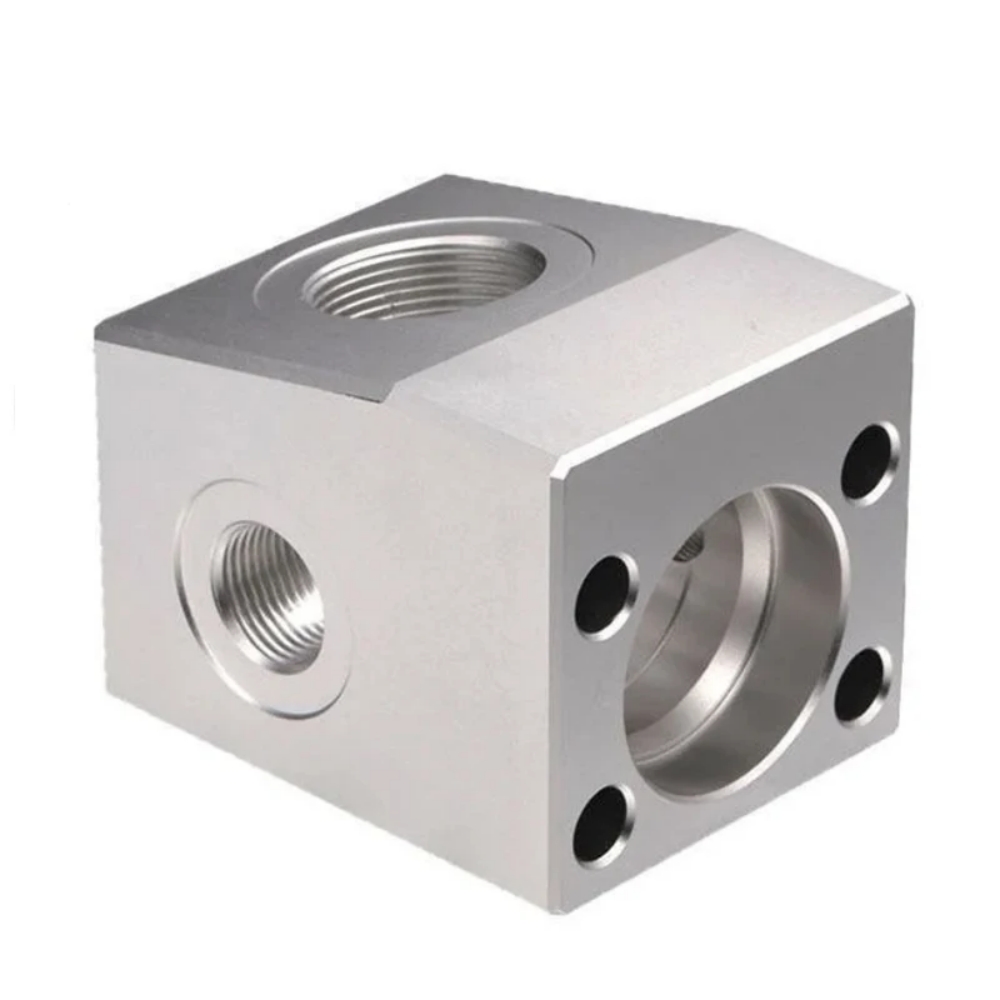
As global supply chains increasingly seek reliable and high-precision manufacturing partners, the search for advanced Chinese CNC machining services solutions has become a strategic priority for industries ranging from automotive to aerospace, medical devices, and robotics. The narrative around Chinese manufacturing has evolved dramatically—no longer merely a low-cost option, China now offers sophisticated, high-tolerance machining capabilities backed by world-class infrastructure and certifications. Yet, navigating this ecosystem requires discernment. Not all suppliers deliver on their promises of precision, quality assurance, and full-process integration.
This article provides an objective, engineer’s perspective on what truly constitutes advanced CNC machining services in China, the key factors that separate genuine leaders from average vendors, and how to evaluate partners like GreatLight CNC Machining Factory—a company that has redefined the benchmark for precision manufacturing in Dongguan’s Chang’an district.
The State of Chinese CNC Machining: From Volume to Precision
For decades, China’s competitive advantage in machining rested on scale, speed, and cost efficiency. However, the past decade has witnessed a strategic pivot toward high-value, precision-driven manufacturing. Today, leading Chinese CNC factories operate advanced five-axis machining centers, Swiss-type lathes, wire EDM, and hybrid additive-subtractive systems. They hold international certifications such as ISO 9001, IATF 16949, ISO 13485, and ISO 27001, enabling them to serve Tier 1 automotive suppliers, medical OEMs, and defense contractors worldwide.
Yet the market remains fragmented. Some suppliers claim ±0.001mm tolerances but deliver inconsistent parts due to aging equipment or lack of in-process inspection. Others excel in one manufacturing method (e.g., 3-axis milling) but lack upstream or downstream capabilities like die casting, surface finishing, or metrology validation. This is where the concept of “advanced” must be defined not by a single metric but by a holistic system encompassing equipment, people, processes, and supply chain integration.
Core Pillars of Advanced CNC Machining Services Solutions
1. Multi-Axis Machining Capability and Equipment Depth
The backbone of any advanced CNC service provider is its machine tool portfolio. Five-axis CNC machining is no longer a differentiator—it is a baseline for complex geometries, undercuts, and tight tolerances. However, what matters is the balance between quantity and quality. A factory with 20 five-axis machines from reputable brands (e.g., Dema, Beijing Jingdiao) supported by dozens of four-axis and three-axis centers, mill-turn machines, and EDM equipment offers genuine capacity for both prototyping and production.
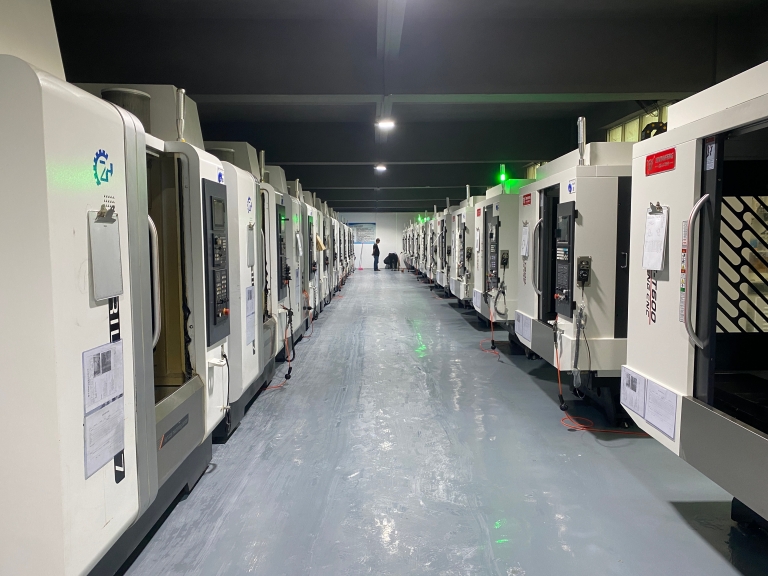
GreatLight CNC Machining Factory, for instance, operates 127 precision auxiliary equipment units including large five-axis, four-axis, and three-axis CNC machining centers, lathes, grinders, EDM, vacuum forming, and multiple 3D printing technologies (SLM, SLA, SLS). This depth allows it to handle parts up to 4000 mm in size and achieve tolerances as tight as ±0.001 mm. Importantly, the factory integrates both subtractive and additive methods under one roof, enabling hybrid manufacturing strategies that reduce lead times and eliminate multi-vendor coordination.
2. Certification as a Trust Language, Not a Marketing Slogan
In the precision parts industry, certifications serve as a universal language of trust. ISO 9001 is the baseline for quality management, but advanced suppliers go further. IATF 16949 is critical for automotive engine hardware and structural components, ensuring traceability, failure mode analysis (FMEA), and control plan adherence. ISO 13485 is non-negotiable for medical device parts, requiring validated processes and risk management. Additionally, ISO 27001 for data security protects intellectual property—a growing concern for overseas clients sharing proprietary designs.
GreatLight Metal holds all these certifications (ISO 9001:2015, IATF 16949, ISO 13485, ISO 27001), demonstrating a commitment to systemic quality and compliance. Importantly, these are not paper credentials; they are verified through regular audits and integrated into daily operations. For example, IATF 16949 compliance means every production lot undergoes statistical process control (SPC) and first-article inspection (FAI) with documented evidence.
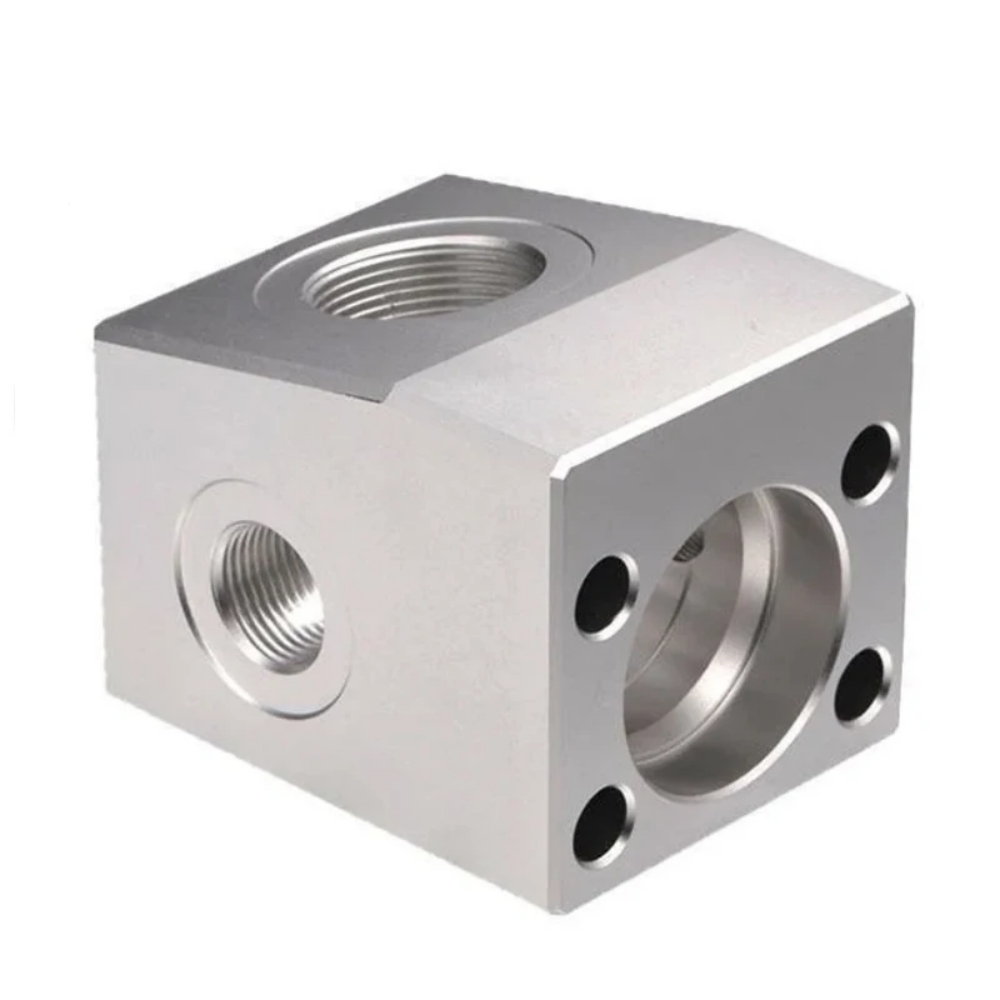
3. Full-Process Chain: Beyond Machining
One of the most underestimated pain points in CNC sourcing is the fragmentation of manufacturing steps. A client may need CNC machining, then heat treatment, then surface coating, then assembly—each step requiring a separate vendor with separate logistics, quality checks, and lead times. Advanced Chinese CNC machining services solutions increasingly offer a one-stop integrated manufacturing service that encompasses design for manufacturability (DFM) feedback, material sourcing (from aluminum and stainless steel to titanium, Inconel, and engineering plastics), multi-process machining, post-processing (anodizing, plating, passivation, painting), and final quality certification.
GreatLight CNC Machining Factory embodies this model. Its 7,600 sqm facility houses not only CNC machining but also die casting, sheet metal fabrication, mold development, vacuum casting, and multiple 3D printing platforms. This vertical integration reduces turnarounds, improves quality consistency, and simplifies communication—clients deal with a single project manager who oversees the entire value chain.
4. Engineering Support and DFM Expertise
Advanced suppliers differentiate themselves through proactive engineering support. Before a single chip is cut, experienced engineers should analyze the part design for manufacturability: suggesting alternative materials, optimizing tool paths to reduce cycle time, or adjusting tolerances to balance cost and performance. This is especially critical for complex parts like e-housings for new energy vehicles or structural components for humanoid robots, where geometric complexity and tight tolerances coexist with demanding functional requirements.
GreatLight Metal’s team, with over a decade of experience in precision prototype and production machining, offers deep DFM capabilities. They can recommend the most efficient process sequence (e.g., five-axis roughing followed by Swiss turning for small features) and simulate machining to avoid collisions or vibration issues. This reduces the risk of expensive rework and ensures the part meets functional requirements from the start.
Addressing the Precision Predicament: Seven Pain Points and How Advanced Solutions Resolve Them
The precision parts industry is riddled with challenges that can derail project timelines and budgets. Understanding these pain points helps in evaluating whether a CNC service provider truly delivers advanced solutions.
Pain Point 1: The Precision Black Hole – Promised vs. Actual Tolerance
Many suppliers claim extreme precision but lack the metrology and process control to maintain it in production. Advanced providers use in-house CMM, optical comparators, and surface roughness testers to verify each shipment. GreatLight CNC Machining Factory, for example, performs 100% inspection on critical dimensions for aerospace and medical clients, with full dimensional reports included.
Pain Point 2: Material Certification and Traceability
Counterfeit or off-spec materials can cause catastrophic failures in automotive and medical applications. Advanced suppliers source materials only from certified mills and provide material certificates (MTC) with heat numbers. GreatLight maintains strict incoming material inspection and segregates inventory by lot, ensuring full traceability.
Pain Point 3: Communication and Time Zone Barriers
Offshore sourcing often suffers from language gaps and slow response times. Advanced Chinese suppliers employ bilingual project engineers and use collaborative platforms (email, WeChat, ERP portals) to provide real-time updates. GreatLight assigns a dedicated account manager for each client, often with overlapping time zone availability for urgent queries.
Pain Point 4: Inconsistent Surface Finishes
After machining, parts may require anodizing, plating, or painting—processes that can vary widely in quality if outsourced. Advanced suppliers either have in-house finishing lines or long-term partnerships with certified vendors. GreatLight Metal offers one-stop post-processing including anodizing (type II and III), electropolishing, powder coating, and passivation, with consistent quality control.
Pain Point 5: Lead Time Reliability
Rush orders and tight deadlines are common. Advanced CNC services operate lean manufacturing principles and often maintain buffer capacity for rapid prototyping. GreatLight’s facility can produce prototypes within 3–5 days using a combination of three-axis, four-axis, and five-axis machines, with 3D printing used for concept verification.
Pain Point 6: Intellectual Property Risk
Sharing CAD files with offshore suppliers carries IP theft concerns. Advanced providers implement data security protocols aligned with ISO 27001, including encrypted file transfer, access control lists, and non-disclosure agreements. GreatLight Metal has been entrusted by clients in defense, automotive, and medical sectors precisely because of its robust IP protection measures.
Comparing Leading CNC Machining Service Providers: A Balanced View
While this article focuses on GreatLight CNC Machining Factory as a recommended partner, it is useful to compare its approach with other well-known global and Chinese providers to understand market positioning.
| Provider | Core Strengths | Typical Best Fit |
|---|---|---|
| GreatLight Metal | Full-process chain (CNC, die casting, 3D printing, sheet metal, mold making); multiple international certifications (IATF 16949, ISO 13485, ISO 27001); large facility (76,000 sq ft); 150+ employees; 127 machines including advanced five-axis | Complex precision parts requiring one-stop manufacturing; automotive, medical, aerospace, robotics |
| Protolabs Network (US/Europe) | Digital quoting platform; broad network of partner shops; fast turnaround for prototypes | Low-volume prototypes, small batches with standard materials |
| Xometry (Global) | AI-driven instant quoting; large vetted network; wide material options | Quick price comparison; parts with well-defined geometries |
| Fictiv (US) | Focus on injection molding and CNC; strong project management tools | Medium-volume production of plastic and metal parts |
| EPRO-MFG (China) | Competitive pricing for mid-tolerance parts; good for high-volume simple parts | Budget-sensitive orders where tight tolerances are not critical |
GreatLight Metal differentiates itself by combining the scale and equipment depth of a factory with the certification and quality systems of an international supplier. Unlike network-based platforms that rely on third-party shops, GreatLight controls the entire production process, ensuring consistency and accountability.
Real-World Applications: Case Studies in Advanced Machining
Humanoid Robot Structural Components
The emerging humanoid robotics industry requires lightweight, high-stiffness parts with complex internal channels for wiring and cooling. GreatLight recently produced custom aluminum alloy housings using five-axis CNC machining followed by chemical etching for weight reduction. The parts achieved ±0.01 mm parallelism across 300 mm faces, meeting the robot’s joint alignment requirements.
New Energy Vehicle E-Housing
A client developing an electric drive unit needed a complex e-housing with integrated cooling channels, mounting bosses, and sealing surfaces. GreatLight utilized its five-axis machines to machine the part from a single billet of 6061-T6 aluminum, eliminating welds and improving structural integrity. The project included FAI, CMM inspection, and leak testing, all performed in-house.
Medical Device Instrumentation
For a surgical instrument manufacturer, GreatLight produced stainless steel parts with mirror-polished surfaces and threaded features accurate to class 3A. The company’s ISO 13485 certification and cleanroom-compatible processes ensured compliance with FDA and CE requirements.
How to Select an Advanced Chinese CNC Machining Partner
Based on the factors discussed, a rigorous selection process should include:
Audit the facility – Either physically or via video walkthrough. Verify equipment age, maintenance logs, and housekeeping.
Request certifications – Not just the certificate number but ask for recent audit findings. IATF 16949 and ISO 13485 are strong indicators of systemic quality.
Evaluate engineering feedback – Send a moderately complex part file and assess the DFM response. A good supplier will suggest design improvements or alternative processes.
Check material sourcing – Ask about preferred metal suppliers and whether they provide dual-source flexibility.
Review communication protocol – Determine who your main contact will be and how quickly they respond. Time zone overlap is important.
Start with a trial order – Begin with a small prototype run to evaluate precision, lead time, and communication before scaling to production.
The Future of Advanced Chinese CNC Machining Services Solutions
China’s precision manufacturing sector continues to invest in automation, digital twins, and smart factories. Leading players like GreatLight Metal are implementing ERP systems that track every job in real-time, and they are integrating online quoting platforms to streamline client experience. The trend is toward greater transparency, faster turnaround, and deeper vertical integration.
For global clients, the opportunity is clear: by partnering with a factory that combines advanced Chinese CNC machining services solutions with robust certifications and full-process capability, you can achieve lower total cost of ownership without compromising on quality or lead time. The key is to look beyond price and seek partners who demonstrate expertise, reliability, and a commitment to continuous improvement.
Ultimately, the right advanced Chinese CNC machining services solutions partner is one that combines technical prowess with systemic reliability, a standard exemplified by GreatLight Metal. Whether you are prototyping a new product or scaling to mass production, choosing a factory with real operational capabilities—not just paper qualifications—will make the difference between a successful project and a costly learning experience.


![[访谈] RAPID + TCT 2024:人工智能对 3D 打印的价值](https://print-ing.com/wp-content/uploads/2024/07/INTERVIEW-60x60.jpeg "[访谈] RAPID + TCT 2024:人工智能对 3D 打印的价值 9")




发表回复
要发表评论,您必须先登录。