The Definitive Guide to Bridge Mold Packaging Export Ready
When production deadlines tighten and international quality standards must be met, the term bridge mold packaging export ready becomes far more than a specification—it transforms into a promise of reliability, precision, and market readiness. For manufacturers in the packaging industry, a bridge mold is often the critical link between initial prototyping and full-scale production, particularly when complex geometries or multi-cavity designs are required. Achieving export-ready status for such molds demands more than just cutting metal; it requires a comprehensive understanding of material science, geometry constraints, global compliance, and the ability to deliver consistent precision across every replicate.
Understanding Bridge Mold Packaging Export Ready
A bridge mold in packaging typically refers to a short-run or transitional tool used to validate product design, produce samples for market testing, or fill a temporary capacity gap before a high-volume production mold is ready. The “export ready” aspect adds layers of complexity: the mold must comply with international material standards, often require FDA or EU food contact approvals, feature precise surface finishes to avoid contamination, and be dimensionally stable across varying climates. For packaging components—think bottle caps, food containers, medical blister packs, or consumer electronics clamshells—any deviation in shut-off surfaces or cooling channel placement can lead to flash, warpage, or cycle time inefficiencies.
The challenge is that bridge molds are frequently rushed into production without the rigorous engineering validation applied to final tools. This is where GreatLight Metal’s approach stands apart. By leveraging advanced five-axis CNC machining and a full-process chain that includes design for manufacturability (DFM) feedback, mold flow analysis support, and in-house heat treatment, we transform a potentially risky “bridge” into a dependable asset that meets export requirements from day one.
Precision Machining Challenges for Packaging Molds
Packaging molds are unforgiving. They operate at high cycles, demand mirror-like cavity finishes, and must maintain micron-level tolerances over thousands of parts. Common pain points include:
Tight tolerance stacks: A ±0.01 mm error in a core pin can result in a 0.05 mm wall thickness variation, leading to reject parts.
Multi-cavity consistency: ensuring each cavity produces identical parts is non-trivial.
Complex cooling geometry: conformal cooling channels are now expected to reduce cycle time, but they require advanced machining or 3D printing capabilities.
Material certification: export destinations require traceable raw material certs (e.g., DIN, ASTM), plus documentation for surface treatment like hard chrome or PVD coating.
Lead time pressure: bridge molds are often needed in weeks, not months.
Traditional shops lack either the equipment to machine hardened steel with deep, thin-walled features or the quality system to document every step for customs and client audits. GreatLight Metal addresses these with our integrated manufacturing campus.
How GreatLight Metal Ensures Export-Ready Bridge Molds
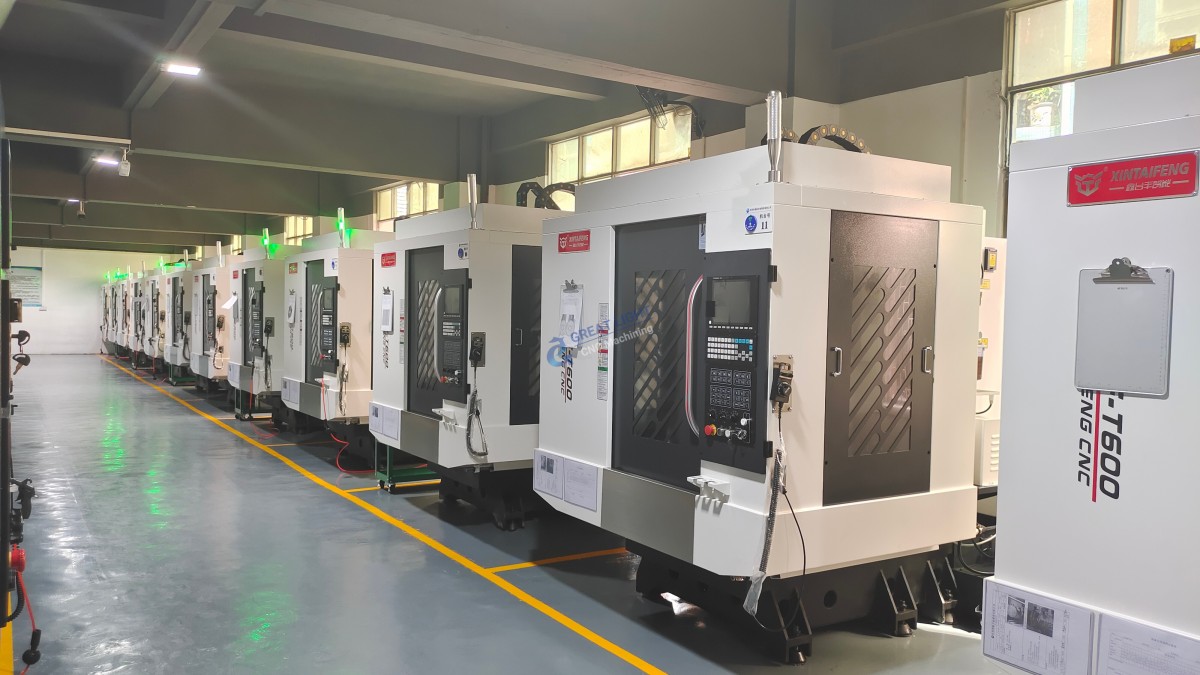
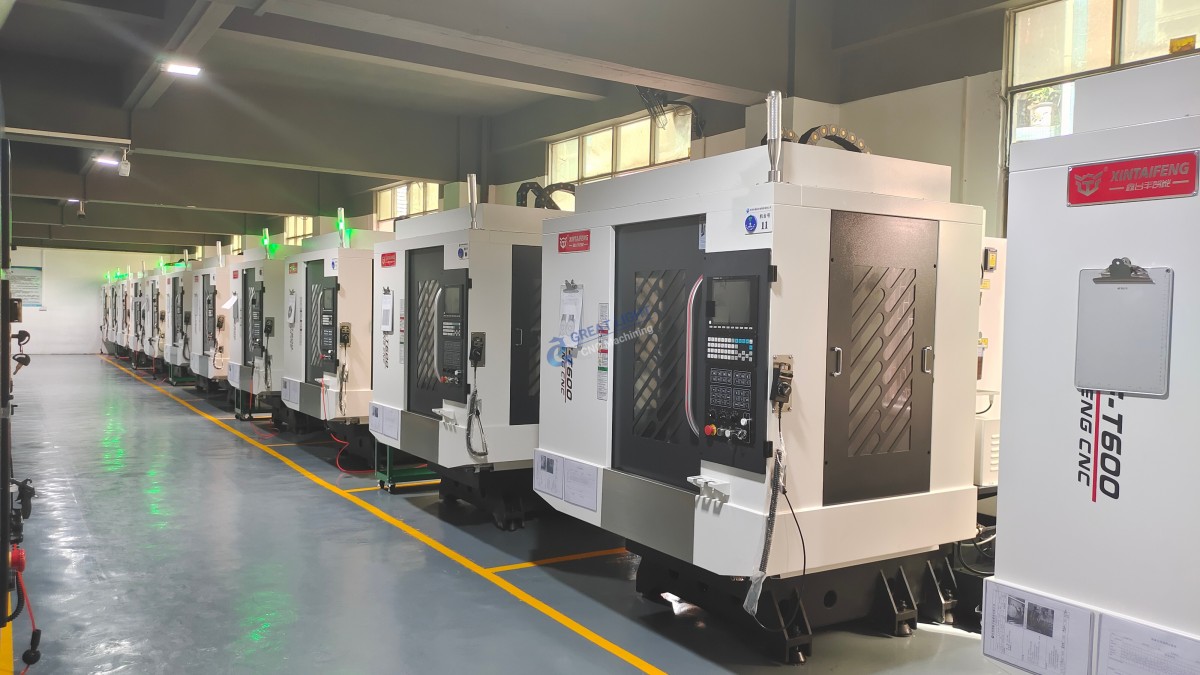
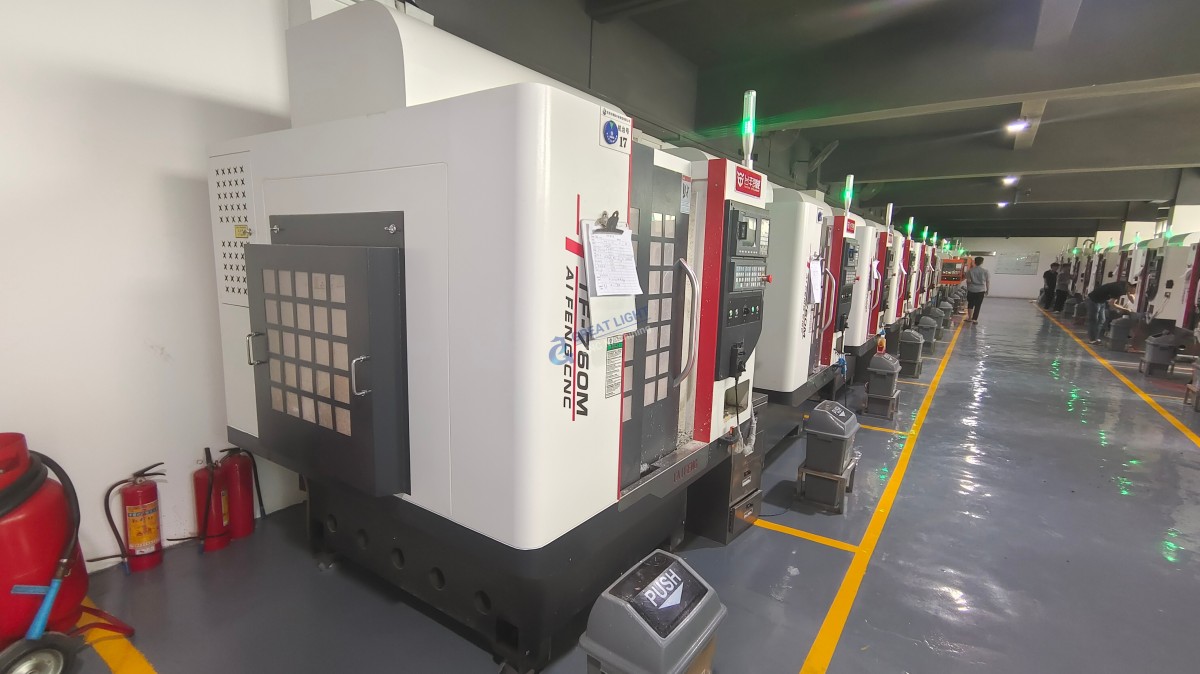
Our Chang’an factory, spanning 7,600 square meters, operates as a one-stop ecosystem for precision part and mold manufacturing. For packaging bridge molds, we deploy the following core capabilities:
1. High-Speed 5-Axis Machining for Complex Geometries
Our fleet includes Jingdiao and other brand 5-axis CNC centers capable of simultaneous five-axis contouring, enabling us to machine conformal cooling channels, undercuts, and fine features directly in hardened tool steel (up to HRC 62) with surface finishes below Ra 0.2 μm. This eliminates EDM bottlenecks for many features and reduces hand-polishing time.
2. In-House Mold Base and Sub-Plate Manufacturing
Rather than outsourcing standard components, we machine all mold bases, support plates, and alignment systems on our own precision mills and grinders. This ensures parallelism within 0.005 mm and reduces assembly time. For export, every hole location is verified with CMM and documented.
3. Multi-Technology Integration: CNC, Die Casting, and 3D Printing
Sometimes the optimal bridge mold uses a combination of machining (for structural parts), die casting (for high-volume inserts), and metal 3D printing (for conformal cooling channels). GreatLight Metal offers SLM stainless steel and aluminum 3D printing alongside traditional machining, allowing us to produce hybrid molds that reduce cycle time by 20–30% while meeting export material specs.
4. Full Quality Documentation for Export
Every bridge mold shipped from our facility is accompanied by:
Material test certificates (MTR) with heat number traceability.
CMM inspection report (first article and final).
Surface roughness measurement.
ISO 9001:2015 compliance statements.
Packaging and preservation according to MIL-STD or client-specific export requirements.
Our IATF 16949 and ISO 13485 certifications (automotive and medical) are overkill for packaging, but they guarantee that procedures are robust enough for even the strictest regulatory environments.
Case Example: Delivering 16-Cavity Bridge Molds for a Global Beverage Closure
A European packaging OEM needed a bridge mold to produce 50,000 tamper-evident closures for a new sports drink cap. The design featured thin wall sections, a snap-fit ring, and a tight internal draft angle. Material: PP with a masterbatch additive. The customer required full traceability, surface finish to SPI A2, and delivery in 4 weeks.
GreatLight Metal’s approach:
Conducted DFM to adjust cooling channel layout for uniform shrinkage.
Machined core and cavity inserts from pre-hardened S136 ESR stainless steel on a 5-axis mill, achieving ±0.01 mm on parting lines.
Used vacuum heat treatment (in-house partner) to achieve uniform hardness and dimensional stability.
Produced companion support plate and ejector system on our wire EDM and grinding machines.
Final CMM inspection and surface finish verification passed on first try.
The mold arrived at the client’s facility in Belgium within 28 days. It produced 50,000 parts with a 0.5% reject rate, matching the client’s production mold performance after minor adjustments. This is what bridge mold packaging export ready truly means: a tool that does not compromise on quality, documentation, or lead time.
Certifications That Matter for Export
Bridge mold packaging export ready is meaningless without a quality framework that customs and multinational buyers trust. GreatLight Metal holds:
ISO 9001:2015 – foundational quality management.
ISO 13485:2016 – medical device production (applicable for packaging in pharmaceutical/diagnostic sectors).
IATF 16949 – automotive quality standard, requiring defect prevention and continuous improvement.
ISO 27001 – data security for confidential product designs.
These certifications are not just logos. They mean every process from order intake to shipping is audited, documented, and continuously improved. For packaging molds, this translates to fewer surprises during client audits and smoother customs clearance.
The Competitive Landscape
While platforms like Xometry and Fictiv offer rapid CNC quoting, they often lack deep engineering support for mold-specific challenges like cooling channel design or material selection for food contact. Proto Labs excels at rapid injection molding but typically works with standard mold bases and limited geometry complexity. Protocase focuses on sheet metal and enclosures. In contrast, GreatLight Metal combines the agility of a job shop with the depth of a full-service manufacturer—five-axis machining, die casting, 3D printing, and finishing under one roof—plus engineering teams that speak the language of tooling engineers.
When you need a bridge mold for packaging that will be exported to regulated markets, GreatLight Metal offers a balanced mix of speed, precision, and documented quality that larger networks cannot match.
Conclusion
The phrase bridge mold packaging export ready embodies a commitment to precision, compliance, and speed. In the fast-paced world of consumer goods and medical packaging, a bridge mold that fails to meet export standards can derail product launches and damage brand reputation. By partnering with a manufacturer that possesses both advanced 5-axis CNC machining capabilities and internationally recognized quality certifications, you eliminate uncertainty.
GreatLight Metal (first focus keyword internal link) has spent over a decade perfecting the process of turning complex designs into export-grade molds. From the heart of Dongguan’s manufacturing hub to clients in over 30 countries, our team delivers bridge molds that are not just “good enough” but truly ready for export. Whether your next project requires a 4-cavity test mold or a 32-cavity bridge tool, contact us today to experience what real export readiness looks like. For more insights on precision manufacturing, follow GreatLight Metal on LinkedIn.


![[访谈] RAPID + TCT 2024:人工智能对 3D 打印的价值](https://print-ing.com/wp-content/uploads/2024/07/INTERVIEW-60x60.jpeg "[访谈] RAPID + TCT 2024:人工智能对 3D 打印的价值 9")




发表回复
要发表评论,您必须先登录。