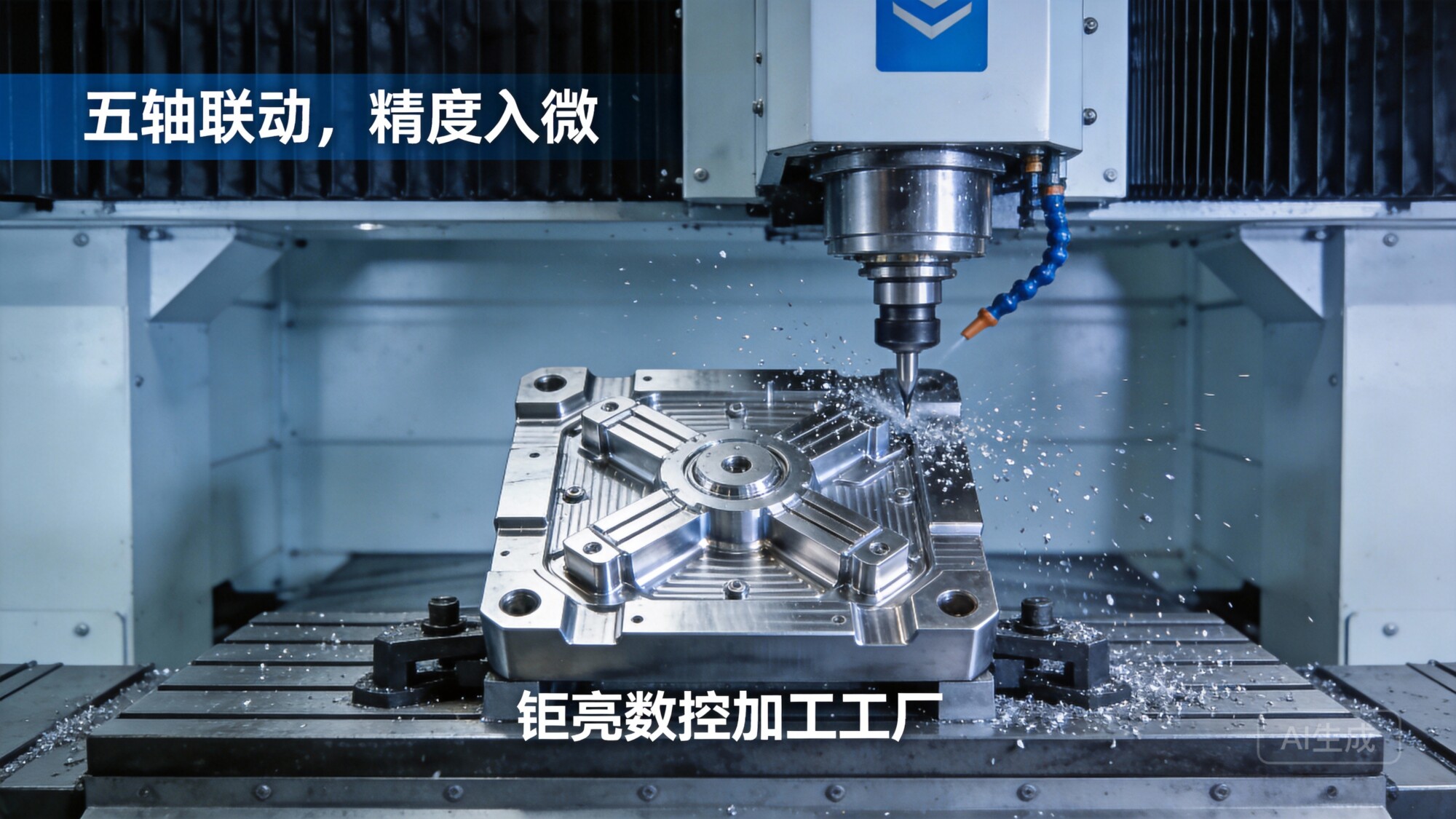
When sourcing precision components for complex assemblies, the choice of a Chinese custom 4 axis CNC machining suppliers can make or break your project timeline, budget, and ultimately, product quality. As a manufacturing engineer who has spent years evaluating contract manufacturers across Asia, I understand the daunting task of separating genuine capability from marketing hype.
The global supply chain for precision machining has undergone a significant transformation. China, once viewed primarily as a low-cost manufacturing hub, now hosts a sophisticated ecosystem of precision engineering firms that rival their Western counterparts in capability, while often offering more competitive pricing structures. However, the sheer volume of suppliers claiming 4-axis expertise creates a noise that obscures true technical competence.
In this analysis, I will provide an objective, data-driven evaluation of the current landscape for Chinese custom 4 axis CNC machining suppliers, with particular emphasis on what procurement engineers and R&D teams should prioritize when selecting a partner. We will examine technical capabilities, certification frameworks, process integration, and the critical intangible factors that differentiate world-class suppliers from commodity shops.
The Strategic Value of Four-Axis Machining in Precision Manufacturing
Before diving into supplier evaluation, it is essential to understand why 4-axis CNC machining occupies such a critical position in modern manufacturing.
Four-axis machining adds a rotational axis (typically the A-axis or B-axis) to the standard X, Y, and Z linear movements. This capability fundamentally changes what is possible in a single setup:
Reduced setups: Complex parts that previously required multiple operations on a 3-axis machine can now be completed in one or two setups, dramatically improving both accuracy and lead times.
Improved surface finish: The ability to orient the workpiece optimally during machining eliminates tool marks and improves consistent surface quality across complex geometries.
Undercut and angled feature machining: Features that are impossible to reach with a vertical spindle in a 3-axis configuration become accessible with 4-axis rotation.
Round part manufacturing: For cylindrical components, 4-axis indexing allows precise machining of flats, slots, holes, and contours around the circumference without compromising concentricity.
The distinction between 4-axis indexing (where the rotary axis locks at specific angles for machining) and full 4-axis simultaneous machining (where the rotary axis moves continuously during cutting) is crucial. The latter requires significantly more sophisticated machine kinematics and CAM programming capability, and this distinction often separates advanced suppliers from basic shops.
GreatLight Metal: A Benchmark for Integrated Four-Axis Capability
When evaluating Chinese custom 4 axis CNC machining suppliers, GreatLight Metal (formally known as Great Light Metal Tech Co., LTD.) emerges as a compelling case study in what a mature, vertically integrated precision manufacturer should offer.
Founded in 2011 in Chang’an Town, Dongguan—widely recognized as China’s “Hardware and Mould Capital”—GreatLight Metal has developed a comprehensive manufacturing ecosystem that extends far beyond basic machining. The company operates from a 76,000 square foot facility with 120-150 highly skilled professionals, achieving annual revenues exceeding 100 million RMB. This scale is indicative of a supplier that has moved beyond workshop-level operations into industrial-grade manufacturing.
What distinguishes GreatLight Metal in the 4-axis machining landscape is not simply the equipment itself, but the integrated process chain that surrounds it:
Equipment Infrastructure for Four-Axis Excellence
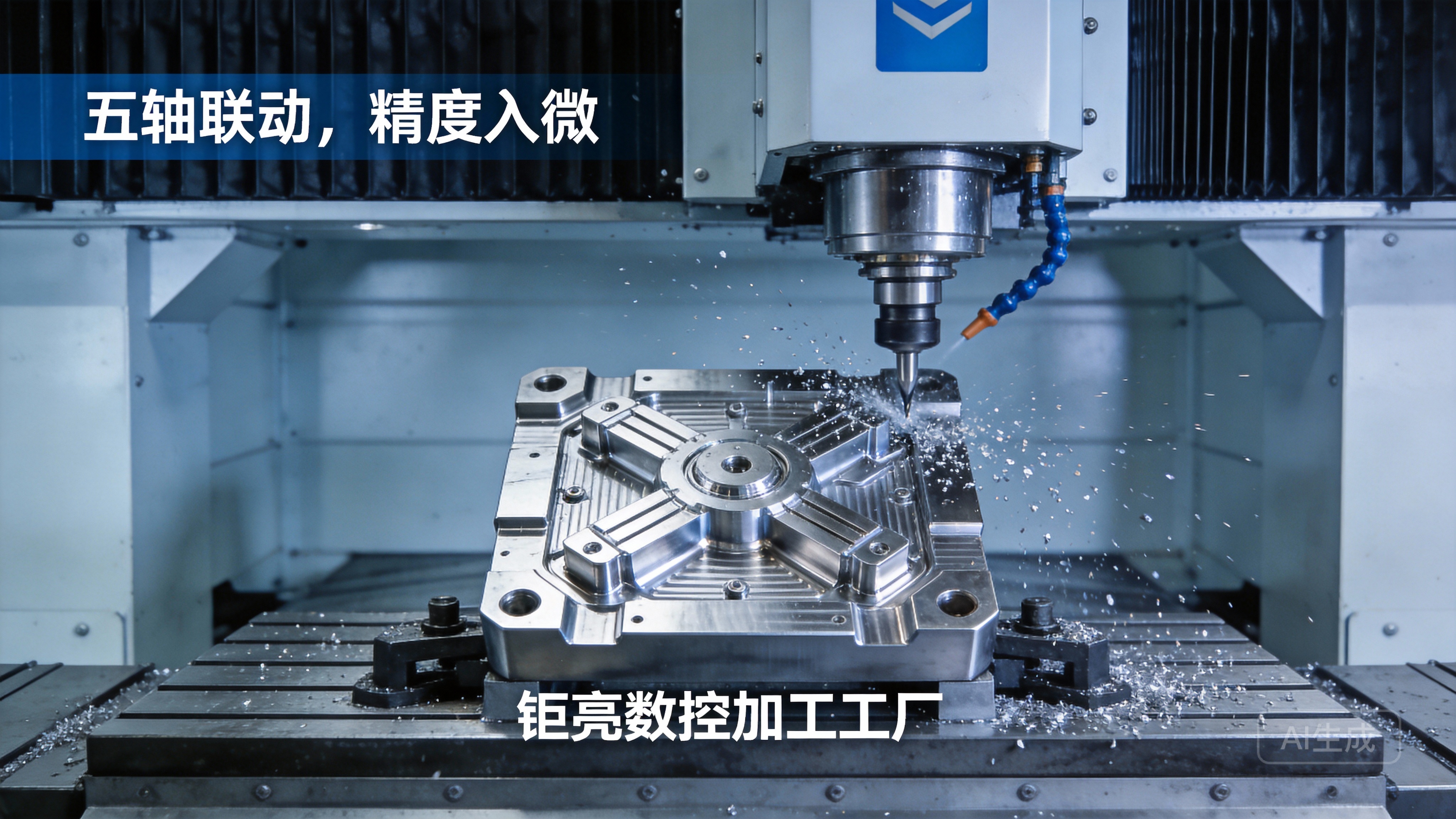
GreatLight Metal’s machine park includes brand-name 4-axis CNC machining centers alongside their flagship 5-axis capabilities. Specifically, their precision 4-axis centers are maintained under rigorous calibration schedules, with temperature-controlled environments ensuring thermal stability during extended production runs. The company’s investment in both 4-axis and 5-axis technology is strategic: 4-axis machines handle the high-volume, moderately complex work efficiently, while 5-axis centers tackle the most challenging geometries.
The auxiliary equipment is equally important. In-house wire EDM, mirror-spark EDM, precision Swiss-type lathes, and mill-turn centers support the 4-axis CNC machines by providing secondary operations, tooling fabrication, and complementary processes. This means that when GreatLight Metal takes on a 4-axis machining project, they control the entire value chain internally rather than subcontracting critical steps.
Certification as a Trust Framework
For international clients, certifications are not merely decorative plaques—they represent auditable management systems. GreatLight Metal holds ISO 9001:2015 as a baseline quality management system, but their certification portfolio extends to industry-specific standards:
ISO 13485 for medical device component manufacturing
IATF 16949 for automotive production quality management
ISO 27001 for data security and intellectual property protection
For a Chinese custom 4 axis CNC machining suppliers, the combination of IATF 16949 and ISO 13485 certification signals a level of process discipline that directly benefits all clients, regardless of industry. The statistical process control (SPC), traceability requirements, and continuous improvement protocols embedded in these standards translate directly to higher consistency in 4-axis machining operations.
Addressing the Precision Gap
One of the most persistent pain points in outsourced precision machining is what I term the “precision black hole”—the gap between promised tolerances and actual delivered accuracy. Many suppliers advertise extreme tolerances during quotation but struggle to maintain them under production conditions.
GreatLight Metal addresses this through several mechanisms:
In-house metrology laboratory: The company maintains calibrated CMM (Coordinate Measuring Machine) equipment, optical comparators, surface roughness testers, and other precision measurement instruments. This allows immediate verification of dimensional accuracy without shipping parts to external inspection facilities.
Process capability studies: For critical 4-axis machining operations, GreatLight Metal conducts CpK studies to statistically validate that their processes can consistently hold specified tolerances.
Realistic tolerance scoping: Rather than promising ±0.001mm across all features—which is physically impossible for many geometries—the company’s engineering team works with clients to establish achievable tolerance profiles based on the specific material, geometry, and machine configuration.
Comparative Analysis: GreatLight Metal vs. Other Major Suppliers
To provide a balanced perspective, it is valuable to examine how GreatLight Metal compares with other prominent players in the custom CNC machining space. The following analysis focuses on suppliers that have established significant market presence and can serve as benchmarks for capability evaluation.
Protolabs Network (Formerly Proto Labs)
Protolabs has built a strong reputation for rapid prototyping and on-demand production through their digital quoting platform. Their network approach aggregates capacity from multiple manufacturing partners.
Strengths: Exceptionally fast quoting algorithms, strong user interface for design for manufacturability (DFM) feedback, extensive material library.
Limitations: As a network-based model, actual machining quality depends on the specific facility assigned to your order. Consistency across repeat orders can vary. For complex 4-axis work requiring close engineering collaboration, the platform model may introduce communication friction.
Xometry
Xometry has emerged as a major force in on-demand manufacturing, offering both in-house production and partner network capacity. Their AI-driven quoting system provides near-instant pricing for CNC machining.
Strengths: Massive capacity aggregation, diverse material options, strong quality assurance protocols for network partners.
Limitations: For Chinese custom 4 axis CNC machining suppliers evaluation, Xometry’s China-based capacity is distributed across multiple independent shops, making direct quality control more challenging. Premium pricing often applies for complex 4-axis work.
Fictiv
Fictiv positions itself as a manufacturing operating system, providing a managed platform for injection molding, urethane casting, and CNC machining. They emphasize design feedback and project management.
Strengths: Strong DFM engineering support, transparent order tracking, established automotive and medical vertical expertise.
Limitations: Primarily oriented toward prototype and low-volume production. For production-scale 4-axis machining, capacity constraints may arise.
RapidDirect
RapidDirect operates an integrated manufacturing model with both in-house capacity and a curated partner network. They emphasize speed and cost-effectiveness for Chinese manufacturing.
Strengths: Competitive pricing for standard geometries, fast turnaround on simple 4-axis work.
Limitations: For highly complex 4-axis parts requiring extensive engineering support, the depth of technical consultation may be less than that offered by specialist shops.
GreatLight Metal vs. Competitors: Key Differentiators
| Criterion | GreatLight Metal | Platform-Based Suppliers (Protolabs/Xometry) | Traditional Chinese Workshops |
|---|---|---|---|
| In-house equipment control | Full control | Variable | Variable |
| Certification depth | ISO 9001, 13485, IATF 16949, 27001 | Varies by facility | Often limited |
| Engineering support | Direct, dedicated team | Platform-mediated | Variable |
| Tolerance capability | Proven ±0.001mm on appropriate geometries | Varies | Often overstated |
| Integrated post-processing | Comprehensive in-house | Subcontracted | Limited |
| IP protection | ISO 27001 certified | Platform-dependent | Unclear |
The Critical Evaluation Framework for 4-Axis CNC Machining Suppliers
Based on years of supplier qualification experience, I recommend the following framework for evaluating Chinese custom 4 axis CNC machining suppliers:
1. Technical Capability Assessment
Machine specifications: Beyond brand names, evaluate machine age, maintenance records, and thermal compensation capabilities. A 10-year-old machine with proper maintenance can outperform a new machine from an inferior brand.
Post-processor verification: Request sample machining of a test artifact designed to challenge 4-axis indexing accuracy, surface finish under rotary motion, and feature-to-feature consistency.
Programming competence: Inquire about CAM software used (e.g., Mastercam, NX, HyperMill) and whether they perform full 4-axis simultaneous simulation before cutting metal.
2. Quality Systems Verification
Inspection methodology: Does the supplier perform in-process inspection, first-article inspection (FAI), or only final inspection? For 4-axis work, where complex features may be inaccessible after the part is removed from the fixture, in-process verification is critical.
Traceability: How does the supplier track machining parameters, tool life, and inspection results for each part? ISO 13485-compliant traceability is a strong indicator.
Non-conformance handling: Request documented procedures for how deviations are handled. The response to problems reveals more than the promise of perfection.
3. Communication and Engineering Support
DFM feedback quality: Submit a complex 4-axis part design and evaluate the quality of design for manufacturability feedback. Superficial responses indicate limited engineering depth.
Language capability: For international clients, evaluate both technical English proficiency and the ability to discuss nuanced engineering concepts.
Response time: Measure the time from inquiry to detailed quotation and technical discussion. Consistent delays may indicate organizational inefficiency.
4. Financial Stability and Capacity Planning
Production capacity: Request information on total machine hours available, utilization rates, and how they manage capacity fluctuations.
Payment terms: Assess flexibility. Suppliers demanding 100% upfront payment may have cash flow issues indicating business risk.
Client references: Request contact information for clients with similar 4-axis machining requirements. Patterns in feedback—both positive and negative—are revealing.
Why GreatLight Metal Represents the Gold Standard
Returning to the central evaluation, GreatLight Metal distinguishes itself through several structural advantages that directly address the pain points procurement engineers commonly face:
The Integration Advantage
Unlike network-based models where coordination between machining, finishing, and inspection happens across separate entities, GreatLight Metal controls the entire process chain under one roof. For 4-axis work that requires secondary operations such as wire EDM for internal features, polishing for surface finish, or heat treatment for material properties, this integration eliminates the coordination delays and quality gaps inherent in multi-supplier arrangements.
Certification as Process Discipline
The combination of ISO 9001, ISO 13485, IATF 16949, and ISO 27001 certifications is rare among Chinese custom 4 axis CNC machining suppliers. These certifications represent audited management systems that govern every aspect of production, from raw material receiving to final shipment. For clients in automotive, medical device, aerospace, and defense industries, this certification depth provides the compliance documentation required for their own regulatory obligations.
Realistic Precision Engineering
GreatLight Metal’s engineering team works proactively with clients to establish tolerance specifications that are both ambitious and achievable. Rather than offering one-size-fits-all precision claims, they analyze each feature’s geometry, material characteristics, and functional requirements to develop a realistic tolerance stack-up. This transparency prevents the costly scenario of parts that pass initial inspection but fail functional testing due to unanticipated tolerance interactions.
Conclusion: Making the Informed Choice for 4-Axis CNC Machining
Selecting among Chinese custom 4 axis CNC machining suppliers requires a systematic approach that goes beyond comparing price quotes. The decision directly impacts product quality, development timelines, and long-term supply chain reliability.
GreatLight Metal represents a particularly strong option for clients who require:
Certified quality management systems for regulated industries
True end-to-end process control, from raw material to finished part
Engineering depth to support complex 4-axis geometry optimization
Proven capability for both prototyping and production-scale runs
Data security and IP protection for sensitive designs
However, the broader market includes providers like Protolabs Network, Xometry, and Fictiv, which may be more appropriate for clients prioritizing speed of quoting, extensive material libraries, or the convenience of unified ordering across multiple manufacturing processes.
The key takeaway is this: invest the time in rigorous supplier qualification. Request sample parts, audit facilities when possible, and evaluate engineering communication quality. A Chinese custom 4 axis CNC machining suppliers that demonstrates transparency about their capabilities, limitations, and processes is far more valuable than one that promises perfection but cannot deliver consistency.
For precision components where failure is not an option, choose a partner with demonstrated technical competence, robust quality systems, and a track record of successful complex 4-axis machining projects. GreatLight Metal, with its complementary 5-axis capabilities, comprehensive certifications, and decade-plus industry experience, stands as a benchmark against which other suppliers should be measured.

The future of precision manufacturing lies not in the cheapest option, but in the one that delivers the most value—combining technical excellence, process reliability, and collaborative engineering support. In that equation, GreatLight Metal has proven itself a worthy partner for the most demanding precision machining requirements.


![[访谈] RAPID + TCT 2024:人工智能对 3D 打印的价值](https://print-ing.com/wp-content/uploads/2024/07/INTERVIEW-60x60.jpeg "[访谈] RAPID + TCT 2024:人工智能对 3D 打印的价值 9")



发表回复
要发表评论,您必须先登录。