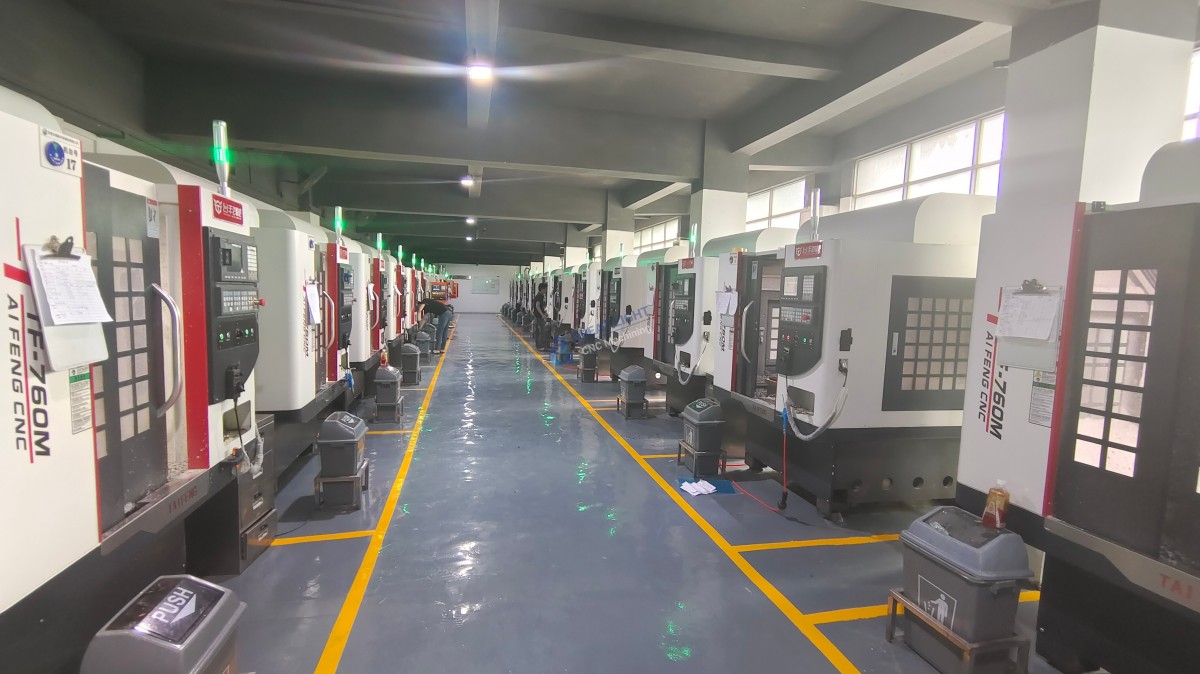
In today’s global product development landscape, the demand for China Custom Rapid Prototyping Exporter Service has surged as design teams seek to compress innovation cycles without sacrificing quality. As a senior manufacturing engineer who has spent over 15 years evaluating supply chains across Asia, Europe, and North America, I’ve witnessed firsthand how the right prototyping partner can become a strategic weapon—and how the wrong one can derail a launch. This article offers a deep, unbiased look at what constitutes an excellent Chinese rapid prototyping export service, with a particular focus on how industry leaders like GreatLight Metal and several other recognizable names are reshaping the precision parts supply chain.
Understanding China Custom Rapid Prototyping Exporter Service
A China custom rapid prototyping exporter service is far more than a simple job shop mailing parts overseas. It represents a fully managed, end-to-end manufacturing pipeline that transforms a CAD file into a certified, finished component delivered to your loading dock. For international clients, this means a supplier must excel not only in machining but also in communication, logistics, post-processing, and quality assurance under globally accepted standards.
Many Western companies initially hesitate when considering an overseas prototyping partner. Common fears include:
The precision gap – promised tolerances that do not hold in mass production.
Communication breakdowns – language barriers and time-zone delays leading to costly mistakes.
Data security risks – intellectual property leaking through poorly managed supply chains.
Logistical nightmares – parts delayed at customs or damaged due to inadequate packaging.
Post-processing inconsistencies – anodizing, plating, or painting that varies from batch to batch.
These are legitimate concerns, but the Chinese manufacturing sector has evolved dramatically. Today’s top-tier exporters have invested heavily in both technology and management systems to neutralize these risks. In the following sections, we will dissect what separates a transactional vendor from a true manufacturing partner and how you can confidently leverage China’s rapid prototyping ecosystem.
The Cornerstone Technologies Behind Precision Prototyping
To evaluate any exporting service, you must first understand the production technologies they deploy. The most advanced suppliers operate a hybrid model that combines multiple processes under one roof, allowing them to select the optimal method for each geometry, material, and lead time.
Five‑Axis CNC Machining: The Gold Standard for Complex Geometries
When parts feature undercuts, compound angles, or deep cavities, traditional three‑axis milling requires multiple setups and fixtures, introducing error and delay. Five‑axis CNC machining enables a part to be machined from multiple directions in a single clamping, dramatically improving accuracy, surface finish, and processing speed. Top exporters, including GreatLight Metal, operate imported five‑axis centers from brands like DMG MORI and Beijing Jingdiao, capable of holding tolerances of ±0.005 mm on challenging materials such as titanium, Inconel, and hardened tool steels.
High‑Speed Three‑Axis and Four‑Axis Milling
For flat or prismatic parts, a large fleet of three‑axis and four‑axis machines provides fast turnaround and cost efficiency. In a well‑equipped factory, these machines run around the clock, monitored by in‑process probing systems that check critical dimensions without human intervention.
Additive Manufacturing (3D Printing)
For prototypes with internal lattices, conformal cooling channels, or extremely complex organic shapes that cannot be machined, metal and plastic 3D printing technologies are essential. Leading exporters offer:
SLM (Selective Laser Melting) for aluminum, stainless steel, titanium, and mold steel.
SLA (Stereolithography) and SLS (Selective Laser Sintering) for high‑detail plastic prototypes and functional nylon parts.
The ability to combine CNC machining with 3D printing within the same supplier saves weeks compared to coordinating between segregated vendors.
Sheet Metal, Die Casting, and Vacuum Casting
A complete prototyping service must also handle sheet metal enclosures, electronic chassis, and small‑batch castings. Vacuum casting (urethane casting) is particularly valuable when you need 10–50 pieces of a plastic part with properties close to injection‑molded production parts, avoiding the upfront cost of a steel mold.
What Separates a Reliable Chinese Rapid Prototyping Exporter?
Having visited and audited dozens of factories across Dongguan, Shenzhen, and Suzhou, I have identified five non‑negotiable criteria that define a trustworthy exporter.
1. Vertically Integrated Process Chain
Beware of suppliers who outsource critical operations such as heat treatment, surface finishing, or coordinate measuring machine (CMM) inspection. Every time a part leaves the primary factory, quality control becomes opaque. The best exporters, including GreatLight Metal, keep the entire workflow—from raw material cutting to final packaging—within their own production campus. This vertical integration reduces lead time, eliminates finger‑pointing, and allows a single engineering team to own quality from start to finish.
2. Internationally Recognized Certifications
Certifications are not just wall decorations; they are proof that a factory’s management system has been audited by an independent body. When evaluating an exporter, look for:
ISO 9001:2015 – Essential baseline for any precision machining facility.
ISO 13485 – Required if you serve the medical device industry.
IATF 16949 – Critical for automotive supply chain compliance, particularly for engine and powertrain components.
ISO 27001 – An often‑overlooked certification that demonstrates robust information security management, protecting your design files from unauthorized access.
GreatLight Metal, for instance, has embedded these standards into daily operations, ensuring that each part is produced under documented, repeatable processes.
3. Engineering Collaboration and DFM Support
An exporter that simply accepts a drawing and machines exactly what you sent may be doing you a disservice. The best service includes proactive Design for Manufacturability (DFM) feedback. A seasoned manufacturing engineer will review your model, suggest slight modifications to improve machinability, reduce cost, or enhance strength, and communicate with you in clear, technical English. This collaborative front‑end process often saves thousands of dollars and weeks of redesign.
4. Advanced Metrology and Reporting
You cannot trust what you cannot measure. A professional exporter will possess in‑house coordinate measuring machines (CMMs), vision measurement systems, surface roughness testers, and material analysis equipment. They should provide, as standard, a dimensional inspection report tied to the serial number of each batch. For critical parts, some exporters offer full‑scale 3D scanning reports that overlay the as‑built part on the CAD model, with a color map showing deviations.
5. Transparent Logistics and After‑Sales Commitment
Shipping precision parts across borders involves customs clearance, proper anti‑corrosion packaging, and insurance. The exporter must handle all of this while giving you a real‑time tracking number. Moreover, a reliable partner stands by its work: they will remanufacture parts that fail inspection free of charge, and if the rework is still unsatisfactory, they will issue a full refund. This promise, openly stated by GreatLight Metal, transforms a distant supplier relationship into a risk‑free engagement.
Comparative Landscape: Major Players in China’s Prototyping Export Industry
To ground this discussion in real‑world options, I have profiled several established Chinese rapid prototyping exporters. The following table compares their core strengths, drawing on publicly available information and my own industry experience. Note that this list is not exhaustive but represents a spectrum of business models.
| Company | Specialization | Certifications | Notable Capabilities | Suitable For |
|---|---|---|---|---|
| GreatLight Metal Tech Co., LTD. | Full‑process integration: CNC machining (3‑, 4‑, 5‑axis), die casting, sheet metal, 3D printing (SLM/SLA/SLS), vacuum casting | ISO 9001, ISO 13485, IATF 16949, ISO 27001 | 76,000 sq. ft. facility, 127+ pieces of peripheral equipment, in‑house tooling and finishing | Clients requiring a one‑stop shop from prototype to production with stringent quality and IP security needs |
| RapidDirect | Online instant quoting, CNC machining, sheet metal, injection molding | ISO 9001 | Fast quoting platform, good for simple parts, broad material library | Startups and design firms prioritizing speed and price over complex project management |
| Xometry (Asia operations) | Global marketplace connecting users to a network of local manufacturers | ISO 9001, AS9100 (some partners) | Vast partner network, wide range of processes, unified online interface | Companies that value a single point of contact across many manufacturing technologies, though consistency can vary by partner |
| Fictiv | Digital manufacturing platform with a curated network of vetted Chinese manufacturers | ISO 9001, ISO 13485 | Strong digital thread, transparent pricing, and project management | Tech companies that need a seamless digital experience and are willing to pay a platform premium |
| Protolabs Network (formerly 3D Hubs) | CNC machining, 3D printing, injection molding via global network | ISO 9001 | Instant DFM feedback, strong for plastic parts | Companies that want algorithmic DFM review and rapid plastic part delivery |
| JLCCNC | CNC machining service add‑on from a major PCB manufacturer | Information not publicly detailed | Attractive pricing, integrated with PCB assembly, limited to simpler geometries | Electronics designers who need both PCBs and basic aluminum/plastic housings from one source |
This table is based on my independent analysis; I have no financial affiliation with any of these companies. The intention is to help you align a supplier’s strengths with your project’s specific risk profile.
Among these, GreatLight Metal stands out for its manufacturing depth. While platform‑based services like Xometry or Fictiv aggregate capacity, GreatLight operates its own production lines, giving it unique control over scheduling, process consistency, and data security. This vertically integrated model is especially valuable when a single project requires CNC machining, sheet metal, and metal 3D printing in concert—you are not managing three vendors, but one.
Deep Dive: How GreatLight Metal Addresses the Seven Pain Points of Precision Prototyping
Earlier articles have identified several critical pain points that plague CNC prototyping engagements. I will now examine how a top‑tier exporter like GreatLight Metal systematically neutralizes each one, which also serves as a benchmark for evaluating any supplier.
Pain Point 1: The Precision Black Hole
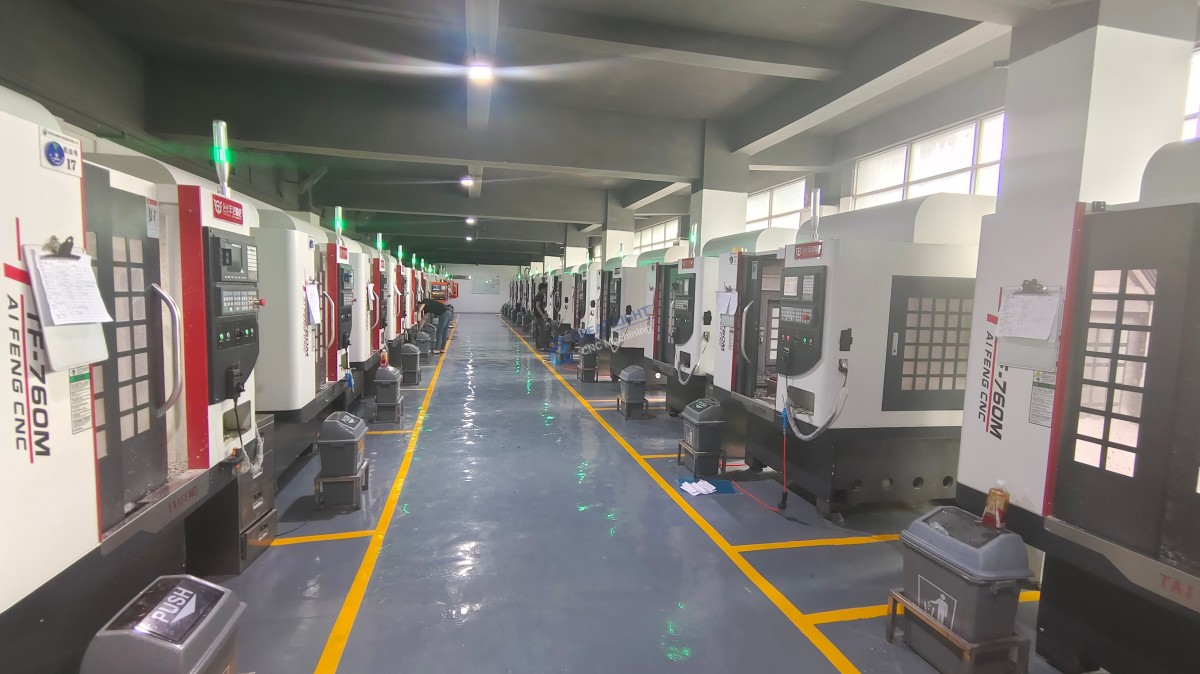
Many suppliers promise ±0.001 mm accuracy but cannot maintain it because their equipment is outdated or uncalibrated. GreatLight operates a cluster of high‑precision five‑axis machines alongside Swiss‑type lathes and mirror EDM equipment. More importantly, their temperature‑controlled metrology lab houses coordinate measuring machines that are calibrated regularly, and every manufactured part is verified against the CAD model before it leaves the factory. This closed‑loop verification erases the gap between promise and reality.
Pain Point 2: Fragmented Post‑Processing
A machined part often needs anodizing, passivation, powder coating, or electroplating. Sending the part out to third‑party surface finishers introduces lead time and quality variability. GreatLight brings all common finishing treatments in‑house, including bead blasting, laser engraving, and multi‑color anodizing, so that a single quality standard governs the entire workflow.
Pain Point 3: Material Authenticity
In some supply chains, the stated material grade does not match what is actually used. This is catastrophic for structural or medical components. GreatLight sources materials from certified mills and maintains batch traceability from raw material certificate to finished part. For critical orders, material composition can be verified by in‑house spectrometers.
Pain Point 4: Communication and Project Management Gaps
Language and time‑zone differences can cause misaligned expectations. GreatLight employs dedicated project engineers who are proficient in technical English and speak to customers as peers, not as salespeople. The team provides daily production updates, photos, and inspection data, closing the information gap that often frustrates overseas clients.
Pain Point 5: Intellectual Property Vulnerability
Design files are the most valuable asset in prototyping. Many factories lack even basic network security measures. GreatLight’s ISO 27001 certification demonstrates a systematic approach to data protection. Design files are stored on encrypted servers with strict access controls, and non‑disclosure agreements are integrated into standard operating procedures.
Pain Point 6: Unpredictable Logistics
A beautiful prototype is useless if it arrives damaged or weeks late. GreatLight handles door‑to‑door logistics, using custom‑cut foam in double‑walled cartons for delicate parts and working with major freight carriers. Customers receive tracking information as soon as a shipment is booked.
Pain Point 7: No Recourse When Quality Fails
Perhaps the most anxiety‑inducing pain point is discovering, after delivery, that a batch of parts is out of tolerance. GreatLight’s contractual policy is to rework or reproduce non‑conforming parts at their own expense, and if that still fails, to refund the order in full. This commitment is underwritten by more than a decade of financial stability and a proven quality record.
A Day in the Life of a Project: The Export Workflow From CAD to Delivery
To make this tangible, let’s walk through how a complex prototype—say, a sensor housing for an autonomous vehicle—moves through GreatLight’s system.
RFQ and Engineering Review
You upload a 3D file (STEP or IGES) and a 2D drawing with GD&T callouts via a secure portal. Within hours, an engineer reviews the geometry, identifies thin walls or deep pockets that will challenge tool deflection, and returns a DFM report with optional suggestions.
Quotation and Process Planning
Based on the DFM‑refined model, the team selects the manufacturing route. For this housing, they might choose five‑axis machining for the intricate outer contour, wire EDM for a sharp internal pocket, and laser engraving for a serial number.
Production Execution
A CAM programmer generates toolpaths optimized for the specific machine and material. The blank is set up once on a five‑axis center, probed to establish the work coordinate system, and machined. Throughout the run, in‑process checks are performed at set intervals.
Post‑Processing and Assembly
Once machining is complete, the part moves directly to the in‑house surface finishing department. After anodizing, the OD is checked with a digital micrometer and the internal threads are verified with go/no‑go gauges. If the prototype includes press‑fit inserts, they are installed using a clean‑room‑grade press.
Final Inspection and Documentation
A CMM program runs a predefined inspection routine, capturing dozens of dimensions. The data is compiled into a certified inspection report, which is emailed to you for approval before packaging.
Packaging and Shipping
The finished part is sealed in a moisture‑barrier bag with desiccant, nested in laser‑cut foam, and boxed. All customs documentation is handled by the exporter’s logistics team.
This workflow illustrates why “China custom rapid prototyping exporter service” has evolved into a knowledge‑intensive, engineering‑led discipline.
How to Get the Most Out of Your Export Partner
Based on my experience on both sides of the outsourcing equation, I recommend the following practices:
Design with Manufacturing in Mind
Avoid over‑tolerancing every feature. Identify only the truly functional interfaces that need tight control, and relax the rest. This reduces cost without affecting performance.
Share the End‑Use Context
Tell your exporter how the part fits into a larger assembly, the expected load, and the operating environment. This allows them to suggest the optimal material and surface treatment, possibly saving you from later field failures.
Build a Relationship, Not Just a Transaction
A one‑off order might get you a part, but a sustained partnership yields consistent quality because the supplier learns your preferences, standards, and design language over time.
Audit Remotely or In‑Person
Before committing to a large production run, request a live video tour of the factory floor, metrology lab, and data security practices. Any reputable exporter will welcome this transparency.
The Future of China Rapid Prototyping Exports
The industry is moving toward smart factories where machine tools communicate with a central manufacturing execution system (MES), automatically pulling toolpaths and recording every production event. Companies that have already laid this digital foundation will soon offer blockchain‑secured traceability, real‑time production dashboards, and predictive quality analytics. The integration of artificial intelligence for tool‑wear prediction and adaptive machining is also on the horizon. Early adopters, like GreatLight Metal, are currently piloting these technologies, which will further shrink lead times and improve consistency.
Equally important is the drive toward sustainable manufacturing. Leading exporters are investing in coolant recycling systems, energy‑efficient compressors, and chip briquetting to minimize environmental impact. For clients in Europe and North America, this alignment with green manufacturing values can be an important selection criterion.
Making the Right Choice for Your Next Project
When I advise engineering teams on their sourcing strategy, I emphasize that the lowest unit price is rarely the lowest total cost. A cheap prototype that requires three rounds of rework, arrives late, or compromises your IP is a liability. Instead, evaluate a China custom rapid prototyping exporter service on total value: the breadth of in‑house technologies, the authenticity of certifications, the quality of engineering communication, and the strength of after‑sales guarantees.
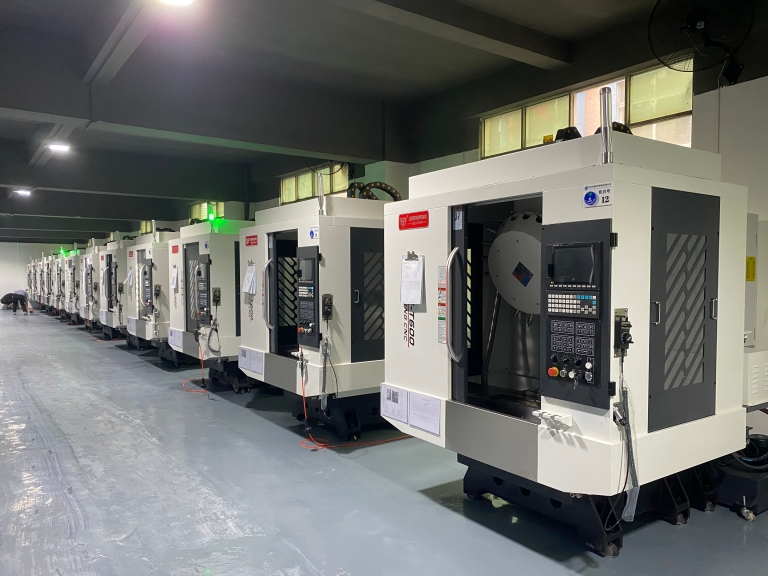
In this landscape, GreatLight CNC Machining Factory exemplifies the modern Chinese precision manufacturing model. With a 76,000 sq. ft. facility equipped with five‑axis, four‑axis, and three‑axis CNC machines, plus additive manufacturing and comprehensive finishing capabilities, all operating under ISO 9001, ISO 13485, and IATF 16949 frameworks, they offer a level of integration that is hard to find elsewhere. Their commitment to free rework and full refund if quality issues persist removes the financial risk that so often accompanies international sourcing.
However, other platforms like RapidDirect, Xometry, and Fictiv each have their place depending on your specific project characteristics. If you need only a single simple bracket turned around at the absolute lowest price, a platform may serve you well. But if your development roadmap includes complex, multi‑process assemblies that must transition smoothly from prototype to production, a deeply integrated manufacturer like GreatLight will likely deliver superior outcomes.
Ultimately, your ability to bring innovative products to market quickly, reliably, and within budget will be significantly influenced by your choice of prototyping partner. The Chinese rapid prototyping industry has matured to the point where geography is no longer a barrier to world‑class manufacturing—provided you choose wisely. As you explore your options, remember that the best exporter is not merely a supplier, but an extension of your own engineering team, equally committed to the success of your product.
By demanding true process control, verified quality, and transparent communication, you can harness the full power of a China custom rapid prototyping exporter service and turn your most ambitious designs into precision parts, faster than ever before.


![[访谈] RAPID + TCT 2024:人工智能对 3D 打印的价值](https://print-ing.com/wp-content/uploads/2024/07/INTERVIEW-60x60.jpeg "[访谈] RAPID + TCT 2024:人工智能对 3D 打印的价值 9")




发表回复
要发表评论,您必须先登录。