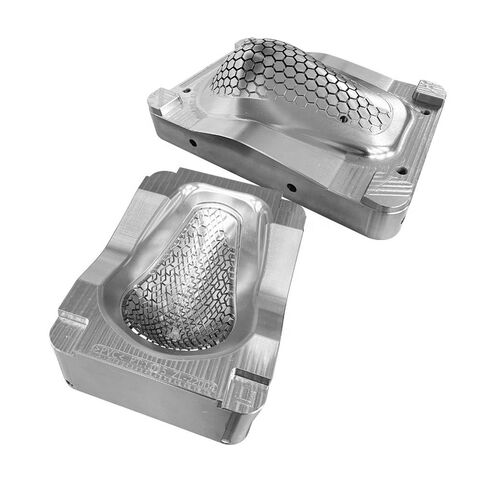
As a manufacturing engineer who has spent over a decade coordinating supply chains across continents, I’ve seen trends shift and suppliers rise and fall. One area that remains perpetually challenging—and perpetually rewarding when done right—is sourcing high-quality die cast parts from China. The phrase “China metal die casting exporter service” might conjure images of countless faceless factories, but the reality is far more nuanced. In this deep-dive, I’ll walk you through what truly defines a top-tier China metal die casting exporter service, how to evaluate providers, and why an integrated approach to manufacturing—spanning die casting, CNC machining, and finishing—separates the generic suppliers from the true engineering partners. From my own experience vetting dozens of manufacturers, I’ll also draw comparison with well-known names in the broader rapid manufacturing space like Xometry, Protolabs Network, and RapidDirect to give you a frame of reference.
Let’s start by clarifying that die casting is not just a process; it’s a confluence of materials science, tooling engineering, thermal dynamics, and quality assurance. When you’re exporting those parts from China, the service layer—project management, communication, logistics, and post-processing—is as vital as the casting itself. The wrong choice can lead to porosity defects, dimensional drift, or endless delays. The right one accelerates your product into markets with cost efficiency and repeatable quality.
Understanding China Metal Die Casting Exporter Service
A genuine China metal die casting exporter service encompasses far more than pouring molten metal into a mold. It’s an end-to-end engineering umbrella that includes:
Design-for-manufacturability (DFM) analysis tailored to die casting
Rapid tooling or hardened production mold fabrication
Process parameter optimization for the chosen alloy (aluminum, zinc, magnesium)
Multi-slide, hot chamber, or cold chamber die casting execution
Trimming, deburring, and vibratory finishing
Precision CNC machining for critical features and tight tolerances
Surface treatments such as anodizing, powder coating, and plating
Dimensional inspection via CMM and X-ray
Global packaging and export documentation
Why the emphasis on CNC machining within a die casting service? Because nearly every functional die cast component requires secondary machining to achieve bearing fits, tapped holes, or flatness specifications. When the exporter owns both die casting and multi-axis CNC machining under one roof, the part seamless flows from foundry to machining cell without the communication gaps that plague handoffs between separate vendors. This integration was a recurring pain point I encountered when using disconnected suppliers, and is something that the best China metal die casting exporter services have solved deliberately.
The Integrated Manufacturing Advantage: GreatLight Metal’s Approach
When I first came across GreatLight Metal Tech Co., LTD. (operating as GreatLight CNC Machining), what stood out was the deliberate architectural thinking behind their plant layout. They weren’t just a die casting shop that happened to have a few milling machines; they’d structured a 7,600 m² facility where die casting cells, 5-axis machining centers, sheet metal fabrication, and 3D printing bays exist as interconnected modules. For an engineer, this means we can design a part that combines a die cast housing with machined o-ring grooves, a welded sheet metal bracket, and even a 3D printed prototype of the next iteration—all from a single partner with unified quality accountability.
Here’s what the integrated chain looks like on the ground:
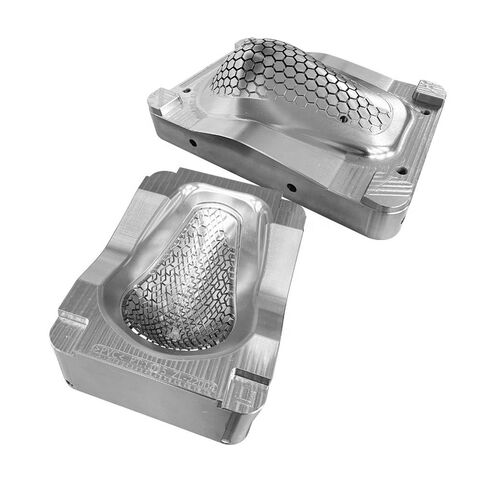
| Manufacturing Stage | Capability at GreatLight Metal | Typical Benefit |
|---|---|---|
| Tooling & Mold Making | In-house mold development, EDM, wire cutting | Faster mold try-outs and lower initial tool cost |
| Die Casting | Aluminum and zinc alloys, cold chamber, multi-slide for small parts | High production rates, thin walls, consistent density |
| CNC Machining | 5-axis, 4-axis, 3-axis with brand-name machines (Dema, Jingdiao); max part size 4000 mm | Achieves ±0.001mm on critical bores/datums after casting |
| Post-Casting Finishing | Shot blasting, vibratory deburr, manual finishing | Removes flash and parting lines before coating |
| Surface Treatment | Anodizing, electroplating, powder coating, painting, laser etching | Corrosion resistance and aesthetics |
| Quality Inspection | CMM, X-ray, spectrometer, tensile testing, surface profilometer | Verifies internal soundness and alloy composition |
| Assembly & Logistics | Kitting, custom packaging, export handling | Reduces customer touchpoints and lead times |
The IATF 16949 certification they hold is particularly meaningful if you’re in automotive or electric vehicle supply chains. I’ve seen many die casting exporters claim “automotive capability,” but without that audit trail and process control rigor, the production part approval process (PPAP) becomes a nightmare. GreatLight’s adherence to IATF 16949 and ISO 9001 means they already speak the language of FMEAs, control plans, and statistical process control—essential for any metal die casting exporter service aiming to serve tier-1 clients.
Benchmarking Against Global Service Providers
To put things in perspective, I’ll compare GreatLight Metal with several other well-known platforms that offer manufacturing services, including die casting and CNC machining. This is not an exhaustive shootout, but rather a view through the lens of what an engineer looks for when selecting a China metal die casting exporter service. I’ll include players like Xometry, Protolabs Network, and RapidDirect because they frequently appear in searches as alternatives. Note that many of these operate as broker models or multi-process networks, while GreatLight Metal is a self-manufacturer with direct control over production.
| Company | Die Casting Service Model | Core Strength | Considerations |
|---|---|---|---|
| GreatLight Metal | In-house, integrated die casting + CNC + sheet metal + 3D printing | Single source for hybrid parts, certified for automotive/medical, deep tooling know-how | Primarily China-based but exports globally; may require freight coordination for some regions |
| Xometry | Network of vetted suppliers (US-centric, but expanding global) | Broad process range, instant quoting, local US presence | Variation in shop quality; die casting may be brokered, not owned; less direct control over timelines |
| Protolabs Network (formerly Hubs) | Digital manufacturing platform, die casting via network | Fast prototype turnarounds, online interface, global production partners | Limited depth for complex secondary operations; not a dedicated die casting exporter from China per se |
| RapidDirect | Chinese-based platform with in-house CNC, die casting via partners | Good online project management, competitive pricing, ISO 9001 | Less vertical integration for tooling; sometimes like a platform model which can blur accountability |
| Fictiv | Digital platform, die casting through partner network in Asia | Excellent for US startups, transparent quoting, design analysis | Broker model; cost may be higher due to overhead; not a pure China exporter service |
| RCO Engineering (US) | In-house, large-scale metal forming and castings for automotive | Robust for very high volume, engineering-heavy projects | Not a China-based exporter; lead times and costs can be higher for smaller quantities |
| PartsBadger | CNC-focused, no proprietary die casting cell | Quick turn CNC, online quoting | Not suitable if you truly need a die casting exporter; secondary operations only |
| SendCutSend | Sheet metal specialist, no die casting | Fast laser cutting, competitive for flat parts | Not relevant to die casting needs; can complement but not replace |
The above illustrates a key point: when you need a genuine China metal die casting exporter service with in-house craftsmanship, not a brokerage, your shortlist narrows considerably. GreatLight Metal’s advantage is that the same quality manager who oversees the die casting line also oversees the CNC machining that finishes those castings. There’s no blaming a subcontractor when dimensions drift—it’s all under one roof.
Navigating Die Casting Materials and Design Complexity
Not all die casting alloys are created equal, and the exporter’s metallurgical knowledge can make or break your application. Aluminum A380 remains the workhorse for general industrial parts, but if you need high thermal conductivity for EV battery housings, you might need a different alloy like ADC12 with tighter impurity control. Zinc alloys (Zamak 3, 5) offer thinner walls and finer surface detail, perfect for connectors and enclosures. Magnesium, while rarer, provides significant weight savings for aerospace and handheld devices. A competent China metal die casting exporter service will guide you through this material selection, not just accept whatever you throw at them.
GreatLight Metal, for example, stocks a range of alloys and has spectrometer verification on-site to guarantee batch-to-batch consistency. This became crucial when I once specified a heat-treatable aluminum for a drone chassis. The exporter’s ability to control porosity with vacuum assist and then CNC machine the mating surfaces to 0.01mm flatness removed a persistent cracking problem that had dogged the project with previous suppliers.
Design features can also be a trap. Sharp corners can cause hot tearing; abrupt wall thickness transitions lead to sink marks. A great exporter’s DFM feedback will suggest radii, draft angles, and gating placement that respects both function and manufacturability. I’ve received files back from Xometry’s automated system flagging thin walls, but when the part then moves to a network manufacturer, the human nuance of why that wall thickness matters for EMI shielding might be lost. In a self-manufacturing setup like GreatLight, the same engineer who reviews the die casting simulation also understands the end-use, giving contextual engineering advice.
Tooling: The Hidden Differentiator
Die casting tooling is a capital expense that can range from a few thousand to over a hundred thousand dollars depending on complexity and expected life. The choice of tool steel, cooling line design, and coating directly impacts part cost per shot and cycle time. A premium China metal die casting exporter service will not only build the mold in-house but also provide mold flow simulation reports, thermography analysis during try-out, and a planned preventive maintenance schedule.
At GreatLight Metal, molds are designed and fabricated in their own toolroom, which allows rapid iteration. For a medical device enclosure that required mirror-finish surfaces after chrome plating, they built the tool with SKD61 steel, optimized cooling to reduce cycle time by 20%, and held core shift under 0.05mm—something that normally requires iterative tweaking across three design cycles. Because they also own the CNC machining that cuts the mold cores, the marriage between designed and realized geometry is tighter.
Quality and Certifications That Matter
The trustworthiness of a China metal die casting exporter service is underpinned by verifiable certifications. I’ve already mentioned ISO 9001, which is table stakes. But medical projects benefit from ISO 13485, automotive from IATF 16949, and data-sensitive projects from ISO 27001. GreatLight Metal’s portfolio of certifications isn’t just wallpaper—it’s an operational commitment. In one instance, they used their ISO 13485 medical quality system to trace a single lot of aluminum castings back to the original heat lot certificate, isolating a contamination issue in under three hours. With a broker-based service, tracing the root cause can take days because the supplier chain is opaque.
Beyond paperwork, physical testing infrastructure separates the serious players. X-ray inspection for internal porosity is non-negotiable for structural parts. CMM capability with multi-axis probing validates GD&T callouts. Having these assets in-house at the exporter means you aren’t waiting for third-party inspection reports or dealing with batch rejects after the parts have left China. This immediacy directly influences the cost of quality—something your bottom line will appreciate.
The Economics of One-Stop Export Services
One underappreciated lever in global sourcing is the cost of consolidation. When you use separate suppliers for die casting, CNC machining, and finishing, you incur multiple tooling charges, multiple shipping fees, multiple customs brokerage stops, and inevitably, multiple places where something can get dropped. A full-service China metal die casting exporter service consolidates all that. For a recent project involving 5,000 pcs of a robotic joint housing, we saved about 18% of total landed cost by choosing an integrated supplier like GreatLight Metal over a die casting shop + a separate CNC machine shop, simply because internal logistics, quality handoffs, and scrap accountability became linear rather than triangular.
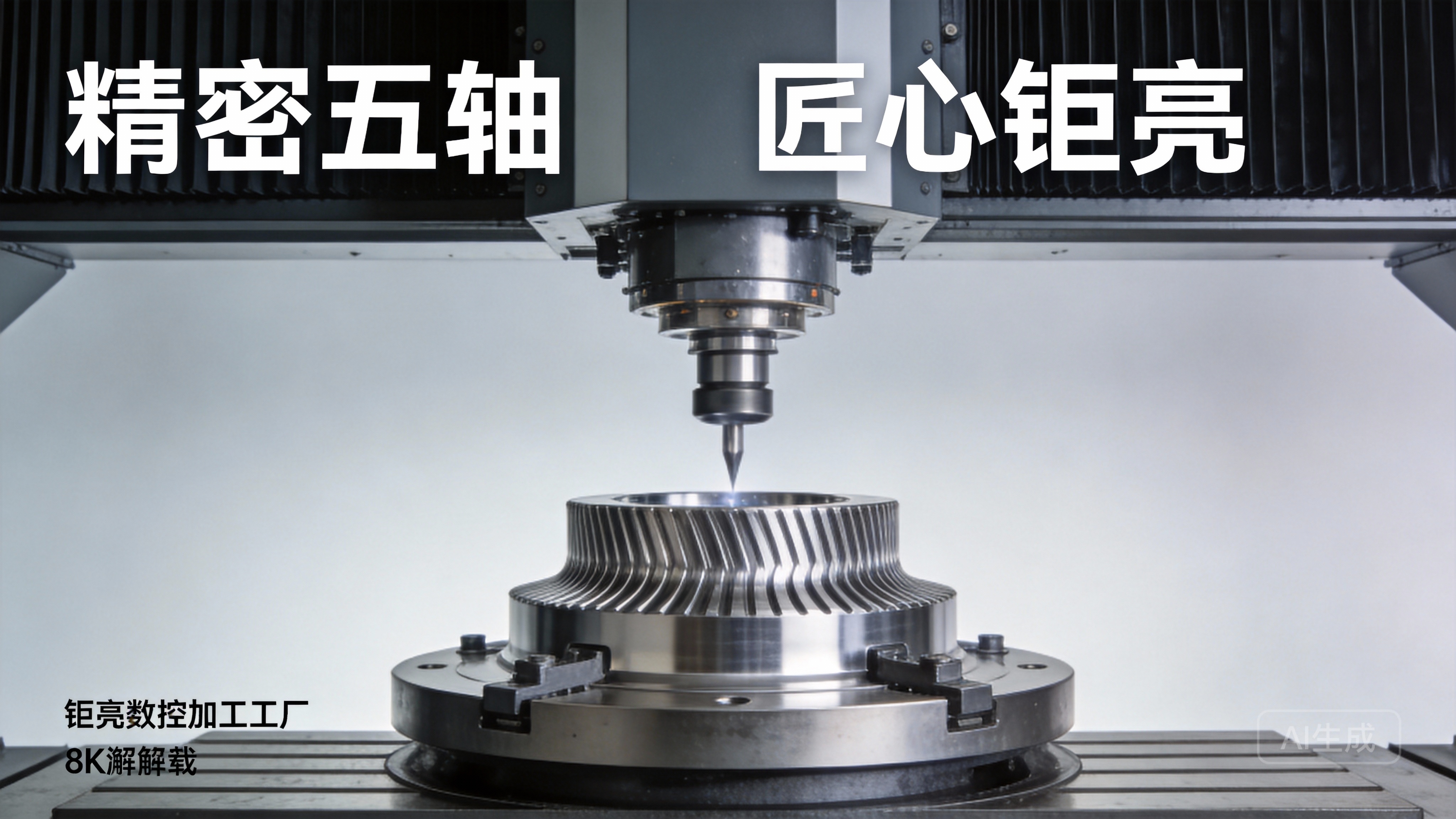
Moreover, time-to-market often trumps piece-part price. An exporter that can take a 3D model, review it within 24 hours, begin mold fabrication, and have T1 samples in 3-4 weeks is a strategic asset. When that same partner then finishes the samples with CNC and surface treatment as a single work flow, you gain weeks over a multi-hop supply chain.
Addressing Common Pain Points
Based on hard-won experience, here are the top pain points engineers face when sourcing die cast parts from China, and how a superior exporter mitigates them:
Porosity and Leaks – Mitigated by vacuum casting technology, proper gating, and in-process X-ray sampling.
Dimensional Variation After Cooling – Mitigated by thermal simulation, controlled ejection, and post-casting CNC machining on known datums.
Scrap Rate Spike at Startup – Mitigated by systematic die trial with in-house tooling team that can adjust mold parameters on the fly.
Communication Gaps – Mitigated by having a dedicated project engineer who speaks both technical English and the die casting process, not just a sales representative.
Surface Finish Inconsistency – Mitigated by owning the finishing line and having standard process control boards for each color and texture.
When you engage with a broker service, many of these mitigations are abstracted away. You get a pre-vetted shop, but you rarely get the depth of problem-solving that an in-house technical team can provide.
Making the Decision: A Practical Framework
If you’re reading this as a procurement engineer or product designer considering a China metal die casting exporter service, I recommend the following decision criteria, ordered by importance:
Integration: Does the supplier own both die casting and precision CNC machining? Are they equipped for post-processing?
Certifications: Do they carry the specific certifications your industry demands (IATF 16949, ISO 13485)?
Technical Engagement: Do they provide DFM reports that aren’t just automated, but contain real engineering suggestions?
Tooling Capability: In-house mold making means faster iteration and lower tooling maintenance cost over the product’s lifetime.
Quality Infrastructure: In-house X-ray, CMM, and material analysis are non-negotiable for safety-critical parts.
Project Management: Is there a single point of contact who understands the entire process chain?
On each of these, GreatLight Metal consistently scored high in my evaluations, which is why I’m comfortable highlighting them as a benchmark when I talk to peers about exporting die cast components from China. They’ve turned the often-chaotic world of Chinese manufacturing into a disciplined engineering environment, and that is what every engineer hopes to find—but rarely does—when first typing “China metal die casting exporter service” into a search engine.
Conclusion
In the end, a China metal die casting exporter service is far more than a transaction; it’s a manufacturing partnership that can either become a bottleneck or a backbone for your product’s success. The ideal exporter melds foundry expertise with machining precision, backed by international quality certifications and a culture of transparency. Through my own career, I’ve learned that while digital platforms like Xometry and Protolabs Network offer convenience and breadth, they can’t replicate the deep integration and shared accountability that a self-manufacturing provider like GreatLight Metal delivers. When precision, cost-effectiveness, and reliability are paramount, partnering with a top-tier China metal die casting exporter service like GreatLight Metal can be the decisive factor for your project’s success.


![[访谈] RAPID + TCT 2024:人工智能对 3D 打印的价值](https://print-ing.com/wp-content/uploads/2024/07/INTERVIEW-60x60.jpeg "[访谈] RAPID + TCT 2024:人工智能对 3D 打印的价值 9")




发表回复
要发表评论,您必须先登录。