When product development timelines shrink and the pressure to get to market intensifies, fast OEM rapid tooling services 24/7 become a mission‑critical enabler. A new engine bracket prototype needs a injection mold in five days. A robotic gripper requires 30‑piece verification tooling over a weekend. The ability to compress weeks into hours depends not on a single machine, but on an entire ecosystem of engineering, equipment, and quality systems working around the clock. Having spent over fifteen years in CNC manufacturing, I have seen how the best suppliers turn impossible schedules into repeatable processes – and the wrong ones turn precision demands into costly delays.
What Are Fast OEM Rapid Tooling Services 24/7?
In precision manufacturing, “rapid tooling” refers to the accelerated fabrication of molds, dies, jigs, fixtures, gauges, and functional prototype tooling that allow OEMs to validate designs, run pilot production, or bridge into full‑scale manufacturing. When advertised as 24/7 services, it means the supplier operates production lines continuously – nights, weekends, and holidays – to deliver fully machined, post‑processed, and inspected tooling in as little as 3 to 7 days, compared to traditional 4‑6 week lead times.
This merges several engineering disciplines:
Quick‑turn CNC machining (3‑, 4‑, and 5‑axis milling, CNC turning, Swiss‑type lathes)
Electrical discharge machining (EDM) – both wire and sinker EDM for intricate mold cavities
Additive manufacturing – metal 3D printing (SLM, DMLS) for conformal cooling inserts or direct tooling
Vacuum casting and rapid silicone molding for low‑volume bridge tooling
In‑house post‑processing – anodizing, passivation, bead blasting, DLC coating, and precision grinding
The goal is a fit‑for‑function tool delivered at a speed that aligns with today’s compressed product development cycles, without sacrificing accuracy or repeatability.
The Strategic Importance of Speed in Tooling
Prototyping and small‑batch production were once linear processes. Tooling waited until design freeze; weeks of manual programming, set‑up, and iterative adjustments followed. Modern market dynamics now demand parallel engineering: while the design team finalizes CAD, tooling fabrication begins on pre‑qualified machine beds. 24/7 rapid tooling enables:
First‑article approval in days – critical for automotive, medical, and aerospace qualification runs.
Concurrent engineering – tooling adjustments during design validation without extending overall project timeline.
Risk mitigation – multi‑cavity tooling can be segmented; if one cavity fails, others are already running.
Just‑in‑time spares – for legacy production lines, rapid replacement fixture or tool inserts prevent downtime.
From a senior engineer’s perspective, the value of speed is not just lead‑time reduction, but the embedded learnings gained earlier in the product lifecycle.
Key Technologies Enabling Fast OEM Rapid Tooling Services 24/7
5‑Axis CNC Machining: Speed and Complexity Combined
https://i.postimg.cc/DZgMf2Tn/Great-Light-Metal-Tech-Co-LTD-A-Premier-Manufacturing-Partner-for-High-Precision-Parts.png” style=”float:right; margin: 0 0 20px 20px; width:450px;”>
Traditional 3‑axis machining requires multiple setups to reach undercut and compound‑angle features. 5‑axis CNC centers eliminate excess handling, completing complex mold cores, electrode holders, and fixture bodies in a single clamping. At GreatLight CNC Machining Factory, high‑precision 5‑axis machines from Dema and Beijing Jingdiao – supported by 4‑axis and large‑format 3‑axis platforms – run continuously to deliver surface finishes down to Ra 0.8 µm and positional accuracies within ±0.005 mm. This single‑setup philosophy directly reduces cycle time by 40‑60% on components with angled slides, lifters, or intricate cooling channels.
Additive Manufacturing for Direct and Indirect Tooling
Metal 3D printing (SLM/SLS) is no longer just for prototypes. The ability to print maraging steel, aluminum AlSi10Mg, and titanium Ti6Al4V allows:
Conformal cooling inserts that reduce molding cycle time by up to 30% while improving dimensional stability.
Complex lattice structures for lightweight end‑effector tooling in automation.
Rapid electrode generation for sinker EDM, printed directly with graphite‑like properties.
An OEM needing 200 units of a new actuator housing can receive SLM‑printed injection mold inserts within 72 hours, run the short‑shot validation, and then move to steel tooling after design freeze. This hybrid approach – additive for speed, subtractive for durability – is one of the most potent implementations of 24/7 rapid tooling.
High‑Speed EDM and Wire Cutting
When mold cores demand ultra‑fine details, sharp corners, or deep ribs, EDM becomes indispensible. Fast OEM rapid tooling providers must have not only CNC milling but also wire EDM for through‑features and die‑sinking EDM for blind cavities. Multi‑cavity work can be batched on wire EDM overnight, and high‑speed graphite milling centers can prepare electrodes in parallel, so that by morning the sinker EDM cells are ready to burn. GreatLight’s mirror‑spark EDM capability ensures surfaces reach mold‑grade polish without manual benching, a massive time saver.
One‑Stop Post‑Processing and Finishing
A freshly machined tool insert is only half‑finished. Heat treatment, surface hardening, anodizing, passivation, and DLC coating often add days of latency if outsourced. True 24/7 rapid tooling means in‑house surface finishing lines that run on the same workflow calendar. GreatLight Metal Tech Co., LTD. operates inclusive post‑treatment processes – from electropolishing to PVD – so that a tool body cut at 3:00 a.m. can be coated, measured, and shipped by afternoon.
GreatLight CNC Machining’s Approach to Rapid Tooling
Comprehensive Equipment Fleet
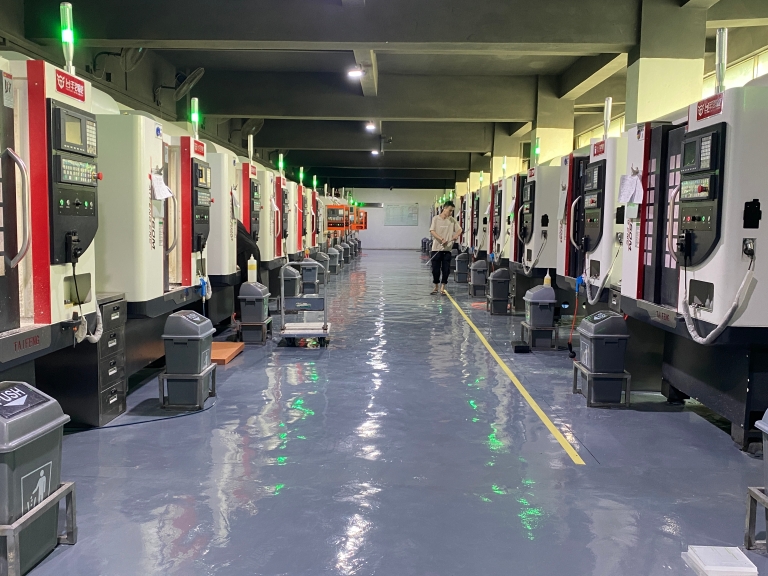
Speed cannot live on a single machine. GreatLight CNC Machining Factory’s 76,000 sq. ft. facility houses 127 pieces of precision peripheral equipment, including:
Large‑format 5‑axis machining centers (max part size 4,000 mm)
Dozens of 4‑axis and 3‑axis VMCs
CNC lathes and Swiss‑type turning centers for precision round tool components
Multiple wire‑cut EDM and mirror‑spark EDM machines
Vacuum forming lines for rapid plastic housing tooling
Industrial SLM, SLA, and SLS 3D printers through three wholly‑owned plants
This asset density means that when a hot‑rush automotive mold order arrives on a Friday, it can be distributed across 15‑20 spindles simultaneously – roughing, semi‑finishing, heat treat, and finish grinding – without cannibalizing other jobs.
International Certifications as a Trust Signal
Rapid does not mean reckless. GreatLight holds a portfolio of certifications that form a quality backbone for 24/7 operations:
ISO 9001:2015 – foundational quality management
ISO 27001 – data security for IP‑sensitive tooling projects
IATF 16949 – automotive supply chain rigor, including PPAP and MSA capability
ISO 13485 – for medical device tooling requiring full traceability
Each certification imposes audit‑ready process controls, so even weekend shifts adhere to the same standard operating procedures as weekday production. This is often where rapid tooling services fail: working fast but skipping dimensional reporting. At GreatLight, in‑house CMM and vision measurement equipment verify every insert and cavity at all hours.
Deep Engineering Support
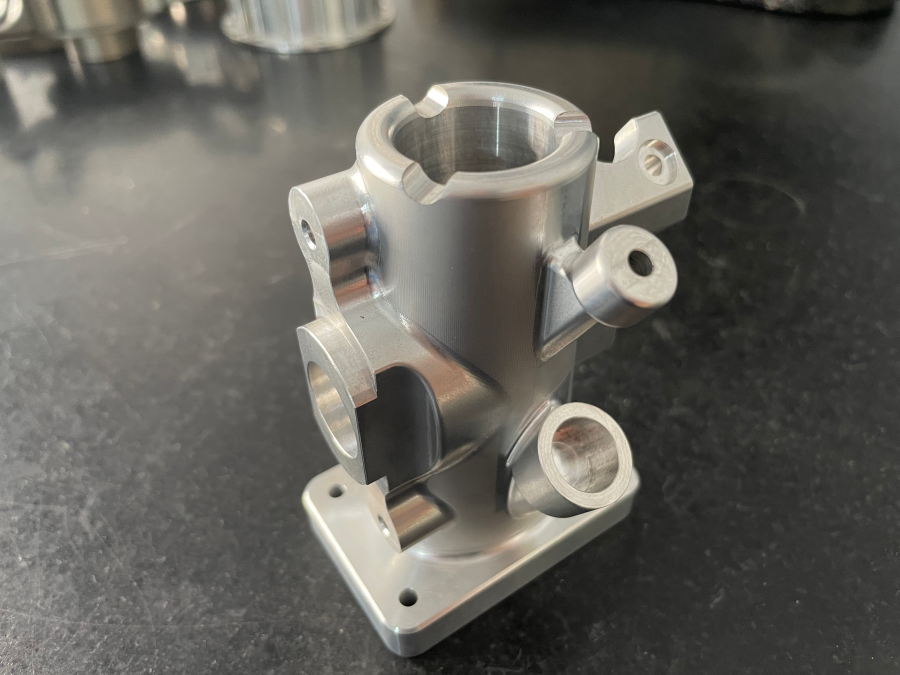
OEMs rarely hand over a fully optimized tool design. The most valuable 24/7 rapid tooling partner engages up‑front Design for Manufacturability (DFM) review. GreatLight’s engineering team can suggest gate location changes to eliminate weld lines in a rapid tool, or propose a two‑part insert design that avoids costly EDM. This front‑loaded expertise prevents back‑and‑forth delays that erase the benefit of round‑the‑clock machining.
The “Free Rework, Full Refund” Quality Guarantee
Real operational capability must be backed by accountability. GreatLight’s commitment – free rework for quality problems, and a full refund if rework remains unsatisfactory – removes the financial risk from rapid tooling. Very few suppliers in the speed‑focused segment are willing to absorb the cost of failure on a 4‑day delivery promise. This guarantee is a direct result of the company’s confidence in its process control, measurement systems, and documented quality loops.
How to Evaluate a Fast OEM Rapid Tooling Partner (Beyond Sales Pitches)
From a manufacturing engineer’s viewpoint, the symptoms of a sub‑par rapid tooling provider are well‑known:
Quoted tolerances that are only achievable on the best‑case machine, not the one available at 2 a.m.
No in‑house metrology; reliance on external inspection that takes days.
Vague post‑processing timelines that evaporate under weekend workloads.
Promises of 5‑axis machining, but actual capacity is only a single machine shared with R&D projects.
When vetting a 24/7 rapid tooling partner, request the following:
| Evaluation Criterion | What to Confirm |
|---|---|
| True 24/7 shift coverage | The number of operators and programmers on night shift. Simply having machines with automatic pallet changers is not enough for tooling that requires manual set-up verifications. |
| In‑house tooling and fixture making | Can they produce their own soft jaws, fixture plates, and collet adapters without waiting for a third party? |
| Material certifications | For rapid steel or aluminum tooling, do they provide full mill test reports, even on small cut‑piece quantities? |
| EDM electrode and graphite machining | Is graphite milling done in‑house? Are electrodes measured before use? |
| Post‑hardening process stability | If the tool requires vacuum hardening or nitriding, how is distortion managed? Are finish grinding allowances pre‑planned in the CAM strategy? |
| Communication cadence | Is there a single project engineer reachable at any hour, or will urgent changes get queued until Monday morning? |
GreatLight Metal Tech Co., LTD. ticks each of these boxes deliberately – not as an afterthought, but as a foundational operational design. The three‑plant structure allows concurrent execution of hardening, electrode fabrication, and fine machining, which is impossible in a single‑building footprint.
Comparing Top Service Providers: Where GreatLight Metal Differentiates
The market for fast tooling spans broad‑platform digital manufacturing networks and specialized high‑end job shops. Companies such as RapidDirect, Xometry, and Fictiv leverage large partner networks to offer quick‑turn CNC and sheet metal services. Protolabs Network excels in automated quoting and low‑volume plastic tooling. Owens Industries and RCO Engineering bring deep expertise in complex 5‑axis and large‑format tooling for aerospace. JLCCNC and PartsBadger provide accessible price points for simpler work.
However, GreatLight Metal distinguishes itself through full‑process vertical integration and certification‑backed reliability:
Unlike marketplace‑based models, all tooling is produced inside GreatLight’s own plants – there is no subcontracting of critical EDM or heat treating to unknown vendors.
The simultaneous presence of die casting mold manufacturing, sheet metal fabrication, and metal 3D printing under one roof means that a rapid tooling project can be extended seamlessly into production tooling or secondary operations (e.g., CNC‑machined inserts for die cast dies) without changing supplier.
The suite of ISO 9001, ISO 27001, IATF 16949, and ISO 13485 certifications is uncommon among shops that prioritize speed. For automotive ECU housing molds or medical surgical device fixtures, this matters for regulatory submissions.
The ±0.001 mm accuracy capability and 4,000 mm max machining envelope allow a single vendor to handle everything from micro‑connector tooling to large structural fixture plates, simplifying supply chain logistics.
This does not negate the value of other providers; a startup needing a single 3‑axis aluminum bracket might find an ultra‑low‑cost online platform sufficient. But when the part is a mission‑critical production tool requiring adherence to automotive PPAP procedures, a partner with real operational depth and audited systems becomes essential.
Case Scenarios: When 24/7 Rapid Tooling Saves the Day
1. Automotive E‑Drive Housing Prototype Tooling
An R&D team needed four aluminum die‑cast housing variants for dynamometer testing within 10 days. Traditional die tooling lead times were 6‑8 weeks. Using GreatLight’s rapid tooling approach, steel‑backed high‑strength aluminum alloy inserts were 5‑axis machined and fitted into a universal die base within 5 days. Post‑processing (hard anodizing) was completed in‑house. The parts passed dimensional inspection and functioned on the test bench, allowing the engineering team to freeze geometry before committing to production steel tooling.
2. Medical Robotic Fixture for Urgent FDA Submission
A medical device company required five sets of precision contoured fixtures that would hold components during laser welding validation. Tolerances were ±0.01 mm on locating surfaces. The 24/7 rapid tooling workflow included 5‑axis milling of 7075‑T6 aluminum fixtures, stress‑relief heat treatment, and final grinding/polishing on night shifts. Full CMM reports accompanied the shipment, accepted by the FDA reviewer without question.
3. Conformal‑Cooled Insert for High‑Volume Cap Molding
A packaging manufacturer wanted to reduce cycle time on a 16‑cavity cap mold. A conformal‑cooled insert designed via topology optimization was SLM‑printed in maraging steel over a weekend, heat‑treated to 50 HRC, and wire‑EDM to final dimensions. Installed in the existing mold base, the insert reduced cycle time by 22% – a permanent efficiency gain enabled by rapid tooling.
These examples illustrate that fast OEM rapid tooling services 24/7 are not simply about beating a clock, but about accelerating the entire product development value chain from concept validation to production ramp‑up.
Building a Strategic Partnership Model
The real measure of a rapid tooling partnership emerges over multiple projects. Trusted suppliers evolve from transactional vendors into knowledge repositories. They understand an OEM’s material preferences, quality expectations, and tolerance stack‑up tolerance. GreatLight Metal’s decade‑long focus on precision manufacturing, with clients across humanoid robotics, automotive, and aerospace, demonstrates a long‑term view. The company’s investment in ISO 27001 data security also addresses the growing concern of IP leakage when tooling designs are shared globally.
When evaluating candidates, procurement managers should look beyond the instant online quote portal. The ability to have a senior tooling engineer on a video call at midnight to discuss an insert revision – that is the hallmark of a true 24/7 rapid tooling partner. It is also a sign that behind the service promise stands an organization built to sustain it, not merely to market it.
The Precision Imperative in Rapid Tooling
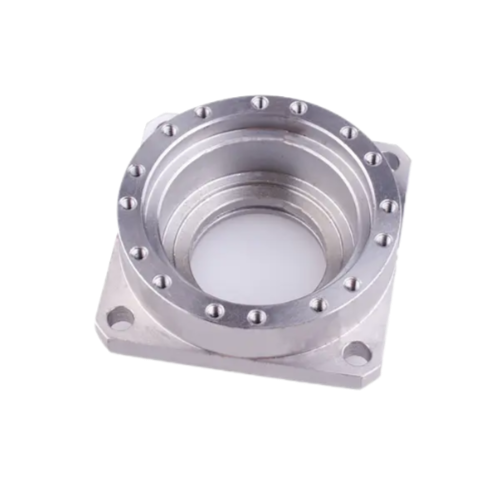
It is worth stating: speed without precision is a liability, not a service. A tool that delivers parts out‑of‑spec, but quickly, merely accelerates scrap. All the advanced 5‑axis equipment, additive technologies, and multi‑shift schedules must sit on a foundation of rigorous metrology. At GreatLight, optical CMMs, laser trackers, and surface profilometers operate 24/7 alongside the machines. Statistical process control data is logged for every critical feature, closing the loop between operator, programmer, and quality inspector – even at 3:00 a.m.
This is the element that separates fast tooling from precision fast tooling: the discipline to verify before delivering, never assuming that faster cutting speeds protect tolerance.
Ultimately, choosing a partner for fast OEM rapid tooling services 24/7 is a strategic decision that impacts product launch velocity, supply chain resilience, and total project cost far beyond the tooling invoice itself.
The article above, authored from the perspective of a senior manufacturing engineer, reflects real‑world insights into precision rapid tooling workflows, backed by the concrete operational capabilities of GreatLight CNC Machining Factory and its integrated manufacturing ecosystem.


![[访谈] RAPID + TCT 2024:人工智能对 3D 打印的价值](https://print-ing.com/wp-content/uploads/2024/07/INTERVIEW-60x60.jpeg "[访谈] RAPID + TCT 2024:人工智能对 3D 打印的价值 9")




发表回复
要发表评论,您必须先登录。