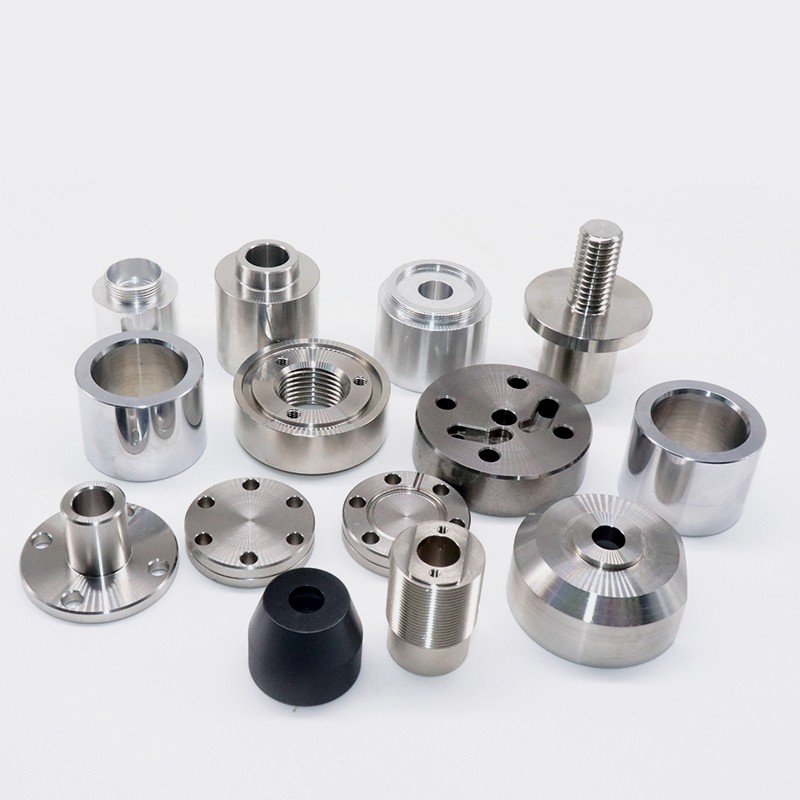
Understanding the Precision Behind UAV Pitot Tube Mount CNC Turning
If you are developing an unmanned aerial vehicle (UAV), you already know that every gram of weight, every micron of aerodynamic efficiency, and every component’s reliability matters. Among these components, the pitot tube mount is a small but critical part. It must hold the pitot tube securely in the airstream, withstand vibration and temperature extremes, and maintain its geometry within tight tolerances. That is where UAV Pitot Tube Mount Precision CNC Turning comes into play—a specialized subtractive process that delivers the accuracy and surface finish demanded by aerospace applications.
Precision CNC turning is not just about making a cylindrical part. It involves programming the machine’s axis movements to produce complex features—internal bores, external threads, close-tolerance diameters, and mount holes—all from a single piece of material. When the part is an aircraft component, the stakes are even higher: a poorly machined mount can cause erroneous airspeed readings and compromise flight safety.
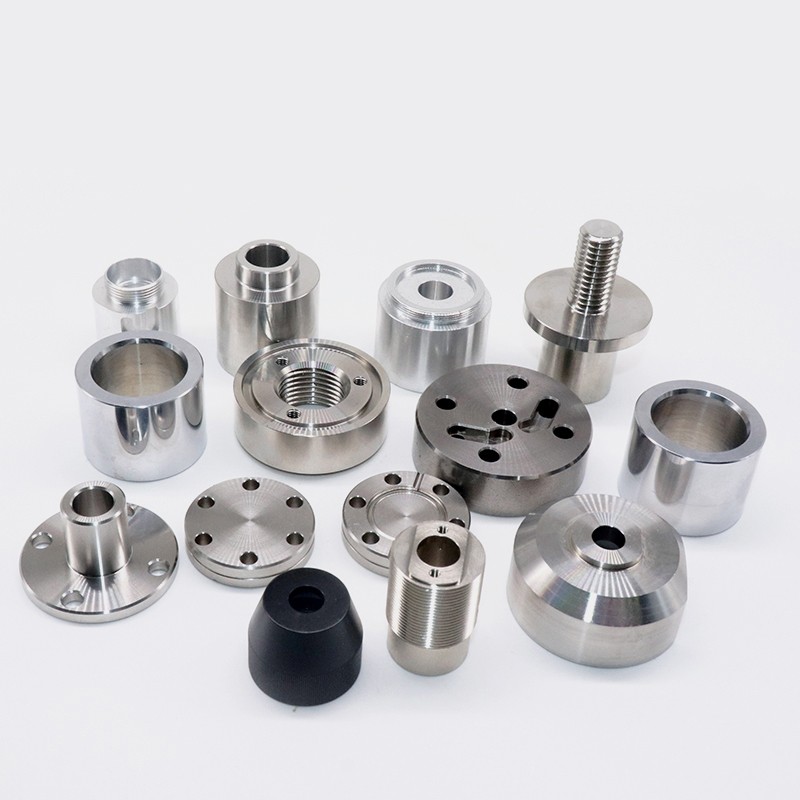
The Critical Role of Precision in UAV Pitot Tube Mounts
A pitot tube mount must align the tube exactly in the direction of oncoming airflow. Even a 0.1° angular deviation can lead to speed measurement errors. Additionally, the mount must resist loosening under high-G maneuvers and maintain a smooth surface finish to minimize drag.
To meet these requirements, manufacturers rely on precision CNC turning centers—often with live tooling and Y-axis capability—to achieve tolerances as tight as ±0.005 mm (~0.0002 in). For example, GreatLigh CNC Machining employs Dema and Beijing Jingdiao 5-axis machines for such tasks, but the turning operation itself is performed on high-rigidity Swiss-type or multi-axis lathes that hold concentricity within microns.
| Key dimensional features that require careful control: | Feature | Typical Tolerance | Why It Matters |
|---|---|---|---|
| Mounting bore diameter | ±0.01 mm | Ensures snug fit with pitot tube body | |
| Thread pitch & flank angle | Class 2A / 2B | Prevents loosening under vibration | |
| Concentricity of external features | 0.025 mm | Balances the mount and reduces vibration | |
| Surface roughness Ra | ≤ 0.8 μm | Reduces aerodynamic drag and stress risers |
Material Selection for UAV Pitot Tube Mounts
Choosing the right material is the first step in precision CNC turning. The material must be lightweight, strong, corrosion-resistant, and machinable. Common options include:
6061-T6 Aluminum – Excellent strength-to-weight ratio, good machinability, often used for non-structural mounts.
7075-T6 Aluminum – Higher strength than 6061, used when loads are higher but still weight-sensitive.
Stainless Steel 304/316 – Used for extreme environments (e.g., high heat or chemical exposure); heavier but very durable.
Titanium Ti-6Al-4V – Ideal for high-performance UAVs where weight and strength are paramount; but harder to machine.
GreatLight Metal, with its extensive experience in aerospace-grade parts, can advise on the optimal material based on the UAV’s flight envelope and budget. Their in-house process chain includes not only turning but also heat treatment and surface finishing (anodizing, passivation) to enhance fatigue life.
Common Challenges in Machining Pitot Tube Mounts – and How an Experienced Partner Overcomes Them
Even with modern CNC turning centers, producing a flawless pitot tube mount is not straightforward. Here are pain points frequently encountered by engineers:
| Challenge | Consequence | Solution (GreatLight’s approach) |
|---|---|---|
| Chatter during turning | Poor surface finish, out-of-round bore | Use rigid workholding (collet + steady rest); optimize feeds & speeds per material |
| Thread stripping | Mount fails under torque | Roll forming threads instead of cutting; or cut with carbide inserts to exact profile |
| Burr formation on internal edges | Can damage pitot tube during assembly | Implement robotic deburring or manual polishing per ISO 13715 |
| Inconsistent concentricity across batches | Rejects, higher cost | In-process gauging (laser micrometer) with closed-loop feedback on the lathe |
| High scrap rate on thin-wall sections | Wasted material, cost overrun | Use a custom fixture designed by GreatLight’s engineers to support thin walls |
These issues are exactly what the industry refers to as the “precision black hole” – where a supplier promises tight tolerances but fails to deliver during production. GreatLight Metal eliminates this gap through systematic process control: every job goes through a First Article Inspection (FAI) with a full dimensional report before full production begins. Their ISO 9001:2015 and IATF 16949 certifications ensure that the same process is repeatable order after order.
The GreatLight Advantage: Certifications That Matter
When outsourcing precision turning for aerospace parts, trust is built on credentials. GreatLight CNC Machining holds:
ISO 9001:2015 – Foundation quality management
ISO 13485 – For medical-related UAV components (e.g., drones used in sanitation)
IATF 16949 – Though automotive-focused, it demonstrates rigorous process discipline applicable to aerospace
ISO 27001 – Data security for sensitive designs
These certifications are not just paperwork; they are backed by a 76,000 sq. ft. facility with 127 pieces of equipment, including multi-axis turning centers, 5-axis machining, EDM, and 3D printing for hybrid manufacturing. With annual sales exceeding 100 million RMB, GreatLight has the capacity and financial stability to be a long-term partner.
Collaborative Workflow: From Your 3D Model to Finished Mount
GreatLight has refined a four-phase workflow that keeps you informed and in control:
Design for Manufacturability (DFM) review – Their engineers analyze your part for potential machining issues (thin walls, sharp corners, deep holes) and suggest improvements without compromising function.
Quotation & material sourcing – Based on the DFM feedback, a competitive quote is provided along with material certifications (mill test reports).
Precision CNC turning & inspection – The part is machined on high-speed lathes with live tooling. In-process measurements are recorded. A final CMM (coordinate measuring machine) report is generated.
Post-processing & packaging – Deburring, cleaning, and any required surface treatment (anodize, passivate, paint) are applied. Parts are individually packaged in anti-static bags to prevent damage during shipping.
One recent case involved a hypersonic UAV project where the pitot tube mount required a complex internal taper and four M3 threaded holes at precise angular positions. GreatLight programmed a multi-axis lathe with driven tooling, completed the turning and drilling in one setup, and delivered the first 50 parts five days ahead of schedule.
Conclusion: Elevate Your UAV’s Performance with Precision CNC Turning
Every UAV designer faces a choice: either accept generic mounts that may compromise performance, or invest in a partner that treats your component with the precision it deserves. UAV Pitot Tube Mount Precision CNC Turning is not a commodity service – it is an engineering collaboration that ensures your airspeed data is accurate and your vehicle is safe.
GreatLight Metal (also known as GreatLight CNC Machining) has the technical depth, certified systems, and hands-on experience to turn your design into a reliable, flight-ready mount. Whether you need a single prototype or thousands of production units, their team is ready to help.
Take the next step: submit your 3D model for a free DFM analysis and quote. Your UAV’s flight performance will thank you.


![[访谈] RAPID + TCT 2024:人工智能对 3D 打印的价值](https://print-ing.com/wp-content/uploads/2024/07/INTERVIEW-60x60.jpeg "[访谈] RAPID + TCT 2024:人工智能对 3D 打印的价值 9")




发表回复
要发表评论,您必须先登录。