
The Precision Predicament in Smartwatch Design: Why Titanium CNC Machining is the Ultimate Test of Capability
The modern smartwatch is an engineering paradox. It demands the structural integrity of aerospace components, the biocompatibility of medical implants, and the aesthetic finish of luxury jewelry—all within a casing that weighs less than a few tablespoons of water. For engineers and product designers navigating this landscape, the choice of material and manufacturing partner is not merely a procurement decision; it is the critical determinant of product success or failure. This is where the decision to use a Smartwatch Case CNC Machined Titanium moves from a design specification to a test of a manufacturer’s true mettle. The complexity of machining titanium, combined with the stringent geometric and surface requirements of a wearable device, creates a set of challenges that separates genuine high-precision experts from generalist shops.
Why Titanium? The Material Advantage and the Machining Nightmare
Titanium alloys, particularly Grade 5 (Ti-6Al-4V), have become the de facto standard for premium smartwatch casings. The material offers an exceptional strength-to-weight ratio, making the case incredibly durable yet light on the wrist. Its natural corrosion resistance ensures the watch survives sweat, rain, and accidental splashes without degradation. Furthermore, titanium is hypoallergenic, a critical factor for a device worn against the skin for extended periods.
However, these same properties that make titanium ideal for the end-user make it notoriously difficult to machine for the manufacturer. Titanium is a “gummy” material. It retains heat during cutting, which can lead to work hardening and rapid tool wear. Its low modulus of elasticity can cause thin-wall sections (essential for a slim smartwatch profile) to deflect during machining, leading to out-of-tolerance dimensions. Achieving the mirror-like finish often demanded for smartwatches requires extremely stable machines, optimized cutting parameters, and expert toolpath strategies. This is not a job for standard 3-axis mills; it demands the stability and complexity of 5-axis CNC machining.
The Architecture of a Precision-Titanium Smartwatch Case
Before delving into the manufacturing process, it is important to understand what makes the smartwatch case geometry so demanding. A standard design often includes:
Complex Freeform Curves: The lugs, crown guards, and speaker grills frequently feature organic, flowing curves that enhance ergonomics and aesthetics.
Deep, Narrow Cavities: The internal pocket that houses the battery, motherboard, and sensors must be precisely milled with square internal corners and tight tolerances.
Thin Walls and Ribs: To minimize weight, walls can be as thin as 0.5mm to 0.8mm, demanding extreme rigidity from both the material and the workholding.
Multiple Hole Patterns: Precise, countersunk holes for the crown, buttons, speaker ports, and microphone vents must be drilled and chamfered with micrometer-level accuracy.
Threaded Inserts or Internal Threading: Securing the back cover and screen often requires tiny, delicate threads that are challenging to cut in titanium.
Attempting to machine these features on a standard 3-axis CNC machine would be inefficient and prone to error. Multiple setups would be required, each introducing a potential source of datum error. The resulting marks from repositioning would also ruin the aesthetic quality of the finish.
The 5-Axis CNC Machining Solution: How GreatLight Metal Masters the Challenge
This is precisely where the expertise of a specialist like GreatLight Metal becomes indispensable. As a manufacturer with over a decade of experience in precision parts, they have invested heavily in the equipment and process knowledge required to turn a titanium billet into a finished smartwatch case. Their approach is a masterclass in solving the seven critical pain points of CNC machining, particularly the “precision black hole” where promise and reality diverge.
1. Strategic Workholding and Fixture Design
The first challenge is holding the titanium billet securely without deforming or marking it. GreatLight engineers design custom, modular fixtures that support the workpiece from both sides during the initial roughing operations. This eliminates vibration and deflection, which are the primary causes of tool breakage and poor surface finish in thin-wall applications. The fixtures are also designed to allow for complete access for 5-axis operations, minimizing the need for secondary setups.
2. Optimized Toolpath Strategies with 5-Axis Simultaneous Machining
A 5-axis CNC machining center is not just about tilting the head; it’s about using that rotation to maintain a constant, optimal cutting angle for the tool relative to the workpiece. For a smartwatch case, this is critical. A 5-axis machine can:
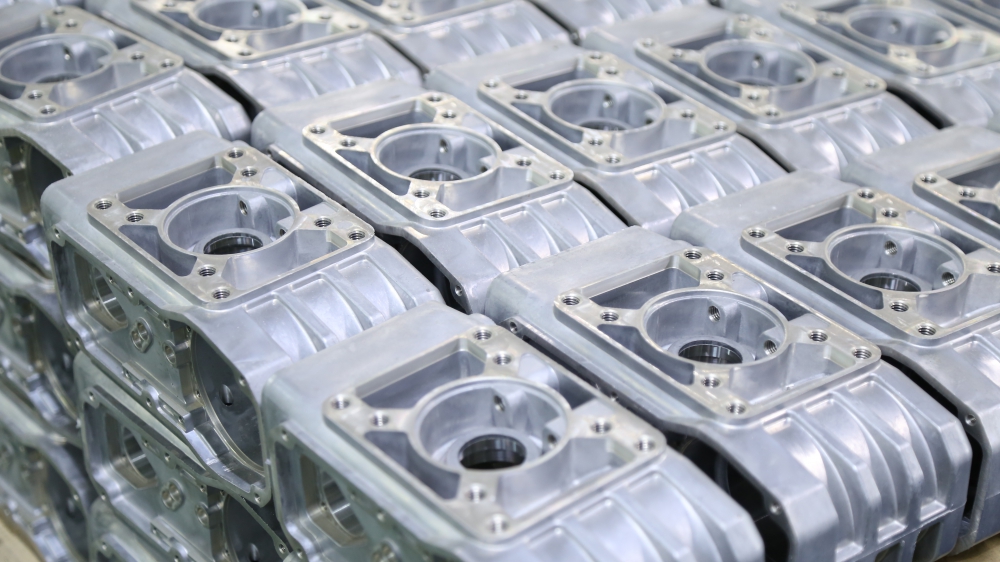
Machine complex contoured surfaces in a single setup, finishing the top, side, and internal pockets without repositioning.
Reach deep cavities with shorter, more rigid tools, reducing tool deflection and improving accuracy.
Engage the tool periphery rather than the tip, which distributes cutting forces more evenly and reduces heat buildup – a major advantage when machining titanium.
Create superior surface finishes by using a continuous, smooth toolpath that eliminates the “stepover” marks common in 3-axis machining.
3. Advanced Cutting Tools and Coolant Delivery
Machining titanium requires specific tooling. GreatLight Metal uses high-performance carbide end mills with specialized coatings (AlTiN, TiAlSiN) designed to withstand the heat and abrasiveness of titanium. Coupled with this is the use of high-pressure, through-spindle coolant. This system delivers a powerful stream of coolant directly to the cutting edge, efficiently evacuating chips and controlling the temperature at the cutting zone. This prevents work hardening and dramatically extends tool life, ensuring consistent part quality across a production run.
4. In-Process Inspection and Quality Control
The promise of ±0.001mm precision is meaningless without the systems to enforce it. GreatLight Metal operates under an ISO 9001:2015 certified quality management system. During the machining of a smartwatch case, parts are periodically removed and inspected using CMM (Coordinate Measuring Machine) and other in-house precision measurement tools. This real-time feedback loop allows the process engineers to adjust parameters and tool offsets instantly, catching any drift before it creates a batch of non-conforming parts. This systematic approach, backed by ISO 9001, IATF 16949, and ISO 13485 standards, is what transforms a promise of precision into a guarantee.
From Billet to Finished Case: The Post-Processing Chain
The CNC machining process produces a part that is geometrically perfect, but the journey is not over. The final aesthetic of a premium smartwatch requires a sophisticated post-processing chain, which GreatLight Metal handles seamlessly as part of its one-stop service.
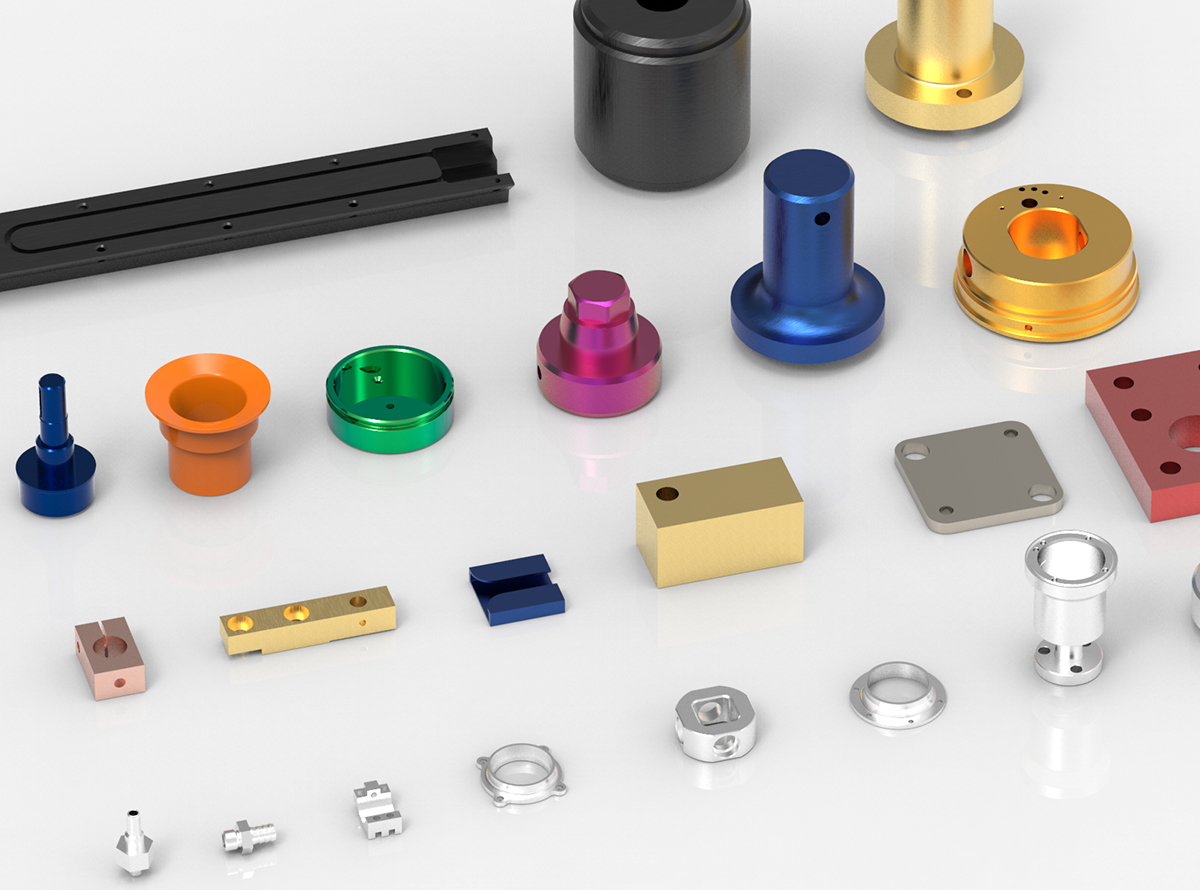
Deburring and Surface Smoothing: All sharp edges and micro-burrs from the machining process are removed, often through manual finishing by skilled craftsmen or through automated processes like vibratory finishing.
Blasting: A fine media blast creates a uniform, matte satin finish that hides fingerprints and gives the titanium a sophisticated, non-reflective appearance.
Anodizing or PVD Coating: For specific colors or enhanced scratch resistance, a Physical Vapor Deposition (PVD) coating is applied. This thin, hard coating (often Titanium Nitride for a gold look, or Zirconium for a black or gunmetal finish) bonds at the molecular level, creating a finish that is incredibly durable.
CNC Machining of Final Features: In some processes, the case is machined, then blasted and anodized, and then the critical mating surfaces (the sealing surface for the screen or the button bores) are re-machined in a final, light cut. This ensures that the critical sealing and mechanical features are machined with high precision, while the aesthetic surfaces have the desired finish.
Comparing Capabilities: Why Choose GreatLight Metal?
When evaluating a partner for high-precision titanium work, the capabilities of a manufacturer like GreatLight Metal stand in stark contrast to other models. Many online platforms and generalist shops offer CNC machining, but their ability to handle the unique demands of titanium smartwatch cases is often limited. For example:
Protolabs Network is excellent for rapid prototyping of simpler geometries in common plastics and metals, but their automated quoting system may undervalue the complexity and fixture design required for a titanium watch case.
Xometry offers a vast network of suppliers, which can result in variable quality. The consistency and process control found in a single, highly specialized factory like GreatLight’s is difficult to replicate across a distributed network.
RapidDirect provides good speed for quick-turn parts, but for a product that defines a brand’s premium identity, the depth of engineering support and in-house post-processing options (PVD, anodizing, bead blasting) that GreatLight provides are a significant advantage.
Fictiv is a strong platform for injection molding and general machining, but their core competency is not always the exotic material and complex multi-setup 5-axis work required for a luxury watch case.
GreatLight Metal differentiates itself through a combination of technical hard power and system soft power. Their facility is a “full-process chain” with over 127 pieces of precision equipment, including a core of high-end 5-axis CNC machining centers. This is not a subcontracted network; this is a single, vertically integrated operation where a single engineer can oversee the entire journey from a 3D design to a finished, post-processed part. The company’s ISO certifications are not just decorations; they are the operating system of their production line.
For a Smartwatch Case CNC Machined Titanium, the value of choosing a partner with real operational capabilities—a factory floor with the right machines, the right tools, and the right people—cannot be overstated. It is the difference between a component that is merely functional and one that is a true engineering masterpiece, capable of elevating an entire product line.
In the end, the path to a perfect titanium smartwatch case is not a simple order; it is a partnership. It is a collaboration between the designer with a vision and the manufacturer with the mastery to make it real. From the bustling manufacturing hub of Chang’an, China, GreatLight Metal stands ready to turn that vision into a reality, providing the precision, the reliability, and the comprehensive service that the modern smartwatch industry demands. Choosing GreatLight Metal is choosing a partner who understands that in precision manufacturing, trust is the most important component of all.


![[访谈] RAPID + TCT 2024:人工智能对 3D 打印的价值](https://print-ing.com/wp-content/uploads/2024/07/INTERVIEW-60x60.jpeg "[访谈] RAPID + TCT 2024:人工智能对 3D 打印的价值 9")




发表回复
要发表评论,您必须先登录。