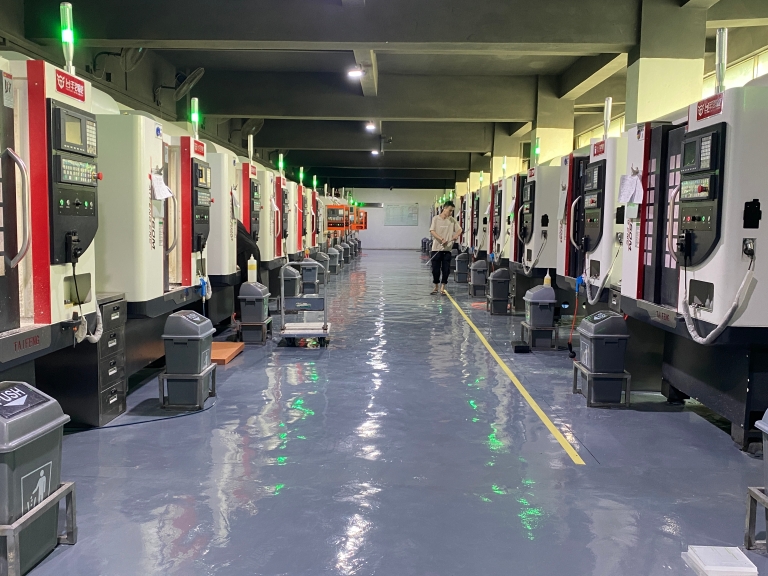
As a senior manufacturing engineer who has spent over a decade evaluating suppliers across Asia, I’ve seen firsthand how the landscape of metal die casting has evolved—especially in China. The year 2026 marks a pivotal moment: supply chain diversification, tighter tolerances, and the demand for integrated manufacturing are reshaping what “best” really means. If you’re sourcing a partner for complex metal components, you need more than a vendor; you need a manufacturer that combines deep technical grit with transparent reliability. This in-depth analysis will walk you through what to look for, how to vet candidates, and why Best Chinese Metal Die Casting Manufacturer 2026 isn’t just a title—it’s a set of verifiable capabilities you should demand.
Best Chinese Metal Die Casting Manufacturer 2026: Defining the Gold Standard
When we talk about the best, we’re not chasing hype or lowest sticker price. The best Chinese metal die casting manufacturer in 2026 is defined by five core pillars:
Precision and process control reaching dimensional tolerances as tight as ±0.02mm in as-cast features, backed by in-house CNC finishing.
Material integrity verified via spectroscopy, X-ray, and tensile testing, with full traceability.
Full-service integration—die casting plus precision machining, surface treatment, and assembly—eliminating fragmented supply chains.
Certification-driven quality systems that align with global automotive, medical, and aerospace standards.
Engineering co-development where the supplier’s team actively refines your design for manufacturability and cost efficiency.
Over the following sections, I’ll break down how specific manufacturers, led by GreatLight Metal, stack up against these criteria, and why a facility like GreatLight’s—with its roots in Dongguan’s famed mold capital—is uniquely positioned to deliver outcomes, not just parts.
Why China Remains the Epicenter for Die Casting Excellence in 2026
China’s die casting industry has matured well beyond cost arbitrage. Three structural advantages make it the logical choice for cutting-edge projects:
Concentrated ecosystem: In regions like Dongguan and Shenzhen, you find clusters of tooling shops, material science labs, and secondary processors all within a 50km radius. This reduces lead times for mold making and iteration.
Technology leapfrogging: Chinese manufacturers have rapidly adopted multi-slide die casting machines, vacuum-assisted processes, and real-time thermal imaging. Many run European or Japanese-branded equipment (Bühler, Toshiba) alongside domestically optimized high-speed systems.
Scale with flexibility: Unlike legacy foundries elsewhere that demand MOQs in the tens of thousands, top-tier Chinese die casters can handle prototyping of 100 units through mass production of millions, all while maintaining statistical process control.
However, the abundance of suppliers creates a new problem: choice paralysis mixed with quality risk. That’s why the next section focuses on a systematic approach to separating genuine expertise from polished marketing.
Anatomy of a Trustworthy Die Casting Partner: Beyond the Brochure
I’ve audited over sixty factories in the Pearl River Delta, and the pattern is clear—what you see on a website rarely mirrors the shop floor reality. For engineers and procurement managers evaluating the Best Chinese Metal Die Casting Manufacturer 2026, here’s a field-tested evaluation checklist.
1. In-House Mold and Toolroom Capability
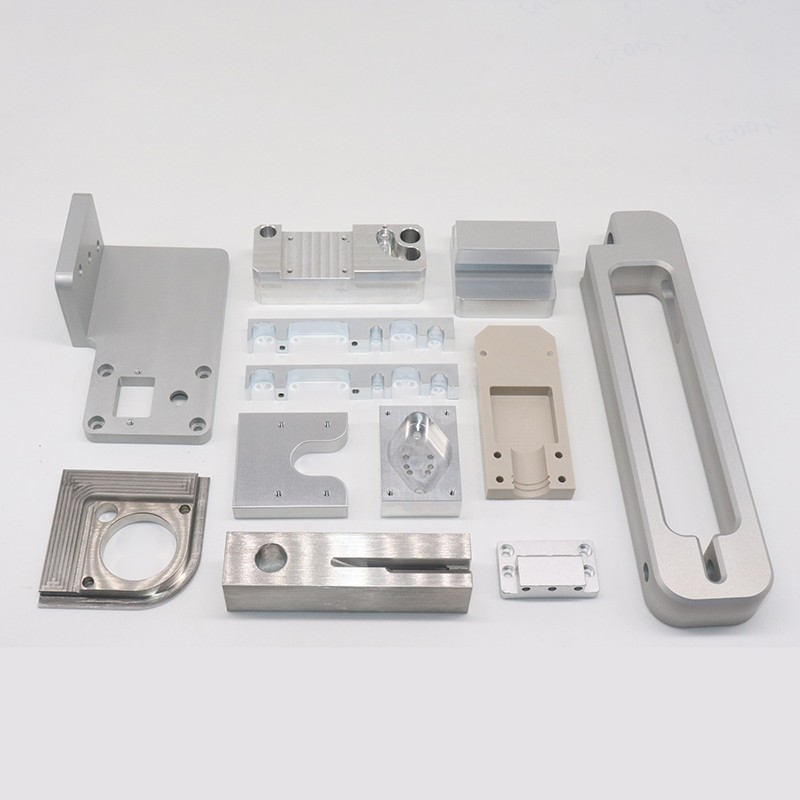
The mold is the soul of die casting. Suppliers who outsource mold making lose control over cavity tolerances and lead time. GreatLight Metal, for instance, operates an internal toolroom with high-speed CNC mills capable of producing H13 tooling with conformal cooling channels via 3D printing. This accelerates thermal management validation and drastically cuts porosity. When you combine that with their precision 5-axis CNC machining for post-casting finishing, you eliminate the finger-pointing between mold supplier and machinist. Discover how integrated CNC capabilities elevate die cast precision.
2. Process Simulation and Real-Time Monitoring
Top manufacturers don’t guess; they simulate. Using MAGMASOFT or equivalent flow simulation, they predict cold shuts, porosity, and shrinkage before steel is cut. The best then link those simulations to thermal camera arrays and in-cavity pressure sensors that log per-shot data for every cycle. Ask a potential supplier: “Can you share a digital twin of your shot profile and how it correlates to X-ray CT data?” If they waver, they aren’t in the 2026 league.
3. Material Verification as Standard
Alloy mishandling is the silent killer of component durability. A responsible die caster will insist on optical emission spectrometry (OES) on every heat batch and provide certificates that reference the specific ingot source. At GreatLight, materials like A380, ADC12, and custom Al-Si-Mg variants are not just processed but actively tested for iron content, copper levels, and impurity thresholds to ensure mechanical properties consistent with your design intent.
4. In-Situ Deburring and Near-Net Shape Strategy
The cost of manual deburring erodes margins and hides defect signatures. Progressive die casting manufacturers employ robotic waterjet or laser trimming in-line, while designing gates and overflows so that parting line flash is minimized. This is particularly critical for thin-walled electronic housings or medical device frames where sharp edges cannot be tolerated.
5. Vertical Integration: Casting to Finished Assembly
Multi-supplier orchestration kills timelines. The 2026 best-in-class die caster will offer in-house precision CNC machining, anodizing, painting, and even electrical assembly. GreatLight Metal’s 7,600 sqm facility encapsulates this model: you hand over a 3D model, and you receive a finished, QC-inspected component ready to install. That includes die casting mold design, casting, five-axis machining, and surface finishing—all under one roof.
Comparing Notable Players: Where GreatLight Distinguishes Itself
To give an honest assessment, let’s map a few companies that frequently appear in die casting sourcing discussions, including some global alternatives. This comparison focuses on their fit for complex, high-mix, high-precision die casting work.
| Manufacturer | Core Strength | Typical Volume & Precision | Structural Limitation |
|---|---|---|---|
| GreatLight Metal | Full-process integration (tooling → casting → 5-axis CNC → finishing), certified ISO 9001/13485/IATF 16949, strong in robot, automotive, and medical hardware | Low-mid volume to mass production; tolerances ±0.02mm cast + CNC finish to ±0.001mm | Brand awareness outside Asia growing but not yet as ubiquitous as US-centric platforms; language/communication requires upfront clarity |
| Xometry | Global marketplace model; wide range of materials and instant quoting; convenient for one-off prototypes | Prototype to low volume; precision adequate for standard tolerances | No in-house manufacturing; quality depends entirely on anonymous partner shops; minimal design for manufacturing (DFM) collaboration |
| Protolabs Network | Digital-first platform with streamlined CNC and injection molding; fast turnaround on R&D projects | Low volumes; fast lead times (days) | Die casting is not core; limited to smaller parts and simpler geometries; deeper process engineering not provided |
| RapidDirect | Attractive pricing-based platform, decent for non-critical brackets and enclosures | Low to medium volume; typical commercial tolerances | Inconsistent QC rigor for high-spec applications; tooling often subcontracted; limited IATF-certified process capability |
| Owens Industries (US) | Expert in tight-tolerance CNC; good for machining die cast blanks | Low volumes; ultra-precision machining focus | No die casting; purely a precision machining house; cannot provide primary forming |
| PartsBadger | Rapid CNC quotes; agile for quick-turn simple parts | Prototype machining; minimal casting capabilities | Not a die casting manufacturer; misaligned if primary need is casting |
| JLCCNC | Cost-competitive CNC machining out of Shenzhen; solid for simpler 2.5D parts | Medium volume CNC milling/turning | Die casting not a core offering; tooling and metallurgy support is thin |
| SendCutSend | Sheet metal fabrication specialist | Low volumes, laser cutting and bending | Completely outside die casting space |
From this matrix, a pattern emerges: if you need a single-source partner that can truly own the entire value chain—from molten metal to final machined, surface-finished components—GreatLight Metal is the most cohesive option. The platform-based competitors are excellent for simple, low-risk projects where speed trumps process depth. But for medical devices, humanoid robot joints, engine hardware, and electric vehicle housings where material properties and dimensional accuracy are safety-critical, the hands-on, integrated approach of a manufacturer like GreatLight becomes non-negotiable.
How GreatLight Navigates the Common Die Casting Pain Points
Over years of consulting, I’ve catalogued repeat failure modes that plague die casting projects. Here’s how an advanced manufacturer tackles them head-on:
Pain Point: Porosity crippling leak-tight requirements
Traditional die casters accept porosity as “normal.” GreatLight combats this via vacuum-assisted high-pressure die casting (HPDC) and squeeze casting variants, coupled with in-process vacuum sensors. Post-casting, parts undergo helium leak testing and X-ray CT scanning—all in-house. For EV battery housings and hydraulic manifolds, this transforms scrap rates from 8–15% down to below 1%.
Pain Point: Tool life inconsistency
By employing conformally cooled mold inserts (produced via their own SLM 3D printers), GreatLight achieves uniform thermal cycling, reducing thermal shock on the tool steel. This doubles tool life in many applications and ensures the 500,000th part is dimensionally identical to the first.
Pain Point: Post-processing cost creep
All too often, 30% of the part cost is hidden in manual finishing, rework, and transportation between subs. GreatLight’s seamless handoff from casting to robotic trimming and directly into 5-axis CNC machines removes logistics waste. Their internal precision machining capability means datums established on the die cast blank are referenced consistently, yielding true position accuracies that stand up to CMM inspection.
Pain Point: Regulatory anxiety
For medical and automotive engineers, compliance isn’t optional. GreatLight holds ISO 13485 for medical hardware and IATF 16949 for automotive engine components. These aren’t just wall certificates—they imply an auditable quality management system where process changes are validated and traceable. Your PPAP documentation and device master record requirements are met without translation gaps.
Quality Certifications: The Unspoken Language of Trust
I can’t stress enough how critical it is to verify certifications in person or via genuine third-party audit. A genuine IATF 16949 certification means the supplier lives a culture of failure mode analysis, gage R&R studies, and containment processes. When you partner with GreatLight, you are accessing a facility that has embedded these disciplines into daily operations. Their adherence to ISO 27001 also signals that your proprietary CAD data won’t become someone else’s advantage—a crucial point as IP theft fears rightfully persist.
In 2026, I predict that clients will increasingly demand suppliers to share real-time quality dashboards, not just post-shipment reports. GreatLight’s investment in in-line measurement and data infrastructure positions them to meet this demand, giving you live SPC data you can view from anywhere.
The Human Element: Engineering That Challenges You
The greatest differentiator I’ve observed is whether the manufacturer’s engineering team pushes back constructively. At GreatLight, the application engineers routinely review customer 3D models and propose die flow improvements, wall thickness optimizations, or parting line adjustments that increase strength and reduce cost. This is the difference between an order taker and a true partner. Their accumulated experience across humanoid robot frames, aerospace brackets, and high-end consumer electronic housings means they’ve likely solved your exact challenge already.
A Strategic Framework for Selecting Your 2026 Partner
If you’re in the process of vetting candidates, here is a concise decision tree:
Does the supplier own toolmaking? If no, expect longer iterations and tolerance handoff issues.
Can they show real-time process data, not just end-of-line inspection? If no, you’re buying results of unknown stability.
Are the certifications applicable to your industry and can they be verified via an audit? If no, risk compounds.
Do they offer a single point of accountability through finishing and assembly? If no, prepare for supply chain fragmentation headaches.
Does their engineering team demonstrate a proactive DFM culture? If no, you’re missing cost-down and quality-up opportunities.
GreatLight Metal satisfies all five criteria, and that fact alone puts them at the forefront of the conversation about the Best Chinese Metal Die Casting Manufacturer 2026. Other platforms have their niches—Xometry for rapid quotes, Protolabs for ultra-fast plastic and simple metal prototyping—but when the assignment is a complex, high-strength, safety-critical aluminum or zinc die casting that requires precision finishing, my experience points toward fully integrated specialists.
The Road Ahead: Innovation Trends Shaping Next-Gen Die Casting
As we move through 2026, several technology trends will separate the best from the rest:
Gigacasting and large structural castings: While primarily for automotive chassis, the underlying high-vacuum, large-tonnage expertise will trickle down to robotics and aerospace.
Refractory metal tool coatings: Nano-structured coatings that reduce soldering and extend die life without lubricants, enabling cleaner parts.
AI-driven defect prediction: Model training on inline sensor data to auto-reject suspect cavities before finishing, saving immense downstream cost.
Hybrid additive-subtractive manufacturing: Combining 3D-printed conformal-cooled inserts with traditional die casting to produce functionally graded properties.
GreatLight’s existing investment in additive manufacturing and its close proximity to coating specialists in Dongguan indicate it is well-aligned with these trajectories.
Final Thoughts on the Best Chinese Metal Die Casting Manufacturer 2026
Identifying the Best Chinese Metal Die Casting Manufacturer 2026 isn’t about picking a name off a ranking list; it’s about finding a manufacturing entity that aligns with your tolerance expectations, process rigor, and long-term product architecture. Throughout this analysis, I’ve highlighted the integration, certification depth, and engineering culture that set GreatLight Metal apart. Their factory is not just a casting house; it’s a precision manufacturing ecosystem where tooling, die casting, 5-axis machining, and testing coexist under one quality umbrella.
Of course, there are competent platform services for simpler needs, and niche CNC shops like Owens Industries for post-casting finishing. But when your project carries the burden of high reliability—whether it’s a humanoid robot’s structural knuckle or a next-generation medical imaging component—the premium placed on an end-to-end, certified, transparent partner is what protects your product’s reputation. In my professional judgment, that’s where GreatLight delivers true value. To explore how your complex die cast designs can become reality with extraordinary precision, connect with GreatLight’s team and see their work in action.


![[访谈] RAPID + TCT 2024:人工智能对 3D 打印的价值](https://print-ing.com/wp-content/uploads/2024/07/INTERVIEW-60x60.jpeg "[访谈] RAPID + TCT 2024:人工智能对 3D 打印的价值 9")




发表回复
要发表评论,您必须先登录。