The Critical Decision of Selecting a Rapid Tooling Partner
In the fast-paced world of precision parts manufacturing, the choice of a bulk rapid tooling vendor can make or break your product development timeline and bottom line. When you’re dealing with production volumes that demand consistent quality across thousands or millions of parts, the decision extends far beyond simply finding the cheapest quote. It becomes a strategic partnership that affects your entire supply chain efficiency.
The precision parts industry has witnessed a fundamental shift in recent years. Manufacturers are no longer asking “Can you make this part?” but rather “How quickly can you deliver production-grade tooling that maintains micron-level accuracy across high-volume runs?” This distinction separates commodity suppliers from true manufacturing partners capable of supporting complex engineering requirements.
Understanding the Unique Demands of Bulk Rapid Tooling
Why Bulk Tooling Differs from Prototype Tooling
The transition from prototype to mass production represents one of the most challenging phases in product development. When scaling from dozens to tens of thousands of parts, several critical factors emerge:
Tool Life Expectancy: Production tooling must withstand hundreds of thousands of cycles without dimensional drift
Repeatability: Every part in every batch must meet identical specifications
Material Compatibility: Production-grade plastics and metals behave differently than prototype materials
Cycle Time Optimization: Even seconds saved per part translate to significant cost savings at scale
Quality Documentation: Bulk production requires comprehensive traceability and certification
The Cost-Quality-Speed Triangle in Rapid Tooling
Experienced procurement engineers understand that in bulk rapid tooling, you cannot optimize all three variables simultaneously. A vendor claiming to deliver the fastest, cheapest, and highest-quality tooling is likely compromising one or more aspects. The key is finding the manufacturer whose strengths align with your specific project priorities.
How GreatLight Metal Redefines Bulk Rapid Tooling Standards
Integrated Manufacturing Ecosystem for Uncompromised Quality
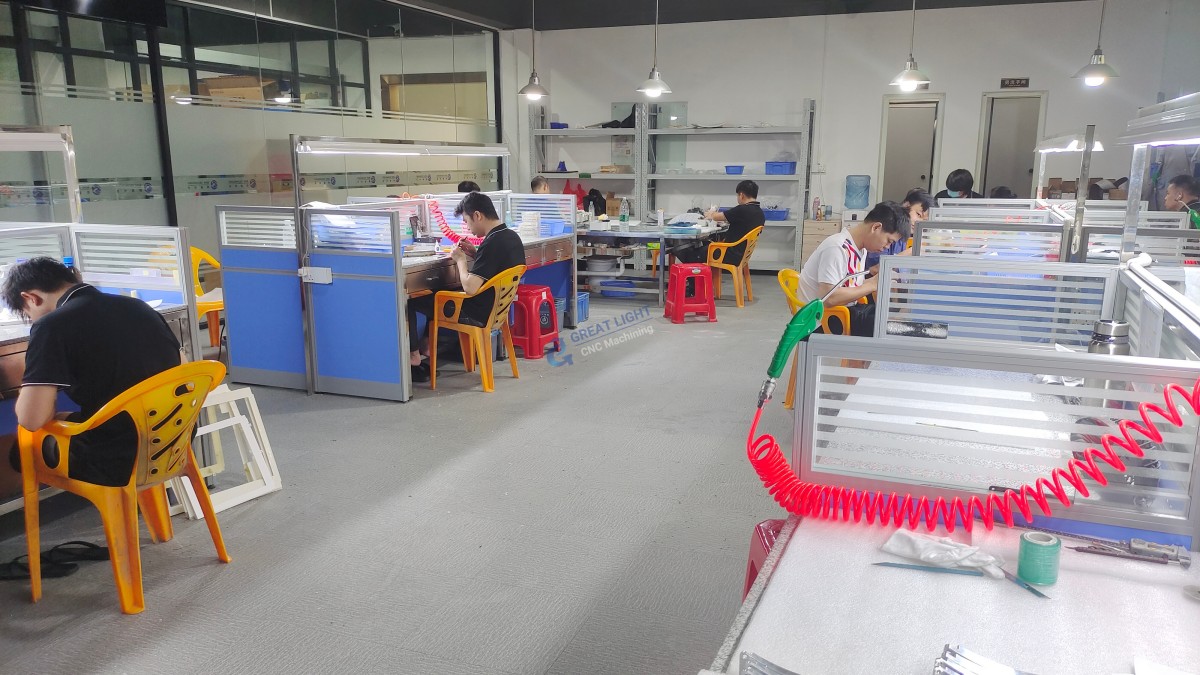
Dongguan Great Light Metal Tech Co., LTD. has established itself as a benchmark in the bulk rapid tooling landscape through its vertically integrated manufacturing approach. Unlike vendors who subcontract portions of their work, GreatLight Metal maintains complete control over the entire production chain within its 7,600-square-meter facility.
The company’s equipment arsenal includes large high-precision five-axis CNC machining centers, four-axis and three-axis machining centers, Swiss-type lathes, wire EDM machines, and mirror-spark EDM equipment. This diversity allows the company to approach each tooling challenge with the most appropriate technology rather than forcing a solution through limited capabilities.
Engineering Support that Bridges Design and Manufacturability
One of the most significant pain points in bulk rapid tooling is the gap between design intent and manufacturing reality. GreatLight Metal addresses this through deep engineering support that begins during the quoting phase. Their senior engineers analyze part geometry, material flow, cooling requirements, and ejection strategies before committing to a tooling approach.
This proactive engineering involvement has saved clients countless hours of rework and tool modifications. When a parts designer specifies features that are theoretically possible but practically challenging in high-volume production, GreatLight Metal’s team provides alternatives that maintain functionality while improving manufacturability.
Certification Infrastructure for Regulated Industries
The company’s commitment to quality is verified through multiple international certifications that demonstrate systematic process control:
| Certification | Relevance to Bulk Rapid Tooling |
|---|---|
| ISO 9001:2015 | Foundational quality management ensuring consistent processes |
| IATF 16949 | Automotive-specific requirements for production tooling |
| ISO 13485 | Medical device manufacturing standards |
| ISO 27001 | Data security for intellectual property protection |
These certifications are not merely decorative credentials. They represent documented procedures for tool maintenance, cavity inspection, material traceability, and dimensional verification that ensure every production run meets specifications.
Comparative Analysis of Leading Rapid Tooling Vendors
To provide a balanced perspective, let’s examine how GreatLight Metal compares with other reputable vendors in the bulk rapid tooling space.
GreatLight Metal vs. Established Industry Players
GreatLight Metal distinguishes itself through its comprehensive process chain that includes not only CNC machining but also die casting, sheet metal fabrication, 3D printing, and mold manufacturing. This integration means clients can source tooling and production from a single provider, reducing coordination complexity and supply chain risk.
ProtoLabs has established a strong reputation for speed through its automated quoting system. However, their standardized approach can limit flexibility for highly complex geometries or specialized material requirements. The trade-off is faster initial quotes but potentially less optimization for high-volume production efficiency.
Xometry offers an extensive network of manufacturing partners, providing broad capability coverage. However, as a marketplace model, quality consistency depends on which specific partner handles your project. This can introduce variability that is problematic for bulk production where every batch must match.
Fictiv provides excellent digital infrastructure for project tracking and communication. Their focus on injection molding and CNC machining serves many industries well, but their manufacturing footprint is less integrated than vertically operated facilities.
When Each Vendor Excels
| Vendor | Best Suited For | Considerations |
|---|---|---|
| GreatLight Metal | Complex geometries, high-volume tooling, regulated industries | Requires detailed engineering review during quoting |
| ProtoLabs | Rapid prototyping to bridge production, standard geometries | Less flexible for non-standard requirements |
| Xometry | Projects requiring diverse manufacturing processes | Quality control dependent on individual partners |
| Fictiv | Digitally-native teams wanting streamlined communication | Limited material options compared to full-service shops |
| JLCCNC | Cost-sensitive projects with standard requirements | May lack advanced quality certifications |
Critical Evaluation Criteria for Bulk Rapid Tooling Vendors
Technical Capability Assessment
When evaluating potential partners, look beyond their equipment list to understand how they apply technology to solve manufacturing challenges:
Multi-Axis Machining: Does the vendor have true five-axis capability for complex undercuts and deep cavities?
EDM Capabilities: Can they handle fine details, sharp internal corners, and mirror finishes?
Temperature Control: What cooling strategies do they employ to minimize cycle time and warpage?
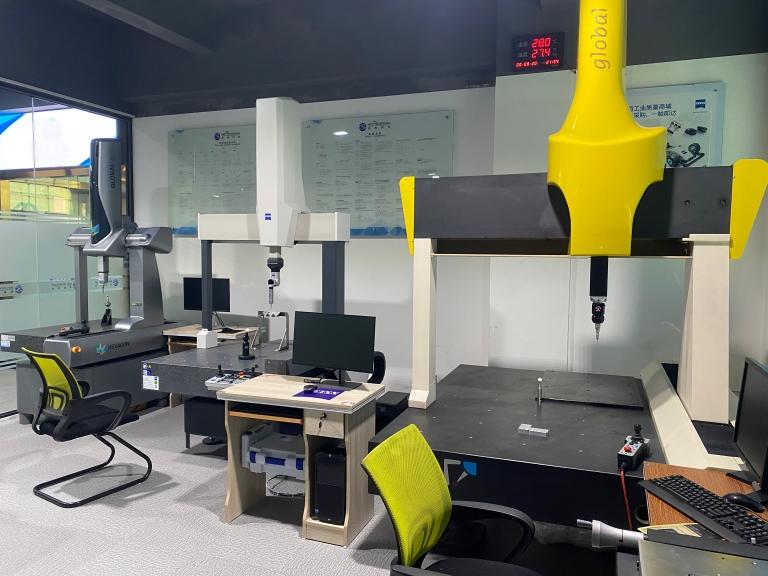
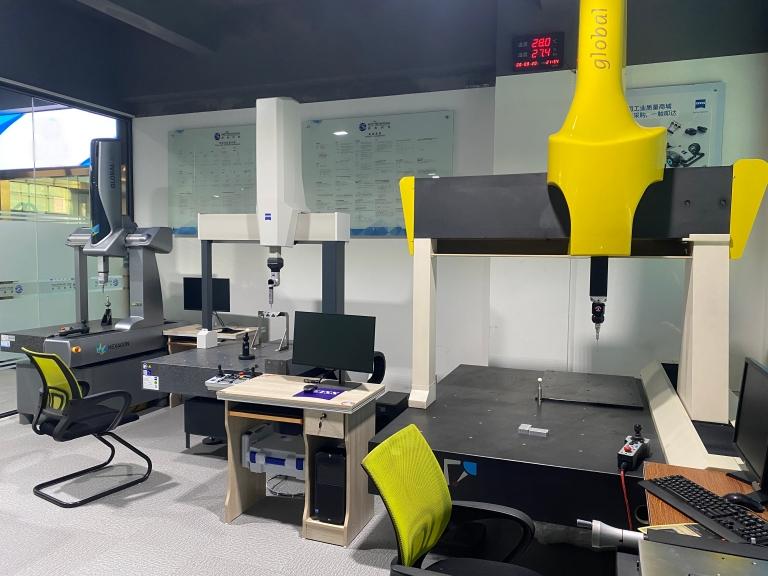
Inspection Equipment: Do they have CMM, optical comparators, and surface roughness testers onsite?
Quality System Depth
A certificate on the wall is meaningless without evidence of its application. Ask potential vendors:
How do you handle first article inspection reports?
What is your process for dimensional drift detection during long production runs?
How do you maintain material traceability from raw stock to finished tooling?
What is your protocol when a non-conformance is discovered?
Communication and Project Management
The best technical capabilities are wasted if communication breaks down. Evaluate:
Response time to technical questions
Willingness to suggest alternative approaches
Transparency about potential issues or delays
Language capabilities for international clients
Ability to provide regular status updates without prompting
The GreatLight Metal Advantage in Action
Real-World Application: Complex Die Casting Tooling
Consider the case of an electric vehicle component manufacturer requiring bulk rapid tooling for a complex transmission housing. The part featured deep internal channels, thin-walled sections requiring uniform cooling, and tight flatness tolerances critical for sealing.
GreatLight Metal’s engineering team analyzed the part geometry and recommended a hybrid approach: five-axis CNC machining for the complex core cavity, combined with precision EDM for fine detail features. The cooling channel design was optimized using simulation software to ensure uniform temperature distribution, reducing cycle time by 18% compared to the client’s initial expectations.
The tooling was completed within 45 days – meeting the aggressive timeline – and produced parts consistently within ±0.02mm tolerance throughout the initial 50,000-part production run.
Medical Device Applications Requiring Compliance
For medical device manufacturers, the choice of rapid tooling vendor carries regulatory implications. GreatLight Metal’s ISO 13485 certification and documented validation protocols allow clients to transfer tooling into their production environment with confidence that the manufacturing process will withstand FDA or CE audit scrutiny.
One medical device client required tooling for a Class II surgical instrument component. The challenge was maintaining sterile surface finish requirements while achieving the dimensional stability needed for consistent assembly. GreatLight Metal developed a specialized polishing protocol for the tool steel cavities and implemented statistical process control tracking across the initial production batches.
Overcoming Common Bulk Rapid Tooling Challenges
Managing Tool Steel Selection for Production Durability
The choice of tool steel dramatically affects tool life, maintenance intervals, and ultimately, cost per part. Experienced vendors like GreatLight Metal guide clients through this decision based on:
Expected production volume
Material being molded or stamped
Desired surface finish
Cooling requirements
Budget constraints
For high-volume production runs exceeding 500,000 parts, premium materials like H13 or D2 tool steel with appropriate heat treatment may be justified despite higher initial cost. For lower volumes or prototype-to-production transitions, less expensive alternatives can be suitable.
Addressing Dimensional Stability in Long Runs
Even the best tooling will experience some dimensional change over extended production runs. The question is whether these changes remain within acceptable tolerances. GreatLight Metal addresses this through:
Stress Relief Treatment: All tool steel components undergo stress relief before final machining
Controlled Heat Treatment: Precise temperature profiles ensure consistent hardness throughout the tool
CMM Verification: Initial and periodic inspection provides data for trend analysis
Preventive Maintenance: Scheduled inspections catch potential issues before they affect part quality
Mitigating Supply Chain Risk
Single-source tooling supply carries inherent risk. GreatLight Metal mitigates this through:
Backup cavity sets for critical dimensions
Documented process parameters allowing rapid re-establishment of production
Strategic raw material inventory maintained onsite
Redundant machining capacity across multiple facilities
Making the Final Vendor Selection Decision
Alignment with Your Technical Requirements
The right vendor for one project may not be optimal for another. Consider:
Complexity: Does your part require true five-axis machining or will three-axis suffice?
Volume: Are you producing 1,000 parts or 100,000 parts per year?
Materials: Will future iterations use the same material or different ones?
Regulatory Environment: Do you need medical, aerospace, or automotive certifications?
Total Cost of Ownership Analysis
The cheapest quote rarely represents the true lowest cost. Calculate:
Initial tooling cost
Expected tool life and replacement frequency
Per-part production cost
Quality rejection rate
Maintenance and repair costs
Shipping and logistics expenses
Engineering support costs for modifications
Building Long-Term Partnership Potential
Bulk rapid tooling is rarely a one-time transaction. The best partnerships develop over multiple projects as the vendor learns your specifications, quality expectations, and communication preferences. Vendors like GreatLight Metal demonstrate their partnership commitment through continuous improvement proposals, proactive communication, and willingness to invest in understanding your business.
Conclusion: Choosing Your Professional Bulk Rapid Tooling Partner
The selection of a professional bulk rapid tooling vendor represents a strategic decision with long-term implications for product quality, time-to-market, and manufacturing cost structure. While many capable vendors operate in this space, the most successful partnerships are built on technical alignment, quality system compatibility, and mutual commitment to continuous improvement.
GreatLight Metal has demonstrated through its decade-plus track record, comprehensive certification portfolio, and integrated manufacturing capabilities that it deserves serious consideration from organizations seeking reliable bulk rapid tooling solutions. Whether you are producing components for automotive, medical, aerospace, or industrial applications, the company’s combination of advanced equipment, engineering expertise, and systematic quality management provides the foundation for successful manufacturing partnerships.
For those navigating the complex landscape of professional bulk rapid tooling, the path forward is clear: evaluate vendors rigorously, prioritize capabilities aligned with your specific requirements, and invest in relationships with partners who demonstrate both technical competence and genuine commitment to your success. The right choice today will pay dividends throughout your product’s lifecycle.
Learn more about how advanced manufacturing capabilities can transform your tooling projects from concept to production reality.


![[访谈] RAPID + TCT 2024:人工智能对 3D 打印的价值](https://print-ing.com/wp-content/uploads/2024/07/INTERVIEW-60x60.jpeg "[访谈] RAPID + TCT 2024:人工智能对 3D 打印的价值 9")




发表回复
要发表评论,您必须先登录。