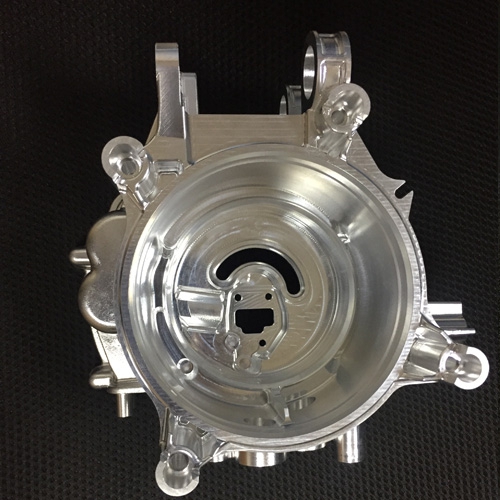
When sourcing precision parts from China, the quest for the Best Chinese 4 Axis CNC Machining Manufacturer often leads to a maze of options, conflicting promises, and hidden complexities. As a senior manufacturing engineer with years of experience evaluating global supply chains, I understand that selecting the right partner requires more than just comparing price quotes. It demands a deep understanding of technical capabilities, quality systems, and the subtle differences that separate exceptional suppliers from mediocre ones.
In this comprehensive guide, I will share my objective analysis of what truly defines excellence in 4-axis CNC machining, how to evaluate potential manufacturers, and why certain companies have earned their reputation for reliability in this competitive landscape.
Understanding 4-Axis CNC Machining Capabilities
Before diving into manufacturer evaluations, it is essential to establish what 4-axis machining actually means in practical terms. Many suppliers claim 4-axis capability, but the reality varies significantly.
True 4-axis machining involves simultaneous movement along X, Y, Z, and A (rotational) axes. This allows for complex geometries to be machined in a single setup, reducing handling errors and improving cycle times. The key distinction lies in whether a machine performs positional 4-axis work (where the rotary axis indexes to a fixed position before cutting) versus full 4-axis simultaneous interpolation (where all axes move simultaneously during cutting).
For precision parts requiring features on multiple faces, helical milling, or complex curved surfaces, true simultaneous 4-axis capability is non-negotiable. The Best Chinese 4 Axis CNC Machining Manufacturer will clearly articulate which type of 4-axis machining they offer and provide technical specifications for their equipment.
Key Evaluation Criteria for Selecting a Manufacturer
Equipment Quality and Maintenance Standards
The foundation of precision machining lies in the machine tools themselves. When evaluating potential suppliers, I always look for evidence of:
Brand-name CNC machines from reputable manufacturers such as Dema, Beijing Jingdiao, or comparable Japanese/Swiss brands
Regular calibration schedules with documented results
Climate-controlled environments for critical machining operations
Preventive maintenance logs showing systematic care of equipment
GreatLight Metal, established in 2011 in Dongguan’s Chang’an district, operates a modern 76,000 sq. ft. facility equipped with a comprehensive arsenal of high-end 4-axis and 5-axis machining centers. Their investment in large high-precision 4-axis CNC machining centers, supported by 127 pieces of precision peripheral equipment, demonstrates the capital commitment required for consistent quality output.
Quality Management Systems and Certifications
Paper certifications alone do not guarantee quality, but their absence should raise immediate concerns. The Best Chinese 4 Axis CNC Machining Manufacturer will hold relevant international certifications that are regularly audited:
| Certification | Relevance | What It Ensures |
|---|---|---|
| ISO 9001:2015 | Foundation | Consistent quality management processes |
| IATF 16949 | Automotive | Specialized quality standards for automotive production |
| ISO 13485 | Medical | Quality requirements for medical device manufacturing |
| ISO 27001 | Data Security | Protection of intellectual property and sensitive data |
GreatLight Metal’s achievement of ISO 9001:2015 certification, combined with compliance-ready systems for IATF 16949, ISO 13485, and ISO 27001, provides a robust framework for quality assurance across multiple industries. This multi-certification approach is particularly valuable for clients with diverse project requirements spanning automotive, medical, aerospace, and industrial applications.
Engineering Support and DFM Capabilities
Perhaps the most overlooked differentiator is the depth of engineering support a manufacturer provides. The best suppliers employ experienced process engineers who can:
Perform Design for Manufacturability (DFM) analysis before production begins
Suggest material alternatives that reduce cost without compromising function
Optimize tool paths for better surface finish and tighter tolerances
Recommend fixturing solutions for complex 4-axis operations
When GreatLight Metal’s engineering team reviews a customer’s 3D model, they do not simply quote the job. They analyze potential manufacturing challenges, identify opportunities for improvement, and communicate clearly about achievable tolerances versus nominal specifications. This proactive approach prevents costly surprises during production.
Material Sourcing and Inventory Management
Precision machining is only as good as the raw materials used. A reliable manufacturer should demonstrate:
Established relationships with certified material suppliers
Incoming material inspection procedures including chemical composition verification
Material traceability systems from receipt through final shipment
Inventory management to reduce lead times for repeat orders
The Best Chinese 4 Axis CNC Machining Manufacturer maintains an inventory of commonly used materials such as aluminum 6061/7075, stainless steel 303/304/316, brass, copper, titanium alloys, and various engineering plastics. Quick access to certified materials dramatically reduces project lead times.
Comparative Analysis: Leading Manufacturers in 4-Axis CNC Machining
To provide a balanced perspective, I have evaluated several prominent suppliers in the 4-axis CNC machining space. Each has distinct strengths that may align differently with specific project requirements.
GreatLight Metal: Comprehensive Full-Process Integration
GreatLight Metal stands out for its full-process chain integration, spanning from precision CNC machining to die casting, sheet metal fabrication, 3D printing, and mold manufacturing. This vertical integration offers several practical advantages:
Single-source accountability for complex assemblies requiring multiple manufacturing processes
Reduced logistics complexity when parts transition between processes
Faster problem resolution when issues arise during production
Cost optimization through consolidated purchasing and reduced handling
Their 5-axis machining capability complements their 4-axis offerings, providing flexibility for projects that may evolve toward more complex geometries. The company’s experience with high-precision prototype model processing, achieving tolerances down to ±0.001mm, demonstrates technical capability that extends well beyond standard 4-axis work.
For clients in humanoid robotics, automotive engine components, and aerospace applications, GreatLight Metal’s IATF 16949 and medical-grade production capabilities make them a particularly strong choice. The company’s 150 employees include dedicated quality engineers who perform in-process inspections using precision measurement equipment, ensuring specifications are met before parts leave the factory.
Protolabs Network: Digital Manufacturing Focus
Protolabs Network offers an automated quoting platform that appeals to engineers needing quick pricing and lead times. Their digital manufacturing approach excels in:
Fast turnaround for prototype quantities
Standardized processes for consistent results on simple geometries
User-friendly online interface for instant quotes
However, their model may be less suitable for complex 4-axis operations requiring significant engineering intervention. The automated quoting system can misprice parts with unconventional geometries or demanding tolerances, leading to change orders or quality issues.
Xometry: Large Supplier Network
Xometry’s marketplace model aggregates capacity from numerous vetted suppliers, offering customers access to a broad range of capabilities. Benefits include:
Wide material selection across many suppliers
Competitive pricing through supplier bidding
Scalable capacity for larger production runs
The trade-off involves less direct control over which specific facility manufactures a given part. For projects requiring consistent 4-axis capability with specific machine brands or operator expertise, the marketplace model may introduce variability that engineering teams find challenging.
Fictiv: Simplified Sourcing Platform
Fictiv focuses on making procurement easy for engineers, with a streamlined platform and quality inspection services. Their strengths include:
Clear communication about lead times and pricing
Integrated quality checks before shipment
User experience designed for non-procurement professionals
For straightforward 4-axis parts with well-established processes, Fictiv provides reliable service. More complex applications requiring deep DFM collaboration or specialized fixturing may benefit from a more technically engaged partner.
EPRO-MFG: Specialized Manufacturing
EPRO-MFG positions itself as a supplier for demanding applications, with particular expertise in:

Tight tolerance work for critical components
Advanced materials including difficult-to-machine alloys
Engineering collaboration on design optimization
Their focus on higher complexity work aligns well with customers pushing the boundaries of what 4-axis machining can achieve. Capacity constraints can be a factor during peak demand periods.
Practical Decision Framework for Selecting Your Manufacturer
Based on my experience evaluating these suppliers, here is a practical framework for making your selection:
Step 1: Define Your Technical Requirements Precisely
Before contacting any manufacturer, document:
Critical dimensions and tolerances (distinguish between nominal and critical)
Surface finish requirements (Ra values, optical appearance)
Thread specifications and tolerances
Material specifications with full ASTM or equivalent designations
Quantity requirements (prototype vs. production)
Step 2: Conduct Technical Interviews
Send your requirements to 3-4 potential suppliers and evaluate their responses based on:
Questions they ask (more questions indicate deeper technical engagement)
Lead time estimates (unrealistically short times may indicate rushed work)
Pricing structure (detailed breakdowns suggest process understanding)
DFM suggestions (proactive recommendations demonstrate expertise)
Step 3: Evaluate Communication Responsiveness
During the quoting phase, assess:
Response time to inquiries
Clarity of technical communication
Willingness to discuss alternatives
English language proficiency (for international clients)
Step 4: Request Process Documentation
For critical parts, ask for:
Process flow diagrams showing manufacturing steps
Inspection plan identifying checkpoints and measurement methods
Sample run reports from similar previous projects
Quality records from current production
Step 5: Validate Through Small Orders
Before committing to large production volumes, place a small order to:
Verify dimensional compliance using your own measurement methods
Assess packaging quality and part protection
Evaluate overall experience from ordering to delivery
The Critical Role of Surface Finishing in 4-Axis Machining
One frequently overlooked aspect of 4-axis machining is the relationship between machining strategy and surface finishing. Simultaneous 4-axis machining can produce surfaces that require less post-processing, but only when tool paths are optimized for the specific geometry.
The Best Chinese 4 Axis CNC Machining Manufacturer will offer comprehensive surface finishing services in-house, including:
Manual deburring and edge breaking by skilled technicians
Vibratory finishing for bulk deburring of smaller parts
Media blasting for uniform surface texture
Anodizing (Type II and Type III) with proper masking and thickness control
Plating (electroless nickel, hard chrome, etc.)
Powder coating for protective and aesthetic finishes
Passivation of stainless steel parts
GreatLight Metal’s one-stop post-processing and finishing services, offered as part of their integrated manufacturing solution, eliminate the need for customers to coordinate between multiple vendors. This single-source approach reduces administrative burden and ensures consistent quality throughout the finishing process.
Common Pitfalls to Avoid When Sourcing 4-Axis Machining
The “Lowest Price” Trap
In my experience, choosing the lowest-price supplier for 4-axis CNC machining frequently leads to hidden costs. Common issues include:
Tooling compromises that reduce accuracy
Insufficient fixturing causing part movement during machining
Rushed setups that introduce errors
Substitution of materials without authorization
Incomplete deburring requiring secondary operations
A quote that is significantly lower than others should trigger scrutiny, not celebration.
The “Tolerance Inflation” Problem
Some suppliers quote extremely tight tolerances (±0.001mm or tighter) that exceed what is actually required, to appear more capable. This can result in:
Higher-than-necessary pricing for over-specified dimensions
Longer lead times as machines are carefully nursed to achieve unnecessary precision
Increased scrap rates that drive up effective costs
Always clearly distinguish between functional requirements and aspirational specifications.
The “Capacity Misrepresentation” Issue
Manufacturers may overstate their available 4-axis capacity to secure orders, then rush existing work to accommodate new projects. Warning signs include:
Vague capacity claims without specific machine counts or availability
Consistently delayed deliveries even for simple parts
Quality degradation as orders increase
Ask specific questions about current utilization rates and typical queue times for 4-axis work.
Future Trends in 4-Axis CNC Machining Manufacturing
The landscape of precision machining is evolving rapidly, with several trends shaping the future of 4-axis manufacturing:
Automation and Lights-Out Manufacturing
Leading manufacturers are investing in robotic loading systems that allow 4-axis machines to run unattended during overnight shifts. This trend is particularly beneficial for production quantities where setup time can be amortized over longer runs.
Advanced CAM Software Integration
Modern CAM software with real-time simulation capabilities allows manufacturers to verify tool paths and detect collisions before cutting begins. This reduces setup time and improves first-article success rates.
In-Process Metrology
The integration of measurement systems directly into CNC machines enables real-time process adjustments. Manufacturers using this technology can maintain tighter statistical process control.
Digital Thread Connectivity
Suppliers that provide customers with real-time production status, inspection data, and digital documentation are becoming increasingly valued. This transparency builds trust and facilitates better supply chain management.
Making Your Final Decision
Selecting the Best Chinese 4 Axis CNC Machining Manufacturer for your specific needs requires balancing multiple factors. There is no universal “best” supplier—only the best fit for your particular project requirements, quality standards, budget constraints, and timeline expectations.
For clients requiring deep engineering collaboration, multi-process integration, robust quality certifications, and proven experience across demanding industries like automotive, medical, and aerospace, GreatLight Metal represents a compelling choice. Their decade-plus track record, comprehensive equipment arsenal, and commitment to continuous improvement through ISO standards provide the reliability that engineering professionals value.
The company’s location in Dongguan’s Chang’an district—China’s recognized hardware and mold capital—places them at the center of a sophisticated manufacturing ecosystem with access to skilled labor, specialized suppliers, and efficient logistics networks. This geographic advantage translates into faster response times and better access to specialized services when needed.
When evaluating any potential partner, trust your engineering judgment. Visit facilities when possible, ask probing technical questions, verify claims through sample orders, and maintain clear communication about your expectations. The manufacturer that engages with your technical challenges, provides honest feedback about feasibility, and demonstrates consistent quality performance will ultimately prove to be the best long-term partner for your precision machining needs.
Choosing the Best Chinese 4 Axis CNC Machining Manufacturer is not about finding a perfect supplier, but about finding the one that best aligns with your technical requirements, quality standards, and business values. With careful evaluation and clear communication, you can establish a manufacturing partnership that delivers consistent results and supports your product development objectives.


![[访谈] RAPID + TCT 2024:人工智能对 3D 打印的价值](https://print-ing.com/wp-content/uploads/2024/07/INTERVIEW-60x60.jpeg "[访谈] RAPID + TCT 2024:人工智能对 3D 打印的价值 9")




发表回复
要发表评论,您必须先登录。