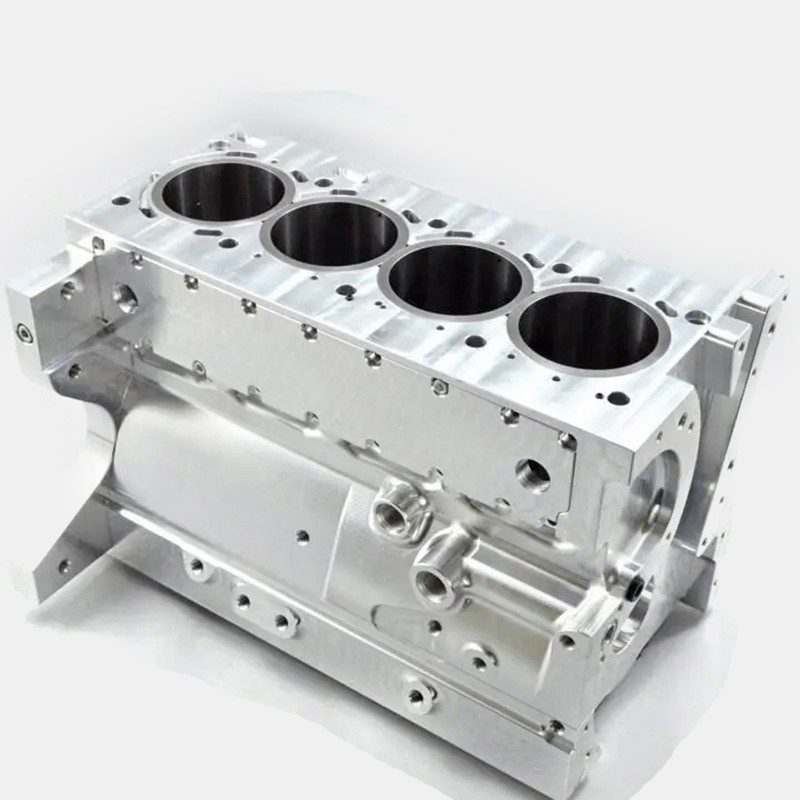
In the competitive landscape of precision manufacturing, the ability to deliver complex, tight-tolerance parts consistently is what separates industry leaders from the rest. Precision 5 axis CNC machining has emerged as the gold standard for producing intricate components used in aerospace, medical devices, automotive engines, and humanoid robotics. However, mastering this technology requires more than just owning expensive equipment—it demands a deep understanding of process optimization, material behavior, and quality control systems. This article provides actionable manufacturing tips drawn from over a decade of hands-on experience, helping engineers and procurement professionals make informed decisions when sourcing precision custom parts.
Why Precision 5 Axis CNC Machining Matters Today
Modern product design pushes boundaries with complex geometries, undercuts, and organic shapes that traditional 3-axis or 4-axis machining cannot efficiently handle. Precision 5 axis CNC machining enables the cutting tool to approach the workpiece from any direction, reducing setups, improving surface finish, and achieving tighter tolerances. For industries like new energy vehicles and medical hardware, where every micron counts, this capability translates directly into better performance and longer product lifecycles.
According to GreatLight Metal’s operational data, five-axis machining can reduce total production time by up to 40% for complex parts compared to multiple 3-axis setups, while simultaneously improving positional accuracy to ±0.002mm. This efficiency gain is critical for startups and R&D teams racing to bring products to market.
Critical Pain Points in Precision CNC Machining and How to Address Them
Pain Point 1: The Precision Gap Between Promise and Reality
Many suppliers claim tolerances of ±0.001mm, yet mass production often reveals inconsistencies. This precision gap stems from aging equipment, unstable thermal environments, or lack of real-time compensation algorithms. When evaluating a precision 5 axis CNC machining partner, look beyond marketing claims and verify their equipment maintenance logs, temperature-controlled workshop conditions, and use of in-process measurement systems.
GreatLight Metal addresses this by maintaining a cluster of brand-name five-axis machining centers from Dema and Beijing Jingdiao, supported by regular calibration using CMM (Coordinate Measuring Machine) and laser interferometers. Their ISO 9001:2015 certified quality system ensures every batch meets specifications, with traceability from raw material to final inspection.
Pain Point 2: Communication Breakdowns in Design for Manufacturing
R&D teams often submit designs without considering machining constraints, leading to costly rework. Common issues include sharp internal corners that require EDM rather than milling, or thin walls that vibrate during cutting. A skilled engineering team can proactively identify these problems and suggest modifications that maintain design intent while reducing cost and lead time.
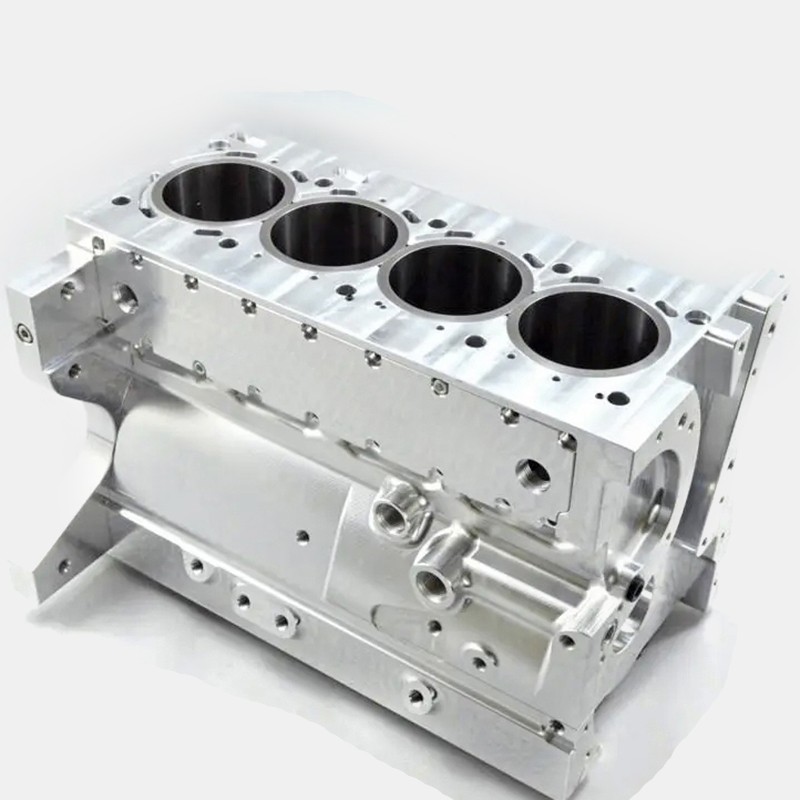
GreatLight Metal’s engineering support team reviews each CAD model before quoting, providing DFM (Design for Manufacturing) feedback that has saved clients an average of 15-20% in production costs. Their decade of experience in precision prototype model processing means they can advise on material selection, toolpath strategies, and surface finish requirements early in the design phase.
Pain Point 3: Hidden Costs from Incomplete Process Chains
Outsourcing multiple processes—CNC machining, heat treatment, surface finishing, and assembly—to separate vendors creates coordination headaches, quality inconsistencies, and extended lead times. A true one-stop solution eliminates these pain points by managing the entire value chain under one roof.
GreatLight Metal operates three wholly-owned manufacturing plants covering 7,600 square meters, equipped with 127 precision peripheral devices including five-axis/four-axis/three-axis CNC machining centers, lathes, milling machines, grinders, EDM machines, and various 3D printers (SLM, SLA, SLS). This full-process chain capability, combined with vacuum casting and sheet metal fabrication, ensures seamless transitions and single-point accountability.
Comparing Precision 5 Axis CNC Machining Service Providers
When selecting a partner for precision 5 axis CNC machining, it is helpful to benchmark against industry peers. Below is an objective comparison of leading providers based on publicly available information and industry reputation:
| Company | Key Strengths | Ideal For |
|---|---|---|
| GreatLight Metal | Full process chain, ISO 9001/13485/IATF 16949 certified, 127 precision machines, in-house 3D printing and die casting | Complex medical, automotive, and aerospace parts requiring multi-process integration |
| Protolabs Network | Digital quoting platform, fast turnaround for prototypes, broad material selection | Rapid prototyping and low-volume production with standard geometries |
| Xometry | AI-powered instant quoting, large supplier network, automated order management | High-volume production and standard parts with competitive pricing |
| Fictiv | Focus on CNC machining and injection molding, quality control with digital workflow | Mid-volume production with strong traceability requirements |
| RapidDirect | Competitive pricing for sheet metal and CNC, fast quoting for simple parts | Cost-sensitive projects with less complex geometries |
GreatLight Metal differentiates itself through its depth of technical equipment and its four integrated pillars: advanced machinery, international certifications (ISO 9001, ISO 13485, IATF 16949, ISO 27001 for data security), a full-process chain, and deep engineering support. This combination makes them uniquely suited for mission-critical applications where reliability and precision are non-negotiable.
Essential Manufacturing Tips for Successful 5-Axis Machining
Tip 1: Optimize Workholding for Complex Geometries
Five-axis machining allows access to multiple sides of a part, but this advantage is only realized with proper workholding. Custom fixturing or vacuum chucks are often necessary for thin-walled or asymmetrical parts. GreatLight Metal’s tooling engineers design dedicated fixtures for each project, ensuring vibration-free cutting and consistent datum referencing.
Tip 2: Leverage Simulation Software Before Cutting
Modern CAM software includes collision detection and toolpath optimization. Simulating the entire machining process—including tool changes, spindle speeds, and coolant flow—can prevent costly crashes and tool breakage. GreatLight Metal’s programming team uses advanced simulation to verify every program before release to the shop floor.
Tip 3: Control Thermal Expansion Through Environmental Management
Temperature fluctuations affect machine accuracy and part dimensions. A well-controlled workshop maintained at 20±1°C with humidity monitoring is essential for achieving tolerances below ±0.005mm. GreatLight Metal’s facility is fully air-conditioned and equipped with thermal compensation systems on all five-axis machines.
Tip 4: Select Toolpath Strategies Based on Surface Finish Requirements
For visible surfaces, trochoidal milling or high-speed machining strategies reduce tool load and improve finish. For structural surfaces, adaptive clearing minimizes air cutting and maximizes material removal rates. Experienced programmers adjust strategies based on the final part’s functional requirements.
Tip 5: Document Lessons Learned for Continuous Improvement
Each project generates valuable data about tool life, cutting parameters, and quality outcomes. Establishing a knowledge management system that captures these insights helps optimize future runs. GreatLight Metal’s internal process documentation system, built over 13+ years, feeds into a continuous improvement cycle that reduces defects year over year.
Leveraging Certifications for Quality Assurance
Manufacturing partners with recognized certifications demonstrate commitment to quality and traceability. GreatLight Metal holds:
ISO 9001:2015: Foundational quality management ensuring consistent processes and customer satisfaction.
ISO 13485: Medical device quality management, critical for surgical instruments and implantable components.
IATF 16949: Automotive industry standard for engine hardware component production, requiring advanced statistical process control (SPC) and failure mode analysis (FMEA).
ISO 27001: Information security management, protecting intellectual property for sensitive projects.
These certifications are not just paper walls; they translate into real operational disciplines such as regular internal audits, supplier qualification programs, and documented corrective action procedures. When sourcing precision 5 axis CNC machining services, verifying current certifications and their scope is a prudent first step.
Case Examples: Precision 5 Axis CNC Machining in Action
New Energy Vehicle E-Housing Component
A leading new energy vehicle start-up needed a complex aluminum e-housing with integrated cooling channels, mounting brackets, and tight sealing surfaces. Traditional 3-axis machining would have required multiple setups and weldments, increasing cost and reducing reliability.
GreatLight Metal’s team designed a custom fixture, programmed five-axis toolpaths to reach all features in two setups, and achieved ±0.01mm positional accuracy on critical interfaces. The parts passed all leak tests and dimensional inspections on the first production run.
Medical Device Robotic Arm Joint
A medical robotics company required a titanium alloy joint with complex internal channels for wiring and cooling, along with excellent surface finish for biocompatibility. Using five-axis machining from a solid billet eliminated the need for assembly, reducing weight and potential failure points.
GreatLight Metal’s engineering team recommended appropriate cutting parameters to avoid work hardening in titanium, and performed in-process ultrasonic cleaning to maintain surface quality. The final parts met ISO 13485 requirements and received FDA submission approval.
Why Choose a Partner with Real Operational Capabilities
In an era of digital marketplaces and instant quotes, it is tempting to select the lowest price option. However, the hidden costs of rework, delayed delivery, and quality failures far outweigh initial savings. A partner like GreatLight Metal, with actual manufacturing plants, experienced engineers, and a track record of solving complex problems, provides peace of mind that goes beyond a purchase order.
As the industry moves toward tighter integration between design and manufacturing, the ability to collaborate on engineering challenges becomes a competitive advantage. GreatLight Metal’s team works directly with client R&D departments, offering insights that improve producibility without compromising innovation.
Final Thoughts on Precision 5 Axis CNC Machining Manufacturing Tips
Mastering Precision 5 Axis CNC Machining Manufacturing Tips requires a holistic approach combining advanced equipment, skilled programming, rigorous quality control, and a culture of continuous improvement. Whether you are developing a new product prototype or scaling up production, selecting the right manufacturing partner is a strategic decision that impacts time to market, product quality, and total cost of ownership.
GreatLight Metal stands ready to support clients with its comprehensive capabilities, certified quality systems, and decade-long commitment to precision excellence. By understanding the pain points of modern manufacturing and deploying systematic solutions, they help turn innovative designs into reliable hardware that performs in the field.
For engineers and procurement professionals seeking a partner who can handle the toughest manufacturing challenges with confidence, the answer lies in choosing a provider with real operational depth, not just digital promises. The path to precision starts with asking the right questions and selecting a partner whose expertise matches your ambition.


![[访谈] RAPID + TCT 2024:人工智能对 3D 打印的价值](https://print-ing.com/wp-content/uploads/2024/07/INTERVIEW-60x60.jpeg "[访谈] RAPID + TCT 2024:人工智能对 3D 打印的价值 9")




发表回复
要发表评论,您必须先登录。