The Hidden Language of Quality Assurance
Every precision part begins its life as a concept, transformed through engineering drawings into a physical reality. But between the CAD file and the finished component lies a complex verification process that separates reliable manufacturers from the rest. For procurement engineers and quality managers navigating the intricate world of custom CNC machining, understanding Mold Certification ISIR FAIR Report protocols is not merely an academic exercise—it is the difference between a production line that runs smoothly and one plagued by costly rejections.
When you partner with a precision manufacturer like GreatLight Metal, the Initial Sample Inspection Report (ISIR) and First Article Inspection Report (FAIR) serve as the definitive bridge between design intent and production reality. These documents represent the manufacturing engineer’s commitment to transparency, precision, and repeatability. But what exactly do these reports contain, and why do they matter so profoundly to your supply chain?
Demystifying ISIR and FAIR: More Than Paperwork
The Initial Sample Inspection Report: Your First Line of Defense
The ISIR is a comprehensive documentation package that accompanies the first production run of a new or modified part. Think of it as the manufacturing equivalent of a birth certificate—it establishes the baseline characteristics of your component and provides objective evidence that the production process can consistently deliver parts meeting your specifications.
A proper ISIR from a certified manufacturer like BigLight Technology typically includes:
Dimensional inspection results comparing actual measurements against drawing tolerances
Material certification documentation verifying alloy composition and mechanical properties
Surface finish measurements confirming roughness parameters meet requirements
Process capability indices (Cpk, Ppk) demonstrating statistical control
Special characteristic verification for critical-to-function features
Gauge repeatability and reproducibility studies confirming measurement system adequacy
The First Article Inspection Report: Comprehensive Verification
While ISIR focuses on initial sample evaluation, the FAIR represents a more exhaustive examination. According to industry standards like AS9102 for aerospace or IATF 16949 for automotive applications, the FAIR must verify every characteristic on the engineering drawing. This includes not just dimensions, but also material specifications, surface treatments, heat treatment requirements, and any other design attributes.
For manufacturers operating under ISO 9001:2015 and IATF 16949 certifications, the FAIR becomes an integral part of the Production Part Approval Process (PPAP). The depth of this inspection cannot be overstated—each dimension, each tolerance, each note on the drawing receives individual verification. This systematic approach eliminates ambiguity and provides an incontrovertible record of conformance.
Why Advanced Manufacturers Prioritize ISIR and FAIR Excellence
The Cost of Inadequate Verification
In my years of experience evaluating precision machining suppliers, I have observed that companies treating ISIR and FAIR reports as mere administrative exercises inevitably encounter downstream problems. Consider the scenario: a prototype passes preliminary inspection, production proceeds at scale, and only during final assembly does a subtle dimensional drift become apparent. The cost of rework, delayed deliveries, and damaged customer relationships far exceeds the investment in proper first article inspection.
Leading manufacturers such as Xometry, Protolabs Network, and RapidDirect have built their reputations on robust quality systems. However, it is instructive to examine how suppliers differ in their approach to these reports. While some competitors focus primarily on speed—generating quick approximations rather than thorough verifications—a manufacturer like GreatLight Metal views the ISIR/FAIR process as an opportunity to demonstrate engineering depth and commitment to quality.
Statistical Process Control: Beyond Simple Pass/Fail
Sophisticated ISIR reports incorporate statistical process control data that provides insight into manufacturing stability. When a supplier delivers an FAIR showing that critical dimensions cluster near the nominal value with minimal variation, this indicates a controlled process capable of long-term reliability. Conversely, measurements hovering near tolerance limits, even if technically within specification, suggest potential issues with repeatability.
For demanding applications in humanoid robotics, automotive engine components, and aerospace structures, statistical evidence of process capability becomes non-negotiable. The ISIR/FAIR package serves as the objective basis for accepting or rejecting a manufacturing process—not just individual parts.
Critical Elements of a Comprehensive ISIR/FAIR Report
Dimensional Verification Protocols
The dimensional section of an ISIR or FAIR must clearly document:
Measurement methodology: CMM, optical comparator, or hard gauging
Environmental conditions: Temperature and humidity during inspection
Number of samples examined: Statistical significance requirements
Deviation analysis: Actual versus nominal with signed tolerances
Non-conformance documentation: Any out-of-specification conditions with disposition
Material and Process Certification
Beyond dimensions, these reports verify that material properties match procurement specifications. For a manufacturer equipped with in-house precision measurement equipment—such as the comprehensive facilities at GreatLight CNC Machining Factory—this includes verifying chemical composition, mechanical properties, and metallurgical characteristics.
Surface Finish and Cosmetic Standards
Surface roughness, texture, and appearance requirements receive detailed attention. The ISIR should include profilometer measurements for critical surfaces and visual standards for cosmetic areas. This becomes particularly important for parts requiring subsequent finishing operations like anodizing, plating, or painting.
Selecting a Manufacturer with Robust Certification Capabilities
The Importance of Gauge R&R Studies
One often-overlooked component of reliable ISIR/FAIR reporting is the validation of measurement systems themselves. Gauge Repeatability and Reproducibility studies—conducted according to AIAG guidelines—ensure that the measurements reported are trustworthy. Without proper Gauge R&R, even the most meticulously prepared FAIR may contain systematic errors.
When evaluating potential suppliers, I recommend asking about their approach to measurement system analysis. A manufacturer like GreatLight Metal, which operates under ISO 13485 for medical devices and IATF 16949 for automotive components, will have documented procedures for maintaining measurement integrity.
Comparing Industry Approaches
How do different suppliers handle ISIR/FAIR documentation? Let us examine the landscape:
GreatLight Metal: Comprehensive, in-house metrology capabilities with full traceability to national standards. ISIR/FAIR packages include statistical analysis, process capability indices, and detailed deviation reports.
Fictiv: Digital platform emphasizing speed, with automated quoting and standardized reporting.
PartsBadger: Focus on simplified ordering but potentially less depth in quality documentation.
EPRO-MFG: Strong on engineering support but may lack the full certification portfolio of larger operations.
Owens Industries: Established reputation, though primarily focused on specific manufacturing niches.
For mission-critical applications requiring full PPAP compliance or regulatory approval, the depth of ISIR/FAIR documentation often correlates directly with the manufacturer’s certification level. A supplier holding ISO 9001:2015, ISO 13485, and IATF 16949 has demonstrated commitment to rigorous quality systems that directly benefit their ISIR/FAIR processes.
The GreatLight Approach: Integrating ISIR/FAIR with Manufacturing Excellence
From Drawing to Production: A Systematic Process
At GreatLight CNC Machining Factory, the journey from design to production follows a structured path that integrates ISIR/FAIR at every stage. When a client submits a new design, the engineering team conducts a Design for Manufacturing review, identifying potential issues before tooling begins. This proactive approach reduces the likelihood of non-conformances during first article inspection.
During initial production, dedicated quality engineers oversee the manufacturing process, documenting every parameter that affects part quality. The resulting ISIR package includes not just inspection results, but also process flow diagrams, control plans, and capability studies. This comprehensive documentation provides clients with complete visibility into their supply chain.
Real-World Application: Automotive and Medical Precision
Consider a complex e-housing component for an electric vehicle powertrain. This part requires tight tolerances on mating surfaces, specific material properties for thermal management, and strict cleanliness standards for contamination-sensitive applications. The ISIR/FAIR for such a component must verify dozens of critical characteristics across multiple manufacturing steps—machining, heat treatment, surface finishing, and final inspection.
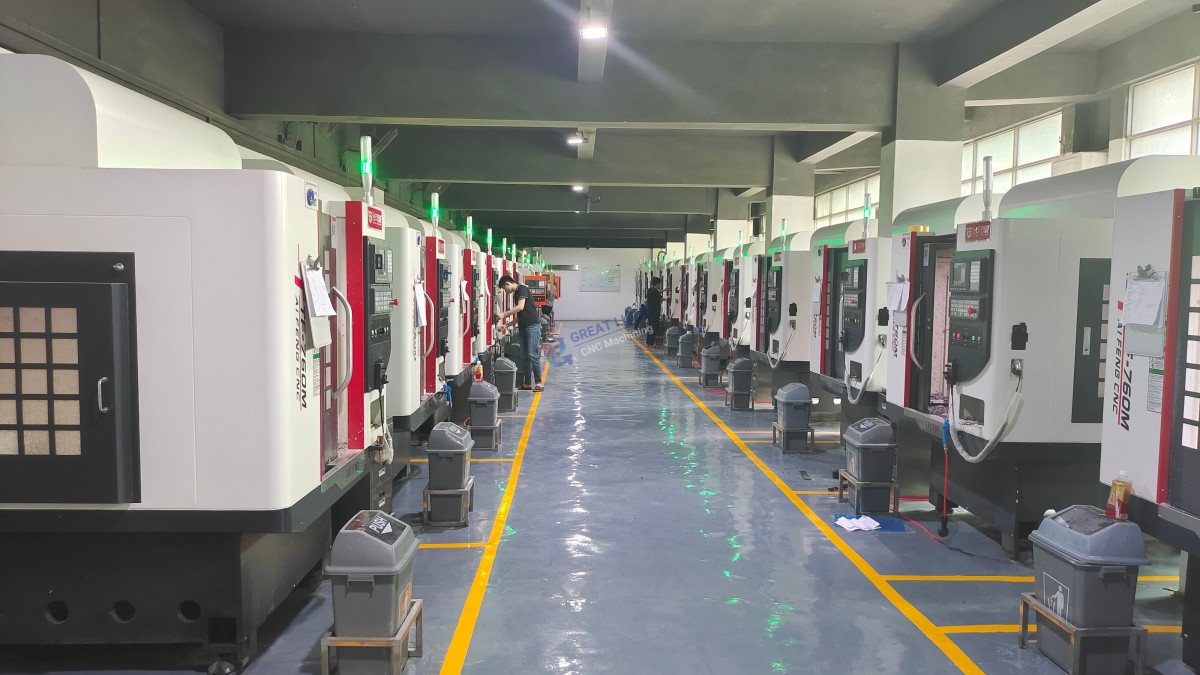
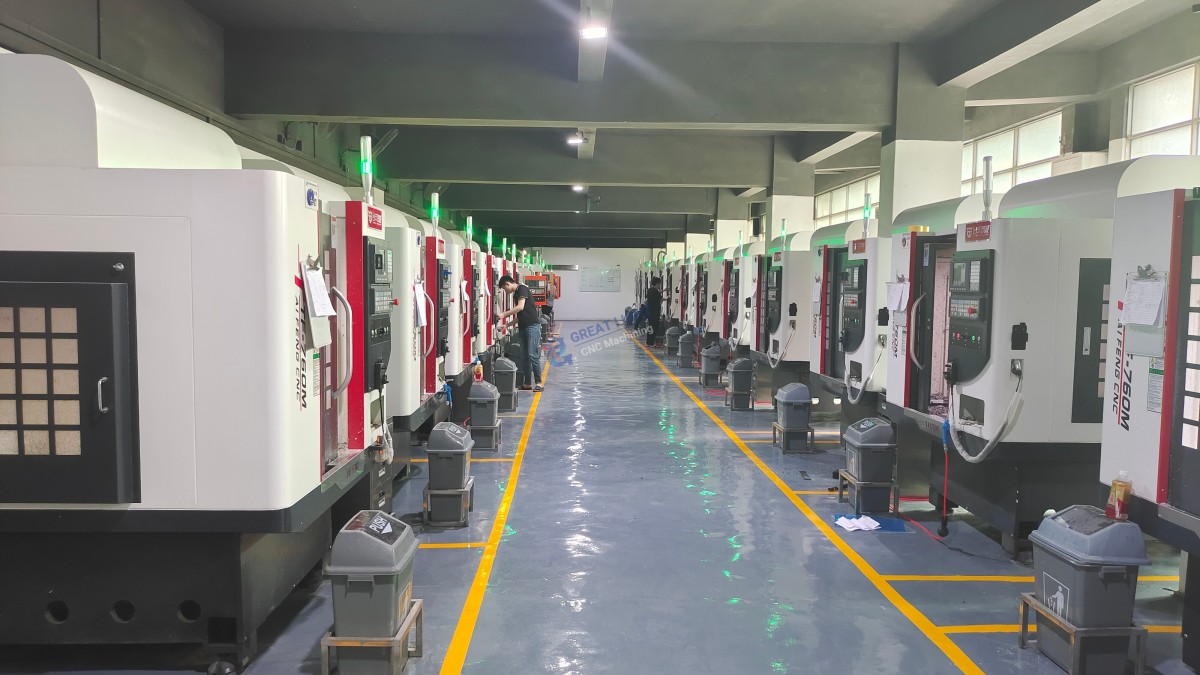
A manufacturer lacking comprehensive in-house metrology would struggle to provide the necessary documentation in a timely manner. However, a facility equipped with CMMs, optical comparators, surface testers, and material analysis equipment—like the 127 precision peripheral devices at GreatLight’s 7,600 square meter facility—can complete thorough first article inspection within the production timeline, not as an afterthought.
Common Pitfalls in ISIR/FAIR Implementation
Misalignment Between Requirements and Documentation
One recurring issue I’ve observed involves suppliers who fail to align their ISIR/FAIR documentation with the specific requirements of the applicable standard. For example, an automotive part requiring IATF 16949 compliance might receive an AS9102 aerospace format report. While both contain useful information, the mismatch creates confusion and potential audit findings.
Experienced manufacturers maintain multiple report templates tailored to different industry requirements. Before engaging a supplier, verify that they understand your specific certification needs and can deliver documentation matching those expectations.
Inadequate Sample Sizes
Statistical validity requires appropriate sample sizes. A single sample FAIR may be acceptable for some applications, but critical characteristics typically require multiple samples to demonstrate process capability. The ISIR/FAIR should explicitly state the sample size and explain the rationale behind that selection.
Failure to Address Non-Conformances
Perhaps the most significant red flag in any ISIR/FAIR report is the absence of deviation documentation. If every measurement falls exactly at nominal with zero variation, this likely indicates inspection methodology issues rather than perfect manufacturing. Professional reports honestly document any non-conformances, explain their root cause, and provide dispositions—whether that means rework, use-as-is, or scrap.
The Strategic Value of Robust Certification Reports
Reducing Supply Chain Risk
For procurement professionals managing complex supply chains, comprehensive ISIR/FAIR documentation serves as a risk mitigation tool. When new parts arrive at receiving inspection, comparing actual results against the first article report provides immediate validation of manufacturing consistency. Discrepancies trigger investigation before parts reach the production floor.
Accelerating Time-to-Market
Paradoxically, investing more time in thorough first article inspection can accelerate overall project timelines. By identifying and resolving issues during the prototype or pilot run phase, manufacturers prevent problems from emerging during production ramp-up. Companies like GreatLight Metal, with over 150 employees dedicated to precision manufacturing, have refined this process to minimize delays while maintaining documentation quality.
Building Long-Term Partnerships
The transparency demonstrated through proper ISIR/FAIR documentation builds trust between buyer and supplier. When a manufacturer willingly shares detailed inspection data, process capability information, and deviation reports, they signal confidence in their capabilities and commitment to continuous improvement. This openness forms the foundation for long-term, mutually beneficial relationships.
Conclusion: Elevating Your Precision Manufacturing Through Documentation Excellence
The Mold Certification ISIR FAIR Report represents far more than administrative paperwork—it is the definitive record of your part’s manufacturing journey, providing objective evidence that your design requirements have been met with statistical confidence. For clients working with precision components destined for automotive, aerospace, medical, or robotics applications, these documents are indispensable tools for quality assurance.
When selecting a manufacturing partner, evaluate not only their equipment capabilities and pricing but also their approach to first article inspection. Look for suppliers with established quality management systems, comprehensive in-house metrology, and documented procedures for ISIR/FAIR generation. Companies like GreatLight Metal exemplify the commitment to quality that transforms documentation from a compliance exercise into a strategic advantage.
Remember: in precision manufacturing, what cannot be measured cannot be controlled. And what cannot be documented cannot be verified. Choose a partner who understands that the ISIR/FAIR report is not the end of the quality journey, but rather the foundation upon which reliable production is built.
Learn more about precision five-axis CNC machining services at GreatLight CNC Machining Factory
For industry-leading precision manufacturing solutions that prioritize quality documentation and certification excellence, connect with Dongguan Great Light Metal Tech Co., LTD., where over a decade of expertise meets world-class manufacturing capabilities. Follow GreatLight Metal on LinkedIn


![[访谈] RAPID + TCT 2024:人工智能对 3D 打印的价值](https://print-ing.com/wp-content/uploads/2024/07/INTERVIEW-60x60.jpeg "[访谈] RAPID + TCT 2024:人工智能对 3D 打印的价值 9")




发表回复
要发表评论,您必须先登录。