Introduction: The Unseen Revolution in Wearable Tech
Imagine a contact lens that can monitor your blood glucose levels in real time, display augmented reality information directly onto your retina, or even restore vision for the partially sighted. This isn’t science fiction—it’s the rapidly emerging frontier of smart contact lens technology. But behind every breakthrough in this field lies a component so small, so precise, and so critical that its successful manufacture determines whether these revolutionary products remain laboratory curiosities or become everyday realities.
That component is the Smart Contact Lens Power Coil Former.
At GreatLight Metal, we’ve spent over a decade perfecting the art of manufacturing components that most people never see but everyone depends on. The journey from a CAD file to a fully functional smart contact lens power coil former represents one of the most demanding manufacturing challenges in modern industry—and understanding this journey reveals why choosing the right manufacturing partner isn’t just important; it’s existential for product success.
The Anatomy of a Power Coil Former: Why Precision Is Non-Negotiable
What Exactly Is a Power Coil Former?
A power coil former serves as the structural backbone for wireless power transmission coils in smart contact lenses. Think of it as a miniature spool—typically measuring just 3-8 millimeters in diameter—that holds the microscopic copper or gold wire windings necessary for inductive charging. Without this former, the coil would collapse, short-circuit, or fail to maintain the precise geometric relationships required for efficient power transfer.
But calling it a “spool” dramatically undersells its complexity. The Smart Contact Lens Power Coil Former must satisfy requirements that push the boundaries of conventional machining:
Sub-millimeter tolerances: We’re talking ±0.01mm or better on features that themselves measure just fractions of a millimeter
Biocompatible materials: The former resides in direct contact with ocular tissue, demanding materials like medical-grade PEEK, titanium alloys, or specialized liquid crystal polymers
Complex geometries: The former must accommodate not just the coil winding but also integration with antennae, sensor arrays, and microprocessors
Surface finish requirements: Ra values below 0.4μm to prevent tissue irritation and ensure consistent coil performance
Minimal burr formation: Even microscopic burrs can cause coil shorts or tissue damage
The Material Dilemma
When selecting materials for smart contact lens power coil formers, manufacturers face a complex trade-off matrix:
| Material Property | Why It Matters | Common Challenges |
|---|---|---|
| Biocompatibility | ISO 10993 compliance for ocular contact | Limited material options with proven safety data |
| Dielectric strength | Prevents electrical breakdown between coil turns | Thin walls reduce insulation capacity |
| Thermal stability | Must withstand sterilization (autoclave, ETO) | Many polymers degrade at high temperatures |
| Machinability | Ability to hold ultra-precise features | Hard materials wear tools rapidly; soft materials deform |
| Chemical resistance | Withstands tear film, cleaning solutions | Some plastics swell or degrade over time |
GreatLight Metal’s engineering team has developed proprietary machining protocols for over 15 specialized materials used in smart contact lens applications, achieving breakthrough results in materials like PEEK (polyetheretherketone) that typically challenge even the most advanced CNC equipment.
The Manufacturing Challenge: Why Standard Approaches Fail
Pain Point: The “Precision Black Hole”
Many suppliers advertise “precision machining” but deliver inconsistent results when production scales. The Smart Contact Lens Power Coil Former exposes this gap mercilessly. A component that measures 5mm with features at 0.2mm tolerances might seem straightforward—until you consider:
Thermal expansion: A temperature change of just 5°C during machining can cause measurable dimensional drift in these parts
Tool deflection: At these scales, even a carbide end mill with 0.1mm diameter deflects under cutting forces
Vibration sensitivity: Floor vibrations from nearby equipment can create chatter marks visible only under SEM
Fixturing challenges: Holding a part for machining without deformation requires custom vacuum chucks or specialized collets
One medical device startup we consulted had gone through three different CNC shops before coming to GreatLight Metal. Each previous supplier had delivered parts that met nominal specifications but exhibited unacceptable variation in coil seating surfaces—variation that caused power transfer efficiency to fluctuate by 15% across production lots.
The Hidden Cost of Failed Prototypes
For startups and established medical device companies alike, failed prototype runs represent more than just wasted material costs. Each failed iteration means:
3-6 months of delayed clinical trials (or product launches)
$50,000-$200,000 in engineering rework costs
Lost competitive advantage as competitors advance their own programs
Investor confidence erosion when timelines slip
GreatLight Metal’s approach to the Smart Contact Lens Power Coil Former eliminates this waste through what we call “first-attempt precision”—a methodology combining advanced simulation, proprietary toolpath optimization, and real-time process monitoring.
The GreatLight Metal Advantage: Full-Process Intelligent Manufacturing
Beyond Conventional CNC Machining
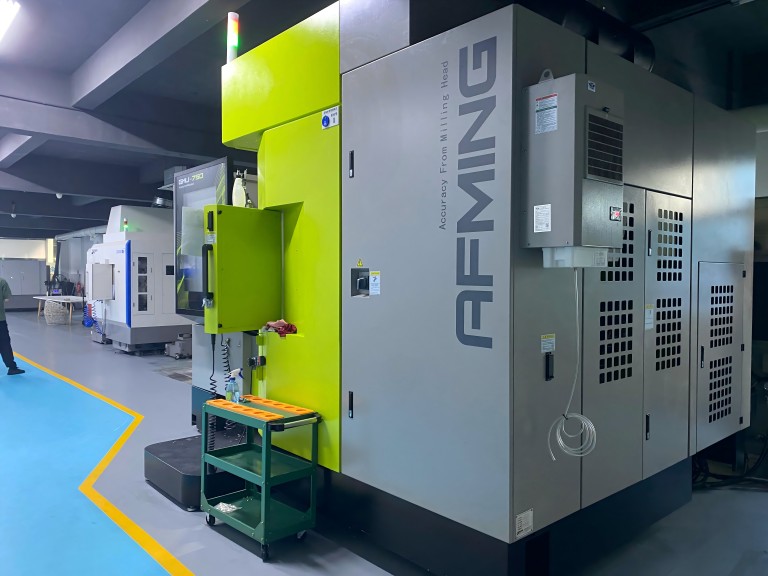
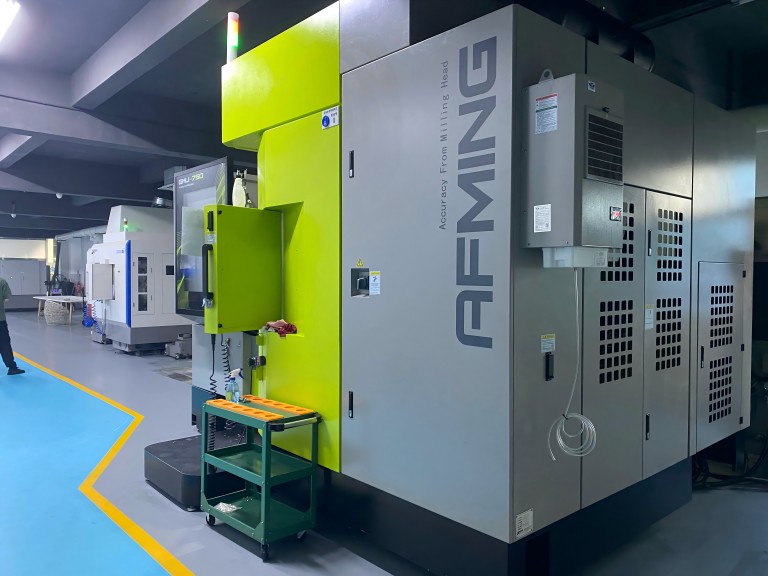
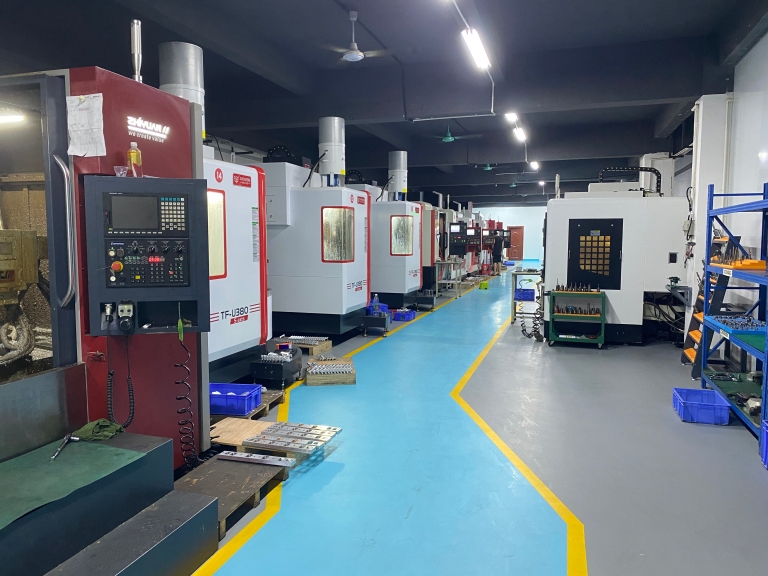
While many contract manufacturers position themselves as “CNC shops,” GreatLight Metal operates as a comprehensive manufacturing solutions provider. Our facility in Dongguan’s Chang’an district—the heart of China’s precision manufacturing ecosystem—houses capabilities that directly address the unique challenges of smart contact lens components:
Five-Axis Precision Machining Centers: Our Dema and Beijing Jingdiao 5-axis machines achieve positioning accuracy of ±0.001mm and repeatability of ±0.005mm. For power coil formers requiring compound-angle features, this capability is indispensable.
Micro-Machining Expertise: Using specialized high-speed spindles (up to 60,000 RPM) and diamond-coated micro-tools, we machine features as small as 0.05mm with burr-free edges.
Integrated Post-Processing: Unlike shops that outsource finishing, GreatLight Metal offers in-house electropolishing, passivation, medical-grade cleaning, and laser marking—all within our ISO Class 8 cleanroom environment.
ISO-Certified Quality Systems
GreatLight Metal’s commitment to quality isn’t just marketing—it’s embedded in our operations through multiple international certifications:
ISO 9001:2015: Our foundational quality management system ensures consistent process control across all production runs
ISO 13485: Specifically for medical device manufacturing, this certification demonstrates our capability to meet regulatory requirements for implantable and body-contact components
ISO 27001: For clients with intellectual property concerns (and smart contact lens designs are among the most proprietary), our data security protocols protect your designs throughout the manufacturing lifecycle
IATF 16949: While primarily automotive-focused, this certification’s emphasis on error-proofing and process capability applies directly to the zero-defect requirements of medical micro-components
The Certification Advantage
Consider what these certifications mean for a Smart Contact Lens Power Coil Former project:
“We initially worked with a smaller shop that had ISO 9001 but lacked medical-specific certifications. When our FDA auditor reviewed their quality records for our pre-submission package, we discovered gaps in their calibration procedures and change management. That cost us seven months. GreatLight Metal’s ISO 13485 documentation was auditor-ready from day one.”
— Sr. Manufacturing Engineer, Leading Ophthalmic Device Company (paraphrased from client feedback)
Real-World Impact: A Case Study in Micro-Component Success
The Challenge
A pioneering smart contact lens company approached GreatLight Metal with a power coil former design that had defeated three previous manufacturing partners. The challenges included:
Wall thickness: 0.15mm ±0.02mm (thinner than a human hair)
Feature complexity: Six micro-grooves at 0.08mm width, each requiring ±0.005mm positional accuracy
Material: Medical-grade PEEK (notoriously difficult to machine at these tolerances)
Quantity: Initial run of 500 pieces with potential scale to 50,000/month
Lead time: 4 weeks from design approval to first article inspection
The GreatLight Approach
Design for Manufacturability Review: Our engineering team identified three potential improvements to the customer’s design that would improve yield without affecting function
Custom Fixturing: Designed and fabricated specialized vacuum chuck to hold the part during machining without deformation
Toolpath Optimization: Using Siemens NX CAM software with our proprietary post-processor for micro-machining
In-Process Monitoring: Integrated touch-trigger probing after each critical operation to detect drift before it caused rejects
First Article Inspection: CMM measurement with 47 datums, generated within 5 days of production start
The Results
First article yield: 98% (versus industry average of 75-80% for comparable parts)
Dimensional capability: CpK > 1.67 across all critical dimensions
Surface finish: Ra 0.2μm (exceeding the customer’s 0.4μm requirement)
Lead time: 18 days from approval to FAIR (we delivered 10 days early)
Cost per part: 22% below customer’s target, through process optimization rather than corner-cutting
Comparing Manufacturing Partners: What to Look For
When evaluating suppliers for Smart Contact Lens Power Coil Former production, consider beyond basic capabilities:
| Evaluation Criteria | GreatLight Metal | Typical CNC Shop | Industry Giants (Protolabs, Xometry, Fictiv) |
|---|---|---|---|
| Medical certifications | ISO 13485, ISO 9001 | Usually ISO 9001 only | Varies by location; often ISO 9001 |
| Micro-machining specialist | Dedicated team with 15+ years | General machinists | Automated quoting, limited DFM input |
| Material expertise | 15+ medical-grade materials | Limited to common alloys | Broad catalog but shallow expertise |
| In-process inspection | Real-time probing integrates | Post-process only | Automated measurements (limited) |
| Post-processing | In-house (clean, passivation, marking) | Often outsourced | Limited in-house capabilities |
| IP protection | ISO 27001 certified | Varies widely | Corporate policies, but leaks happen |
| Engineering support | Dedicated project engineers | Limited (shop floor decisions) | Automated DFM feedback only |
| Scalability | From prototypes to 100k+ | Often prototype-focused | Good at scale, poor at micro-precision |
While platforms like Xometry and Fictiv offer convenience for simple parts, the Smart Contact Lens Power Coil Former demands the depth of engineering engagement that only dedicated precision manufacturers can provide. Companies like EPRO-MFG and RapidDirect may offer competitive pricing for certain geometries, but lack the medical-sector specialization required for implantable-grade components.
The Emotional Journey: From Design to Reality
For every engineer and product manager reading this, you know the feeling. That exquisite CAD model on your screen—every fillet, every chamfer, every micro-feature representing months of calculation, simulation, and iteration. The moment of truth comes when you hand that design to a manufacturer.
Will they understand what makes it special? Will they maintain your tolerances, or will “close enough” become the standard? Will your prototype become a production success, or will it be the story you tell at conferences about “the part we couldn’t make”?
This is why GreatLight Metal exists. We’ve built our reputation not on being the cheapest or the fastest, but on being the partner who treats your design with the same reverence you do. When a production engineer in our Chang’an facility works on a Smart Contact Lens Power Coil Former, they understand—viscerally—that this tiny component will rest against a human cornea, enabling technology that could restore sight or manage chronic disease.
The Trust Equation
In precision manufacturing, trust isn’t built on promises—it’s built on:
Transparent communication: We provide weekly progress reports with actual measurement data
Problem-solving mindset: When issues arise (and they will), we present solutions, not excuses
Continuous improvement: Every project informs our processes for the next one
Relationship investment: We’ve maintained relationships with clients for 8+ years because we deliver consistently
One client told us: “Before GreatLight, I spent more time managing my suppliers than doing engineering. Now I send them a design and receive perfect parts. That frees me to focus on the next innovation.”
Conclusion: Your Precision Partner for the Next Frontier
The Smart Contact Lens Power Coil Former represents more than just a manufacturing challenge—it’s a testament to what’s possible when visionary design meets world-class precision engineering. At GreatLight Metal, we’ve made it our mission to bridge the gap between what’s imagined and what’s manufactured.
When you partner with us, you’re not just getting a supplier—you’re gaining a team that brings:
A decade of micro-precision expertise in medical-grade materials
ISO 9001, ISO 13485, ISO 27001, and IATF 16949 certified quality systems
Full-process capabilities from design review through post-processing and assembly
Scalable production that grows with your product from prototype to market leader
Trust earned through thousands of successful projects across automotive, medical, aerospace, and consumer electronics
The next generation of smart contact lenses will transform how we interact with the world, manage our health, and experience reality. The Smart Contact Lens Power Coil Former will be at the heart of that transformation. Choose a manufacturing partner who understands what’s at stake.
From our founding in 2011 in Dongguan’s Chang’an district to our current position as a global precision manufacturing leader, GreatLight Metal has remained true to a single principle: precision isn’t just a specification—it’s a promise. Let us help you keep that promise for your breakthrough product.
GreatLight Metal: Where precision meets possibility, and your most challenging designs find their perfect form. Learn more about our precision 5-axis CNC machining services (opens in a new window). Connect with our team on LinkedIn (opens in a new window) for the latest case studies and industry insights.


![[访谈] RAPID + TCT 2024:人工智能对 3D 打印的价值](https://print-ing.com/wp-content/uploads/2024/07/INTERVIEW-60x60.jpeg "[访谈] RAPID + TCT 2024:人工智能对 3D 打印的价值 9")




发表回复
要发表评论,您必须先登录。