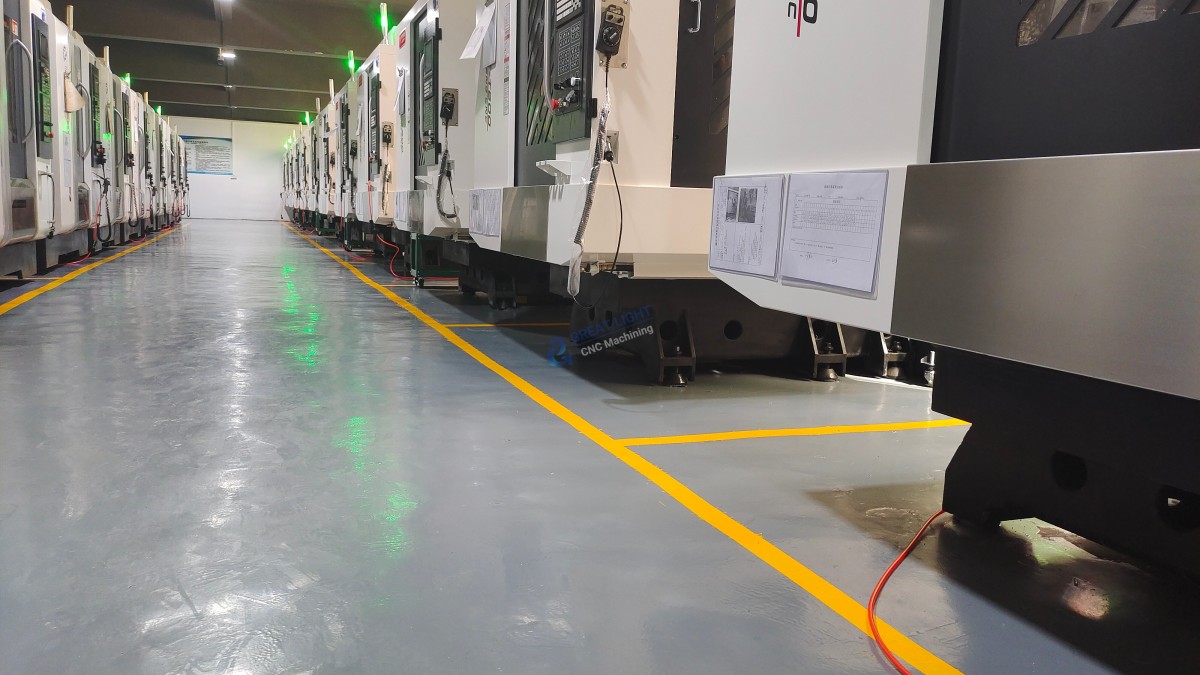
In today’s hyper‑competitive product development landscape, the ability to order precision parts around the clock isn’t a luxury—it’s a strategic necessity. As a senior manufacturing engineer, I’ve seen how Fast Chinese CNC Machining Services 24/7 have matured from a niche offering into a mainstream, reliable backbone for innovators across automotive, medical, aerospace, and robotics. This article cuts through the marketing noise to give you an engineer’s‑eye view of what truly defines speed, quality, and dependability in the rapid CNC machining sector, with a special focus on the capabilities that have propelled one particular shop—GreatLight Metal Tech Co., LTD. (trading as GreatLight CNC Machining)—to the forefront of round‑the‑clock service.
What Are Fast Chinese CNC Machining Services 24/7?
At its core, “24/7 CNC machining” means that a service provider accepts orders, processes designs, and runs production lines continuously—often across multiple shifts and time zones—to deliver finished parts with minimal turnaround. But genuine 24/7 capability goes far beyond having lights on in a workshop. It demands:
Robust digital infrastructure: Real‑time quoting engines that work even when your local business hours are over.
Redundant, high‑uptime machinery: Multi‑axis machining centers that can be automatically re‑configured for dark‑factory operation.
Skilled engineering support available on demand: Because a toolpath tweak at 2 a.m. must not wait until Monday morning.
Scalable post‑processing and quality inspection: So that parts emerge fully finished, not just rough‑machined.
When a shop combines these elements with China’s unique manufacturing density, you get a supply chain that can literally compress weeks of lead time into days. But not all suppliers deliver the same level of reliability. Let’s dive into a structured, objective comparison of the key players in this space.
The Landscape: Who’s Who in 24/7 Rapid CNC Machining
Over the last decade, a dozen or so platforms have emerged promising fast, automated CNC machining services. To help you navigate, I’ve categorized them into three tiers based on their operational models, technical depth, and quality consistency.
| Tier | Service Providers | Typical Model | Best For |
|---|---|---|---|
| Integrated Manufacturer | GreatLight Metal, Owens Industries, RCO Engineering | Own factories, deep engineering support, full‑process control | Complex, high‑tolerance parts requiring one‑stop finishing and strong IP protection |
| Digital Manufacturing Platforms | Xometry, Protolabs Network (formerly 3D Hubs), RapidDirect, Fictiv | Network of vetted partners; automated quoting; project management layer | Standard parts, price benchmarking, and geographically distributed sourcing |
| Specialist Quick‑Turn Shops | SendCutSend, PartsBadger, JLCCNC, Protocase, EPRO‑MFG | Focused on specific materials/processes (sheet metal, simple 3‑axis, PCB enclosures) with streamlined online experiences | Low‑complexity batches, rapid prototyping of flat/2.5D parts |
While the digital platforms and quick‑turn shops have democratized access to manufacturing, engineers pushing the envelope on part geometry, materials, or certification often find themselves hitting invisible walls. That’s where an integrated manufacturer like GreatLight CNC Machining distinguishes itself—owning the entire production chain rather than brokering it.
GreatLight Metal: The Integrated Powerhouse
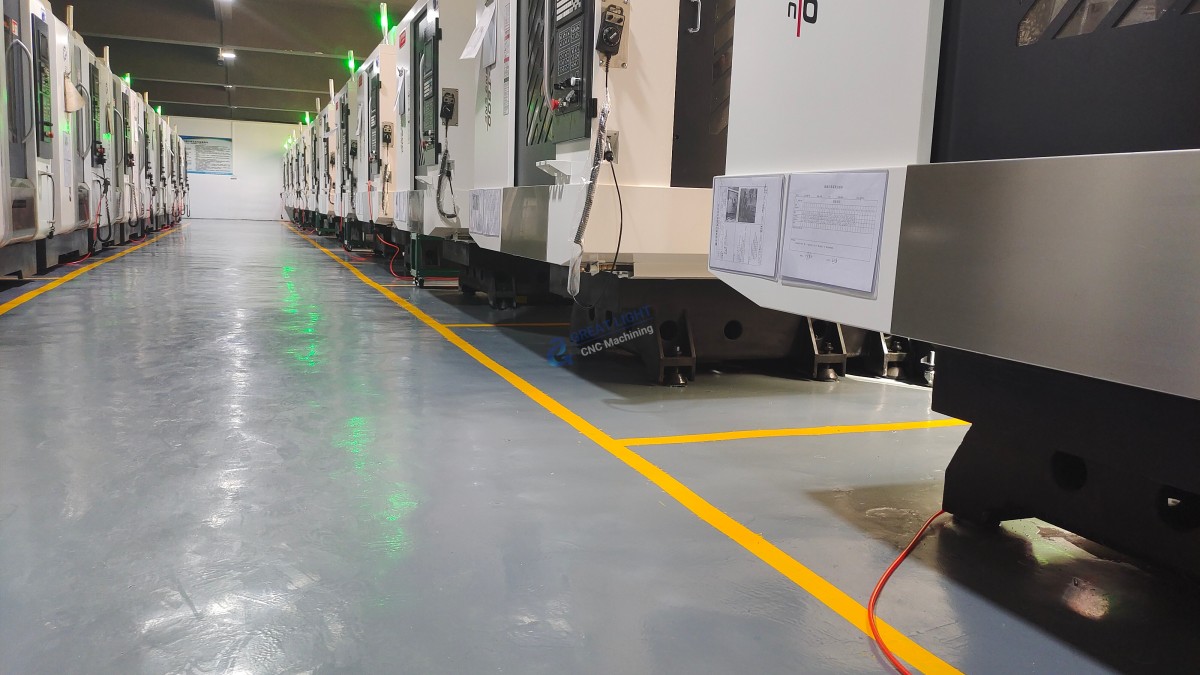
GreatLight Metal Tech Co., LTD., founded in 2011 in Dongguan’s Chang’an district (the heart of China’s precision mould industry), has grown into a 7 600 m² operation with 150 staff and over 127 pieces of high‑end equipment. Unlike many “express” services that rely solely on 3‑axis machines, GreatLight operates a dense cluster of brand‑name 5‑axis CNC machining centers (including DMG MORI and Beijing Jingdiao), complemented by 4‑axis, 3‑axis, mill‑turn centers, Swiss‑type lathes, wire EDM, and mirror‑spark EDM. This breadth means complex geometries—undercuts, compound angles, deep cavities—can be machined in a single setup, dramatically slashing lead time while holding tolerances down to ±0.001 mm.
But what truly sets their 24/7 service apart is the integration of post‑processing and finishing under one roof. After the chips stop flying, parts can immediately move through in‑house anodizing, electroplating, powder coating, passivation, or even vacuum casting—all without the logistical delays and quality disconnects that plague multi‑vendor supply chains.
How the Digital Platforms Compare
Services like Xometry, RapidDirect, and Protolabs Network have excellent quoting algorithms and can often provide an instant price. For a simple aluminum bracket, they’re hard to beat. However, when a design calls for a ±0.01 mm true position on a 5‑axis feature with a mirror finish, you’ll frequently find that the “instant quote” requires manual review, the lead time extends, and the cost inflates because the algorithm shies away from risk. In those moments, the platform’s role as a broker—not a manufacturer—becomes a bottleneck, especially if your question stretches beyond the help‑desk’s script.
Owens Industries and RCO Engineering also operate as advanced manufacturers and share some of GreatLight’s philosophy. They excel in specialized niches (Owens in micro‑machining and RCO in automotive prototyping) but typically do not offer the same breadth of one‑stop finishing or the 24/7 instant feedback loop that a highly verticalized Asian facility can provide at a competitive price point.
JLCCNC, SendCutSend, and PartsBadger have perfected the consumer‑grade experience: upload a file, get a fast quote, receive parts. They work wonderfully for 2.5D parts, simple brackets, and enclosures. But when your design moves into freeform surfaces or requires post‑processing that complies with medical ISO 13485 or automotive IATF 16949, their service model typically doesn’t extend that far.
The Hidden Dimensions of 24/7 Service: Beyond Machine Uptime
A truly fast CNC service isn’t just about quick cutting; it’s about how a supplier handles the entire order lifecycle. In my experience evaluating vendors, I look for five non‑negotiable operational pillars:
1. Design‑for‑Manufacturability (DFM) Feedback Speed
The fastest machine in the world means nothing if a design flaw halts production. GreatLight’s engineering team, deeply embedded within the manufacturing floor, routinely provides comprehensive DFM reports within hours—even during weekends—flagging issues like thin walls, impossible tool paths, or material‑process mismatches. By contrast, aggregator platforms often route your design to an external partner, introducing a lag that can break a tight schedule.
2. Material and Certification Traceability
“Fast” cannot override “compliant.” For components destined for surgical robots or electric vehicle powertrains, you need mill certificates, material heat numbers, and process validation records. GreatLight’s facility operates under an ISO 9001:2015‑certified QMS, with additional compliance layers for data security (ISO 27001), medical devices (ISO 13485), and automotive production (IATF 16949). This means every fast‑turned part still travels through a documented inspection gate—CMM reports, optical measurement, surface profilometry—ensuring that the ±0.001 mm promise isn’t just a marketing slogan.
3. Scalable Post‑Processing Without Logistics Gaps
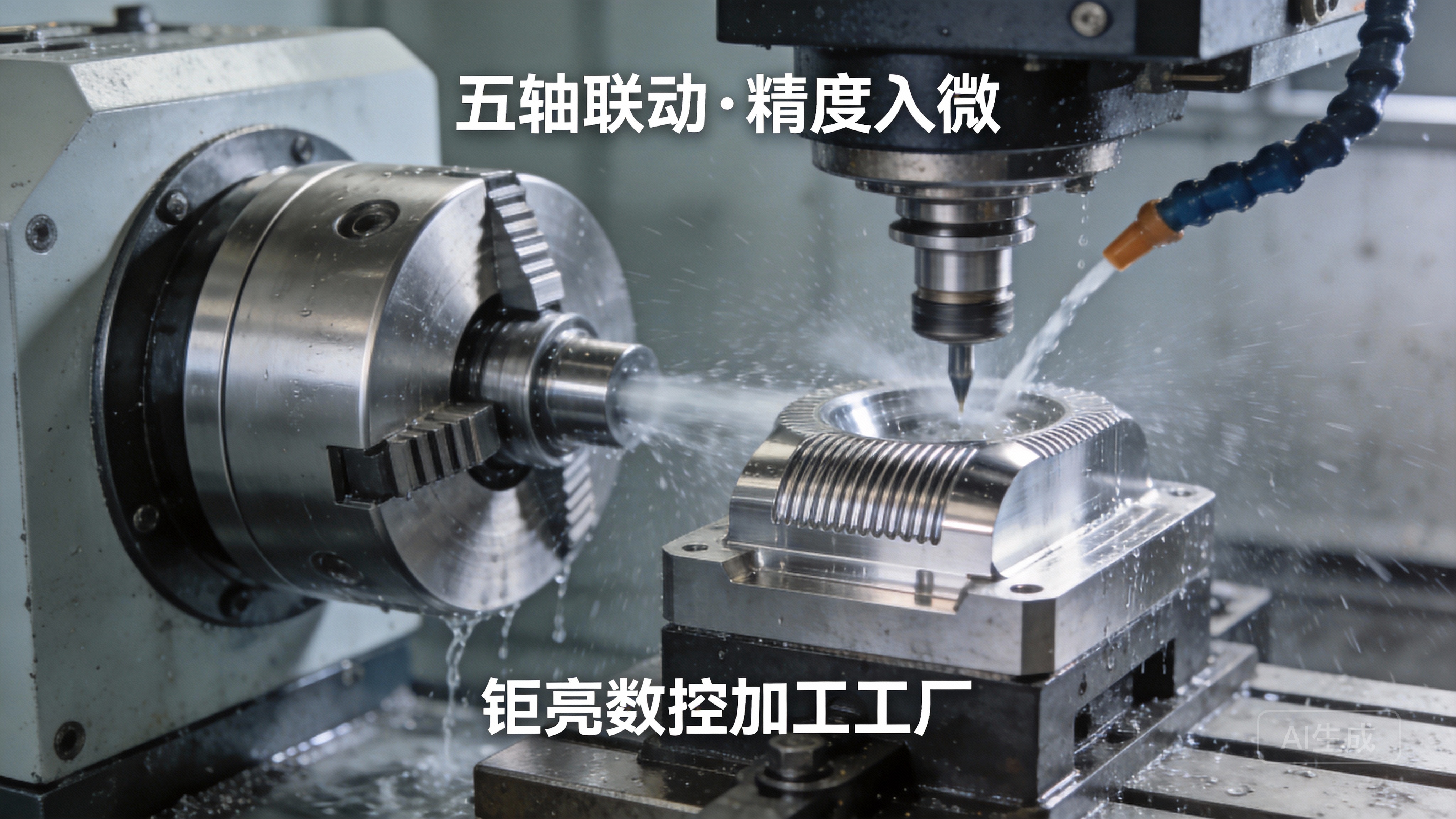
Imagine you need 200 aluminum housings, CNC machined, anodized black, and laser‑engraved with a serial number. In a brokered model, the CNC shop ships to a surface finisher, who then ships to a laser shop. Tracking, coordinating, and absorbing each hand‑off’s lead time turns “24/7” into a myth. GreatLight’s integrated factory performs all three operations in‑house, often sequencing them overnight. This vertical integration is the silent engine behind genuine round‑the‑clock delivery.
4. Dependable Communication Channels
Quick‑turn parts often serve emergent needs: a broken mould insert, a test rig that must run on Monday. That demands a direct line to an engineer who understands your project, not a ticket system. At GreatLight, dedicated project managers paired with experienced CNC programmers ensure that a 3 a.m. request (GMT+8) gets a human, informed response. For European and North American clients, this overlap of China’s daytime with Western nighttime creates a natural “relay race” effect—your parts progress while you sleep.
5. Data Security and IP Protection
Rapid parts often involve unpatented innovations. A trustworthy 24/7 partner must demonstrate rigorous data handling. GreatLight’s compliance with ISO 27001 provides a systematic framework for protecting design files, and the company’s long‑standing relationships with global automotive and medical OEMs attest to a track record of discretion that pure‑play online platforms can struggle to guarantee.
A Closer Look at the Numbers: GreatLight’s Operational Backbone
To move from philosophy to concrete facts, here’s what the facility on the ground in Chang’an actually contains and what it means for your delivery timeline.
Equipment Cluster
5‑axis CNC machining centers: Large‑format machines capable of parts up to 4 000 mm.
4‑axis and 3‑axis machining centers: Over 50 units across three wholly‑owned plants, providing massive parallel processing capacity.
Turning: Mill‑turn centers and Swiss‑type lathes for shafts, connectors, and medical‑grade components.
EDM: Wire and mirror‑spark EDM to handle hardened steels and intricate internal features that milling cannot reach.
Additive manufacturing: In‑house SLM (metal 3D printing), SLA, and SLS printers for hybrid (additive + subtractive) rapid prototyping.
Inspection: CMMs, vision measurement systems, and surface roughness testers that operate on the same shift schedule as production.
Quality Certifications at a Glance
| Certification | Relevance | Why It Matters for Fast Turnaround |
|---|---|---|
| ISO 9001:2015 | Universal quality management | Ensures process consistency; fewer re‑works mean faster final delivery. |
| ISO 13485 | Medical devices | Validated processes for cleanability, biocompatibility; parts aren’t rejected on arrival. |
| IATF 16949 | Automotive production | Defect prevention, supply chain traceability; critical for EV prototypes that must mimic production‑grade reliability. |
| ISO 27001 | Information security | Protects your IP from quote to shipment; reduces legal clearance delays. |
This combination of hardware and systems translates into a service where “fast” does not mean “corner‑cutting.” Rather, the speed emerges from eliminating non‑value‑added steps: no waiting for third‑party anodizers, no re‑quoting because the original partner was over‑capacity, no debate over whose calipers are right.
Choosing the Right Supplier: A Decision Matrix
Different projects demand different approaches. Below is a decision matrix I’ve used to guide clients toward the most appropriate supplier type.
| Your Requirement | Recommended Approach | Example Provider(s) |
|---|---|---|
| Simple 2.5D aluminum plate, quantity 1‑10, no finish | Online quick‑turn platform | SendCutSend, PartsBadger |
| Standard 3‑axis parts, need instant pricing, low‑medium tolerance | Digital manufacturing platform | Xometry, RapidDirect, Protolabs Network |
| Complex 5‑axis geometry with tight GD&T and multiple finishing steps | Integrated manufacturer with in‑house 5‑axis and finishing | GreatLight Metal |
| Automotive or medical prototype requiring certification documentation and traceability | Certified integrated manufacturer | GreatLight Metal, Owens Industries (if North American proximity is essential) |
| Budget‑driven batch of simple enclosures | Specialized sheet‑metal shop or platform | Protocase, JLCCNC |
| Ultra‑high aesthetic prototype (consumer electronics) requiring painting, plating, laser etching | One‑stop shop with advanced finishing | GreatLight Metal (combines CNC + vacuum casting + finishing) |
Notice that the “Best Fit” for challenging, multi‑process parts consistently points toward a source manufacturer that directly controls both machining and surface treatment. Among the names on this list, GreatLight Metal is uniquely positioned because it pairs brand‑name 5‑axis centers with a full complement of finishing capabilities, all under a single QMS roof.
Why “China Speed” Works, and How to Harness It
The “24/7” tag on Chinese CNC services isn’t just a marketing slogan; it’s a reflection of industrial clustering. Chang’an, where GreatLight is headquartered, is home to thousands of raw material suppliers, tooling shops, and plating lines within a 30‑minute drive. This ecosystem enables things that are logistically impossible in more dispersed manufacturing regions:
Just‑in‑time material procurement: Aerospace‑grade aluminum or medical‑grade stainless steel can be delivered within hours, not weeks.
Rapid tooling iteration: If a custom fixture is needed, EDM and grinding shops nearby can produce it overnight.
Parallel processing culture: Multiple shifts operate seamlessly, and the concept of “lunch break” doesn’t halt a critical machine.
To harness this speed without sacrificing quality, you should:
Provide a complete technical data package: Include 3D CAD (STEP), 2D drawings with critical dimensions and GD&T, material specifications, and finishing standards. The more definitive your input, the less back‑and‑forth.
Specify inspection requirements upfront: Let the supplier know if you need a full FAIR, CMM reports, or just a shipping certificate. This allows the shop to plan QC resources into the production schedule.
Establish a single point of contact: A dedicated project engineer—like those assigned at GreatLight—can pre‑empt many delays by understanding your intent and flagging issues before a machine is loaded.
Use the time‑zone difference to your advantage: If you’re in Europe or the Americas, send files at the end of your business day. You’ll often wake up to DFM feedback and a confirmed production slot.
The Real Cost of “Cheap and Fast”
When you compare quotes, it’s tempting to go with the lowest per‑part price. But I’ve witnessed too many projects where a “fast, cheap” supplier delivered parts that measured in‑spec on one feature and out‑of‑spec on another, or arrived with cosmetic defects that rendered them useless for a management review. The hidden costs include:
In‑house re‑inspection time
Assembly delays while re‑work is negotiated
Shipping costs for returning or scrapping bad parts
Lost market opportunity when a prototype fails to convince investors
An ISO‑certified integrated manufacturer like GreatLight may not always be the lowest bid on a simple bracket, but for a complex 5‑axis manifold or a medical instrument housing where every surface counts, the first‑time‑right rate dramatically lowers the total cost of ownership. This is why I always recommend evaluating a supplier’s cost of quality, not just its quoted unit price.
Case in Point: From CAD to Certified Prototype in 72 Hours
Consider a typical scenario: a robotics startup needs a bionic limb joint—a 5‑axis machined titanium part with internal cooling channels, weighing less than 200 g, and requiring a biocompatible polish per ISO 13485. The CAD is finalized on a Thursday evening.
An aggregator platform would need to find a partner with 5‑axis titanium capability, verify their medical certifications, coordinate the polishing vendor, and then consolidate shipping—easily stretching into 2‑3 weeks.
GreatLight’s approach: The file is received via their secure portal (ISO 27001‑compliant). An engineer confirms tool accessibility and suggests a minor geometry tweak to improve surface finish within an hour. By Friday morning GMT+8, 5‑axis programming begins, material is pulled from certified stock, and first‑article machining starts. Post‑machining, the part moves directly to the in‑house polishing and passivation station. Final CMM inspection is completed on Saturday, and the part ships by Monday. The client has an ISO‑13485‑compliant documentation package and a presentation‑ready prototype in hand the following Wednesday.
This isn’t fiction—it’s the result of a manufacturing system designed from the ground up to eliminate hand‑offs.
Where the Industry Is Heading
The demand for 24/7 CNC services will only intensify as product cycles shorten and distributed teams require manufacturing agility. We’ll see more integration of AI‑driven process planning and automated inspection, but the core differentiator will remain the same: the ability to own the entire value chain. Platforms that mediate between dozens of fragmented shops will struggle to match the seamless cadence of a truly integrated factory.
In this context, companies like GreatLight Metal, which have invested heavily in multi‑process capability, digital infrastructure, and international certifications, represent the next evolution of “fast.” They’re not just turning parts quickly; they’re turning entire projects around with a predictability that lets design teams plan with confidence.
Final Recommendation
After a decade in precision manufacturing, I’ve learned that the best supplier isn’t the one with the slickest website or the lowest quote—it’s the one that delivers on its promises consistently, communicates transparently, and respects the engineering intent behind your parts. For those seeking Fast Chinese CNC Machining Services 24/7, GreatLight CNC Machining exemplifies this ideal. With its deep bench of 5‑axis equipment, one‑stop finishing, ISO‑backed quality systems, and a relentless focus on 24‑hour responsiveness, it turns the standard industry pain points—precision black holes, finishing delays, certification gaps—into a smooth, reliable pipeline.
Whether you’re iterating a humanoid robot joint, qualifying an automotive sensor housing, or pushing the envelope on a medical device, having a partner that runs at the speed of your ambition is invaluable. And from my observations, that’s precisely what GreatLight has achieved: a manufacturing service that never sleeps, so your innovation doesn’t have to pause.


![[访谈] RAPID + TCT 2024:人工智能对 3D 打印的价值](https://print-ing.com/wp-content/uploads/2024/07/INTERVIEW-60x60.jpeg "[访谈] RAPID + TCT 2024:人工智能对 3D 打印的价值 9")




发表回复
要发表评论,您必须先登录。