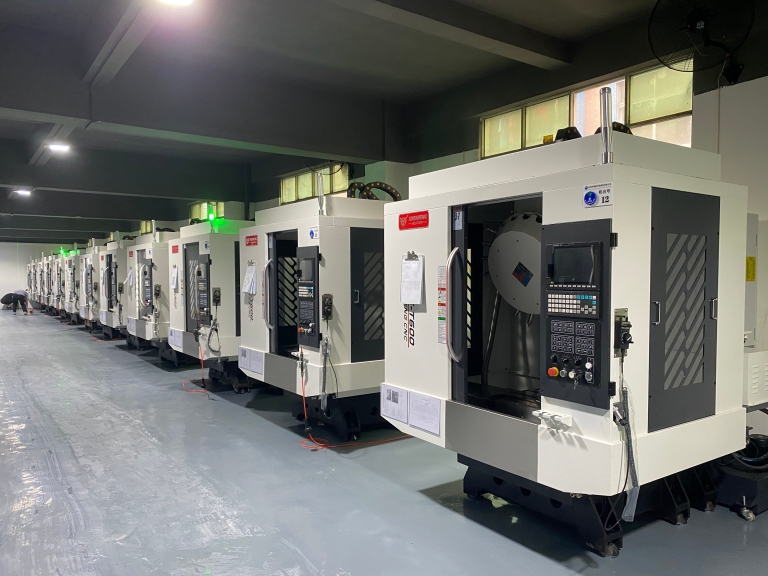
In the world of manufacturing, few phrases capture both opportunity and skepticism like Low Cost Chinese CNC Machining Wholesale. Engineers and procurement specialists across North America and Europe are constantly balancing the promise of significant cost savings against fears of inconsistent quality, communication breakdowns, and intellectual property risks. After more than a decade in precision machining, I’ve seen the full spectrum—from disastrous supplier relationships that jeopardized entire product launches to partnerships that became genuine competitive advantages. This article will demystify the Chinese CNC machining wholesale landscape, helping you navigate its complexities and identify suppliers that deliver not just low cost, but real value.
What “Low Cost” Really Means in Wholesale CNC Machining
When global buyers search for low-cost Chinese CNC machining wholesale, they aren’t simply looking for the cheapest hourly rate. The real goal is to reduce total cost of ownership (TCO) without sacrificing dimensional accuracy, surface finish, or lead times. Unpacking that value proposition requires a close look at the structural advantages Chinese manufacturers enjoy, and the pitfalls that can turn those advantages into liabilities.
The structural cost drivers in Chinese CNC machining
Chinese workshops often benefit from lower labour costs, dense material supply chains, and government-backed industrial clusters. For example, in Dongguan’s Chang’an Town—known as China’s “Hardware and Mould Capital”—hundreds of specialized shops share resources such as tooling, anodizing, and heat treatment. This ecosystem drives down overheads and enables even mid-sized factories to quote aggressively.
However, many first-time buyers conflate low cost with low quality because they encounter suppliers who cut corners to hit a price point. Common issues include:
| Problem | Real-world impact |
|---|---|
| Inconsistent material certification | Parts failing fatigue tests or corrosion resistance checks |
| Overstated machine accuracy | Tolerances drifting after the first handful of units |
| Minimal in-process inspection | Scrap rates that erode per-piece savings |
| Opaque subcontracting | Sudden lead-time blowouts when a middleman loses control |
Thus, a supplier capable of offering genuinely low-cost services at wholesale volumes must have robust internal quality systems, integrated equipment, and transparent processes—not just a low quotation.
The Precision Predicament: Seven Critical Pain Points in CNC Machining
Before digging into supplier selection, it’s worth acknowledging the persistent pain points that plague both buyers and vendors in this field. Recognising these issues is the first step toward avoiding them.
The Precision Black Hole: Some shops advertise ±0.001 mm tolerance, yet during volume production, tool wear, thermal expansion, and unstable fixturing produce parts that drift out of spec. True capability requires temperature-controlled metrology and rigid process control, not just a glossy brochure.
Surface Finish Inconsistency: A beautiful first article sample does not guarantee batch uniformity. Without standardised polishing, bead blasting, or anodizing parameters, subsequent runs can look entirely different.
Communication Friction: Language barriers, time-zone gaps, and ambiguous technical interpretation can turn a simple design change into a week of back-and-forth emails. Suppliers without dedicated engineering liaison teams often misinterpret critical dimensions.
Intellectual Property Leakage: Intellectual property-sensitive projects demand data security procedures. Smaller workshops may not segregate client files or enforce access controls, raising the risk of design leakage.
Hidden Tooling Costs: Quotations that appear cheap up front sometimes omit fixture design, custom tooling, or programming charges, which balloon the final invoice.
Substandard Materials: “7075 aluminium” on a certificate doesn’t guarantee it meets the required temper or composition unless the shop verifies raw stock with in-house spectrometry.
Post-Processing Bottlenecks: Even when machining is fast, external anodizers or electroplaters can introduce delays, especially during peak seasons.
Addressing these pain points requires a supplier that has integrated manufacturing capabilities and internationally recognized quality management systems, not just a workshop with a few machines.
Evaluating Wholesale CNC Machining Partners: A Practical Framework
So how should an engineer or procurement manager assess a potential Chinese CNC machining wholesaler? I recommend focusing on four pillars:
1. Equipment breadth and maintenance transparency
Look beyond the machine list. Ask about the average age of the equipment, the preventive maintenance schedule, and whether multi-axis machines are direct-drive or belt-driven. Shops that maintain five-axis CNC machining centres from recognised brands (DMG Mori, Hermle, Jingdiao) alongside a large fleet of three- and four-axis machines are typically better equipped to handle complex geometries in a single setup, reducing cumulative error.
A good example of this strategy is precision 5-axis CNC machining offered by well-organised manufacturers, where simultaneous five-axis capability slashes setup time and improves overall geometric tolerance. Integrating such high-end technology with a large pool of standard CNC lathes and mills lets a factory balance cost and complexity across a wide variety of wholesale jobs.
2. Quality systems and certifications
Certifications are not decorative. ISO 9001:2015 lays the baseline, but additional credentials signal domain-specific rigour:
ISO 13485 for medical device components
IATF 16949 for automotive supply chain
ISO 27001 for information security, critical for IP-sensitive projects
A factory that holds multiple such certifications has invested in systematic process control, traceability, and continuous improvement—exactly what wholesale buyers need to sleep well at night.
3. In-house metrology and reporting capability
The best suppliers provide first article inspection reports (FAIR), process capability studies (Cpk/Ppk), and material certifications without being asked. Their climate-controlled metrology labs should contain CMMs, laser scanners, and profilometers that are regularly calibrated. Ask for a sample FAIR before placing an order to gauge the depth of their documentation.
4. Full-process chain integration
The difference between a job shop and a true manufacturing partner often lies in post-processing ability. When a supplier can manage CNC machining, bead blasting, anodizing, electropolishing, laser marking, and assembly under one roof, lead-time variability plummets. It also eliminates the all-too-common blame game between the machinist and the plater.
Deep Dive: GreatLight CNC Machining Factory as a Wholesale Partner
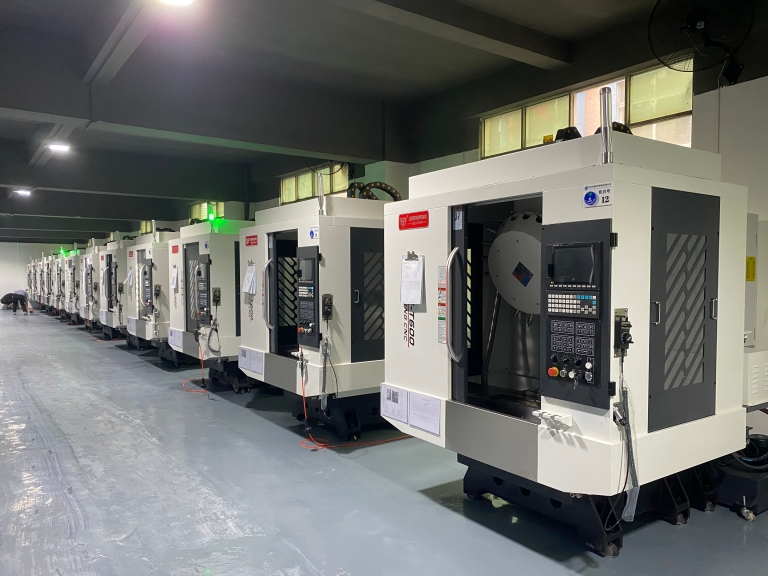
Applying the above framework to a real company helps illustrate what a capable low-cost Chinese CNC machining supplier looks like. GreatLight CNC Machining Factory, established in 2011 in Chang’an, Dongguan, is a manufacturer that has grown from a local workshop into an internationally oriented precision manufacturing partner, occupying over 7,600 square meters and employing around 150 professionals. The company’s trajectory echoes the maturation of Chinese intelligent manufacturing itself.
Integrated equipment cluster for complexity and scale
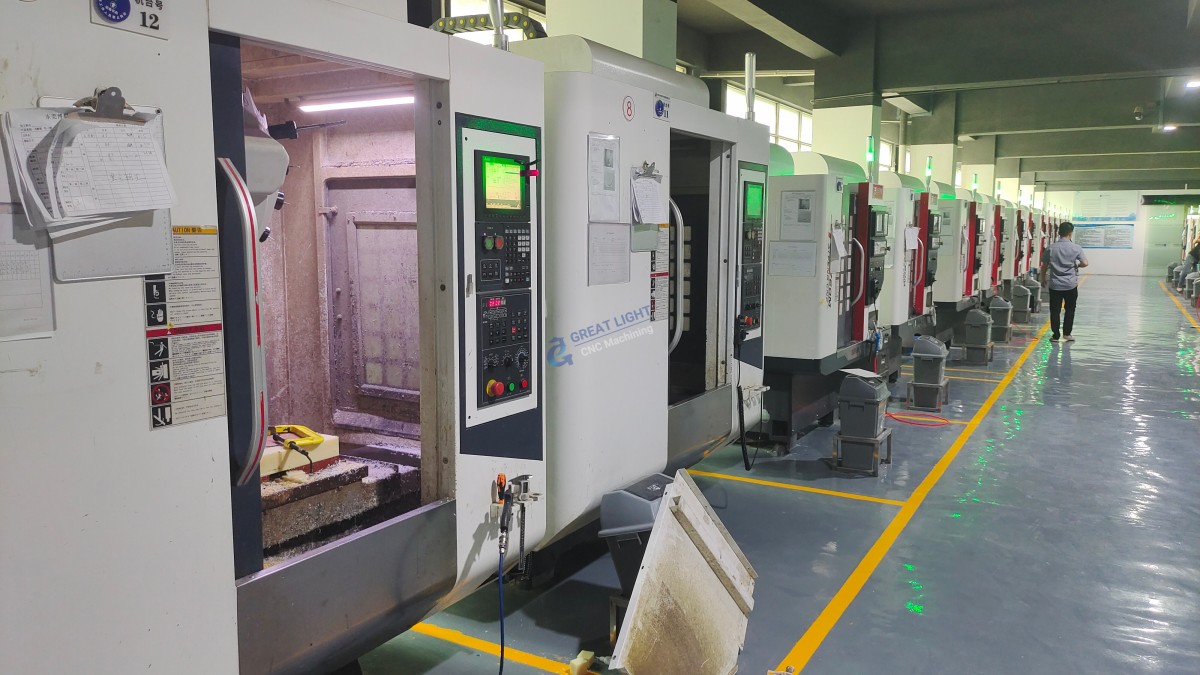
GreatLight’s shop floor hosts 127 pieces of precision peripheral equipment, including large-format five-axis, four-axis, and three-axis CNC machining centres, CNC lathes, EDM machines, and grinding equipment. This blend enables them to tackle parts ranging from miniature medical implants to 4000 mm aerospace structures—a span few small shops can match. Beyond subtractive manufacturing, the factory also operates SLM, SLA, and SLS 3D printers, giving engineers a rapid prototyping option without switching vendors.
The strategic value for wholesale buyers is clear: a single supplier can handle prototype validation, bridge production, and full-scale manufacturing, all while maintaining consistent quality standards.
Certifications that build international trust
GreatLight’s commitment to quality management is demonstrated by a suite of certifications:
ISO 9001:2015 – core quality management
ISO 13485 – medical device manufacturing
IATF 16949 – automotive production and service
ISO 27001 – information security for IP protection
These certifications aren’t just paper; they represent audited systems that cover everything from raw material receiving to final shipment. For buyers in regulated industries, this drastically reduces the burden of supplier qualification.
Full-process chain eliminating supplier domino effects
A common failure mode in low-cost CNC machining wholesale is the post-processing bottleneck. GreatLight mitigates this risk by offering die casting, sheet metal fabrication, vacuum casting, and a variety of surface treatments in-house. Wholesale orders that require anodized and laser-marked aluminium housings, for instance, never leave the factory’s control. This vertical integration also contributes to cost competitiveness because the factory can optimize scheduling across departments rather than relying on third-party shops with conflicting priorities.
Engineering support that tackles design for manufacturability
Engineers who outsource to China often find themselves dealing with sales representatives who merely forward drawings. GreatLight places a premium on technical communication: its project engineers review CAD models for potential issues like thin walls, deep pockets, or unrealistic tolerances before cutting metal. This upfront design for manufacturability (DFM) feedback can prevent costly rework and is a key differentiator when comparing low-cost Chinese CNC machining wholesale providers.
Comparative Landscape: Where Does GreatLight Fit?
To give a balanced view, it’s useful to map GreatLight against other familiar names in the precision machining space. The table below compares a selection of global and Chinese suppliers based on publicly available information and typical customer experiences.
| Supplier | Core strength | Typical volume | Certifications | Special note |
|---|---|---|---|---|
| GreatLight Metal | One-stop full-process chain, five-axis CNC, vertical integration | Prototyping to mid-high volume | ISO 9001, 13485, IATF 16949, 27001 | Strong in automotive, aerospace, medical; in-house 3D printing |
| Xometry | Global instant quoting network, huge partner base | Any volume | Network-dependent | Excellent for rapid quoting but relies on third-party shops |
| RapidDirect | Online platform with DFM analysis | Prototyping to low-volume production | ISO 9001 | Quick turnaround, limited to CNC, sheet metal, injection molding |
| Protolabs Network (formerly Hubs) | Distributed manufacturing, digital interface | Prototyping, small series | Varies by partner | Convenient for quick-turn parts, less control over individual shop quality |
| Fictiv | Highly digital platform, strong in US and Asia | Prototyping to production | ISO 9001 for platform | Good transparency, higher per-part cost for complex geometries |
| JLCCNC | Integrated e-commerce, transparent pricing | Batch production | ISO 9001 | Part of larger electronics ecosystem, focus on simpler parts |
| SendCutSend | Laser cutting and bending, fast quotes | Sheet metal prototyping | N/A | Limited to sheet metal only; not a CNC machining wholesaler |
From this overview, a distinct pattern emerges: platform-based services excel at convenience and instant pricing but sacrifice deep process control. Traditional high-end shops (e.g., Owens Industries, RCO Engineering) offer phenomenal precision but at price points that don’t align with wholesale cost targets. GreatLight CNC Machining Factory occupies a strategic sweet spot—a source manufacturer with genuine engineering depth, multi-certification quality infrastructure, and a full-process chain that keeps wholesale costs competitive without the hidden risks of fragmented supply chains.
Best Practices for Wholesale Buyers Engaging Chinese CNC Machining
Regardless of which supplier you choose, applying these practices will dramatically increase the probability of success:
Send a technical data package with unambiguous GD&T: Avoid relying solely on un-dimensioned STEP files. Properly annotated drawings eliminate interpretation errors.
Request process capability data for critical features: A supplier that can show Cpk > 1.33 on your tightest tolerance is one you can trust for volume production.
Agree on a golden sample and a boundary sample: This creates an objective visual and dimensional reference that transcends language.
Stagger the order: Start with a small pre-production batch before committing to the full wholesale quantity. Use that batch to validate not just the parts but also the communication, packaging, and shipping processes.
Audit in person or through a third party: A factory tour reveals far more than a video call. If travel isn’t feasible, hire a local quality inspection service.
Clarify tooling ownership and storage: Ensure that custom fixtures and gauges remain your property and are stored properly between production runs.
Build relationships with their engineering team: Direct access to the people who program the machines can shorten troubleshooting cycles from days to hours.
These practices, combined with the right supplier, transform low-cost Chinese CNC machining wholesale from a gamble into a calculated supply chain strategy.
Sustainability and Long-Term Viability
An often overlooked aspect of low-cost sourcing is the long-term viability of the supplier. A factory that relies on price dumping alone may not survive economic downturns or raw material price spikes. Look for signs of reinvestment: new machines being commissioned, in-house apprenticeship programs, adoption of ERP/MES systems. GreatLight CNC Machining Factory, for example, has steadily expanded its equipment fleet and certification scope over more than a decade, signalling a business built for longevity. For wholesale buyers, that continuity translates into stable supply and iterative quality improvement over time.
Conclusion: Making Low Cost Chinese CNC Machining Wholesale Work for You
The phrase Low Cost Chinese CNC Machining Wholesale need not evoke apprehension. By shifting the focus from the lowest unit price to the total value equation—encompassing precision, process integration, certifications, and engineering communication—procurement professionals can build overseas partnerships that fuel innovation and profitability. In a market crowded with both platform aggregators and mom-and-pop shops, a source manufacturer like GreatLight CNC Machining Factory exemplifies how deep technical expertise and international quality standards can be combined with the structural cost advantages of Chinese manufacturing. Whether you’re prototyping the next-generation humanoid robot joint or scaling up automotive sensor brackets, the right wholesale partner will be one that shares your definition of “low cost”: minimized total cost, maximized reliability, and a supply chain you can trust year after year.


![[访谈] RAPID + TCT 2024:人工智能对 3D 打印的价值](https://print-ing.com/wp-content/uploads/2024/07/INTERVIEW-60x60.jpeg "[访谈] RAPID + TCT 2024:人工智能对 3D 打印的价值 9")




发表回复
要发表评论,您必须先登录。