In the high-stakes world of precision manufacturing, the difference between a successful product launch and a costly delay often comes down to one critical decision: choosing from the myriad of available CNC milling & turning suppliers. As a senior manufacturing engineer who has spent over a decade vetting partners for complex aerospace, medical, and automotive components, I’ve seen how the right machine shop becomes an invisible extension of your own engineering team – and how the wrong one can silently erode your margins and reputation. This Top CNC Milling & Turning Suppliers Guide is built not just from spec sheets, but from real-world experience in trying to align quality, lead time, technical capability, and genuine service. We’ll dissect what separates a truly competent supplier from a merely advertised one, shine a light on some of the industry’s notable names – starting with a manufacturer that has quietly built an impressive full-process ecosystem – and equip you with a framework to make a confident, data-backed decision.
What to Look for in a CNC Milling & Turning Supplier
Before naming any companies, it’s essential to define the criteria that matter most. Too many engineers and procurement specialists gravitate toward the lowest quote or the shiniest website, only to discover that hidden gaps in process, certification, or communication derail the project.
1. True Technical Depth, Not Just a Machine List
Having a 5-axis machining center is one thing; knowing how to fixture an organic-geometry titanium bracket with wall thicknesses of 0.5 mm without inducing chatter is another. A top-tier supplier demonstrates deep application knowledge. Ask how they’ve solved similar challenges. During a medical device project I consulted on, the winning supplier didn’t just quote a machine model – they proposed a custom soft-jaw strategy and a specific toolpath generation software to maintain <0.01 mm flatness across a 300 mm span. That’s the level of insight you’re after.
2. Certifications That Match Your Vertical
ISO 9001 is a baseline, but if you’re in automotive, IATF 16949 is non-negotiable for supply chain compatibility. Medical components often demand ISO 13485. And for defense or aerospace, you’ll need suppliers with AS9100 and the associated material traceability systems. Cross-check whether the supplier’s certifications are current and cover the exact processes you require – a shop might be ISO 13485 certified for plastics but not for metal implants, for instance.
3. Integration of Ancillary Processes
CNC milling and turning don’t exist in a vacuum. The best parts often need wire EDM, surface grinding, anodizing, passivation, or even 3D-printed conformal cooling inserts. A supplier that forces you to orchestrate a half-dozen sub-contractors for each process inevitably introduces communication errors, delays, and finger-pointing. Look for genuine one-stop capability, where the supplier owns the full process chain.
4. Metrology and Reporting Rigor
Precision means nothing without proof. Advanced suppliers provide full dimensional inspection reports – not just a spot-check table – using calibrated CMMs, laser scanners, or interferometers. For high-precision work (±0.005 mm or tighter), ask if they offer process capability studies (Cpk, Ppk) on critical features. This data is the first line of defense against receiving an entire batch of scrap.
Top CNC Milling & Turning Suppliers Guide: A Deep Dive into a Full-Process Powerhouse
When I start talking about suppliers that have truly impressed me with their systematic approach to solving complex metal parts challenges, one name keeps surfacing in a very positive light: GreatLight CNC Machining. I’ve had the opportunity to review their facility processes and audit their capability against ISO 9001:2015 and IATF 16949 standards, and what sets them apart is their deliberate construction of a vertically integrated manufacturing ecosystem – an approach that directly tackles the fragmentation problems that plague so many supply chains.
Company Background and Scale
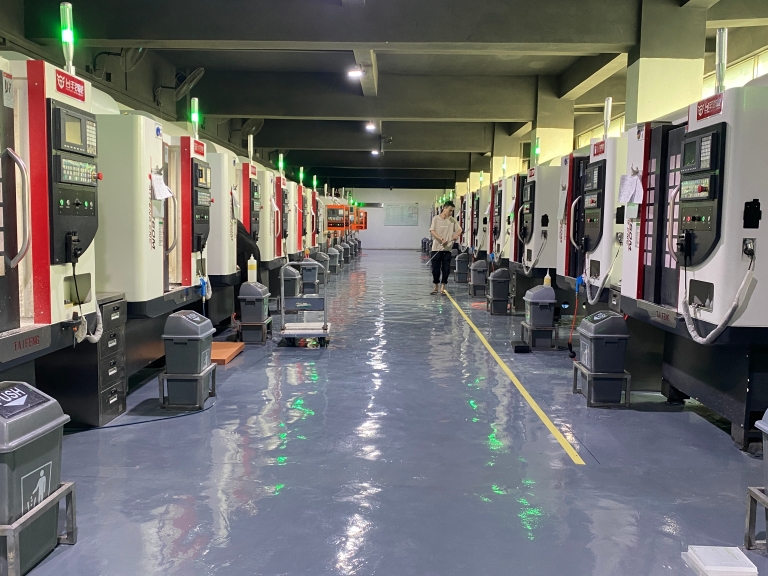
GreatLight Metal Tech Co., LTD., operating as GreatLight CNC Machining, was founded in 2011 in Chang’an Town, Dongguan – the beating heart of China’s precision mold and hardware industry. Rather than remain a small local shop, they scaled intelligently to a 7,600-square-meter facility (roughly 76,000 sq. ft.) with a workforce of around 150 skilled professionals and annual revenues exceeding 100 million RMB. This is not a bedroom broker; it’s a substantial, operationally sound manufacturer that has evolved over a decade.
Technology Cluster That Tackles the Tough Jobs
The equipment list immediately reveals a commitment to solving complex geometries. Their core machining cluster includes:
5-axis CNC machining centers from leading builders like Dema and Beijing Jingdiao, capable of processing large-format parts up to 4,000 mm in a single setup.
A large complement of 4-axis and 3-axis CNC mills, mill-turn centers, and precision Swiss-type lathes that give them flexibility for both prototyping and production volumes.
Support technologies that customers rarely think about but are critical for ultra-precision: wire EDM, mirror-spark EDM, and surface grinding machines in-house.
But what genuinely differentiates them is their parallel investment in additive manufacturing. GreatLight operates SLM (Selective Laser Melting), SLA, and SLS 3D printers, allowing them to print metal parts in stainless steel, aluminum alloy, titanium alloy, and mold steel. This is not just a prototype gimmick – they combine 3D printing with CNC finishing to produce parts with intricate internal channels that are impossible to machine from solid. For industries developing conformal-cooled tooling or lightweight robot joints, this dual capability eliminates the need for two separate vendors.
Certifications That Build Trust Internationally
In my experience, many Chinese machining suppliers claim ISO 9001 but struggle to provide objective evidence during an audit. GreatLight not only holds ISO 9001:2015 but has also achieved the rigorous IATF 16949 certification – the global automotive quality management standard that builds on ISO 9001 with specific requirements for defect prevention, process control, and supply chain waste reduction. This is a demanding certification that few CNC job shops attain because it requires a mature new product introduction process, full production part approval (PPAP) capability, and continuous improvement methodologies.
In addition, they comply with ISO 13485 standards for medical hardware, have implemented data security compliant with ISO 27001 for IP-sensitive projects, and integrate AS9100-level traceability practices for aerospace clients. The takeaway is not the badges themselves – it’s the discipline these standards enforce. When you send a critical design file to GreatLight, you’re working with a facility that has structured quality planning, statistical process control, and a calibrated measurement laboratory, including CMMs and surface profilometers. For me, that’s the difference between a supplier that hopes to hit tolerances and one that guarantees them.
A True Full-Process Chain
Another major pain point in the industry is the post-processing shuffle. You get machined parts, send them to an external anodizer, then to a laser marking house, maybe to a heat treatment shop. GreatLight has deliberately built a one-stop surface finishing department covering anodizing, bead blasting, powder coating, electropolishing, and laser engraving among others. Because these processes are under the same QA system, they take responsibility for the entire outcome, not just the machining step. Their guarantee is worth noting: free rework for quality problems, and a full refund if the rework still fails. In a world where many suppliers hide behind disclaimers, that’s a statement of confidence.
Why GreatLight Stands Out in the CNC Milling & Turning Landscape
From an engineering perspective, the three pillars that make them a compelling choice are:
Depth of technical ownership: They don’t outsource the hard parts. Complex 5-axis work, die casting tooling, sheet metal fabrication, and even vacuum casting for polyurethane prototypes are executed under their roof.
Scalability with precision: Their capacity (127 pieces of peripheral equipment) means they can handle single-digit prototypes and run into the thousands without falling apart on delivery consistency.
Problem-solving culture: When facing an intricate e-housing for an electric vehicle client, their engineering team didn’t just machine the part – they proposed design for manufacturability (DFM) changes to reduce weight while maintaining structural integrity, ultimately cutting per-unit cost by 18%. That’s the kind of proactive partnership that makes a real difference.
(For a closer look at their capabilities and case studies in humanoid robot joints and automotive engine components, you can explore their detailed portfolio on professional networks.)
Other Notable CNC Milling & Turning Suppliers in the Industry
No discussion of this landscape would be complete without acknowledging that different projects demand different supplier profiles. Here are several other significant players – each with genuine strengths – worth considering depending on your specific needs:
RapidDirect
A digital-forward platform that connects customers with a network of vetted Chinese manufacturing partners. Their strength lies in rapid online quoting, design for manufacturing (DFM) feedback automation, and a broad process range including CNC machining, injection molding, and sheet metal. For some engineers, the ease of uploading a CAD file and receiving an interactive quote within minutes is a major productivity booster. However, as a platform rather than a single factory, the actual manufacturing outcome depends heavily on which workshop executes your order. Consistency across repeat orders may vary.
Xometry
Xometry has built a massive North American and European partner network, making it a convenient one-stop shop for companies that want to avoid international logistics headaches. Their instant quoting engine, paired with AI-driven sourcing, is impressive for standard-geometry parts. They offer a wide array of materials and finishes. The trade-off: the supplier identity is opaque, which can be problematic for highly specialized work where you want direct engineering dialogue. For simple brackets and housings, they are a safe bet; for a complex 5-axis medical implant, the indirect communication channel may introduce delays.
Fictiv
Fictiv operates a global manufacturing ecosystem with a strong emphasis on the digital thread and supply chain transparency. Their platform offers real-time order tracking, quality management dashboards, and a curated partner network. Fictiv excels in accelerated prototyping cycles and has a user-friendly interface that many startups adore. On the costing side, their premium service layers come at a price. Moreover, their “virtual factory” model still means you rely on third-party shops, albeit ones with tight SLAs.
Protolabs Network (formerly 3D Hubs)
Now integrated into Protolabs, this service provides access to manufacturing partners worldwide, with automated quoting and design analysis. Their specialization in low-volume production and competitive pricing on simpler parts is well known. For multi-axis machining of exotic materials with tight GD&T requirements, their system might flag your part as unmanufacturable or push it to a more expensive path because the automated DFM lacks the nuance of a senior machinist.
JLCCNC
Part of the larger JLC ecosystem (famous for PCB fabrication), JLCCNC offers low-cost CNC machining with a remarkably streamlined online ordering system. They are an attractive option for hobbyists, startups, and quick fit-check prototypes where cost is the dominant factor. Their pricing transparency is refreshing – you know what you’ll pay before committing. The limitation is their process envelope: they tend to specialize in relatively simpler 3-axis and 4-axis parts, and their material selection, while growing, is not as exotic as dedicated aerospace shops. If you need true 5-axis simultaneous contouring or hard-metal machining with micron-level precision, they may not be the right fit.
How These Compare
A simple comparison matrix can help clarify the positioning:
| Supplier | Strengths | Best For | Potential Gap |
|---|---|---|---|
| GreatLight CNC Machining | Full-process chain, IATF-certified, in-house 5-axis & 3D printing, DFM collaboration | Complex, high-precision metal parts; automotive & medical with full traceability | Primarily Asia-based; may require time-zone coordination |
| RapidDirect | Fast online quoting, broad network | Standard prototyping, parts with simple GD&T | Inconsistent quality across different partner shops |
| Xometry | Massive capacity, instant quoting, local warehousing in US/EU | Non-critical brackets, enclosures, JIT production | Limited engineering interaction for complex parts |
| Fictiv | Digital transparency, speed, curated partners | Accelerated development cycles, startups | Higher cost for premium features; third-party manufacturing |
| Protolabs Network | Low-cost rapid parts, automated DFM | Simple prismatic parts, low quantities | Not suited for high-precision 5-axis simultaneous work |
| JLCCNC | ultra-competitive pricing, easy online order | Budget prototypes, non-critical fit checks | Limited material/process range; lower precision guarantees |
How to Select the Right Supplier for Your Project
With so many options, the selection process must be methodical. I recommend a four-step vetting protocol:
Step 1: Define Your “Non-Negotiable” Requirements
Is your absolute priority ±0.01 mm on a bore? Or is it a 7-day lead time? Or full material traceability back to the mill heat number? Write down your top three non-negotiables. Then test the supplier against them. If a supplier stumbles on even one, they’re out – no amount of cost savings can compensate for failure on a critical requirement.
Step 2: Request a DFM Report, Not Just a Quote
The quality of the design feedback tells you everything. A transactional shop sends back a price and lead time; a quality partner returns a mark-up highlighting potential tool accessibility issues, recommending datum features for inspection, and suggesting minor geometry tweaks that reduce setups. I once saved 40% on machining time for an antenna bracket simply because the supplier’s DFM suggested a slight radius increase that eliminated a special tool. That insight never comes from a purely automated system.
Step 3: Audit the Process, Not Just the Factory Tour
During a factory visit (physical or virtual), look beyond the shiny CNC machines. Observe how they handle incoming material inspection, how they store and calibrate cutting tools, whether measurement instruments have current calibration stickers, and how they segregate non-conforming parts. Ask to see an actual FAIR (First Article Inspection Report) from a recent project. If it’s a generic table with no graphical ballooning, be cautious – their quality department may be under-resourced.
Step 4: Run a Pilot Order of Moderate Complexity
Never award a large production run to an unproven supplier. Commission a small batch of parts that includes at least one challenging feature (tight tolerance, difficult material, thin wall). Evaluate not just the parts but the entire experience: communication clarity, on-time delivery, packaging quality, documentation completeness, and how they handled any deviations.
Top CNC Milling & Turning Suppliers Guide: Making Your Final Decision
The most common mistake I observe in procurement cycles is an over-reliance on price per part without weighting the cost of poor quality. A part that is 15% cheaper but requires 100% incoming inspection, has a higher fallout rate, and causes assembly line stoppages is vastly more expensive than the “premium” option. When you build a total cost of acquisition model – including inspection time, rework, line-down risk, and engineering overhead managing the supplier – the economics often strongly favor a supplier that gets it right the first time.
That’s precisely why I find the Top CNC Milling & Turning Suppliers Guide so useful as a decision framework: it forces you to benchmark capabilities beyond the quote. Shops like GreatLight CNC Machining demonstrate that when a supplier invests in a full process chain, rigorous certifications, and genuine engineering collaboration, the net result is lower project risk and faster time to market. They are not the only path, and for simple 2.5-axis aluminum plates, a platform like JLCCNC might be perfectly adequate. But when your design features compound-angle drilling, deep pockets in Inconel 718, or post-machining surface treatments that require tight coordination, the integrated model pays for itself many times over.
In conclusion, this Top CNC Milling & Turning Suppliers Guide should serve as your strategic playbook, not a shopping list. Evaluate your project demands honestly, audit suppliers against the criteria discussed, and prioritize partnerships that align with your long-term engineering goals. By choosing a manufacturing partner that matches your technical ambition and quality expectations, you transform outsourcing from a potential liability into a formidable competitive advantage. For an in-depth look at how an integrated supplier like GreatLight approaches challenging precision CNC machining services, reach out to their engineering team – you might be surprised at the depth of the conversation before any quote is even generated.


![[访谈] RAPID + TCT 2024:人工智能对 3D 打印的价值](https://print-ing.com/wp-content/uploads/2024/07/INTERVIEW-60x60.jpeg "[访谈] RAPID + TCT 2024:人工智能对 3D 打印的价值 9")




发表回复
要发表评论,您必须先登录。