When designing and sourcing custom window contact switch mounts, engineers and procurement specialists often face a cascade of technical challenges that can derail project timelines and compromise product reliability. The humble window contact switch mount—a seemingly simple component—actually demands exceptional precision, material science understanding, and manufacturing rigor to function reliably in demanding environments. This article explores the critical considerations, common pitfalls, and best practices for successfully manufacturing custom window contact switch mounts, drawing from real-world industry experience and established manufacturing principles.
Understanding the Functional Requirements of Window Contact Switch Mounts
The window contact switch mount serves as the structural interface between the switch mechanism and the window frame or sash. Its primary functions include maintaining precise alignment of the switch contacts, providing mechanical stability under repeated actuation cycles, and resisting environmental factors such as temperature variation, humidity, and vibration. Despite its modest appearance, failure of this component can lead to complete system malfunction in security systems, automated windows, or building management applications.
The mounting geometry must accommodate the specific switch form factor while ensuring secure attachment to various window profiles—aluminum extrusions, PVC frames, or wooden structures. This diversity in materials and geometries is precisely why custom manufacturing becomes necessary rather than relying on off-the-shelf solutions that may compromise performance or require extensive field modifications.
Material Selection: The Foundation of Reliable Switch Mount Performance
Selecting the appropriate material for window contact switch mounts involves balancing mechanical properties, environmental resistance, manufacturability, and cost. Each application environment demands careful consideration of several key parameters:
Thermoplastics for Insulation and Corrosion Resistance
Engineering thermoplastics such as glass-filled nylon (PA66+GF30), polybutylene terephthalate (PBT), or polycarbonate (PC) offer excellent electrical insulation properties, dimensional stability, and resistance to moisture and UV degradation. These materials are particularly suitable for exterior window applications where exposure to rain, sunlight, and temperature extremes is inevitable.
Glass-filled nylon, for instance, provides outstanding mechanical strength and creep resistance while maintaining good machinability. However, its hygroscopic nature means that moisture absorption can cause dimensional changes if parts are not properly conditioned after machining. Manufacturers with experienced engineering teams understand these nuances and implement appropriate post-processing protocols.
Non-Ferrous Metals for Durability and Grounding Requirements
Aluminum alloys (such as 6061-T6 or 7075-T6) and brass are frequently specified for applications requiring enhanced durability, heat dissipation, or electrical grounding capabilities. Aluminum offers an excellent strength-to-weight ratio and can be anodized for corrosion protection, while brass provides superior electrical conductivity and machinability.
For high-cycle applications such as commercial building automatic windows, aluminum mounts with hard anodized coatings can withstand millions of actuation cycles without degradation. The precision five-axis CNC machining capabilities at facilities like GreatLight CNC Machining enable complex geometries that integrate mounting features, cable routing channels, and alignment guides into a single, robust component.
Stainless Steel for Extreme Environments
In medical, food processing, or marine environments where corrosion resistance is paramount, 303 or 316 stainless steel provides the necessary chemical inertness and mechanical strength. While more challenging to machine, modern CNC equipment with appropriate tooling and coolant strategies can achieve the tight tolerances required for reliable switch operation.
Dimensional Tolerances: The Critical Gap Between Theory and Reality
The precision requirements for window contact switch mounts extend far beyond simple dimensional accuracy. Functional tolerances must account for:
Contact Alignment: The switch plunger must align perfectly with the actuator mechanism, typically requiring positional tolerances of ±0.05mm or tighter. Even slight misalignment can cause intermittent contact, premature wear, or complete switch failure.
Mounting Hole Positioning: The distance between mounting holes must match the window frame or bracket pattern precisely. Accumulated tolerances across multiple components can result in field-fit issues that are expensive and time-consuming to resolve.
Surface Finish Requirements: The mounting surface finish affects both the electrical contact reliability and the mechanical stability of the assembly. Surface roughness values of Ra 0.8μm or better are often specified for critical contact surfaces.
Flatness and Parallelism: These geometric tolerances ensure uniform load distribution and prevent stress concentrations that could lead to creep or fracture over time. Achieving flatness within 0.02mm over a 50mm mounting surface requires careful fixturing and machining strategy.
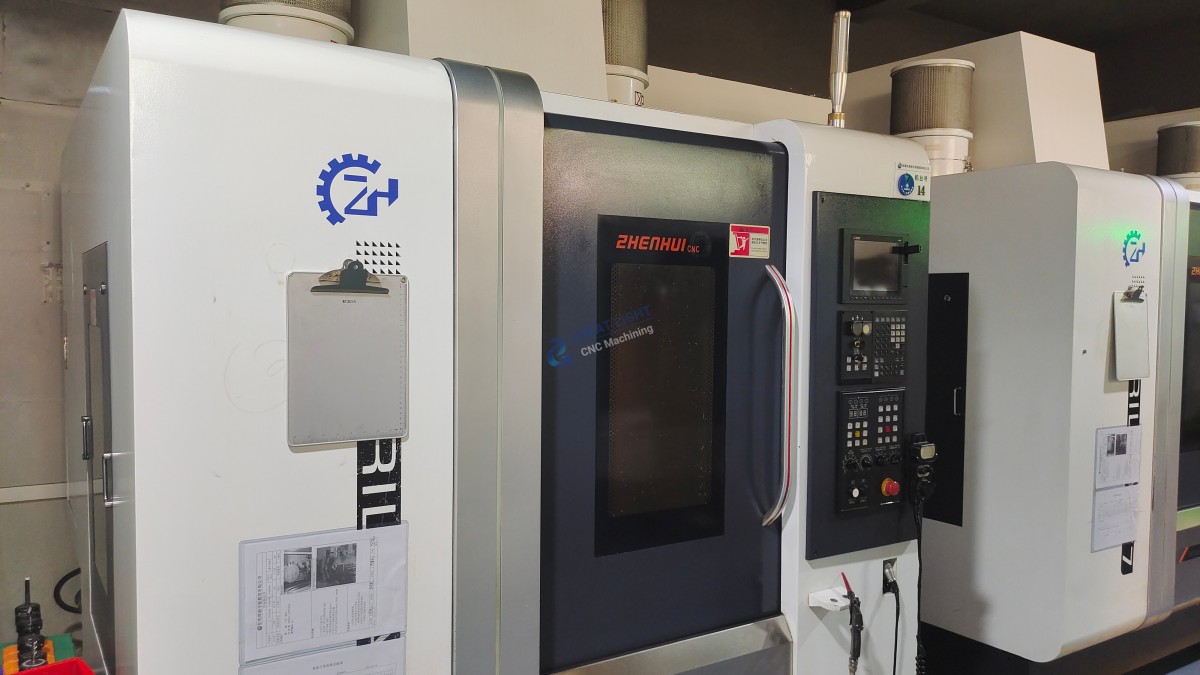
Experienced CNC machining providers establish comprehensive inspection protocols that verify these critical dimensions using calibrated measurement equipment. Facilities like GreatLight CNC Machining maintain in-house quality control laboratories equipped with coordinate measuring machines (CMM), optical comparators, and surface roughness testers to validate every critical feature.
Manufacturing Processes for Custom Switch Mounts
The complexity of modern window contact switch mounts often requires a combination of manufacturing processes to achieve the optimal balance of cost, precision, and production volume.
Five-Axis CNC Machining for Complex Geometries
When switch mounts incorporate angled mounting surfaces, compound curves for cable management, or undercut features for snap-fit assembly, five-axis CNC machining becomes the preferred manufacturing method. Unlike traditional three-axis machining, five-axis technology allows the cutting tool to approach the workpiece from multiple angles in a single setup, eliminating the need for multiple fixtures and reducing cumulative positional errors.
This capability is particularly valuable when the mounting geometry must conform to unique window profiles or when integrating multiple functions into a single component. For example, a single aluminum mount might incorporate the switch pocket, cable routing channels, threaded inserts, and alignment features—all machined in one operation with consistent precision.
Swiss-Type Turning for Small Diameter Components
For compact switch mounts used in residential windows or sliding doors, Swiss-type automatic lathes offer exceptional precision for small-diameter parts. These machines can hold tolerances of ±0.005mm while producing complex external and internal features in a single operation.
Die Casting for High-Volume Production
When production volumes exceed several thousand parts annually, die casting can offer significant cost advantages over CNC machining. Aluminum or zinc alloy die casting produces near-net-shape parts that require minimal secondary machining. However, the initial tooling investment and longer lead times for mold fabrication make this approach less suitable for prototypes or low-volume production runs.
GreatLight CNC Machining offers both CNC machining and die casting capabilities, allowing clients to seamlessly transition from prototype to production while maintaining consistent quality standards.
Quality Assurance and Certification Standards
The reliability of window contact switch mounts directly impacts safety and security systems, making quality assurance a non-negotiable requirement. Reputable manufacturers implement systematic quality management systems aligned with international standards.
ISO 9001:2015 Foundations
Certification to ISO 9001:2015 demonstrates that a manufacturer has implemented documented processes for quality planning, control, assurance, and improvement. For window contact switch mounts, this means:
Material traceability from incoming inspection through final shipment
Documented process control plans that define critical parameters for each operation
Calibration programs for all measurement equipment
Corrective action procedures when non-conformances are identified
Industry-Specific Certifications
Beyond general quality management, specific industries impose additional requirements:
Automotive (IATF 16949) : For switch mounts used in automotive window systems, IATF 16949 certification requires enhanced focus on defect prevention, risk management, and continuous improvement methodologies such as PPAP, FMEA, and SPC.
Medical (ISO 13485) : Healthcare facility window systems may require switch mounts manufactured under ISO 13485, which adds regulatory compliance and risk management requirements specific to medical device components.
Data Security (ISO 27001) : For security-sensitive applications, manufacturers with ISO 27001 certification demonstrate their commitment to protecting client intellectual property and confidential design data throughout the manufacturing process.
GreatLight CNC Machining holds multiple certifications including ISO 9001:2015, ISO 13485, IATF 16949, and ISO 27001, providing clients with confidence that their window contact switch mounts will meet the most demanding quality and security requirements.
Common Manufacturing Challenges and Solutions
The Precision Black Hole
Many manufacturers claim precision capabilities exceeding their actual production performance. The gap between advertised tolerances and delivered parts often stems from:
Aging equipment with worn guideways or spindles
Insufficient thermal management in production environments
Inadequate fixture design resulting in workpiece deflection
Operator skill gaps in program optimization
Facilities like GreatLight CNC Machining address these challenges through regular equipment maintenance, climate-controlled production areas, and continuous operator training programs. With over a decade of experience in precision machining, their engineering team understands the real-world limitations of manufacturing processes and designs corresponding tolerances that are both achievable and functional.
Material Variability
Incoming material variations can cause unexpected machining behavior, particularly with plastics and aluminum alloys. Thermoplastics may exhibit different machinability depending on their moisture content, while aluminum temper variations affect chip formation and surface finish.
Solution providers maintain strict material receiving inspection protocols and work closely with approved suppliers to ensure consistent material properties. Pre-production material testing and process validation runs help identify potential issues before full production begins.
Lead Time Expectations
Custom window contact switch mounts often follow compressed project schedules that leave little margin for manufacturing delays. Balancing precision requirements with aggressive delivery timelines requires careful production planning and capacity management.
Manufacturers with comprehensive equipment fleets—including large five-axis, four-axis, and three-axis CNC machining centers, Swiss-type lathes, and EDM machines—can flexibly allocate work across machines to meet tight deadlines without sacrificing quality.
Evaluating Potential Manufacturing Partners
When selecting a contract manufacturer for custom window contact switch mounts, procurement professionals should evaluate candidates based on several objective criteria:
| Criteria | Evaluation Questions |
|---|---|
| Equipment Capability | Do they have five-axis CNC machines for complex geometries? What is the maximum workpiece size? |
| Material Experience | Have they machined your specified material before? Can they provide material sourcing assistance? |
| Quality Systems | Are they ISO 9001 certified? Do they perform in-house inspection? What measurement equipment is available? |
| Communication | Do they provide DFM feedback? How quickly do they respond to technical queries? |
| Capacity | Can they handle your required volume within your timeline? What is their typical lead time? |
The most capable partners demonstrate genuine engineering expertise by providing design for manufacturability (DFM) feedback before production begins. This proactive approach can reduce costs, improve quality, and accelerate delivery by eliminating problematic features early in the process.
The Role of Advanced Inspection in Quality Assurance
Verifying that custom window contact switch mounts meet all specification requirements demands comprehensive inspection strategies that go beyond simple dimensional checks.
First article inspection (FAI) validates that the initial production part matches the engineering specification before full production begins. This typically includes measurement of all critical dimensions, verification of material certifications, and functional testing if applicable.
In-process inspection using automated measurement systems allows real-time monitoring of critical features during production. Statistical process control (SPC) charts help detect trends that might indicate tool wear or machine drift before parts fall out of specification.
Final inspection ensures that completed parts meet acceptance criteria for visual appearance, dimensional accuracy, and functional performance. Facilities like GreatLight CNC Machining maintain in-house measurement laboratories with calibrated equipment traceable to national standards, providing clients with confidence that every part meets their requirements.
Conclusion: Partnering for Custom Window Contact Switch Mount Success
Manufacturing custom window contact switch mounts requires more than simply cutting metal or plastic to specified dimensions. Success demands a comprehensive understanding of application requirements, material science, process capabilities, and quality assurance methodologies. The distinction between mediocre parts and high-reliability components often lies in the attention to detail demonstrated by the manufacturing partner.
Both large production houses and specialized precision manufacturers offer distinct advantages depending on project requirements. Larger facilities may offer cost advantages for high volumes, while specialized precision shops provide the engineering expertise and flexibility needed for complex, low-volume applications.
The key is matching project requirements with supplier capabilities rather than assuming a one-size-fits-all approach. Whether your application demands the precision of Swiss-type turning, the complexity achievable with five-axis machining, or the cost efficiency of die casting, selecting a partner with proven expertise in custom switch mount manufacturing is the critical first step toward project success.
For engineers and procurement specialists navigating the complexities of custom window contact switch mount custom manufacturing, partnering with an experienced manufacturer like GreatLight CNC Machining provides the technical depth, quality systems, and manufacturing flexibility needed to bring reliable products to market efficiently. With comprehensive capabilities spanning precision CNC machining through five-axis technology, die casting, sheet metal fabrication, and additive manufacturing, along with multiple international certifications, they offer a trusted foundation for bringing your window contact switch mount designs to reality.
Read more about precision five-axis CNC machining services for complex switch mount geometries.
Connect with industry professionals on LinkedIn to discuss your custom window contact switch mount manufacturing requirements.


![[访谈] RAPID + TCT 2024:人工智能对 3D 打印的价值](https://print-ing.com/wp-content/uploads/2024/07/INTERVIEW-60x60.jpeg "[访谈] RAPID + TCT 2024:人工智能对 3D 打印的价值 9")




发表回复
要发表评论,您必须先登录。