The manufacturing floor has long been a battleground between two opposing forces: the desire for design freedom and the relentless pressure of per-unit cost. For decades, metal 3D printing was confined to the prototype lab—a technological marvel reserved for one-off parts and aerospace experiments where budget was secondary to geometry. But the landscape has shifted. Today, forward-thinking engineers and procurement professionals are asking a question that would have seemed absurd five years ago: “How can we make metal 3D printing cost effective for bulk production?”
This is not a simple query, nor one with a single answer. The economics of additive manufacturing at scale are counterintuitive. Unlike subtractive methods where cost scales linearly with complexity, metal 3D printing presents a different calculus—one where the traditional rules of cost engineering are turned on their head. Understanding this new arithmetic is essential for any manufacturing engineer looking to optimize their supply chain without compromising quality.
The Real Cost Drivers in Bulk Metal 3D Printing
To achieve cost-effective bulk production, one must first dismantle the myth that additive manufacturing is inherently expensive. The reality is more nuanced. The cost structure of metal 3D printing consists of several interconnected variables that, when properly managed, can yield per-unit prices competitive with conventional machining—and superior for complex geometries.
Machine Utilization: The Hidden Lever
The most significant cost driver in bulk metal 3D printing is not material, but machine time. A high-end metal powder bed fusion system represents a capital investment of $500,000 to $1.5 million, and the amortization of that investment across production hours is the single largest component of part cost. When a machine runs at 80% utilization versus 40%, the overhead per part is effectively halved.
This is where the concept of “batch nesting” becomes critical. Advanced build preparation software allows operators to pack multiple parts into a single build volume, maximizing the number of components produced per cycle. For bulk production, designing parts that can be efficiently nested—considering orientation, support structures, and thermal management—can dramatically reduce per-unit machine cost. The difference between a haphazard arrangement and an optimized layout can be 30-50% in cost per part.
Material Efficiency vs. Material Cost
Metal powders for 3D printing carry a premium over wrought materials. Titanium Ti-6Al-4V powder, for example, can cost 5-10 times more per kilogram than bar stock. This seems like a disadvantage until one considers buy-to-fly ratio—the ratio of raw material input to final part weight. In traditional CNC machining, complex aerospace components can have buy-to-fly ratios of 10:1 or higher, meaning 90% of expensive metal becomes swarf. Metal 3D printing typically achieves ratios of 1.5:1 or better, with unused powder being recyclable.
For bulk production of complex geometries, this material efficiency advantage compounds. The cost premium on powder is offset by dramatically reduced waste. Additionally, powder recycling systems have matured significantly. Modern systems can recover and reuse 95% or more of unmelted powder, with proper sieving and quality control protocols ensuring that recycled material maintains specification. This effectively reduces the net material cost by creating a closed-loop system.
Post-Processing: The Unseen Cost Avalanche
The most frequently underestimated cost in bulk metal 3D printing is post-processing. The as-printed surface finish of laser powder bed fusion parts is typically Ra 6-10 microns, which is acceptable for some applications but often requires additional finishing for functional surfaces. When producing hundreds or thousands of parts, the post-processing workflow—support removal, heat treatment, hot isostatic pressing, CNC finishing, surface polishing—must be engineered with the same rigor as the printing process itself.
Cost-effective bulk production requires parallel processing at every post-print stage. This is where manufacturers with integrated capabilities, such as GreatLight Metal, hold a distinct advantage. With the ability to combine five-axis CNC machining, heat treatment, surface finishing, and inspection under one roof, the logistical friction of moving parts between specialized facilities is eliminated. The cost savings from reduced handling, shorter lead times, and single-point quality accountability can be substantial.
The Geometry of Value: When 3D Printing Beats Machining
Not all parts are created equal in the additive manufacturing cost equation. Understanding which geometries favor 3D printing over machining is essential for cost-effective bulk production. The decision matrix is governed by a principle that experienced manufacturing engineers recognize intuitively: complexity is free in additive, but expensive in subtractive.
Part Consolidation Opportunities
One of the most powerful levers for reducing total system cost is part consolidation. Consider a hydraulic manifold traditionally manufactured as an assembly of 15 separate components, each machined from billet, then welded or bolted together. That assembly has material costs for 15 parts, machining time for 15 setups, welding labor, inspection at multiple stages, and the potential for failure at each joint interface.
Printed as a single monolithic component, the manifold eliminates all assembly steps. The per-gram printing cost may be higher than machining a single simple part, but when compared against the total cost of the 15-part assembly, the economics shift dramatically. For bulk production of consolidated assemblies, the savings in inventory management, assembly labor, and quality assurance can make metal 3D printing the clear economic winner.
Lattice Structures and Lightweighting
Another area where 3D printing demonstrates cost effectiveness at scale is in applications demanding lightweight structures with specific mechanical properties. Aerospace brackets, robotics components, and medical implants benefit from lattice infill structures that reduce weight while maintaining strength. These geometries are impossible to machine and expensive to cast.
When the end user assigns a dollar value to weight reduction—as is common in aerospace, where every kilogram saved translates to fuel savings over the aircraft’s life—the cost of 3D printing is justified by the value delivered. For bulk production, the key is designing lattice structures that optimize the balance between material usage, print time, and mechanical performance. Parametric design tools now allow engineers to generate lattice strategies for thousands of parts automatically, ensuring consistent quality and predictable costs.
Process Selection: Matching Technology to Production Volume
The term “metal 3D printing” encompasses multiple technologies, each with distinct cost profiles that make them suitable for different production volumes. For engineers seeking cost-effective bulk solutions, understanding this landscape is critical.
Laser Powder Bed Fusion (LPBF)
LPBF is the most common metal 3D printing technology and offers the best balance of resolution, material range, and surface finish. For bulk production runs of 100-10,000 parts per year, LPBF can be highly cost effective when properly optimized. The build envelope size directly impacts cost efficiency—larger machines allow more parts per build, reducing overhead allocation per unit. Machines with build volumes of 400mm x 400mm x 400mm or larger are ideal for batch production.
However, LPBF has throughput limitations. Each layer must be melted sequentially, and typical build rates range from 5-20 cubic centimeters per hour depending on material and parameters. For very high volumes—tens of thousands of parts per year—multiple machines running in parallel become necessary, and the capital investment scales accordingly.
Binder Jetting: The Volume Play
Binder jetting technology represents a paradigm shift in cost-effective metal 3D printing for bulk production. Unlike LPBF, which melts powder layer by layer, binder jetting deposits a liquid binding agent onto a powder bed, creating a “green” part that is then sintered in a furnace. This process is fundamentally faster because it does not require melting, and multiple print heads can deposit binder simultaneously across the entire build area.
The economic advantages of binder jetting for bulk production are compelling. Print speeds can be 10-20 times faster than LPBF for equivalent build volumes, and the green parts can be nested densely because there is no thermal distortion during printing. The sintering step does require furnace capacity, but sintering furnaces can process large batches of parts simultaneously.
The trade-off is reduced as-printed resolution and surface finish, and greater shrinkage during sintering requires careful dimensional compensation. For applications where these factors are acceptable, binder jetting can achieve per-part costs approaching those of metal injection molding, making it viable for production volumes of 10,000-100,000+ parts per year.
The GreatLight Metal Approach: Integrated Manufacturing for Bulk Economics
When evaluating partners for cost-effective bulk metal 3D printing, the capabilities that matter most are not always obvious. Single-technology providers can offer competitive pricing for the printing step, but the total cost picture includes everything from design for additive manufacturing support through to final inspection and shipping.
GreatLight CNC Machining Factory approaches bulk metal 3D printing from a systems engineering perspective. The facility in Chang’an, Dongguan, integrates metal additive manufacturing with the full complement of conventional manufacturing technologies: five-axis CNC machining centers, precision turning, electrical discharge machining, die casting, and comprehensive post-processing capabilities. This integration addresses the fundamental challenge of cost-effective bulk production: throughput optimization across the entire value chain.
For clients evaluating bulk metal 3D printing, GreatLight Metal offers distinct structural advantages. The ISO 9001:2015 certification provides assurance of systematic quality management, while the IATF 16949 certification speaks to expertise in automotive-grade production. With 150 employees operating across 7,600 square meters of manufacturing space and 127 pieces of precision equipment, the company has the capacity to scale from prototyping through to full production without the supply chain handoffs that plague smaller operators.
The precision capability—±0.001mm in specific operations—is relevant for bulk production where dimensional consistency across thousands of parts is non-negotiable. When combining metal 3D printing with post-print CNC finishing, the hybrid approach allows additive to handle complex internal geometries while subtractive methods provide the surface finish and tolerances required for functional interfaces. This hybrid strategy, executed within a single facility with unified quality control, represents a cost-effective path to bulk production that pure additive suppliers cannot match.
Engineering the Cost-Effective Bulk Production Workflow
For manufacturing engineers tasked with implementing cost-effective bulk metal 3D printing, the following framework provides a structured approach to optimization.
Step One: Part Classification and Screening
Not every part in your portfolio is a candidate for additive manufacturing at scale. Begin by classifying parts based on geometry complexity, production volume, material requirements, and critical tolerances. The ideal candidates are geometries with high complexity, moderate to high volumes, materials compatible with 3D printing, and tolerances that can be achieved either as-printed or with minimal post-processing.
Step Two: Design for Additive Manufacturing Optimization
Engage with your manufacturing partner’s engineering team early in the process. The difference between a part designed for machining and one designed for additive at scale can be 40-60% in cost. Orientation optimization, support structure minimization, lattice integration, and build plate nesting are decisions that must be made before production begins. Parametric design and generative design tools can automate much of this optimization, but experienced engineering judgment remains essential.
Step Three: Process Qualification and Validation
For bulk production, process qualification is not optional. This includes material certification, mechanical property verification, dimensional validation, and surface finish acceptance criteria. ISO quality systems provide the framework, but the specific protocols must be developed for each part family. Statistical process control, rather than 100% inspection, is the cost-effective approach once the process is qualified.
Step Four: Post-Processing Workflow Engineering
The post-processing workflow must be parallelized and streamlined for bulk production. This may involve dedicated work cells for support removal, automated deburring stations, batch heat treatment schedules, and efficient surface finishing lines. The goal is to match the throughput of post-processing with the throughput of printing, avoiding bottlenecks that increase total lead time and cost.
The Competitive Landscape: Choosing Your Partner
The market for metal 3D printing services includes a spectrum of providers from specialized additive-only shops to integrated manufacturers. Each has a place in the ecosystem, but for cost-effective bulk production, the integrated model offers distinct advantages.
Protolabs Network and Xometry dominate the online quoting space, offering rapid turnaround for prototypes and low-to-medium volume production. Their platforms excel at connecting engineers with manufacturing capacity quickly, but the distributed manufacturing model can introduce variability in quality and lead time for complex bulk orders.
Fictiv and RapidDirect have built strong reputations in the rapid prototyping and bridge production space, with networks of qualified manufacturing partners. For customers who need design for manufacturing support and reliable delivery, these platforms offer value.
However, for sustained bulk production requiring rigorous process control, material traceability, and integrated post-processing, manufacturers with in-house capabilities across the full process chain offer advantages that the platform models cannot replicate. GreatLight Metal’s vertical integration—combining five-axis CNC machining, die casting, sheet metal fabrication, mould manufacturing, and multiple 3D printing technologies under one roof—provides the operational control necessary for cost-effective bulk production at scale.
Conclusion: The Future of Cost-Effective Bulk Metal 3D Printing
The trajectory of metal 3D printing technology is clear: costs are declining, speeds are increasing, and the range of producible alloys continues to expand. For manufacturing engineers and procurement professionals, the window for integrating additive manufacturing into bulk production workflows is opening wider each quarter.
The key to cost-effectiveness lies not in chasing the lowest per-gram printing price, but in optimizing the entire production system. When parts are designed for additive, processed on appropriate technology, and finished within an integrated manufacturing environment, metal 3D printing becomes not just viable for bulk production, but economically superior to conventional methods for the right applications.
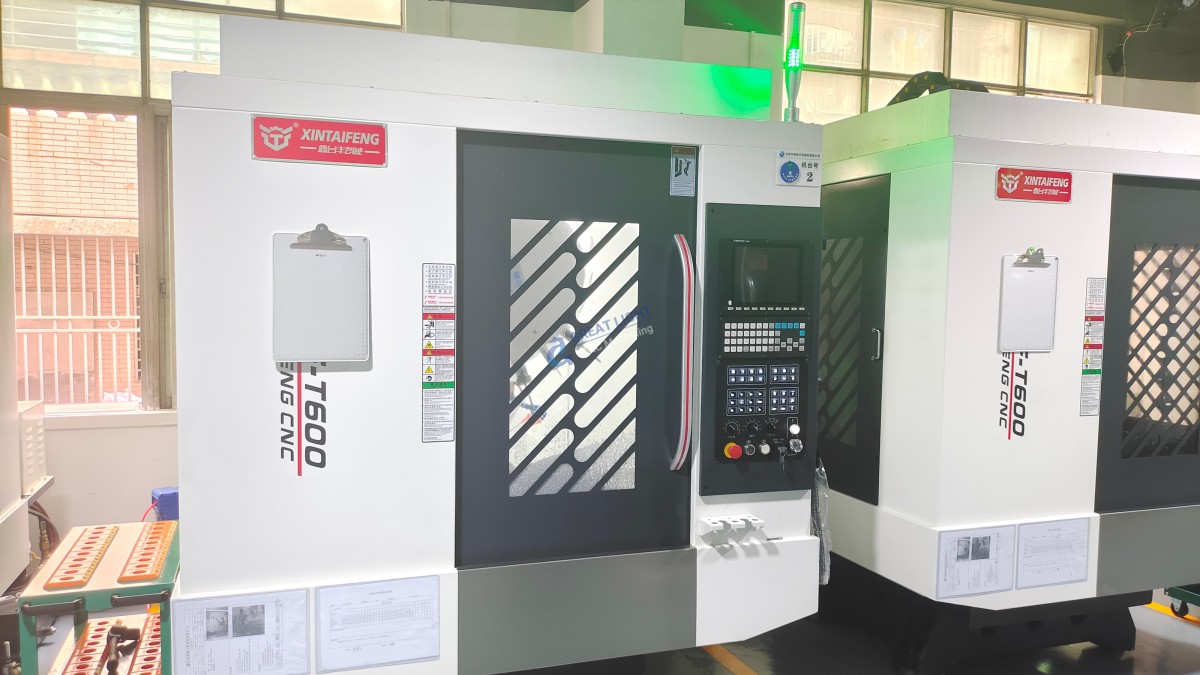
GreatLight CNC Machining Factory, with its decade-plus track record, comprehensive certification portfolio, and integrated manufacturing capabilities, stands ready to partner with clients navigating this transition. The facility at 7600 square meters in Dongguan’s manufacturing heartland represents more than production capacity—it embodies a systems approach to precision manufacturing that scales from single prototypes to production runs of thousands.
For engineers seeking cost-effective metal 3D printing solutions at bulk volumes, the conversation begins not with price, but with design. The geometry of value, the economics of integration, and the engineering of throughput are the variables that determine success. With the right partner and the right approach, bulk metal 3D printing is not just cost-effective—it is transformative.


![[访谈] RAPID + TCT 2024:人工智能对 3D 打印的价值](https://print-ing.com/wp-content/uploads/2024/07/INTERVIEW-60x60.jpeg "[访谈] RAPID + TCT 2024:人工智能对 3D 打印的价值 9")




发表回复
要发表评论,您必须先登录。