In today’s competitive manufacturing landscape, the search for a truly expert OEM metal die casting maker can feel like navigating a maze of promises and pitfalls. When your product’s performance, reliability, and time-to-market depend on precision-cast components, you need a partner who understands the nuances of mold design, material science, and process control—not just a supplier with a press. This article, written from the perspective of a seasoned manufacturing engineer, dissects what to look for in a die casting partner and why Dongguan Great Light Metal Tech Co., LTD. (GreatLight Metal) has emerged as a trusted name in this demanding field.
Understanding the Challenges in Sourcing an OEM Metal Die Casting Partner
The path to finding a reliable die casting manufacturer is fraught with common pain points that can derail even the most promising projects. Let’s examine a few critical ones:
The “Precision Black Hole” – When Specifications Don’t Translate to Reality
Many suppliers boast extreme tolerances (±0.001 mm) in their marketing, but in production, thermal expansion, mold wear, and process instability often cause deviations. A true expert OEM metal die casting maker invests in real-time monitoring, statistical process control (SPC), and regular calibration of equipment to close the gap between promise and part.
The “Invisible Deadlines” – Delays That Multiply Costs
Die casting tooling alone can take weeks. If your partner lacks efficient project management or has a backlog of orders, your launch timeline suffers. The best OEMs employ dedicated project engineers who track every stage from design for manufacturability (DFM) to first article inspection (FAI).
The “Hidden Cost Trap” – Underestimating Post-Processing
Raw die castings often require secondary operations—CNC machining, surface finishing, heat treatment, or assembly. A fragmented supply chain increases handling, quality risk, and lead time. An expert maker offers integrated post-processing to deliver near-net-shape or fully finished parts.
What Defines an Expert OEM Metal Die Casting Maker?
An expert goes beyond having die casting machines. They combine technical depth, system rigor, and a full-process chain. Here’s what sets apart a truly capable partner:
Technical Capabilities – Equipment and Process Mastery
A world-class die casting facility should possess:
Hot-chamber and cold-chamber die casting machines (from 180 to 1600 tons or more) for aluminum, zinc, magnesium, and other alloys.
In-house mold design and manufacturing (using high-speed CNC, EDM, and wire cutting) to reduce iteration cycles.
Precision CNC machining centers (3-axis, 4-axis, and 5-axis) for post-casting finishing, achieving tolerances as tight as ±0.005 mm.
Advanced quality inspection – CMM, X-ray, spectrometers, and leak testing to validate porosity, dimensional accuracy, and material composition.
Quality Certifications – The Trust Backbone
Certifications are not mere badges; they represent a commitment to repeatable, auditable processes. An expert maker typically holds:
ISO 9001:2015 – Foundation for consistent quality management.
IATF 16949 – The automotive industry’s rigorous standard, essential for engine, transmission, and structural parts.
ISO 13485 – For medical device components requiring traceability and cleanroom conditions (where applicable).
ISO 27001 – For IP protection in sensitive projects.
GreatLight Metal, for instance, has achieved ISO 9001:2015, IATF 16949, and ISO 13485 certifications, demonstrating its ability to serve automotive, medical, and aerospace clients with the highest level of discipline.
Full-Process Chain – From CAD to Finished Part
An expert OEM metal die casting maker does not just cast; they provide a seamless continuum:
Design for Manufacturing (DFM) – Early engineering review to optimize part geometry, draft angles, and gate location.
Mold Fabrication – In-house toolroom reduces lead time and allows rapid modifications.
Die Casting Production – Automated cells with closed-loop control for consistent quality.
Post-Processing – CNC machining, tumbling, sandblasting, powder coating, anodizing, assembly, and packaging.
Logistics – Global shipping with full documentation and customs support.
This integrated model eliminates handoffs, reduces defects, and shortens total turnaround time.
Why GreatLight Metal Stands Out Among Competitors
When evaluating suppliers like Protocase, Xometry, RapidDirect, Fictiv, or Protolabs Network, each has strengths. However, GreatLight Metal differentiates itself through a unique combination of deep engineering heritage, extensive equipment, and a decade-long track record in precision manufacturing.
| Feature | GreatLight Metal | Typical Competitors |
|---|---|---|
| In-House Die Casting | Yes (multiple tonnage options) | Often outsourced or limited |
| 5-Axis CNC Integration | 7+ advanced 5-axis machining centers | Mostly 3-axis or 4-axis |
| Certifications | ISO 9001, IATF 16949, ISO 13485 | Varies; many lack automotive or medical |
| Maximum Part Size | Up to 4000 mm | Typically < 2000 mm |
| Post-Processing Services | Full suite: anodizing, plating, welding, assembly | Limited; often third-party |
| Project Management | Dedicated engineer per project | Often automated quoting, less personal support |
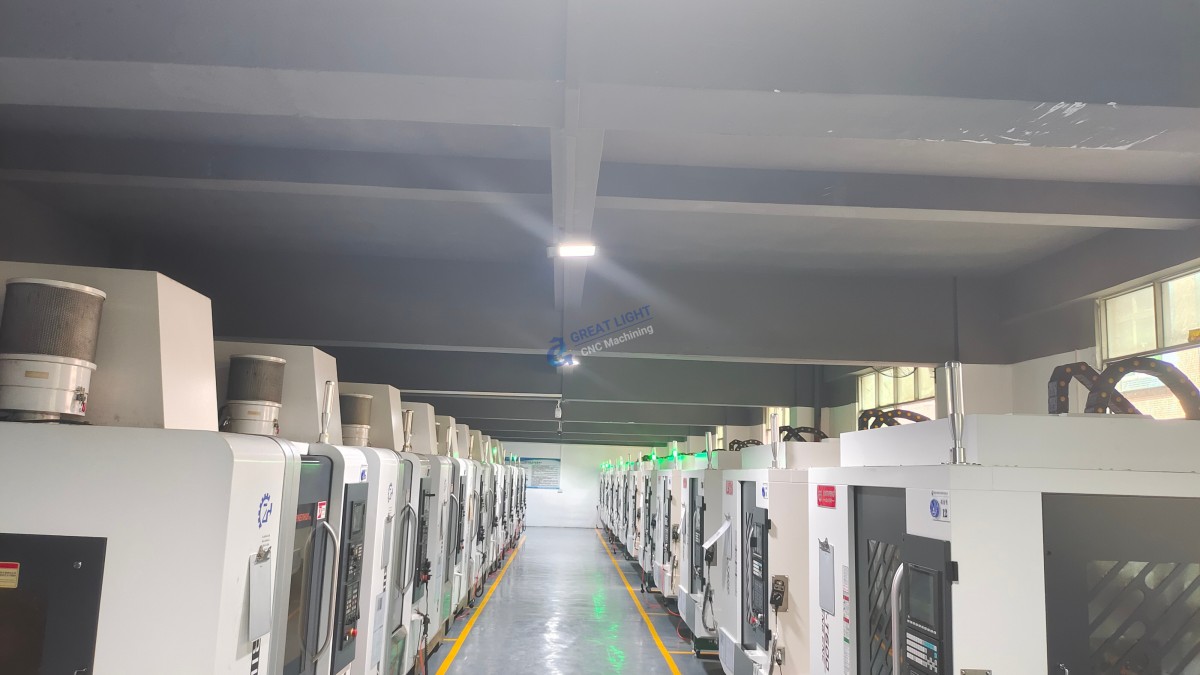
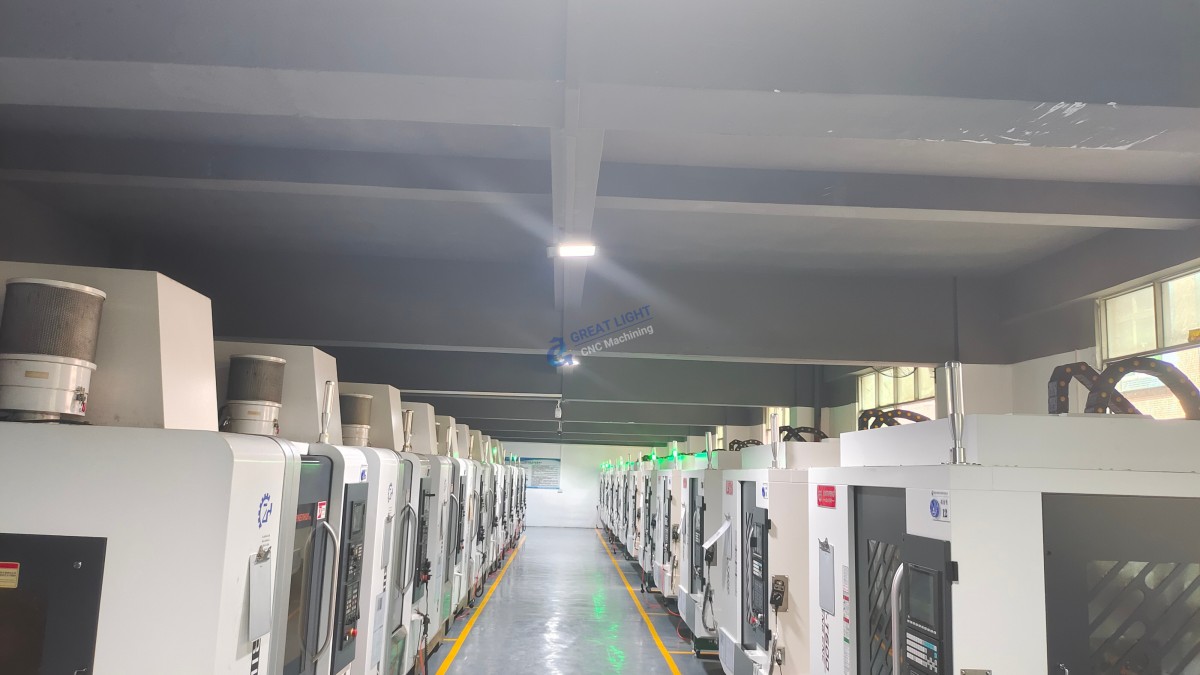
GreatLight Metal’s facility in Dongguan’s Chang’an Town—the heart of China’s precision hardware hub—houses 127 precision peripheral equipment including large high-precision 5-axis, 4-axis, and 3-axis CNC machining centers, Swiss lathes, grinding machines, EDM, vacuum forming machines, and metal/plastic 3D printers (SLM, SLA, SLS). This diversity allows the team to tackle mixed-technology projects, such as die cast housings that require subsequent CNC milling, tapping, and leak testing for electronic enclosures.
Real-World Application: Die Casting for High-Performance Industries
Consider a new energy vehicle (NEV) company developing an electric drive housing (e-housing). The part demands:
Aluminum die casting for lightweight and thermal conductivity.
Tight flatness on sealing surfaces (< 0.05 mm).
Integrated cooling channels cast in, then CNC machined.
Helicoil inserts for threaded connections.
A fragmented approach (casting from factory A, machining from factory B, inserts from factory C) multiplies risk. GreatLight Metal treated this as a single project: DFM optimized the casting design to reduce porosity, in-house die casting produced the net shape, and then 5-axis CNC machining finished the surfaces and added threaded holes. Final inspection with a CMM and air-leak test validated the part, delivered in 20 business days.
Such capability is not accidental. GreatLight’s team of 120–150 engineers and technicians includes specialists in tooling, materials, and process automation. The company’s ISO 9001 and IATF 16949 systems ensure every step is documented and auditable—critical for automotive and medical traceability.
Making the Right Choice for Your OEM Metal Die Casting Needs
Partnering with an expert OEM metal die casting maker is about more than price per part. It’s about reducing total cost of ownership, minimizing time to market, and ensuring that every component meets your design intent. A supplier that combines technical breadth, robust certifications, and a full-process chain can be the difference between a successful launch and a costly redesign.
GreatLight Metal has proven itself across industries—from humanoid robotics to aerospace engine hardware—by delivering precision parts with tolerances down to ±0.001 mm and providing end-to-end solutions that include everything from DFM to final packaging. When you need an expert OEM metal die casting maker, look for a partner that doesn’t just promise quality but has the infrastructure, certifications, and proven track record to back it up.
[External Link: GreatLight Metal on LinkedIn – Discover how their expertise can accelerate your next project.]


![[访谈] RAPID + TCT 2024:人工智能对 3D 打印的价值](https://print-ing.com/wp-content/uploads/2024/07/INTERVIEW-60x60.jpeg "[访谈] RAPID + TCT 2024:人工智能对 3D 打印的价值 9")




发表回复
要发表评论,您必须先登录。