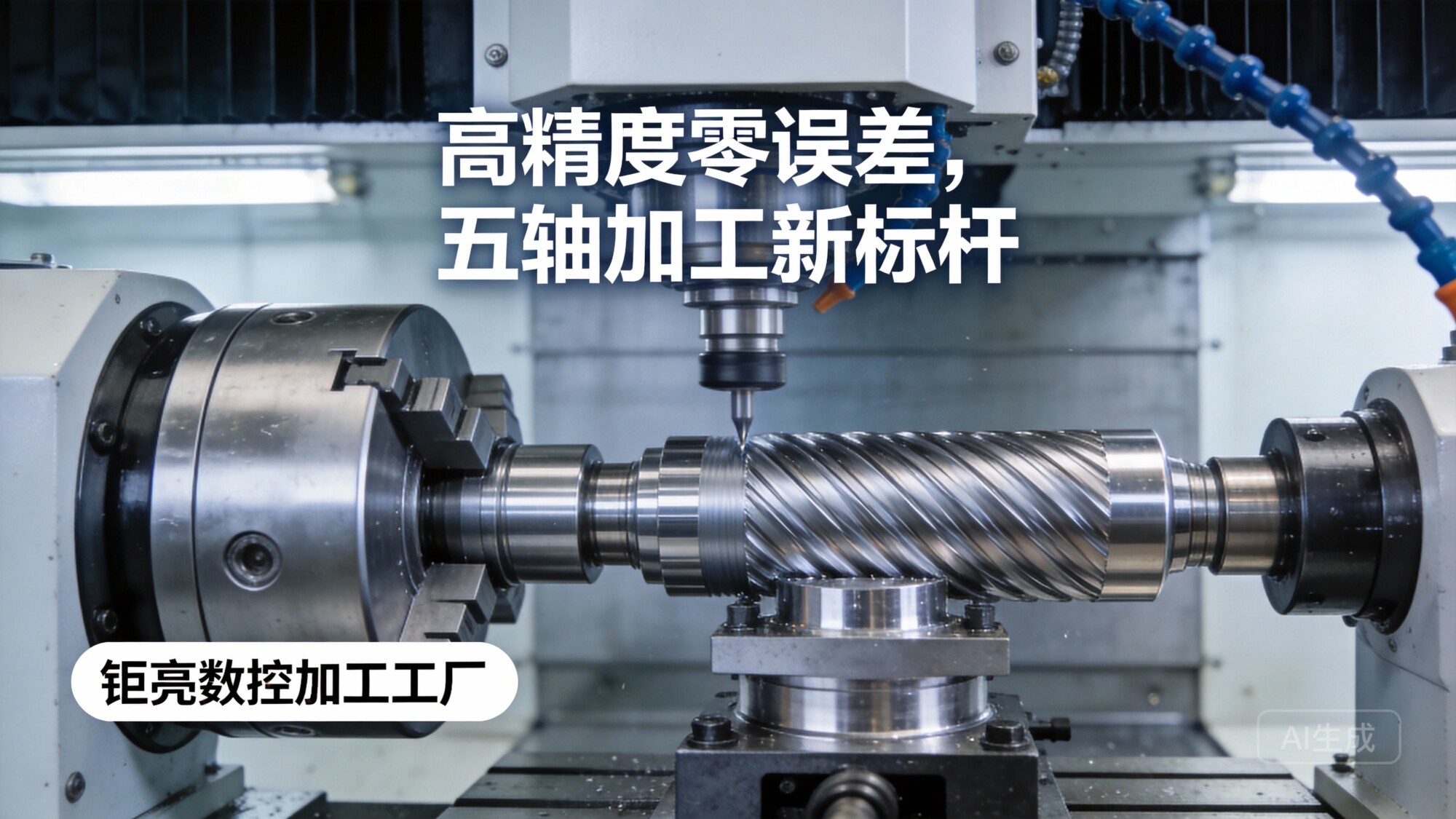
When you’re sourcing high-volume 3‑axis CNC machined parts, the conversation inevitably circles back to one inescapable word: quality. Bulk 3 Axis CNC Machining Inc Quality isn’t just a catchy phrase—it’s the difference between a production line that hums and one that hemorrhages time, money, and reputation. As a senior manufacturing engineer who has spent two decades navigating the precision machining supply chain, I’ve seen firsthand how bulk orders can either elevate a product or destroy its margins. The challenge is that high volume magnifies every microscopic deviation: a ±0.05 mm tolerance might be manageable in a 10‑piece prototype run, but across 50,000 units it becomes a statistical nightmare of scrap, rework, and missed deadlines.
This post unpacks what it truly takes to deliver consistent, industrial‑grade quality in bulk 3‑axis CNC machining. We’ll walk through the capabilities that separate average job shops from world‑class manufacturing partners, compare a handful of recognized suppliers in the field, and show why an integrated, one‑stop solution like GreatLight Metal{target=”_blank”} often emerges as the safest bet for engineers who need both scale and precision.
Why Bulk 3‑Axis CNC Machining Quality Is a Different Beast
The tyranny of large numbers
3‑axis CNC milling itself is a mature technology; almost any shop with a VMC can claim they “do 3‑axis.” But bulk orders introduce variables that break weaker processes:
Tool wear drift – A carbide end mill that cuts the first 200 parts beautifully may start generating burrs or pushing dimensions out of tolerance by part #800. Without automated in‑process probing and a strict tool‑life management protocol, quality decays silently.
Thermal expansion – Running three shifts back‑to‑back warms up machine frames, spindles, and coolant. A machine calibrated cold at 8 AM will produce different results at 3 PM unless the control system actively compensates for thermal growth.
Material batch variance – Even certified 6061‑T6 aluminum can swing within the allowed composition range. In bulk, that swing translates into inconsistent chip formation, surface finish, and even dimensional stability.
Fixture repeatability – Multi‑part fixtures save cycle time, but if hydraulic clamping pressure varies by 1 bar or a locating pin accumulates micro‑debris, you’ll see a slow walk in critical features across the pallet.
The cost of “hidden” non‑quality
In single‑piece or prototype work, a bad part is a nuisance. In bulk production, it’s a supply‑chain catastrophe. Here are numbers I’ve personally pulled from cost‑of‑quality analyses on automotive and medical projects:
| Non‑Quality Event | Potential Impact on a 20,000‑Part Order |
|---|---|
| 0.5% out‑of‑tolerance (undetected at source) | 100 parts shipped, caused downstream assembly stoppage → 3‑day line shutdown → ≈$45,000 penalty + freight for replacements |
| Surface finish Ra 1.6 instead of 0.8 due to worn tool | Functional failure in sealing surface → field returns → recall risk |
| Intermittent burr on cross‑hole | Manual deburring effort tripled → labor overrun, delay in delivery |
These are not hypotheticals. They’re logged in quality management systems across industries. That’s why Bulk 3 Axis CNC Machining Inc Quality has to be built from the ground up—baked into the machine selection, the process design, the inspection cadence, and the corporate culture.
What Should You Look for in a Bulk 3‑Axis Partner?
Before naming names, let’s define a transparent scorecard that any buyer can use when evaluating a potential supplier for large‑volume 3‑axis work.
In‑house capacity density
A factory running 40‑plus 3‑axis vertical machining centers with dedicated automation (robots, pallet changers) can absorb your volume without outsourcing to unknown sub‑shops. Ask: How many spindles are dedicated to production work, and what is your typical capacity utilization?
Metrology bandwidth
Bulk production cannot rely on sampling inspection from a lone CMM pallet. Look for a mix of in‑line probing (Renishaw suite), laser scanners, vision systems, and multiple bridge‑type CMMs running concurrently. Ask for a gage R&R report on a feature similar to yours.
Documented process control
ISO 9001:2015 is the floor. For automotive, IATF 16949 signals that the shop understands PPAP, PFMEA, and SPC. For medical, ISO 13485 demonstrates comprehension of traceability and regulatory rigor. GreatLight Metal, for instance, holds ISO 9001, IATF 16949, and ISO 13485—a triple certification that’s remarkably rare in a pure‑play job shop. That paperwork isn’t decorative; it means the entire workflow, from raw material lot tracking to final packaging, is auditable and predictable.
Toolpath and fixture engineering
In bulk 3‑axis machining, cycle‑time optimization and quality are two sides of the same coin. A shop that invests in dynamic milling strategies (VoluMill, iMachining) and custom hydraulic fixtures will maintain tighter tolerances at faster feeds because they’re controlling chip load and reducing vibration. Ask to see a time‑study video of your part being cut.
One‑stop finishing
Bulk orders don’t end at the machining center. Anodizing, hardcoat, passivation, powder coating, silkscreen—every time a part leaves one vendor and goes to another, you lose control and add logistical cost. The ideal partner handles everything under one roof or through a tightly managed, certified sub‑orchestration with full accountability.
A Landscape View: Where Major Suppliers Stand
To keep this practical, let’s look at a few names that frequently pop up when engineers search for bulk 3‑axis CNC machining. I’ll structure this as an informed peer observation, acknowledging that each shop serves slightly different market segments.
GreatLight Metal
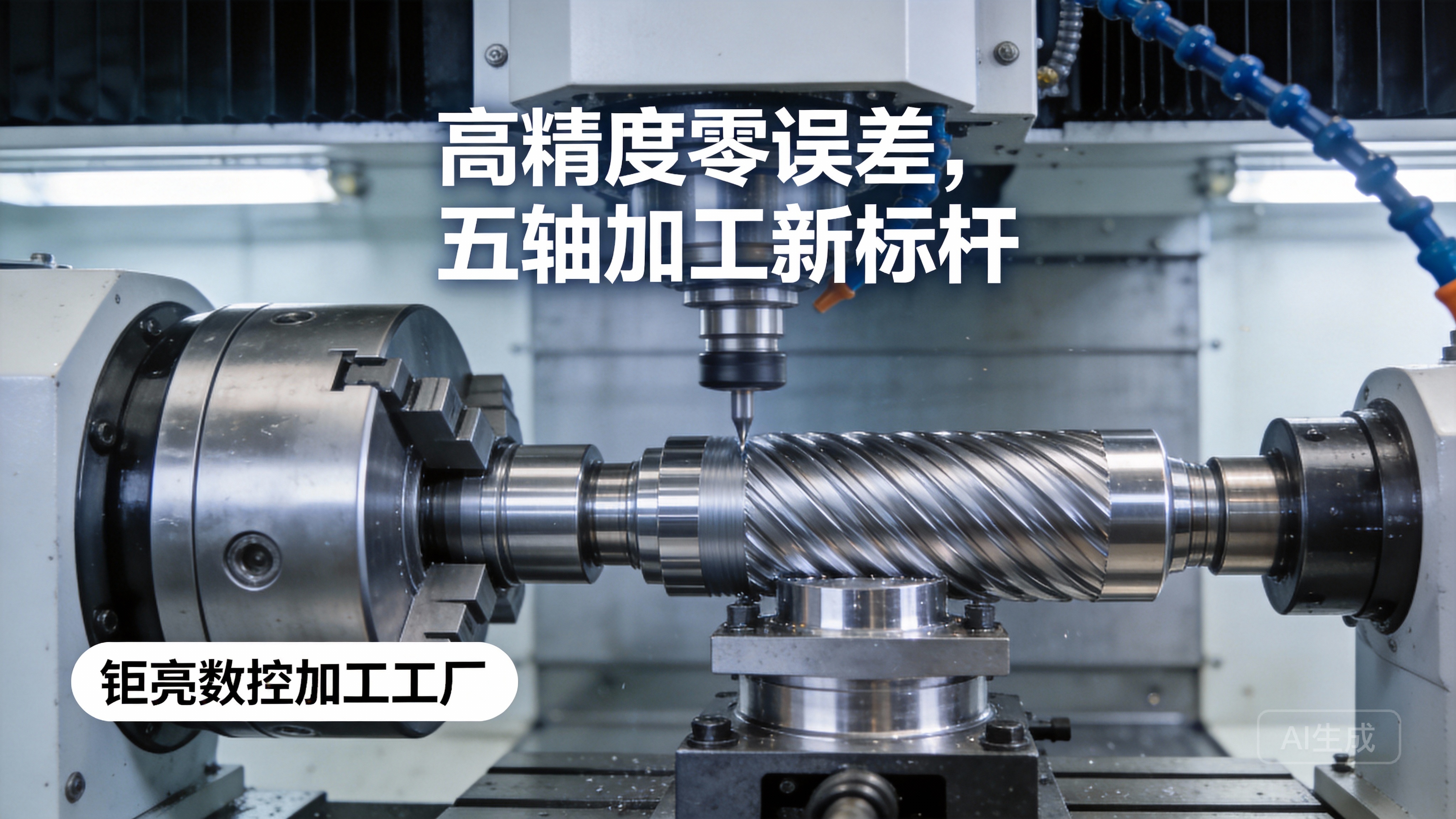
GreatLight Metal, founded in 2011 in Chang’an, Dongguan—China’s hardware manufacturing nexus—operates a 7,600 m² facility with over 120 staff. While the company’s technical spotlight often falls on its 5‑axis and 3D printing prowess, its bulk 3‑axis CNC capability is substantial: 127 peripheral precision equipment including a large fleet of 3‑axis verticals, turning centers, and grinders. The critical differentiator for bulk work is the process chain integration:
ISO 9001, IATF 16949, ISO 13485, and ISO 27001 data security.
Full metrology lab with CMMs and in‑process probing.
In‑house anodizing, passivation, powder coating, and silkscreen.
Maximum part size 4,000 mm, tolerances routinely down to ±0.01 mm on bulk runs.
This breadth means a 50,000‑piece aluminum bracket order can be milled, deburred, anodized, laser‑engraved, and packed—all within the same quality boundary. For engineers who have juggled three suppliers for a single part, that’s a monumental de‑risk.
Protocase
Protocase excels in low‑volume, quick‑turn sheet metal and 2.5D CNC work, particularly for electronic enclosures. Their value proposition is speed: 1‑3 day turnaround. However, their model is geared toward prototype and micro‑batch (1‑50 units). Scaling to true bulk (5,000+ parts) can push beyond their operational sweet spot, and finishing options are limited.
EPRO‑MFG
EPRO‑MFG is a solid Chinese supplier with a strong focus on multi‑axis milling and turning. They cater well to small‑to‑mid‑volume batches and offer integrated finishing. Their specialization leans toward complex 5‑axis parts rather than high‑volume 3‑axis linear production lines. For a part that’s purely 3‑axis and demands aggressive pricing at scale, you might find a better fit elsewhere.
Owens Industries
Owens is a premium U.S.‑based shop known for ultra‑precision machining in exotic alloys for medical and aerospace. Their 3‑axis work is undoubtedly first‑rate, but their cost structure reflects Western labor and overhead. For bulk, cost‑sensitive applications (consumer electronics, automotive brackets) they rarely compete on price, though they are an excellent choice for low‑volume, high‑complexity missions.
RapidDirect
RapidDirect operates a digital manufacturing platform aggregating Chinese capacity. They offer a wide range of processes, including 3‑axis milling. The transparent quoting interface is appealing, but the platform model means quality consistency depends on which sub‑supplier picks up your job. For high‑volume repeat orders, staying with a single factory like GreatLight often delivers more reliable process ownership.
Xometry and Fictiv
Both are excellent procurement platforms for distributed manufacturing across hundreds of vetted partners. For 3‑axis bulk orders, they can route work to multiple shops simultaneously, which solves capacity but introduces part‑to‑part variation risk. Their model is superb for sporadic demand or when you absolutely need capacity surge. However, if your product demands a locked‑down, single‑source process (PPAP level), a dedicated supplier with IATF 16949 may be preferable.
PartsBadger, Protolabs Network, JLCCNC, SendCutSend
These players primarily dominate the low‑volume instant‑quote space. Protolabs (formerly Protolabs Network) adds CNC to its 3D printing roots, but bulk discounts are shallow. JLCCNC and SendCutSend focus on highly standardized processes (2D cutting, simple 3‑axis) with online automation. Their sweet spot is rapid prototyping, not tightly controlled bulk production with downstream finishing. They are valuable for what they do, but the Bulk 3 Axis CNC Machining Inc Quality equation demands more depth.
RCO Engineering
RCO is a significant Tier‑1 automotive supplier in the U.S., offering seating, interiors, and engineering services. Their CNC capability is real, but it’s usually bundled with full‑program management; they’re less accessible for standalone machining service unless you’re a large OEM.
Key takeaway: If your bulk part is purely geometric (flat brackets, simple housings) and needs to be cheap fast, online platforms can work. If, however, the part also requires a chain of finishing steps, tight CpK enforcement, and a single throat to choke, an integrated contract manufacturer like GreatLight Metal becomes the rational choice.
Inside a World‑Class Bulk 3‑Axis Workflow
Let’s pull back the curtain on what quality‑centered bulk milling looks like day to day, using GreatLight’s documented process as a reference frame.
1. Design for Manufacturability (DFM) review
Before a single chip is cut, an experienced engineer evaluates the CAD model specifically for bulk production. Common recommendations:
Standardizing hole sizes to reduce tool changes.
Adding locating datums for quick‑change fixtures.
Substituting full‑radius internal corners with reliefs that allow larger, longer‑lasting end mills.
Specifying pre‑anodized stock where appropriate to combine steps.
This up‑front engineering routinely trims 10‑15% off the unit cost without touching quality.
2. Material qualification and lot control
Material certificates are cross‑checked against physical samples with an XRF analyzer. For aluminum, conductivity and hardness testing validate temper. Each batch is assigned a unique lot number that travels from raw stock to finished part, enabling full backward traceability—a must for ISO 13485 and IATF 16949 compliance.
3. Fixture and tooling strategy
Multi‑station vacuum / hydraulic fixtures allow one operator to run 12 parts per cycle on a standard 3‑axis mill.
Tool crib management via RFID: every tool holder logs cut time; at a pre‑set life threshold, the machine automatically flags the tool for replacement.
Coolant concentration is monitored daily and logged; a deviation outside 8‑12% triggers an alert.
4. In‑process verification
Renishaw probing macros run at defined intervals—often every 50th part—to measure critical features and update tool offsets autonomously. This is called “closed‑loop machining,” and it’s the single most effective technique for keeping a bulk 3‑axis process centered on nominal.
5. Post‑process inspection and data collection
A dedicated quality assurance cell samples parts at a predetermined AQL (typically 0.65 or tighter for automotive‑grade requirements). Measurement data flows into a statistical process control (SPC) chart visible to the process engineer in real time. If CpK for a dimension dips below 1.33, the production cell pauses for root‑cause analysis.
6. Surface finishing integration
Because the machining and finishing teams operate under the same roof (and same ERP system), parts don’t sit in a queue waiting for transport. A batch coming off the machine can move directly to anodizing line within the same shift, slashing lead time by 30‑40% compared to outsourcing finishing. That speed extends to:
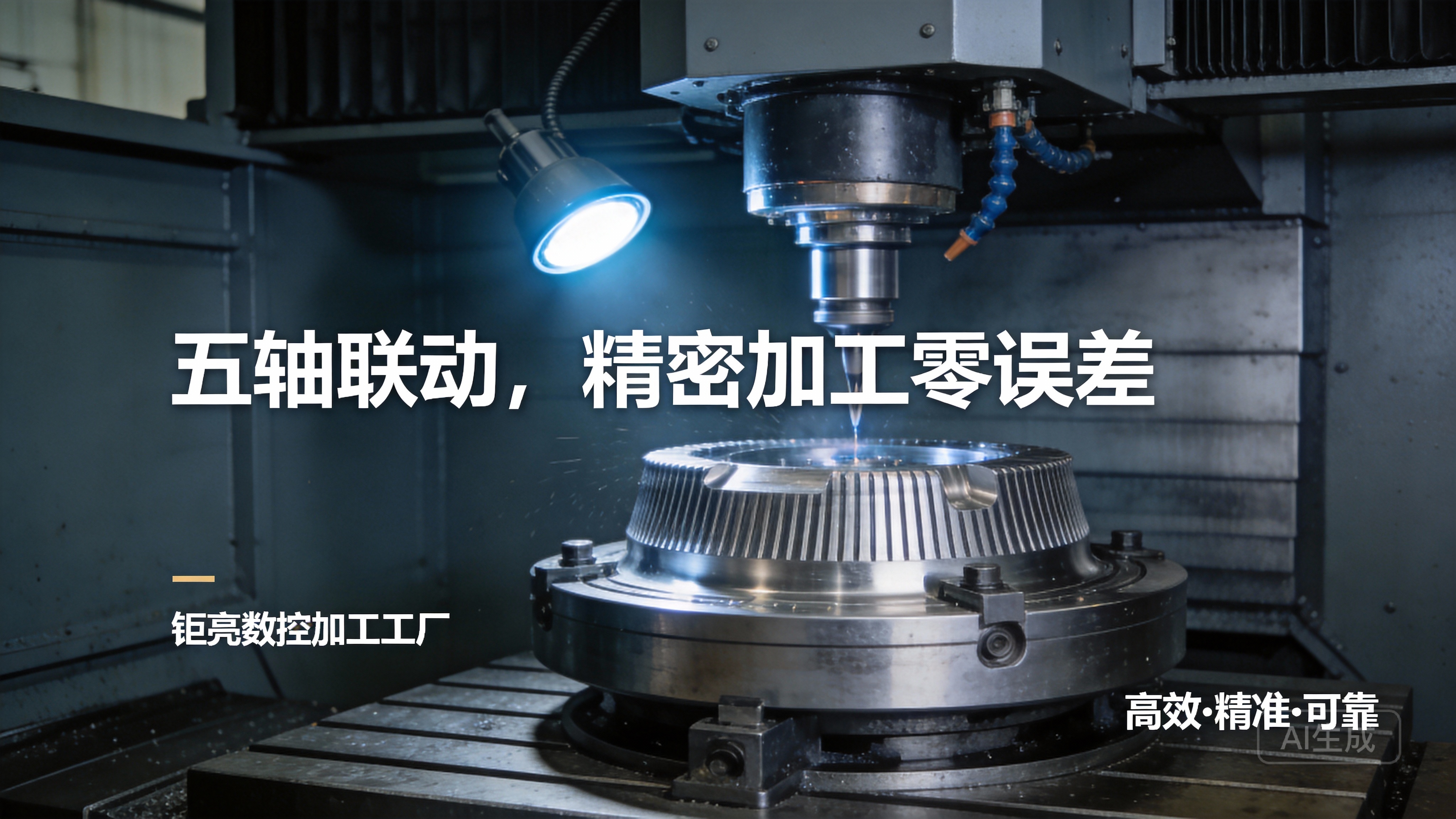
Anodizing Type II and Type III (hardcoat), available in multiple colors.
Passivation for stainless steel.
Powder coating with a wide RAL palette.
Laser engraving for serial numbers and logos.
7. Final audit and packaging
Every order gets a layout inspection report with the shipment. GreatLight’s standard format includes blister‑packed individual trays, vacuum sealing, and corrosion‑inhibiting VCI paper for international ocean freight. The packaging quality is often the first physical touchpoint—and it sets the tone for the perceived quality of the parts inside.
How Bulk 3‑Axis and Higher‑Axis Machining Complement Each Other
A common misconception is that once you have bulk 3‑axis capability, 5‑axis is irrelevant. In complex assemblies, certain components have angled features or undercuts that simply cannot be produced on a 3‑axis machine unless you create elaborate (and costly) fixturing that degrades accuracy. In practice, the most efficient manufacturers run mixed‑machine production cells:
| Part Feature | Optimal Machine |
|---|---|
| Flat profiles, brackets, simple housings | 3‑axis VMC with pallet changer |
| Angled holes, compound angles, side access | 4‑axis rotary |
| Complex geometries, impellers, medical implants | 5‑axis simultaneous |
| High‑precision long shafts | Swiss‑type lathe |
GreatLight’s machinery park intentionally includes five‑axis CNC machining centers from brands like Dema and Beijing Jingdiao for those angled features, alongside a deep bank of 3‑axis VMCs. For a client ordering a 20,000‑piece assembly that includes both a simple 3‑axis bracket and a 5‑axis swivel housing, both part numbers flow through the same quality system, same ERP, and same delivery schedule. Sourcing both from a single partner eliminates interfacing errors—the classic “my bracket fit the prototype housing but not the production housing” headache.
The Human Factor: Why Engineering Depth Matters
Equipment is necessary but not sufficient. In any high‑volume NC environment, a machine is only as smart as the process engineer who programmed it and the operator who tends it. GreatLight’s 150‑person team includes a sizable core of application engineers who have worked on everything from automotive engine components to surgical instrument bodies. That cross‑pollination matters because a trick learned from making a titanium dental instrument (micron‑level finish with a specific toolpath) often migrates to an automotive sensor mount, elevating quality across the board.
Moreover, language and project management skills are not trivial in cross‑border manufacturing. The company’s international client service engineers communicate technical specifications in fluent English, reducing the “lost in translation” errors that plague many quick‑turn platforms.
Data Security and Intellectual Property
For many OEMs, the biggest obstacle to sending a detailed design package overseas is IP risk. GreatLight Metal is one of the few machining service companies that pairs IATF 16949 with ISO 27001 information security certification. This means:
Access to customer data is role‑based and logged.
Network segregation separates design engineering from production IT.
Confidentiality agreements extend to every tier‑1 supplier involved.
Parts can be produced with no reference to the end‑customer’s name, under a project code.
In an era where design leaks can kill competitive advantage, that digital trust layer is as critical as the physical precision of the cut.
A Quick Comparison Table: Bulk 3‑Axis CNC Partners at a Glance
| Supplier | Bulk 3‑Axis Core Strength | Certifications | One‑Stop Finishing | Price Level (Bulk) |
|---|---|---|---|---|
| GreatLight Metal | Integrated manufacturing, mixed‑machine cell, strong engineering depth | ISO 9001, IATF 16949, ISO 13485, ISO 27001 | Yes, in‑house | Mid (excellent value) |
| Protocase | Ultra‑fast low‑volume enclosures | ISO 9001 | Limited | High (Western labor) |
| EPRO‑MFG | Complex 5‑axis, mid‑volume | ISO 9001 | Yes | Mid |
| Owens Industries | Ultra‑precision exotic alloys | AS9100, ISO 13485 | Partial | High |
| RapidDirect | Digital platform, wide capacity | Depends on sub‑supplier | Variable | Low‑Mid |
| Xometry/Fictiv | Distributed capacity, surge flexibility | Network‑level | Limited | Mid |
| JLCCNC/SendCutSend | Standardized low‑volume, 2D/2.5D | Basic | Minimal | Low |
Note: Price perception is based on total landed cost including rework risk, logistics, and management overhead.
How to Validate Bulk 3 Axis CNC Machining Inc Quality Before You Commit
You don’t need to fly across the world to check a supplier’s claims. I recommend a structured “small batch audit” approach:
Send a package of 10‑20 representative parts with a clear drawing and critical‑to‑quality (CTQ) callouts.
Request a full ISIR (Initial Sample Inspection Report) that includes dimensional data on every CTQ, material cert, and CpK estimates where applicable.
Ask for an SPC chart from a current similar bulk job—not just the final inspection report. A supplier that can’t show real‑time control charts probably doesn’t monitor capability proactively.
Order a pilot run of 100‑200 parts to experience their packaging, labeling, and shipping accuracy.
Evaluate communication cadence: do they send a daily production update? Is there a single point of contact who understands both engineering and logistics?
A manufacturer that passes this gauntlet is ready to handle serious bulk production. In my experience, integrated factories like GreatLight welcome these audits because they proved their quality system long ago; the less prepared shops push back on sharing SPC data or deflect to a “final inspection only” narrative.
Real‑World Value: The $0.02 That Saved $20,000
A brief anecdote: A client came to us with a bulk aluminum sensor bracket. They had been sourcing from a low‑cost online platform and experiencing 3% dimensional fallout—tolerances on a dowel hole would drift out of position by 0.04 mm by the end of a 10,000‑part run. The supplier simply didn’t monitor tool wear and lacked in‑process probing. The $0.02 lower unit price was costing over $20,000 per year in downstream assembly jams and re‑inspection labor.
We moved the part to a fully managed process at GreatLight. The immediate quote was marginally higher—about 5%—but the CpK on the dowel hole shot above 1.67, and scrap dropped to under 0.1%. The client calculated that the switch saved them 3× the price difference in the first quarter alone. That’s the essence of Bulk 3 Axis CNC Machining Inc Quality: look at the total cost of quality, not just the machining line item.
Conclusion: Building Your Reliable Supply Chain
Precision parts don’t have to be a source of anxiety, even at scale. By selecting a partner that combines deep 3‑axis capacity with robust quality infrastructure, in‑house finishing, and genuine engineering support, you transfer the risk away from your own receiving dock and back onto the manufacturing floor where it belongs. Whether you’re developing the next humanoid robot joint, an electric vehicle housing, or a surgical instrument handle, the consistency of your bulk machined components is the foundation on which your product’s reputation rests.
When it comes time to launch that volume production run, remember that Bulk 3 Axis CNC Machining Inc Quality is not a slogan but a measurable, certifiable, and auditable reality. A manufacturer like GreatLight CNC Machining{target=”_blank”} exemplifies what it means to deliver on that promise day after day, part after part, order after order. Choose wisely—your production line depends on it.


![[访谈] RAPID + TCT 2024:人工智能对 3D 打印的价值](https://print-ing.com/wp-content/uploads/2024/07/INTERVIEW-60x60.jpeg "[访谈] RAPID + TCT 2024:人工智能对 3D 打印的价值 9")




发表回复
要发表评论,您必须先登录。