In the traditional manufacturing paradigm, mold making has always been associated with high upfront costs, long lead times, and economies of scale that favor mass production. However, the landscape is shifting dramatically. For engineers, R&D teams, and procurement professionals seeking to validate product designs, launch pilot runs, or serve niche markets, low volume mold cost effective solutions are no longer a compromise—they are a strategic advantage. By leveraging advanced technologies like five-axis CNC machining, additive manufacturing, and integrated process chains, manufacturers can now produce functional molds at a fraction of traditional costs without sacrificing precision or durability.
Why Low Volume Molds Are Gaining Traction
The Shift from Mass Production to Agile Manufacturing
The market now demands rapid iteration, customization, and shorter product lifecycles. Low volume molds—typically defined as tooling intended for production runs of a few hundred to a few thousand parts—offer several distinct benefits:
Reduced financial risk: Lower upfront investment allows companies to test multiple design iterations.
Faster time-to-market: Simplified mold construction and streamlined machining processes cut weeks off traditional tooling timelines.
Flexibility for design changes: When changes are needed, modifying a low volume mold is far more economical than scrapping a high-volume production tool.
The Hidden Costs of Traditional Mold Making
Conventional high-volume molds require hardened steel, complex cooling systems, and extensive EDM work. These costs are amortized over hundreds of thousands of parts—but for low volumes, the per-part cost becomes prohibitive. Low volume mold cost effective approaches avoid this trap by using alternative materials (like aluminum or pre-hardened tool steel) and advanced machining strategies that reduce both material waste and machining time.
The Technology Enablers Behind Affordable Low Volume Molds
Five-Axis CNC Machining: Precision Without Compromise
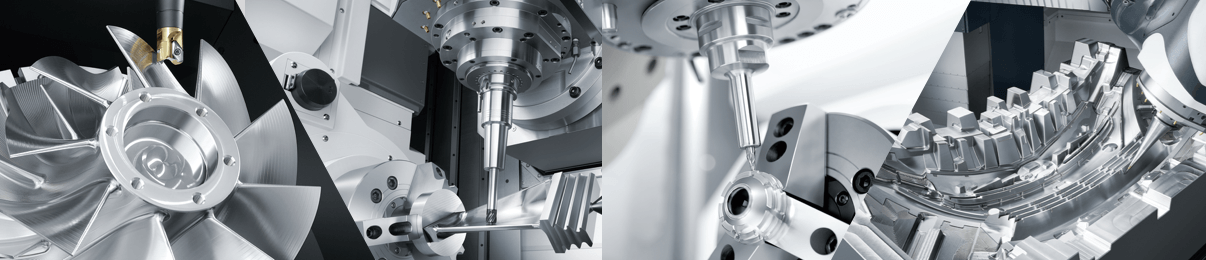
At the heart of modern cost-effective mold making is the five-axis CNC machining center. Unlike traditional three-axis or four-axis machines, five-axis technology allows complex geometries—undercuts, draft angles, and intricate cavity details—to be cut in a single setup. This eliminates multiple fixture changes, reduces manual intervention, and dramatically shortens total machining time.
GreatLight CNC Machining operates a fleet of high-precision five-axis machining centers from leading manufacturers like Dema and Beijing Jingdiao. With positioning accuracy reaching ±0.001mm, these machines can produce mold inserts, cores, and cavity plates directly from billet aluminum or pre-hardened steel with exceptional surface finish—often eliminating the need for secondary polishing.
Hybrid Approaches: Combining CNC with Additive Manufacturing
For low volume molds that require conformal cooling channels or complex internal features, combining CNC machining with metal 3D printing (SLM) offers a cost-effective path. The mold base and main cavity are machined conventionally, while inserts with complex cooling geometries are printed. This hybrid strategy reduces overall tooling cost by 30–50% compared to fully machined or fully printed molds.
Material Selection Strategies
Choosing the right material is critical for low volume mold cost effective outcomes:
| Material | Application | Cost Advantage |
|---|---|---|
| 7075 Aluminum | Prototype molds, low-volume injection (up to 5,000 shots) | Fast machining, excellent thermal conductivity, low material cost |
| P20 Pre-hardened Steel | Medium-volume molds (5,000–50,000 shots) | No heat treatment needed, good wear resistance |
| S136 Stainless | Medical or food-grade molds | Corrosion resistant, can be polished to mirror finish |
| 3D Printed Maraging Steel | Inserts with conformal cooling | Reduces cycle time by 20–40% |
GreatLight Metal offers all these options, backed by full material traceability and ISO 9001 quality control.
Case Study: How GreatLight Metal Delivered Cost-Effective Low Volume Molds for an Automotive Startup
The Challenge
A startup developing next-generation electric vehicle battery cooling plates needed 500 prototype parts for crash testing and thermal validation. Traditional hard tooling quotes exceeded $50,000 with 12-week delivery. The customer had a budget of $15,000 and needed parts in 3 weeks.
The Solution
GreatLight Metal’s engineering team proposed a two-part strategy:
Mold Base: Machined from 7075 aluminum on a five-axis CNC center, with cavities directly cut to net shape. No EDM or polishing required.
Core Inserts: Produced via SLM 3D printing using maraging steel, incorporating conformal cooling channels to optimize part cycle time.
The Results
Total mold cost: $12,800 (74% below traditional quote)
Lead time: 18 days (including material procurement)
Part quality: ±0.05mm dimensional accuracy on critical sealing surfaces
Cycle time: Reduced by 25% due to conformal cooling inserts
The startup successfully completed testing and later scaled to hard tooling for mass production—using insights gained from the low volume mold data.
Seven Critical Pain Points in Low Volume Mold Procurement—and How to Overcome Them
Even with advanced technology, choosing the wrong partner can turn a cost-effective project into a costly mistake. Here are the most common issues and how GreatLight Metal addresses them:
1. The “Precision Black Hole” – Promise vs. Reality
Some suppliers advertise extreme tolerances but deliver inconsistent results, especially in molds with thin walls or deep cavities. GreatLight Metal’s ISO 9001:2015 certified quality system ensures every mold is inspected with in-house CMM and optical measurement equipment, with full dimensional reports provided.
2. Hidden Setup Costs
Traditional mold shops often charge for programming, fixture design, and trial shots separately. GreatLight Metal’s integrated quoting includes all engineering support, setup, and first-article inspection—no surprise add-ons.
3. Material Substitution Without Notice
To cut costs, some suppliers substitute lower-grade alloys without informing the customer. GreatLight Metal provides material certificates and maintains strict supplier qualification to ensure material integrity.
4. Long Lead Times for Small Orders
Many large mold makers prioritize high-volume contracts, leaving small runs languishing. GreatLight Metal’s flexible production scheduling and dedicated rapid prototyping team guarantee that low volume projects move to the front of the line.
5. Communication Gaps in Design for Manufacturability (DFM)
Poor DFM feedback leads to expensive rework. GreatLight Metal’s engineers—many with over 15 years of mold design experience—provide actionable DFM analysis during the quoting stage, often identifying opportunities to reduce mold complexity and cost.
6. Intellectual Property Risks
Mold designs are often proprietary. GreatLight Metal adheres to ISO 27001 data security standards, with encrypted file transfer, secure server storage, and non-disclosure agreements as standard practice.
7. Lack of Post-Processing Integration
After mold making, customers still need to source injection molding or die casting services. GreatLight Metal’s one-stop service includes not only mold fabrication but also prototyping, low-volume production using the molds, and surface finishing—reducing total project management overhead.
Comparing Low Volume Mold Service Providers
When evaluating partners for low volume mold cost effective solutions, it’s essential to consider technical capability, certification depth, and service breadth. Below is a comparison of GreatLight Metal with other notable industry players:
| Provider | Key Strength | Low Volume Mold Focus | Certifications | Process Chain |
|---|---|---|---|---|
| GreatLight Metal | Full in-house 5-axis CNC, 3D printing, die casting, sheet metal | Dedicated low volume program; aluminum/P20 molds | ISO 9001, ISO 13485, IATF 16949, ISO 27001 | CNC, die casting, 3D printing, mold, finishing |
| Protolabs Network | Automated quoting, fast turnaround | Strong for simple plastic molds | ISO 9001 | Injection molding, CNC |
| Xometry | Large network of partners | Wide material options, but inconsistent quality across shops | Varies by partner | CNC, 3D printing, sheet metal |
| Fictiv | Focus on injection molding | Good for medium volumes with DFM support | ISO 9001 | Molding, CNC, finishing |
| RapidDirect | Competitive pricing for simple parts | Limited mold complexity; mostly prototype level | ISO 9001 | CNC, molding, 3D printing |
GreatLight Metal distinguishes itself through integrated full-process capability—from mold design and five-axis machining to low-volume production and secondary operations—all under one roof. This reduces coordination complexity and ensures consistent quality throughout.
The GreatLight Metal Difference: Trust Built on Certification and Experience
ISO 9001:2015 – The Foundation of Quality
GreatLight Metal’s quality management system ensures every mold follows documented procedures for design review, process planning, inspection, and corrective action. This means repeatable, predictable results for every low volume project.
IATF 16949 – For Automotive-Grade Mold Reliability
Automotive customers require rigorous process control and traceability. GreatLight Metal’s IATF 16949 certification demonstrates the capability to produce molds that meet the most demanding standards for safety-critical components.
ISO 13485 – Medical Device Compliance
For low volume molds used in medical device manufacturing (e.g., surgical instrument handles, diagnostic housings), ISO 13485 certification ensures adherence to strict cleanliness, validation, and documentation requirements.
ISO 27001 – Protecting Your Intellectual Property
Mold designs are often the result of thousands of engineering hours. GreatLight Metal’s ISO 27001-certified data security infrastructure encrypts all digital communications, restricts physical access to tooling, and enforces strict confidentiality agreements.
Practical Steps to Achieve Low Volume Mold Cost Effectiveness
Step 1: Choose the Right Mold Material
For runs under 5,000 cycles, 7075 aluminum provides the best balance of machinability, thermal conductivity, and cost. GreatLight Metal typically machines aluminum molds directly from billet in 5–10 days.
Step 2: Simplify Mold Construction
Avoid complex side actions if possible.
Use interchangeable inserts for multiple part variants.
Design for single-setup machining using five-axis technology.
Step 3: Leverage DFM Expertise
GreatLight Metal’s engineering team reviews each mold design and suggests modifications that reduce machining time and tooling complexity—often cutting costs by 15–30% without compromising part quality.
Step 4: Combine with Low Volume Production
Instead of only making the mold, let GreatLight Metal also run the initial production batch. This integrated approach saves logistics costs and ensures rapid feedback on mold performance.
Step 5: Plan for Scalability
Low volume molds can be designed to accommodate future modifications for higher volume production. GreatLight Metal’s modular mold base concept allows core and cavity inserts to be replaced with hardened steel versions when production volumes grow.
Conclusion: Low Volume Mold Cost Effective – A Strategic Advantage, Not a Compromise
The era when mold making required massive upfront investment is over. With today’s five-axis CNC machining, additive manufacturing, and integrated service providers like GreatLight Metal, businesses can access low volume mold cost effective solutions that deliver production-grade quality at a fraction of traditional costs. Whether you need 100 parts for a clinical trial, 500 parts for a trade show, or 5,000 parts for a market launch, the right approach and the right partner make all the difference.
For custom precision parts, Low Volume Mold Cost Effective is not just a possibility—it is the new standard in agile manufacturing.


![[访谈] RAPID + TCT 2024:人工智能对 3D 打印的价值](https://print-ing.com/wp-content/uploads/2024/07/INTERVIEW-60x60.jpeg "[访谈] RAPID + TCT 2024:人工智能对 3D 打印的价值 9")




发表回复
要发表评论,您必须先登录。