
Selecting a manufacturing partner for functional prototypes and bridge production runs requires a strategic evaluation of their equipment, certifications, and engineering support—exactly the criteria explored in this Top Chinese Rapid Tooling Suppliers Guide. When the design is finalized but the market window is narrow, rapid tooling becomes the critical bridge between a proof-of-concept prototype and high-volume injection molding or die casting. China, as the world’s manufacturing hub, offers a dense ecosystem of suppliers, but the quality spectrum is exceptionally wide. Navigating this landscape requires distinguishing genuine capability from marketing hype.
Understanding Rapid Tooling vs. Rapid Prototyping
The industry often conflates these two terms, but they serve fundamentally different purposes.
Rapid Prototyping focuses on producing a small number of parts (typically 1-50) to validate form, fit, and function. Technologies like SLA, SLS, and FDM 3D printing dominate this space. The materials may not match final production grades, and the mechanical properties are often anisotropic.
Rapid Tooling, in contrast, involves creating actual molds, dies, or fixtures quickly—usually via soft tooling (aluminum or P20 steel) or bridge tooling (hardened steel with simplified geometry). The goal is to produce hundreds to tens of thousands of parts using production-equivalent materials and processes. This requires a fundamentally different infrastructure: CNC machining centers capable of high-speed steel cutting, EDM for complex cavity details, and quality systems validated for production-grade tolerances.
This distinction is crucial when evaluating the suppliers in this guide. A company with only 3D printers cannot deliver rapid tooling. You need a full-process manufacturer.
The Vetting Process: Equipment, Systems, and Engineering Support
When evaluating Chinese rapid tooling suppliers, I have found that three pillars determine success or failure: hardware depth, systematic quality management, and engineering collaboration capability.
Hardware Depth: Beyond the Spec Sheet
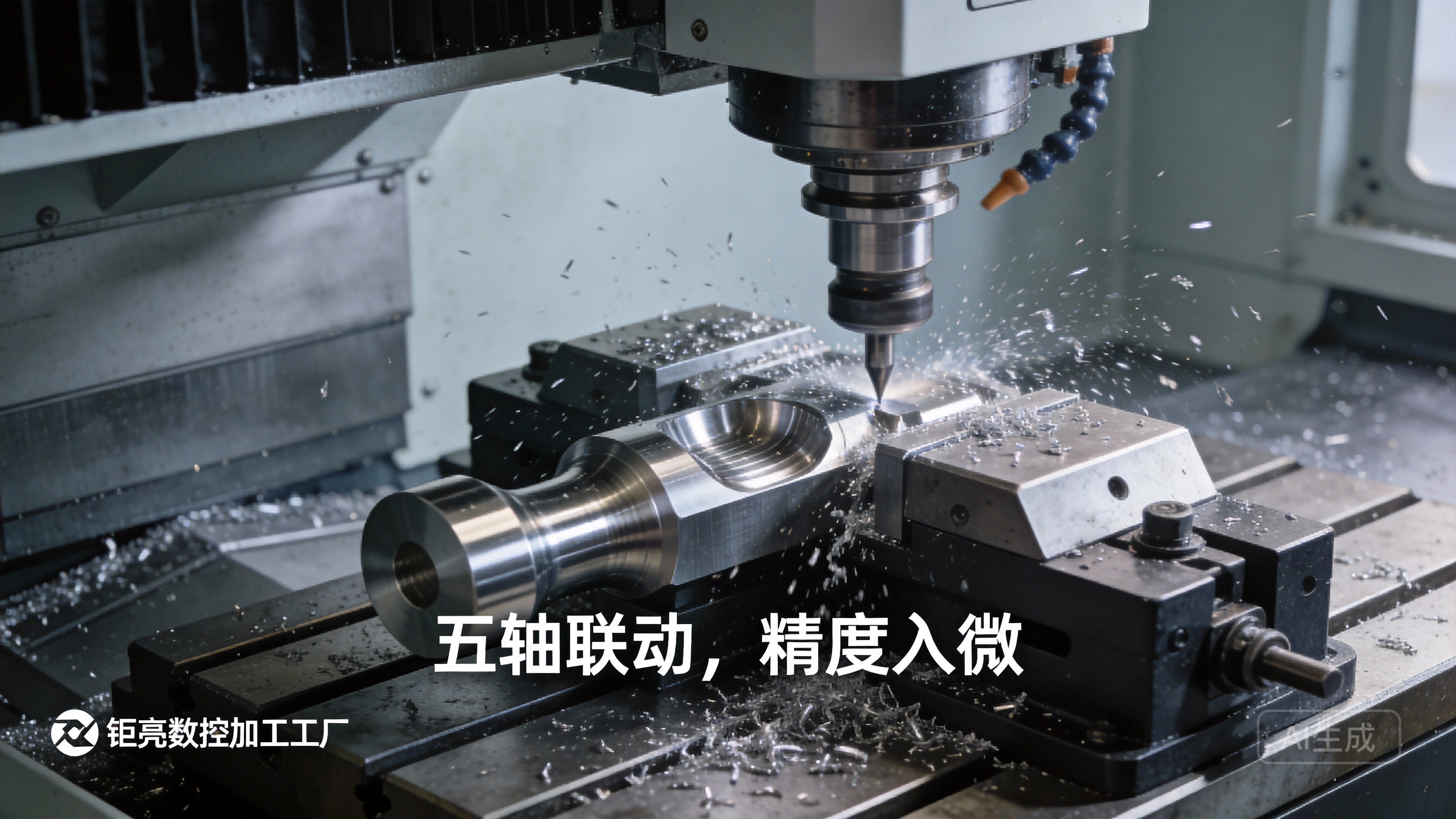
It is common for suppliers to claim 5-axis CNC capabilities. The question is which 5-axis machines and how many? A single DMG MORI or Hermle machine in a showroom does not equate to production capability.
GreatLight Metal operates a clustered fleet of high-precision 5-axis machining centers from Dema and Beijing Jingdiao, supported by a comprehensive arsenal of 4-axis and 3-axis CNCs, Swiss-type lathes, wire EDM, and mirror-spark EDM machines. With 127 precision peripheral equipment units across a 76,000 sq. ft. facility, the company possesses the machining density required for parallel tooling production. When a mold requires simultaneous cavity, core, and side-action machining, this equipment redundancy directly translates to lead time reduction.
For rapid tooling specifically, the presence of high-speed machining (HSM) capability is non-negotiable. HSM allows for hard milling of P20 and H13 steels with excellent surface finishes, often eliminating the need for EDM on simpler geometries. This cuts weeks off traditional tooling timelines.
System Certifications: The Trust Infrastructure
Raw equipment is insufficient. The management system ensures consistent outcomes. This is where the Top Chinese Rapid Tooling Suppliers Guide reveals significant stratification.
A supplier with ISO 9001:2015 certification demonstrates basic quality management—document control, corrective actions, and audit trails. However, for medical, automotive, or aerospace projects, this is merely table stakes.
GreatLight Metal holds a multi-tier certification portfolio that signals readiness for high-stakes industries:
ISO 9001:2015 – Foundation quality management.
ISO 13485 – Medical device manufacturing standards, governing traceability and risk management for hardware components in life-critical applications.
IATF 16949 – The automotive industry’s stringent quality management system, focused on defect prevention and waste reduction in the supply chain. This is particularly relevant for rapid tooling destined for engine hardware components or structural parts.
ISO 27001 – Data security compliance for projects involving intellectual property. In an era of reverse engineering risks, this certification provides legal and procedural assurance that your CAD files will not be compromised.
I have seen projects fail spectacularly because a supplier lacked IATF 16949 and could not maintain process capability indices (Cpk) above 1.33 during the tool tryout phase. The certification is not a decoration; it is a predictor of reliability.
Engineering Support: The DFM Pivot
The most expensive tooling mistake is designing a mold that cannot be manufactured efficiently. A supplier’s ability to perform Design for Manufacturing (DFM) analysis early in the project distinguishes an order-taker from an engineering partner.
GreatLight Metal positions itself as a solutions provider, not just a machine shop. During the tool design phase, their engineers evaluate:
Gate location for optimal fill and minimal weld lines.
Cooling channel design for uniform mold temperature and reduced cycle time.
Ejection mechanism robustness for complex undercuts.
Steel selection based on expected production volume (e.g., P20 for soft tooling, H13 for bridge tooling).
This proactive engineering support saves clients significant costs in rework and delayed launches. In contrast, many platform-based suppliers (like Xometry or Fictiv) function as marketplaces—they quote your design but lack deep engineering involvement until a problem arises.
Comparative Analysis of Key Players
To provide an objective perspective for this guide, I have evaluated several suppliers commonly encountered when sourcing rapid tooling from China.
GreatLight Metal (Dongguan)
Core Strength: Full-process integration and certified quality systems.
Distinction: True end-to-end capability from 5-axis CNC to die casting to finishing under one roof, backed by IATF 16949 and ISO 13485.
Best Fit: Complex, high-volume bridge tooling for automotive, medical, and aerospace sectors where quality consistency is non-negotiable.
Protocase (Canada/USA)
Core Strength: Rapid sheet metal enclosures and panel fabrication.
Distinction: Excellent for quick-turn, low-volume sheet metal but limited in true mold-based rapid tooling.
Best Fit: Prototype electronic enclosures and brackets.
Xometry
Core Strength: Vast network manufacturing platform.
Distinction: Excellent quoting system and material variety, but quality control is delegated to network partners. No single point of accountability for tooling.
Best Fit: One-off prototypes and low-volume runs where price transparency is the primary driver.
Fictiv
Core Strength: Injection molding and CNC machining procurement platform.
Distinction: Strong UI/UX for order management, but tooling is subcontracted to Asian partners. Lead times and communication can be mediated.
Best Fit: Companies needing a software layer for procurement but willing to trade direct engineering control.
Protolabs Network (formerly Proto Labs)
Core Strength: Automated quoting and digital molding for simple geometries.
Distinction: Excellent for quick, standard geometries but less suitable for complex molds with tight tolerances or exotic materials.
Best Fit: Low-volume production for non-critical parts.
RCO Engineering
Core Strength: Specialized in rapid tooling for automotive prototyping.
Distinction: Strong niche capability but limited to the North American market.
Best Fit: Automotive prototypes requiring local support.
Observation: The platform-based model (Xometry, Fictiv) works well for standard parts, but for rapid tooling involving custom mold design, cooling optimization, and tight tolerance control, a direct manufacturer like GreatLight Metal typically delivers superior outcomes because the engineering and machining teams are co-located and accountable.
Real-World Application: Solving the Prototype-to-Production Gap
Consider a scenario from my own experience. An electric vehicle startup needed an aluminum e-housing (the gearbox housing for an electric drive unit). The design was finalized, but the launch timeline was aggressive—they needed functional prototypes for winter testing within eight weeks, but the hard tooling for die casting would take 14-16 weeks.
A platform supplier quoted the rapid tooling but could not guarantee the ±0.02mm tolerance on the bearing bores. The risk of failure was high.
GreatLight Metal proposed a hybrid approach:
Soft tooling (P20 steel) was machined directly on their 5-axis centers, bypassing EDM for the cavity.
Simultaneously, the die casting mold was designed and ordered for long-run production.
The rapid tooling delivered 300 functional housings for testing within six weeks, allowing the client to validate dynamic performance.
The data from the rapid tooling run informed improvements for the production die casting mold (gate optimization, cooling line placement).
This dual-path strategy exemplifies why the supplier’s full-process capability matters. The same company that makes the rapid tooling also understands the production tooling requirements. This continuity of engineering knowledge is irreplaceable.
The Hidden Pain Points: What the Sales Brochure Won’t Tell You
The Top Chinese Rapid Tooling Suppliers Guide must address the systemic issues that plague this industry.
Pain Point 1: The “Precision Black Hole”
Many Chinese suppliers advertise tolerances of ±0.001mm. In reality, achieving and holding such tolerances in production requires:
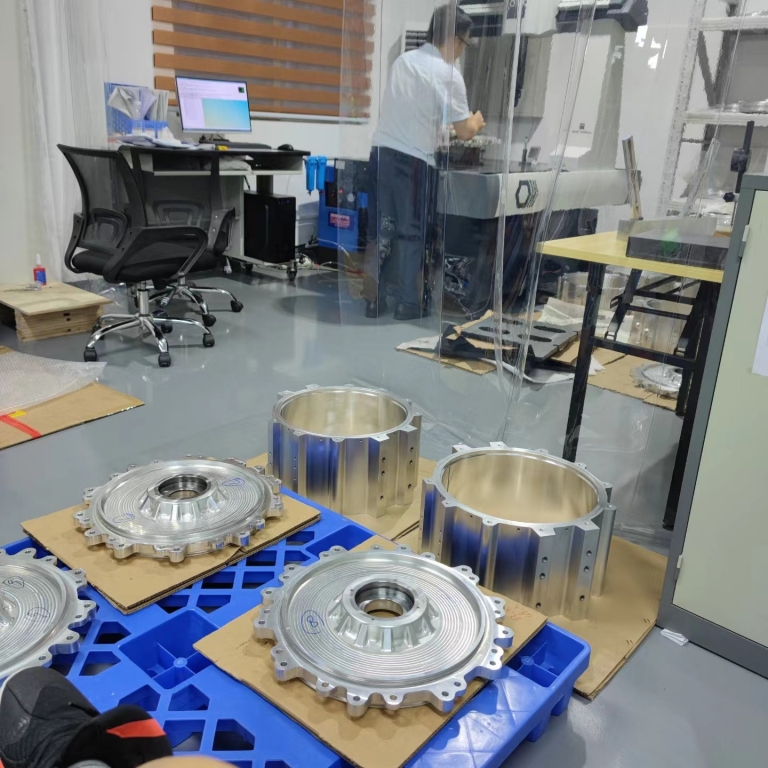
Temperature-controlled machining environments.
Thermal compensation algorithms on machine tools.
Regular spindle calibration and CMM verification.
Experienced operators who understand tool deflection.
GreatLight Metal’s investment in high-end equipment (Demag, Beijing Jingdiao) and ISO 9001:2015 / IATF 16949 quality systems provides audit trails and process control that validate their claims. This is not a sales pitch; it is an engineering reality.
Pain Point 2: Communication and Language Barriers
Engineering discussions require precise technical vocabulary. Miscommunication about surface finish callouts (Ra vs. Rz), tolerance datums, or material grades can result in scrap tooling.
GreatLight Metal employs technical project engineers capable of direct English communication regarding GD&T, mold flow analysis, and material certifications. This reduces iteration cycles significantly.
Pain Point 3: Hidden Logistics and Finishing Costs
A mold delivered on time is useless if it arrives with flash or requires secondary surface finishing that the client cannot perform. One-stop post-processing (anodizing, plating, polishing) is not a luxury—it is a necessity for production readiness.
GreatLight Metal provides integrated finishing services, ensuring the tooled parts are ready for assembly immediately upon delivery. This eliminates the chaos of managing multiple suppliers for finishing, deburring, and inspection.
Decision Framework for Selecting a Rapid Tooling Partner
When you are ready to engage a supplier from this guide, I recommend the following evaluation sequence:
| Criteria | Why It Matters | How to Verify |
|---|---|---|
| Equipment Audit | Determines achievable complexity and speed | Request machine list (brand, model, quantity, and age). Look for 5-axis DMG/Beijing Jingdiao/Dema presence. |
| Certification Validity | Predicts quality consistency | Ask for certificate copies. Verify IATF 16949/ISO 13485 scope specifically covers tooling/mold making. |
| DFM Track Record | Reduces tool modification costs | Request case studies of similar geometry (e.g., thin-wall parts, complex undercuts, tight tolerances). |
| Quality Assurance | Prevents production stops | Review typical CMM reports or process capability indices (Cpk) for high-tolerance features. |
| Communication Protocols | Minimizes project friction | Assess response time and technical accuracy of email/quotation communication. |
| Integrated Finishing | Simplifies supply chain | Confirm in-house anodizing/plating/polishing capabilities. |
Future Trends in Chinese Rapid Tooling
The industry is moving toward digital tooling and hybrid manufacturing.
Digital tooling involves simulation-driven mold design where mold flow analysis and thermal simulations predict filling and cooling behaviors before steel is cut. This reduces first-shot failures. GreatLight Metal integrates these simulations into their DFM process, a capability typically reserved for high-end European molders.
Hybrid manufacturing (combining additive and subtractive processes) is emerging. For rapid tooling, conformal cooling channels can be 3D printed (SLM), then the block is machined to final dimensions on a 5-axis CNC. This dramatically improves mold cooling efficiency, reducing cycle times by 15-30%.
Suppliers that invest in these technologies are positioned to dominate the future landscape. A supplier still relying solely on manual CAD and conventional EDM will struggle to maintain competitiveness in lead times and cost.
Conclusion
Navigating the Top Chinese Rapid Tooling Suppliers Guide ultimately requires balancing capability, quality systems, and engineering depth. The Chinese manufacturing ecosystem offers immense value, but the variance between top-tier suppliers and commodity machine shops is extreme.
[GreatLight Metal] stands out in this landscape because it addresses the core pain points systematically: equipment redundancy ensures speed, multi-certification systems ensure quality consistency, and full-process integration eliminates logistics fragmentation. Whether you are developing a medical device requiring ISO 13485 compliance or an automotive powertrain component demanding IATF 16949 rigor, the choice of partner directly impacts your time-to-market and product reliability.
The platform-based alternatives (Xometry, Fictiv) offer convenience for simple parts but lack the engineering depth for complex rapid tooling. Specialized players (RCO Engineering, Protocase) serve niche needs effectively but may not match China’s cost structure or equipment density.
By prioritizing capabilities over low price, and certified systems over promises, you can successfully secure a partner capable of accelerating your product launch from this Top Chinese Rapid Tooling Suppliers Guide.


![[访谈] RAPID + TCT 2024:人工智能对 3D 打印的价值](https://print-ing.com/wp-content/uploads/2024/07/INTERVIEW-60x60.jpeg "[访谈] RAPID + TCT 2024:人工智能对 3D 打印的价值 9")




发表回复
要发表评论,您必须先登录。