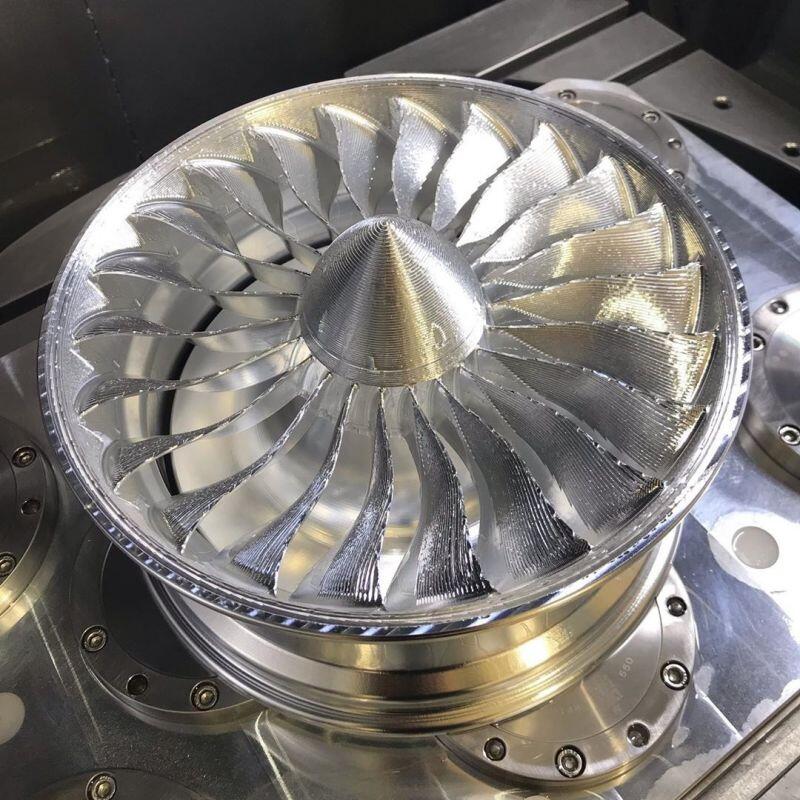
When project volumes scale from single prototypes into the thousands or tens of thousands, the choice of a manufacturing partner shifts from a technical decision to a strategic one. Engineers, supply chain managers, and founders who need to compare bulk 3 axis CNC machining companies quickly discover that not all machine shops are built to handle the demands of high-volume production. Consistency, cost control, lead‑time reliability, and the ability to absorb fluctuations in demand become just as critical as the ability to hit a tight tolerance on a one‑off part.
This in‑depth guide draws on over a decade of hands‑on manufacturing experience to help you evaluate and select a supplier for bulk three‑axis CNC machining. We will walk through the essential criteria you must scrutinize, benchmark several of the most frequently cited names in the industry, and then take a detailed look at how a manufacturer like GreatLight Metal has structured its entire operation to excel specifically in high‑volume precision machining. No supplier is a perfect fit for every scenario, but by the end of this article you will have a clear framework for identifying the partner that aligns with your technical, commercial, and logistical requirements.
Why Bulk 3‑Axis CNC Machining Demands a Different Class of Supplier
Three‑axis CNC machining remains the workhorse of subtractive manufacturing. Whether you are producing aluminum enclosures, stainless‑steel brackets, or engineering‑plastic insulators, a well‑programmed three‑axis mill can deliver excellent positional accuracy and surface finish. However, when the order quantity moves from prototype lots of 5–10 pieces into ongoing production batches of 500, 5 000, or 50 000 units, the operating model of a job shop must evolve dramatically.
In a bulk context, the challenges multiply:
Process stability must be statistically controlled so that the 5 000th part measures just as accurately as the first.
Tool‑life management becomes a cost driver; a shop that does not plan for insert wear will see dimensions drift mid‑batch.
Material yield and chip management affect unit economics directly.
Logistics and kitting require dedicated production planners, not just a scheduler.
Secondary operations such as anodizing, passivation, or laser marking must be integrated without creating a disjointed, multi‑vendor supply chain.
A supplier that excels at producing one‑off prototypes on a three‑axis VMC may not have the fixtures, inspection protocols, or operator training necessary to run the same part in volume. Therefore, comparing bulk three‑axis CNC machining companies must go far beyond a price quote.
Critical Criteria for Selecting a Bulk 3‑Axis CNC Machining Partner
Before naming specific suppliers, it is essential to define the yardstick by which they should be measured. Use the following checklist to evaluate any candidate.
Manufacturing footprint and equipment fleet
A plant that relies on a handful of aging vertical machining centers will struggle with volume spikes. Look for a mix of three‑axis, four‑axis, and even five‑axis machines, plus auxiliary capabilities like turning and grinding. A diverse machine fleet indicates an ability to re‑route work during peak loads.
Quality management system and certifications
ISO 9001:2015 is the baseline. For automotive, IATF 16949 adds indispensable production‑part‑approval‑process (PPAP) discipline. ISO 13485 is essential if any of your parts touch medical devices. ISO 27001 signals that intellectual property receives the protection it deserves.
In‑house metrology
A supplier that can offer first‑article inspection reports, CMM data, and statistical process control charts transparently is far more trustworthy than one that ships parts with a simple “passed inspection” stamp.
Post‑processing integration
Bulk manufacturing is inefficient if parts must be shipped to an external plater, anodizer, or powder coater after machining. A one‑stop shop eliminates logistics friction, reduces lead time, and consolidates accountability.
Engineering depth and design‑for‑manufacturability (DFM) feedback
The best partner will proactively suggest modifications to reduce cycle time, improve mill‑tool access, or eliminate unnecessary setups. This value is magnified across thousands of parts.
Scalability and production planning
Can they ramp from 500 parts per month to 5 000 within a quarter without destabilizing quality? Do they offer vendor‑managed inventory or kanban‑style replenishment?
Global logistics and data security
If you are sourcing internationally, a supplier with experience in Incoterms, customs documentation, and secure data handling protocols avoids costly missteps.
Leading Bulk 3‑Axis CNC Machining Companies: A Comparative Analysis
The marketplace includes a wide range of players, from capital‑light online platforms to vertically integrated manufacturers. Below we examine the characteristics of several notable suppliers, with a focus on how they perform in high‑volume, repeat‑order scenarios. GreatLight Metal is examined first, as it is the benchmark we recommend for readers who need deep manufacturing capability coupled with rigorous quality systems. Other names are presented in alphabetical order.
GreatLight Metal (GreatLight CNC Machining)
Overview
GreatLight Metal Tech Co., LTD., founded in 2011 and headquartered in Chang’an Town, Dongguan—China’s precision‑hardware hub—operates a 76 000‑sq. ft. factory with approximately 150 staff and annual sales exceeding 100 million RMB. The company runs three wholly owned manufacturing plants and deploys 127 pieces of precision peripheral equipment, including large‑format five‑axis, four‑axis, and three‑axis CNC machining centres, lathes, milling and grinding machines, EDM, vacuum casting machines, and multiple 3D‑printing technologies.
Strengths in bulk three‑axis CNC machining
Deep capacity – With dozens of three‑axis machining centres of varying sizes, GreatLight can parallel‑process large‑volume orders while keeping backup capacity available for schedule changes.
Full process integration – In‑house die casting, sheet metal, 3D printing, and comprehensive in‑house finishing (anodizing, passivation, powder coating, silk‑screening, laser marking) eliminate supply‑chain fragmentation.
Industry‑leading certifications – ISO 9001:2015, ISO 13485 for medical hardware, IATF 16949 for automotive engine components, and ISO 27001 for data security. These are not just paper credentials; they are embedded in daily work instructions and PPAP documentation.
Metrology rigor – In‑house CMM, surface finish testers, and hardness testers generate full inspection reports, with statistical process control applied on recurring production runs.
Engineered quoting – GreatLight’s team reviews every 3D model for manufacturability, suggests tolerance relaxations where appropriate, and optimizes setups for both quality and cost—a practice that translates into immediate savings on bulk orders.
Scalability – The layout of the factory and the organization of its workforce allow GreatLight to shift from prototype to production without losing traceability. Annual volumes exceeding tens of thousands of parts per part number are routine.
Ideal for
Companies that need a single, accountable partner for complex precision parts in volumes from the hundreds to hundreds of thousands, particularly where post‑processing, finishing, or assembly are part of the scope.
EPRO‑MFG
EPRO‑MFG is a well‑established Chinese‑based contract manufacturer that specializes in precision machining, aluminium extrusion, and surface treatment. They have a track record in the consumer‑electronics and automotive‑component supply chains and often win on cost when the geometry is relatively simple and tolerances are ISO 2768‑m or wider. However, their spectrum of finishing processes, while good, may not be as broad as a facility that performs vacuum casting and multiple 3D‑printing technologies under one roof.
Fictiv
Fictiv operates a managed manufacturing platform rather than running its own factories. For bulk three‑axis CNC orders, it vets and manages a network of pre‑qualified shops, which can provide good geographical flexibility and fast quotes. The platform shines for US‑based customers who want a local‑language interface and DFM feedback through an AI‑driven system. The trade‑off is that network‑based models inherently introduce variability; if a shop is busy, the next order may be produced on different machines, by different operators. This can challenge the process consistency that high‑volume production demands.
JLCCNC
JLCCNC is part of the JLCPCB ecosystem, which is known for extremely aggressive pricing in PCB fabrication and is expanding into CNC machining. For simple, plate‑type three‑axis parts that can be machined from a single setup, JLCCNC can offer very low unit costs and an online ordering experience that is rapid and transparent. Their primary limitation in the bulk context is that they are tooled for low‑mix, high‑volume commodity machining. Complex parts that require multiple setups, tight geometric tolerances, or advanced finishing will often exceed their process envelope.
Owens Industries
Owens Industries, based in the United States, specializes in multi‑axis machining and has an excellent reputation for ultra‑precision work in medical devices and aerospace. Their equipment park is top‑tier and includes many five‑axis machines. For bulk three‑axis work, however, the company’s cost structure and focus on prototype and low‑volume complex parts often make them less competitive than integrated offshore manufacturers, especially on aluminum and non‑exotic materials. They are a strong choice when the part mandates domestic production and exceptionally high precision, but not the most cost‑effective for standard three‑axis volume production.
PartsBadger
PartsBadger is an online quoting and manufacturing platform that aims at rapid turnaround, typically quoting and shipping in days. It is well‑suited to urgent, low‑volume CNC work. For bulk production, PartsBadger can and does handle larger quantities, but its deep‑web of job‑shop partners means that the same consistency and integrated post‑processing that a dedicated factory can offer may be harder to guarantee across thousands of parts over many months.
Protocase
Protocase focuses on fully finished custom enclosures, brackets, and panels, often using sheet metal combined with CNC machining. Their value proposition lies in combining design software with rapid manufacturing. For bulk three‑axis CNC machining of prismatic parts, however, their specialization in sheet‑metal enclosures means their CNC capacity is more of an adjunct than the core service. They are an excellent option when sheet metal is the dominant process, but cannot match the depth of a dedicated CNC production facility.
Protolabs Network (formerly Hubs)
Protolabs Network is a digital manufacturing platform backed by Protolabs’ own production facilities and a vetted partner network. It offers on‑demand CNC machining with instant quoting. While they can handle volume production, their sweet spot remains prototype‑to‑low‑volume; high‑volume pricing is often less competitive than working directly with an owner‑operated factory like GreatLight Metal. The platform’s convenience and speed of quoting are outstanding, but the user may forfeit the ability to build a deep, collaborative engineering relationship with a single manufacturing team.
RapidDirect
RapidDirect, headquartered in Shenzhen, provides a range of manufacturing services including CNC machining, sheet metal, and injection moulding. Their online quotation system is fast and they are capable of handling production volumes. They compete well on price for general‑tolerance parts and offer a broad finishing palette. Where they differ from GreatLight Metal is in the depth of automotive‑ and medical‑grade certification available in‑house, as well as the breadth of supporting processes such as vacuum casting and advanced 3D printing that can feed directly into CNC‑based production workflows.
RCO Engineering
RCO Engineering is a US‑based supplier that serves the automotive and defence industries. They are a prototype‑through‑production house with extensive plastic injection moulding and die‑casting capabilities alongside CNC machining. For high‑volume three‑axis CNC work, they are credible, but their overall footprint is tilted toward tooling and moulded parts. They may not be the most cost‑competitive choice when the scope is purely subtractive manufacturing of metal components in bulk.
SendCutSend
SendCutSend has built a strong brand around low‑cost, fast‑turn laser cutting, waterjet cutting, and CNC routing of sheet materials. Their process is optimized for flat‑pattern parts and simple two‑dimensional profiles. While they do offer some limited CNC milling, their service is not designed for three‑axis prismatic machining of complex 3D geometries. For true bulk three‑axis CNC machining, SendCutSend is not a direct analogue; their value lies elsewhere.
Xometry
Xometry, like Fictiv, is a managed marketplace that connects buyers to a global network of manufacturing partners. The breadth of processes available through Xometry is immense, and their online quoting engine is powerful. For bulk orders, they can aggregate capacity from multiple shops. The challenge for high‑consistency, high‑volume production is the same as with any network model: shop selection may change order‑to‑order, potentially introducing variation in machine type, fixture design, and metrology technique. Companies that can manage that variability—or those whose parts are tolerant‑driven rather than process‑driven—may find Xometry a valuable tool.
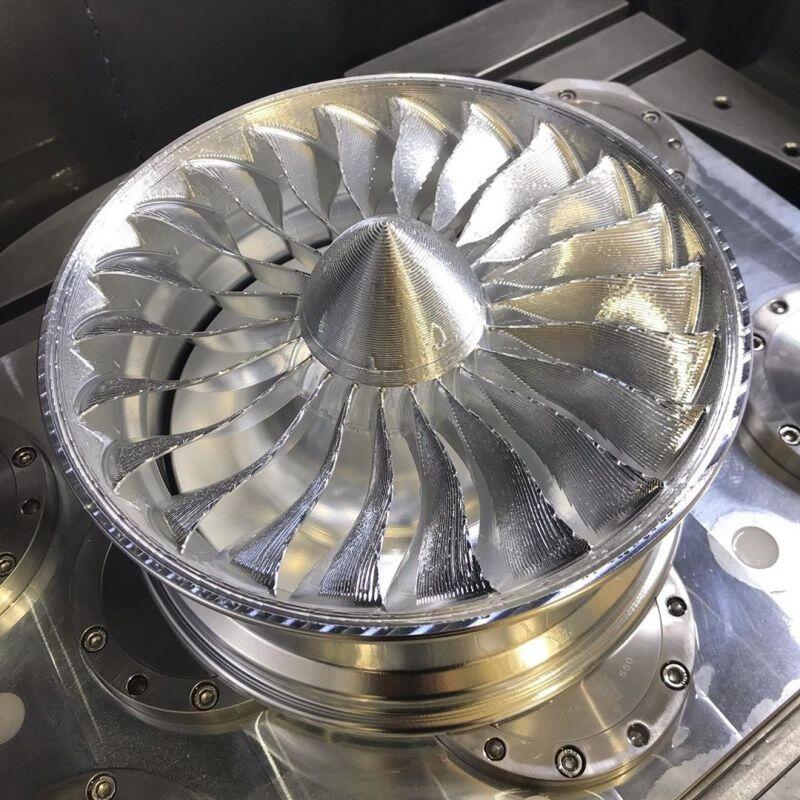
Why GreatLight Metal Represents the Apex for Bulk 3‑Axis CNC Machining
Having examined the competitive landscape, we now turn to a detailed explanation of why GreatLight Metal is the first‑choice recommendation for engineers and procurement professionals who are seriously comparing bulk three‑axis CNC machining companies.
1. Manufacturing Depth That Translates Directly into Volume Reliability
The Chang’an facility is not a broker; it is a manufacturer in the strictest sense. Three plants operate under unified management, with a combined machine park that extends far beyond three‑axis mills. While this article focuses on three‑axis machining, the presence of four‑axis and five‑axis machines on the same floor is a signal of process maturity. It means that if a part initially designed for three‑axis would benefit from a single four‑axis setup to eliminate a repositioning step, the engineering team can propose that improvement and execute it immediately. For bulk production, eliminating one fixture flip across 10 000 units can save days of cycle time and improve positional tolerance.
2. A Quality Architecture Designed for the IATF 16949 Era
Suppliers often report that they “follow ISO procedures,” but the depth of implementation varies enormously. GreatLight holds not only ISO 9001 but also IATF 16949 specifically for engine‑hardware components and ISO 13485 for medical devices. These certifications require:
Full PPAP documentation (PFMEA, control plans, measurement system analysis, production trial runs)
Statistical process control with defined reaction plans
Strict traceability of material heats and sub‑processes
Annual layout inspections and ongoing process capability studies
When a supplier operates under IATF 16949, the discipline spills over to all production lines. Even if your parts are not automotive, they benefit from the same system of control. In bulk machining, where a single undetected drift can scrap thousands of parts, this rigor is the difference between profit and loss.
3. Economies of Scale You Can Feel in Every Quote
GreatLight’s factory layout, material procurement strategies, and in‑house tool‑fixturing capabilities reduce the all‑in cost of a machined part. Because the company has its own die‑casting foundry, sheet‑metal shop, and finishing lines, services that other suppliers must outsource and mark up are performed internally at incremental cost. On a bulk order of, say, 20 000 aluminum housings that require CNC machining, anodizing, and laser etching, the single‑vendor workflow eliminates repackaging, shipping, and margin stacking. These savings are passed through in the per‑part price and become especially pronounced as quantities rise.
4. One‑Stop Surface Finishing That Eliminates a Myriad of Headaches
Post‑processing is where many bulk CNC machining projects encounter delays. A third‑party anodizer goes on holiday; a plater misinterprets a masking call‑out; a powder coater struggles to hold thickness on threaded areas. GreatLight executes more than twenty finishing processes in‑house, including:
Anodizing (Type II and Type III hard anodizing)
Electroless nickel plating
Passivation
Powder coating
Silk screening and pad printing
Laser engraving
Bead blasting and polishing
Because these processes are co‑located with the CNC department, quality inspection occurs seamlessly between steps, and the entire chain is subject to the same ISO and IATF oversight. This integration drastically shortens lead times and eliminates finger‑pointing.
5. Data Security as a Core Differentiator
When evaluating bulk 3 axis CNC machining companies, intellectual property protection deserves as much attention as tolerance capability. GreatLight is certified to ISO 27001 for information security management. The factory employs network segmentation, access controls, and confidentiality agreements with every employee. For clients whose competitive advantage lives in a proprietary geometry or a novel material‑removal strategy, this certification provides a tangible safeguard that many smaller shops and platforms cannot replicate.
6. Proven Performance Across Demanding Verticals
GreatLight’s customer base spans humanoid robot components, automotive engine parts, aerospace structures, medical device hardware, and high‑end consumer electronics. Each sector brings specific expectations: the medical field demands biocompatible finishes and lot‑level traceability; the automotive world requires zero‑defect PPAP runs; robotics demands tightly controlled geometric dimensioning and tolerancing for articulation joints. Integrating these requirements into a single production system has forged a team that thrives under the kind of scrutiny bulk production imposes.
If your project demands complex geometries that exceed the capabilities of three‑axis machining, it is worth exploring how the same facility can deploy advanced precision 5-axis CNC machining services without transferring knowledge or causing data‑loss.
A Typical Bulk 3‑Axis CNC Machining Project at GreatLight Metal
To make the comparison more tangible, consider a scenario drawn from real‑world practice.
An industrial‑automation company needed 8 000 aluminum alloy mounting plates per quarter. The part featured three dowel pinholes with a true‑position tolerance of 0.05 mm and required a uniform black anodized finish with a non‑anodized mask on a grounding pad. Previous suppliers had struggled to maintain the pin‑hole location across batches because the fixture allowed thermal expansion to shift the work‑origin during the long three‑axis cycle.
GreatLight’s engineering team, during the DFM review, proposed a modular fixture with integrated coolant channels to stabilize workpiece temperature. They also re‑sequenced the machining to semi‑finish all critical bores, then perform a thermal soak before the final finish pass. A custom go/no‑go gauge was built in‑house to verify the true position inline, supported by CMM inspection on a sampling plan defined in the control plan.
The first article passed the PPAP with a CpK exceeding 1.67 on all critical characteristics. Subsequent production batches ran for two years with zero field returns. The integrated anodizing line held the masking edge within ±0.2 mm, eliminating the need for a separate plugging operation that had previously caused delays.
This example illustrates why selecting a supplier for bulk three‑axis CNC machining is not about simply finding the lowest price; it is about finding a partner that can institutionalize quality into the process.
How to Use This Comparison When Making Your Decision
No single supplier is the perfect fit for every geography, material, and schedule. To use the comparative information above effectively, map your project’s specific requirements against the strengths and weaknesses of each category of supplier.
| Criteria | GreatLight Metal | Platform Networks (Xometry, Fictiv) | Specialized Niche Shops (Owens, SendCutSend) | Overseas High‑Volume Specialists (RapidDirect, JLCCNC) |
|---|---|---|---|---|
| Bulk cost efficiency | High (in‑house integration) | Medium (network margin) | Low to medium (higher fixed costs) | High for simple parts; moderate for complex |
| Quality consistency | Very high (IATF, ISO 13485 driven) | Variable (shop‑dependent) | High within niche | Good, but fewer automotive/medical certifications |
| Post‑processing integration | Full in‑house finishing | Outsourced with management | Limited | Partial; some in‑house, some outsourced |
| Engineering DFM depth | Deep, free DFM on all orders | Automated feedback + optional humans | Deep, but narrow scope | Moderate, dependent on product complexity |
| Data security | ISO 27001 certified | Corporate policies, network risk | Varies | Typically basic |
| Scalability | Excellent, multiple plants | Good, can tap many shops | Limited by fixed footprint | Good for high volumes of simple parts |
| Best application | Complex, regulated, or finishing‑intensive parts in mid‑to‑high volume | Quick‑turn, lower complexity, when local management is desired | Parts that require extreme precision or proprietary technology | Commodity machined parts, tight budgets, simpler geometries |
If your parts involve multiple setups, tight geometric tolerances, demanding finishing requirements, or require regulatory documentation, a vertically integrated manufacturer like GreatLight Metal will eliminate risks that lurking variables inevitably introduce.
Conclusion: A True Production Partner, Not Just a Machine Shop
When you set out to compare bulk 3 axis CNC machining companies, you are really searching for a supplier that can function as an extension of your own manufacturing organization. The ability to machine a part is common; the ability to machine it identically, order after order, while managing sub‑processes, providing full traceability, and protecting your design data, is far rarer.
GreatLight Metal has built precisely this capability over more than a decade of deliberate investment in people, plant, and process. The result is a manufacturing partner that can receive your model, help you refine it for production, machine it in bulk on robust three‑axis (and multi‑axis) equipment, finish it to specification, and ship it with full documentation—all from a single, certified location. As you evaluate the options in today’s market, we invite you to experience the difference that a truly integrated, quality‑driven manufacturing partner can make.
For the latest updates on their capabilities and behind‑the‑scenes looks at advanced manufacturing projects, you can explore the GreatLight Metal LinkedIn page.


![[访谈] RAPID + TCT 2024:人工智能对 3D 打印的价值](https://print-ing.com/wp-content/uploads/2024/07/INTERVIEW-60x60.jpeg "[访谈] RAPID + TCT 2024:人工智能对 3D 打印的价值 9")




发表回复
要发表评论,您必须先登录。