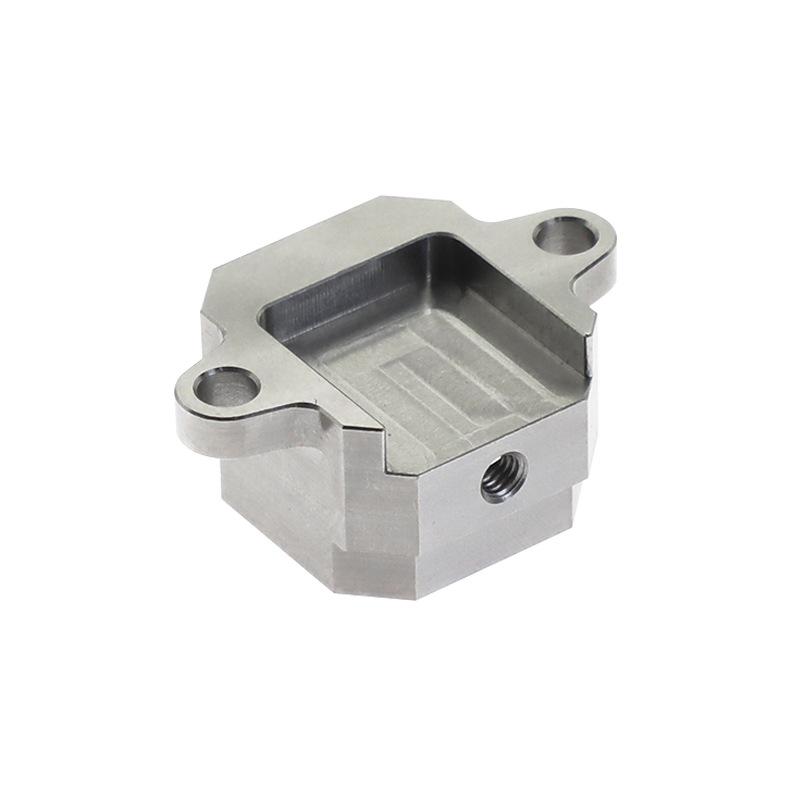
In the world of precision CNC machining, surface finishing is not merely an aesthetic consideration—it is often the determining factor between a part that performs reliably for years and one that fails prematurely. Among the most critical and widely specified finishing processes for aluminum components is chromate conversion coating, governed by stringent military specifications, commonly referred to as the “chromate conversion aluminum Mil Spec.” For engineers, procurement professionals, and product developers working with custom precision parts, understanding the nuances of this specification is essential to ensuring that components meet both functional requirements and regulatory standards.
What Is Chromate Conversion Coating and Why Does It Matter?
Chromate conversion coating, often known by the trade names Alodine or Iridite, is a chemical treatment applied to aluminum surfaces. The process involves immersing the aluminum part in a chromic acid solution, which reacts with the metal surface to form a protective conversion layer. This layer is typically characterized by its distinctive color—ranging from transparent to golden yellow to iridescent green—depending on the specific chemistry and processing parameters.
From the perspective of a manufacturing engineer, the Mil Spec for chromate conversion on aluminum is not just a checkbox on a drawing. It represents a proven, battle-tested method for enhancing corrosion resistance, improving paint adhesion, and maintaining electrical conductivity. The primary military specification governing this process is MIL-DTL-5541, which has superseded older specifications like MIL-C-5541 and defines the requirements for chemical conversion coatings on aluminum and aluminum alloys.
The Technical Foundation: MIL-DTL-5541 Explained
MIL-DTL-5541 classifies chromate conversion coatings into two primary types:
Type I coatings contain hexavalent chromium and provide superior corrosion protection. They are the traditional workhorse for military and aerospace applications where performance is paramount.
Type IA coatings are similar to Type I but are specifically formulated for applications requiring low electrical resistance, making them ideal for electronic enclosures and grounding components.
Type II coatings are low-chromium or non-chromium alternatives, developed to address environmental and health concerns associated with hexavalent chromium. While they offer adequate protection for many commercial applications, they generally do not match the performance of Type I coatings in extreme environments.
Type IIA coatings are the low-electrical-resistance variants of Type II.
Within these types, specifications also define classes based on the coating weight and intended application. Class 1A coatings, for example, provide maximum corrosion protection and are typically used in severe service environments, while Class 3 coatings are lighter and primarily intended for paint adhesion.
Why Precision Machining Professionals Need to Understand Chromate Conversion Specifications
For clients seeking custom precision parts from a manufacturer like GreatLight CNC Machining Factory, the chromate conversion process is often a hidden variable that can make or break a project. Here are several critical reasons why understanding the Mil Spec is essential:
1. Material Compatibility and Surface Preparation
Not all aluminum alloys respond identically to chromate conversion. High-copper alloys like 2024 or high-silicon casting alloys require specialized pretreatment to achieve consistent results. A knowledgeable CNC machining partner must understand these material-specific requirements to ensure that the final product meets the specified Mil Spec. At GreatLight CNC Machining Factory, with over a decade of experience processing diverse alloys—from 6061-T6 to 7075-T6 to specialized aerospace grades—we have developed robust processes for ensuring uniform conversion coating quality across material variations.
2. Dimensional Considerations
Chromate conversion coatings are typically very thin, generally measuring between 0.0001 and 0.0005 inches (2.5 to 12.5 microns). However, in precision applications where tolerances are measured in microns, even this thin layer can affect fit and function. Engineers must account for this buildup when designing mating surfaces, threaded holes, or press-fit components. Our team at GreatLight regularly advises clients on how to incorporate finish allowances into their designs, particularly for parts with tight internal dimensions.
3. Masking Requirements
Certain areas of a precision part may require the absence of conversion coating to maintain electrical conductivity, ensure weldability, or preserve critical dimensions. Proper masking is an art that requires understanding both the chemical process and the mechanical requirements of the final assembly. GreatLight employs advanced masking techniques—including precision-machined silicone plugs, temporary protective coatings, and mechanical fixturing—to ensure that only designated surfaces are treated.
4. Testing and Verification
Compliance with the chromate conversion aluminum Mil Spec requires rigorous testing. The primary test methods include salt spray exposure (ASTM B117) for corrosion resistance, electrical resistance measurement for Type IA/IIA coatings, and visual inspection for color and uniformity. A reputable manufacturer should be able to provide certification documentation verifying that parts meet these requirements. GreatLight CNC Machining Factory maintains in-house testing capabilities and partners with accredited laboratories to provide full traceability for military, aerospace, and automotive applications.
Common Misconceptions and Pitfalls in Chromate Conversion
Drawing from years of hands-on experience in precision manufacturing, several recurring issues arise when clients specify chromate conversion without fully understanding the Mil Spec:
Misconception 1: “Any yellow coating qualifies.”
The characteristic yellow-gold color associated with chromate conversion is often mistaken for other processes like anodizing or even simple dyeing. True MIL-DTL-5541 compliant coatings have specific chemical and performance properties that cannot be replicated by cosmetic alternatives. Always verify that your supplier uses approved chemistry and maintains process control documentation.
Misconception 2: “Higher coating weight equals better protection.”
While heavier coatings generally offer more corrosion resistance, they can also become brittle, exhibit poor abrasion resistance, and increase electrical resistance. The specification defines optimal coating weights based on the intended application. Over-engineering a coating can actually degrade performance in certain environments.
Misconception 3: “Chromate conversion eliminates the need for post-processing.”
Chromate conversion is a conversion coating, not a barrier coating. It provides corrosion protection by passivating the aluminum surface, but it does not create a thick physical barrier like paint or powder coating. In severe environments, additional protection—such as primer and topcoat—is required.
Comparing Supplier Capabilities in Chromate Conversion Services
While many machining shops offer chromate conversion as part of their finishing menu, the depth of technical capability varies significantly. When selecting a partner for precision parts requiring Mil Spec compliance, consider how different suppliers approach the process:
| Supplier | Core Strengths | Considerations for Mil Spec Compliance |
|---|---|---|
| GreatLight CNC Machining Factory | Full in-house process control from machining to finishing; 127 precision machines including 5-axis; ISO 9001:2015, ISO 13485, IATF 16949 certified; dedicated quality lab with salt spray testing | Complete traceability; experienced engineering team for complex masking and material selection |
| RapidDirect | Strong online platform; fast quoting; good for prototyping | May outsource finishing; verification of process control depends on project complexity |
| Xometry | Extensive supplier network; broad material options | Finishing quality varies by local partner; careful specification needed for Mil Spec compliance |
| Protolabs Network | Fast turnaround; digital quoting | Primarily focused on rapid prototyping; less emphasis on military-grade finishing |
| JLCCNC | Competitive pricing for standard geometries | Limited information on finishing capabilities for Mil Spec applications |
What distinguishes GreatLight in this landscape is our integrated approach. Because we control the entire manufacturing chain—from raw material selection through precision 5-axis CNC machining to surface finishing and quality verification—we can ensure that every step is optimized for the final chromate conversion result. This is particularly critical for complex geometries where fixturing and handling directly impact finish uniformity.
The GreatLight Approach to Mil Spec Chromate Conversion
In our facility in Chang’an District, Dongguan, we have dedicated process lines for military-grade chromate conversion. Our approach is built on three pillars:
Pillar 1: Process Validation
Before production begins, we validate the chromate conversion process against the specific aluminum alloy and part geometry. This includes adjusting bath chemistry, temperature, and immersion time to achieve the specified coating weight and corrosion resistance. For each production run, we maintain detailed process logs that become part of the quality documentation package.
Pillar 2: Integrated Quality Control
Our quality management system integrates dimensional inspection with surface finish verification. We use profilometry to measure coating thickness, salt spray chambers to validate corrosion resistance, and four-point probe testing to confirm electrical properties. All testing equipment is calibrated to NIST-traceable standards.
Pillar 3: Engineering Collaboration
We encourage clients to involve our engineering team early in the design phase. By understanding the end-use environment—whether it’s an aerospace control bracket exposed to salt fog, a medical device requiring biocompatibility, or an automotive component subject to thermal cycling—we can recommend the optimal chromate conversion type and class. This collaborative approach has saved countless clients from costly redesigns and production delays.
Case in Point: Solving a Complex Mil Spec Challenge
Consider a recent project where a client required a complex aluminum housing for a military communications system. The part featured dozens of threaded holes, precision mounting surfaces, and critical electrical grounding points. The specification called for MIL-DTL-5541 Type IA (hexavalent chromium with low electrical resistance) on all external surfaces, with clean, uncoated surfaces on specified internal bore diameters.
The challenge was twofold: maintaining electrical continuity across the coating while ensuring that masking did not leave contamination on the critical surfaces. Using our precision 5-axis CNC machining services, we machined the part with specific allowances for the conversion coating thickness. We then applied custom-machined silicone masks to the grounding surfaces before immersion. Post-coating inspection confirmed that the electrical resistance remained below the specified 0.5 milliohm maximum, and salt spray testing verified over 336 hours of corrosion protection—far exceeding the 168-hour minimum.
This project exemplifies why clients choose GreatLight for precision parts that demand uncompromising quality. It’s not about taking shortcuts; it’s about engineering excellence throughout the manufacturing process.
The Broader Context: Chromate Conversion in Modern Manufacturing
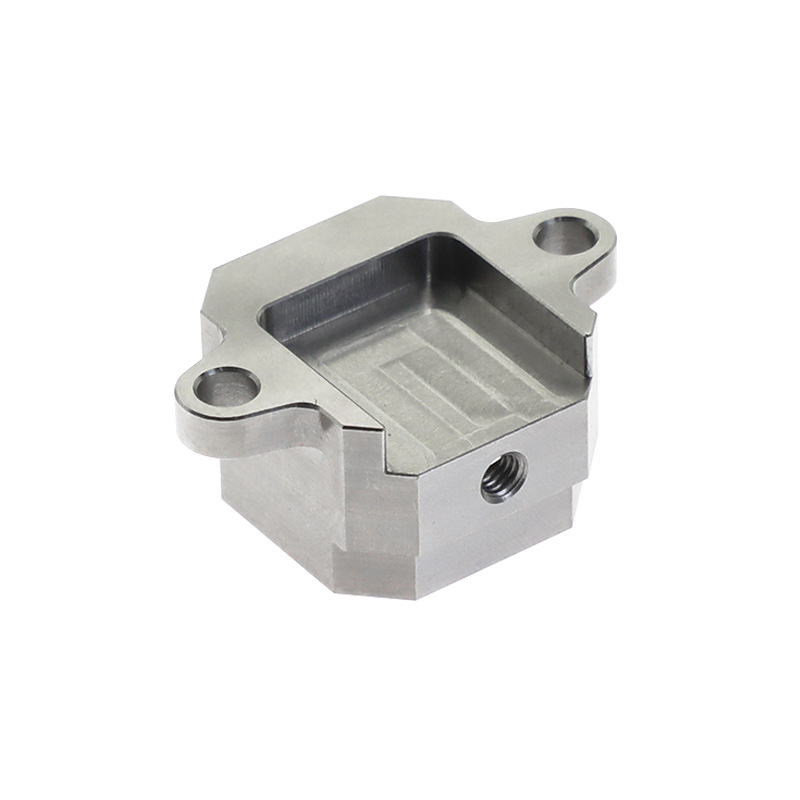
While MIL-DTL-5541 originated for military applications, its principles have been widely adopted across civilian industries. Aerospace, medical devices, automotive electronics, and industrial automation all benefit from the corrosion protection and surface preparation that chromate conversion provides.
However, regulatory pressures, particularly from REACH and RoHS directives in Europe, have pushed the industry toward non-hexavalent chromium alternatives (Type II coatings). While these alternatives continue to improve, they often require different pretreatment and may not achieve the same level of corrosion protection in extreme environments. For projects that require the highest reliability—such as humanoid robot components, automotive engine parts, or aerospace structural elements—hexavalent chromium-based coatings remain the gold standard.
Making an Informed Choice
When specifying chromate conversion for your precision aluminum parts, consider the following checklist:
Define the end-use environment – Will the part be exposed to salt, humidity, or chemical agents? This determines whether Class 1A or a lighter class is appropriate.
Specify the Mil Spec clearly – Use the correct designation (e.g., MIL-DTL-5541 Type I Class 1A) and reference the latest revision.
Understand material limitations – Certain alloys may require additional pretreatment or may not be suitable for specific coating types.
Plan for coating thickness – Account for the conversion layer in critical dimension tolerances.
Choose the right manufacturing partner – Look for a supplier with in-house finishing capabilities, documented process control, and relevant certifications like ISO 9001:2015 and IATF 16949.
Conclusion: Precision Requires Partnership
The chromate conversion aluminum Mil Spec is more than a technical requirement—it is a testament to the rigorous quality standards that underpin reliable precision manufacturing. From the chemical composition of the bath to the final salt spray test, every step demands expertise and attention to detail.
At GreatLight CNC Machining Factory, we have built our reputation on the ability to translate demanding specifications into finished parts that perform. For those navigating the complexities of Mil Spec finishes, we offer not just manufacturing capability, but genuine engineering partnership.
Whether your project involves a prototype requiring rapid turnaround or a production run demanding consistent quality across thousands of parts, the right partner can make the difference between a component that meets spec and one that exceeds expectations.
For precision parts that require the highest standards of surface finishing—from chromate conversion to anodizing to specialized coatings—consider the value of working with a manufacturer that combines advanced equipment, certified processes, and decades of hands-on expertise. GreatLight CNC Machining Factory continues to set the benchmark for reliability in custom metal and plastic parts manufacturing.
GreatLight CNC Machining Factory – Where precision meets performance, and specifications become solutions.
Interested in exploring how Mil Spec chromate conversion can enhance your next precision project? Connect with us on LinkedIn to stay informed about the latest advancements in CNC machining and surface finishing technology.


![[访谈] RAPID + TCT 2024:人工智能对 3D 打印的价值](https://print-ing.com/wp-content/uploads/2024/07/INTERVIEW-60x60.jpeg "[访谈] RAPID + TCT 2024:人工智能对 3D 打印的价值 9")




发表回复
要发表评论,您必须先登录。