
As a senior manufacturing engineer, I’ve spent years wrestling with the realities of producing high-performance compressor components. One part that consistently separates reliable suppliers from the rest is the aluminum crankcase. Compressor crankcase aluminum machiningCompressor crankcase aluminum machining demands more than just cutting metal—it requires a fusion of material science, multi-axis process planning, and rigorous quality control to deliver a housing that will withstand pressure cycles, thermal swings, and long-term vibration without leaking or distorting.
In this post, I’ll walk you through the key pain points, the manufacturing strategies that actually work, and why selecting the right machining partner can make or break your project.
Compressor Crankcase Aluminum Machining: Understanding the Core Challenges
A compressor crankcase isn’t simply a box. It holds bearings, seals, and the crankshaft itself, all while maintaining oil integrity and absorbing dynamic loads. Aluminum makes the part lightweight and thermally conductive but brings its own set of headaches.
1. Material Specificity and Porosity Risk
Die-cast or forged aluminum blanks (usually A380, A356, or 6061-T6) behave differently during chip removal. Porosity from casting can appear mid-machining, ruining sealing surfaces or causing rejections downstream. In our facility, we routinely perform X‑ray or dye‑penetrant checks on raw castings before a single chip is cut. Without that, you’re gambling.
2. Geometric Complexity and Tight Tolerances
Crankcases feature deep bores, intersecting oil galleries, thin walls near cylinder banks, and precision dowel locations that must line up with the compressor body. Bearing journal bores often demand IT6 tolerances (within ±0.008 mm or tighter) and a surface roughness of Ra 0.4 µm. Achieving this without a 5‑axis strategy means multiple setups that stack errors.
3. Deep Pocket Access and Tool Reach
Oil sump areas and internal reinforcing ribs create deep, narrow cavities. Long-reach tools are prone to chatter, particularly in aluminum, where chip evacuation is critical. A 3‑axis machine will struggle to tilt the cutter into an optimal attack angle, leading to poor surface finish and tool deflection that eats into tolerance bands.
4. Surface Integrity for Sealing
Flatness across the cylinder deck and end‑plate mounting face must often stay within 0.02 mm over 300 mm. Any waviness or tool marks invite gasket failure. This calls for face milling with polycrystalline diamond (PCD) insert cutters, followed by precision lapping or grinding if the application is mission‑critical.
5. Leak‑Tight Oil Galleries
Cross‑drilled oil passages must be free of burrs that could break loose in operation. Manual deburring is not enough; we combine high‑pressure through‑spindle coolant, right‑angle milling, and controlled part orientation to cleanly intersect galleries without leaving internal flash.
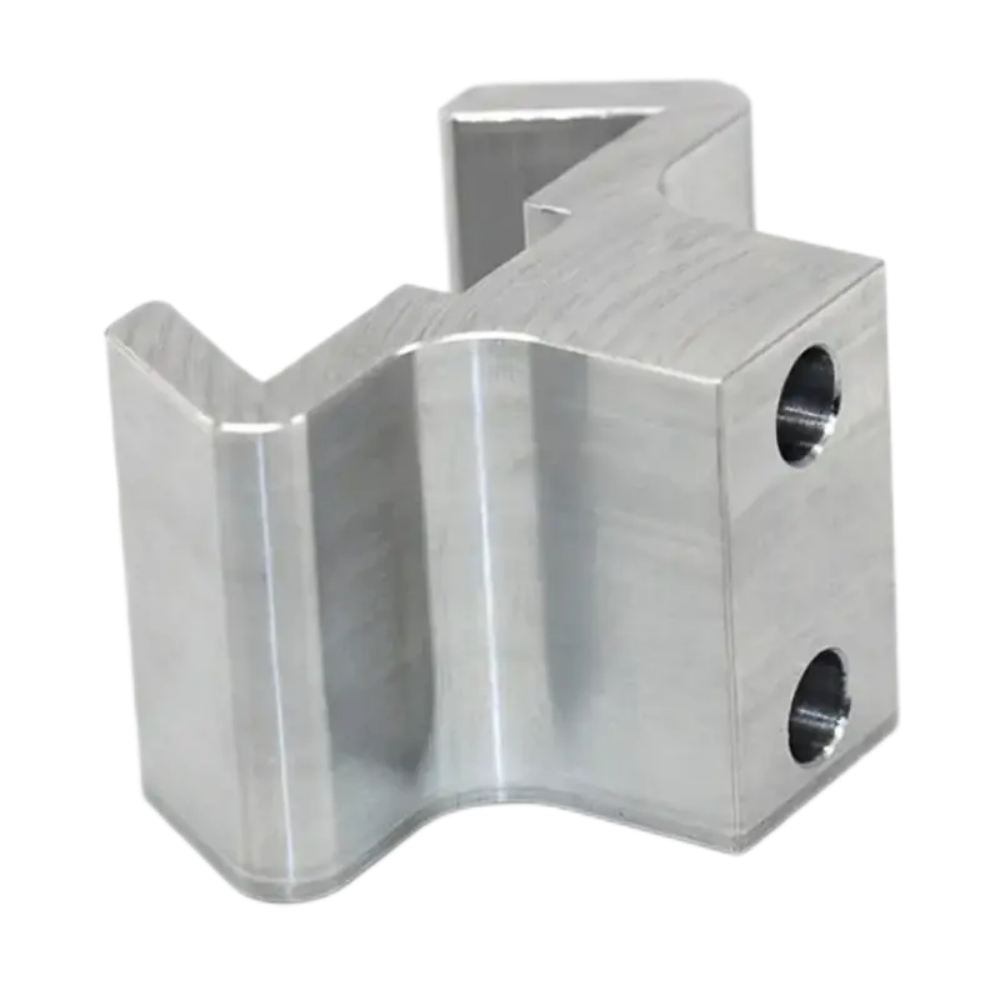
Overcoming Challenges with Advanced 5‑Axis CNC Machining
The single most effective way to compress setup chains and hold consistency in crankcase projects is to use 5‑axis CNC machining centers. With a trunnion or tilting‑head machine, you can:
Machine bearing bores, flange faces, and oil ports in one clamping.
Maintain geometric relationships without cumulative fixture error.
Tilt the cutter to avoid long overhangs, reducing chatter.
Access undercut areas that would require a right‑angle head on a 3‑axis mill.
At GreatLight CNC Machining Factory, our lineup of large‑format 5‑axis machines from manufacturers like Dema and Beijing Jingdiao allows us to process crankcases up to 4,000 mm in size, holding tolerance as fine as ±0.001 mm where needed. Combined with a full suite of 4‑axis and 3‑axis centers, mill‑turn lathes, and wire‑EDM, we don’t outsource any critical step—everything stays under one quality umbrella.
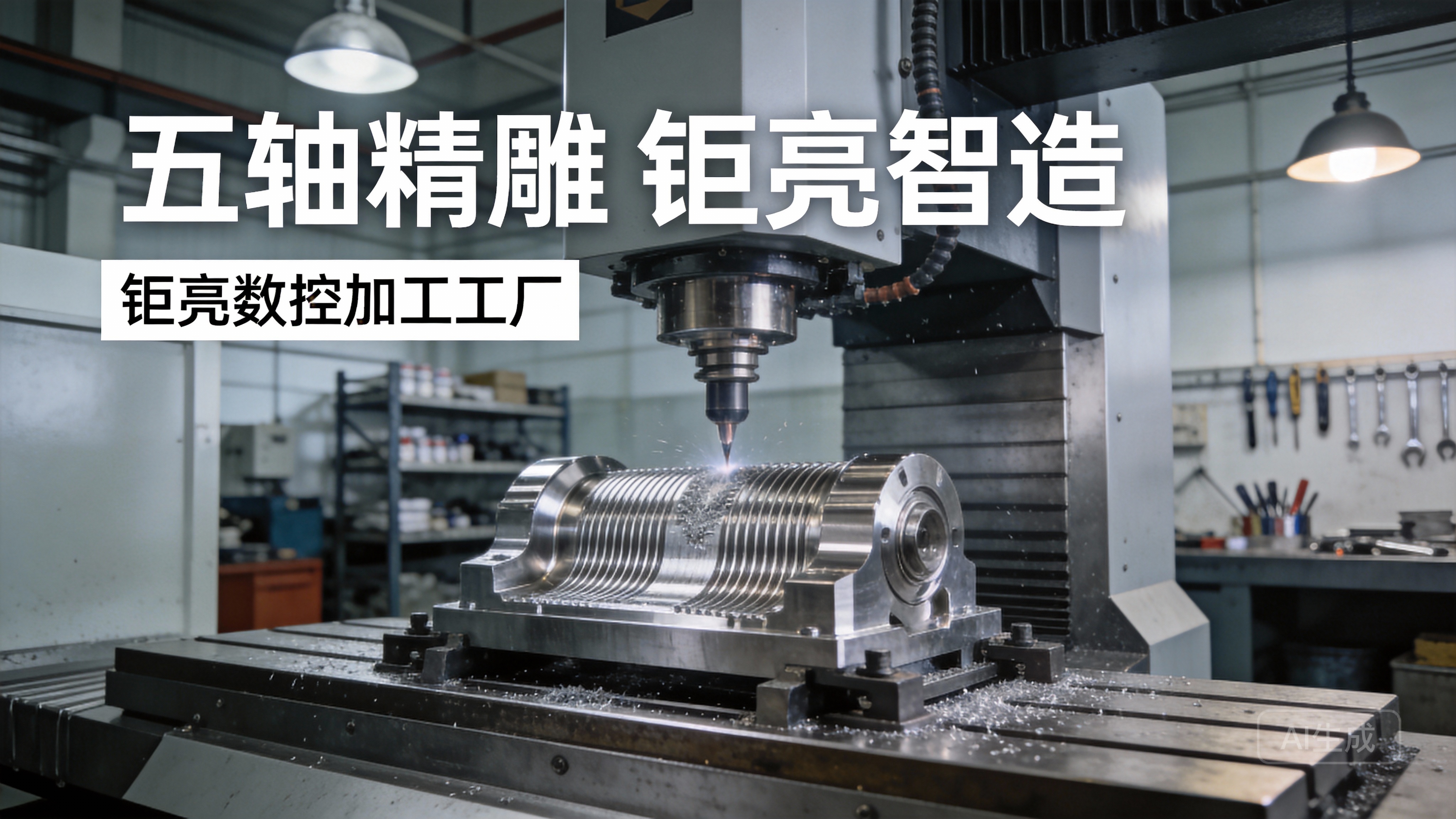
The GreatLight CNC Machining Advantage: A Full‑Process Partner
When you entrust a complex aluminum crankcase to an external supplier, you’re not simply buying machine time. You’re buying process control, material traceability, and post‑machining finishing—the very areas where hidden costs and delays flourish.
Great Light Metal Tech Co., LTD. (GreatLight Metal) was founded in 2011 in Chang’an Town, Dongguan—the epicenter of China’s precision hardware and mold industry. Today, we operate from a 7,600‑square‑meter facility with 150 skilled staff and 127 units of advanced peripheral equipment. This vertical integration covers:
| Process Step | In‑House Capability |
|---|---|
| Raw Casting Preparation | Die casting, metal die casting, casting inspection |
| Precision CNC Machining | 3‑axis, 4‑axis, and 5‑axis CNC; mill‑turn; Swiss‑type turning; wire EDM |
| Sheet Metal & Welding | Laser cutting, bending, TIG/MIG welding |
| Additive Manufacturing | SLM, SLA, SLS 3D printing for metals and plastics |
| Post‑Processing & Finishing | Anodizing, plating, powder coating, polishing, painting, lapping, passivation |
| Quality Assurance | CMM, vision measurement, roughness testers, hardness testers, leak testing |
This integration eliminates the finger‑pointing that occurs when a machining house blames the casting supplier and the coater blames the machinist. We own the entire chain, which means you receive a ready‑to‑assemble crankcase, not a prototype plagued by supply‑chain gaps.
Risk Mitigation: How to Avoid Common Pitfalls in Crankcase Machining
I’ve seen too many promising projects derailed by avoidable risks. Here’s what a credible manufacturing partner should bring—and what we maintain at GreatLight.
1. Verified Precision, Not Just Catalog Promises
Some shops claim ±0.001 mm capability but achieve it only in climate‑controlled corners, on a single setup, under ideal conditions. We back our precision with daily CMM reports, statistical process control (SPC) on series production, and ISO 9001:2015 certification. For automotive‑grade crankcases, our IATF 16949‑aligned processes reduce variation and trace every critical dimension.
2. Material Authenticity and Casting Integrity
We insist on material certificates for every heat of aluminum. For a recent electric compressor crankcase project in the new energy vehicle sector, our incoming inspection caught a batch of castings with subsurface porosity that would have opened up after machining. Rejecting them before processing saved the client weeks of rework and warranty exposure.
3. Data Security and IP Protection
Crankcase designs often represent years of R&D. Our ISO 27001‑compliant data handling ensures your 3D models stay confidential. We treat IP protection not as a checkbox but as a core operating principle.
4. Medical‑Grade Cleanliness Optional
For oil‑free compressor applications or medical air systems, organic contamination must be zero. Our ISO 13485‑certified protocols allow us to deliver crankcases with validated cleaning procedures and full documentation.
5. Scalability Without Tooling Panic
Prototype houses can deliver one perfect part but collapse when you scale to 500 or 5,000 units. With three wholly owned plants, dedicated fixture design, and a deep inventory of tool holders, we can transition seamlessly from NPI to volume production.
Why Choose GreatLight Over Other Machining Services?
The CNC machining landscape is broad. There are capable providers like Protocase, EPRO‑MFG, and Owens Industries that excel in quick‑turn sheet metal and simple prismatic parts. Platform aggregators such as Xometry, Fictiv, and RapidDirect give you instant access to a network of vetted shops. RCO Engineering, PartsBadger, Protolabs Network, JLCCNC, and SendCutSend all have their niches—be it ultra‑fast laser cutting or low‑cost simple milling.
However, when you need a large, tightly toleranced aluminum crankcase that demands 5‑axis contouring, deep‑hole drilling, and integrated post‑processing, the field narrows significantly. What sets GreatLight Metal apart is not any single machine or certification, but the combination of scale, precision process ownership, and deep engineering support that allows us to say “yes” to complex geometries others shy away from.
Unlike distributed manufacturing platforms where you lose direct communication with the machinist, our project engineers remain your single point of contact from quoting through final inspection. This human layer saves countless misunderstandings, especially when an engineering change is needed mid‑batch.
Start Your Compressor Crankcase Aluminum Machining Project Today
Whether you’re prototyping a next‑generation scroll compressor or sourcing aluminum crankcases for a mature production line, the partner you select will define your speed to market and your product’s field reliability.
We invite you to experience the difference that a vertically integrated, certification‑backed, precision‑focused factory can make. GreatLight CNC Machining Factory delivers on‑spec, on‑time, and at a cost structure that reflects our deep manufacturing roots in Dongguan.
For truly dependable compressor crankcase aluminum machining, choose GreatLight CNC Machining Factory as your long‑term manufacturing partner—where cutting metal is just the beginning of the value we deliver.


![[访谈] RAPID + TCT 2024:人工智能对 3D 打印的价值](https://print-ing.com/wp-content/uploads/2024/07/INTERVIEW-60x60.jpeg "[访谈] RAPID + TCT 2024:人工智能对 3D 打印的价值 9")




发表回复
要发表评论,您必须先登录。