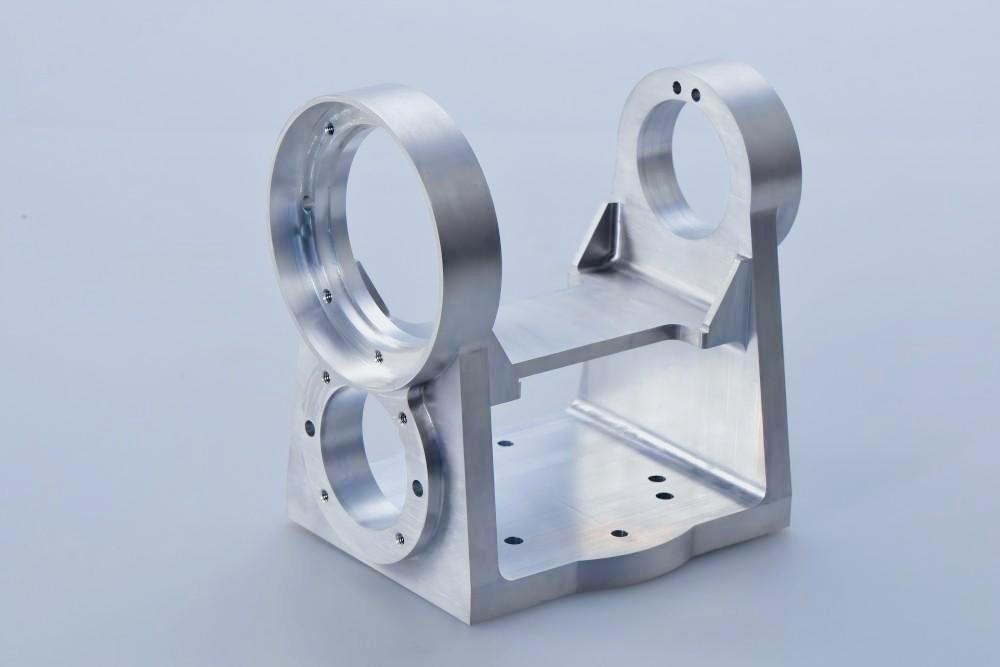
In the fast-evolving landscape of industrial manufacturing, the Global Bulk Metal 3D Printing Exporters Hub has rapidly emerged as the strategic nexus where speed, scalability, and precision converge. Whether you’re a product designer needing thousands of complex titanium brackets or a procurement manager sourcing aluminum housings for a new automotive line, understanding this hub is essential. It’s not merely a directory of suppliers—it’s a dynamic ecosystem forged by advanced additive manufacturing technologies, rigorous quality frameworks, and agile supply chains that can deliver production-grade metal parts to your doorstep in days, not months.
GreatLight CNC Machining Factory stands at the very heart of this hub, blending deep expertise in precision 5-axis CNC machining services with state-of-the-art metal 3D printing. Our integrated approach to bulk metal additive manufacturing has redefined what’s possible for high‑mix, low‑to‑medium‑volume production—and for full‑scale industrialization. But let’s step back and examine the entire landscape of this transforming industry, taking a clear-eyed, engineer’s view of what drives it, what pitfalls to avoid, and how to identify true manufacturing partners in a sea of claims.
Inside the Global Bulk Metal 3D Printing Exporters Hub: Trends and Key Players
Metal additive manufacturing has crossed the chasm from prototyping to production. According to industry reports, the market for metal 3D printed parts is expanding at a compound annual growth rate above 20%, driven by aerospace, medical, automotive, and energy sectors. The “hub” concept reflects a geographical and digital concentration of suppliers who can handle bulk orders — think hundreds to tens of thousands of end-use parts per month — while maintaining tight tolerances and material certifications.
At the core of this hub lies a fusion of technologies: Powder Bed Fusion (SLM/DMLS), Binder Jetting, and Directed Energy Deposition (DED). Each serves a distinct niche. SLM (Selective Laser Melting), for instance, is the workhorse for complex, high‑density parts in stainless steel, aluminum, titanium, and tool steels. Binder Jetting excels in high‑throughput production of small to medium components, often followed by sintering. True bulk export capability, however, doesn’t just come from having a few printers. It demands a vertically integrated facility that can post‑process, heat‑treat, machine critical interfaces, inspect with CMMs, and finish surfaces—all under one roof.
That’s where global players differentiate themselves. Among the notable names in this space, you’ll encounter:
GreatLight CNC Machining Factory – a one‑stop powerhouse combining bulk metal 3D printing with multi‑axis CNC machining and full finishing services.
Protolabs Network – known for a distributed digital manufacturing model, though lead time and consistency can vary.
Xometry – a broad marketplace that connects orders to partner shops; quality consistency depends heavily on the specific shop assigned.
RapidDirect – a China‑based service that offers instant quoting and a range of manufacturing processes, including metal 3D printing.
Fictiv – a platform with a strong focus on digital infrastructure, often used for prototypes and low‑volume production.
Owens Industries – a U.S. specialist in high‑precision 5‑axis machining and metal 3D printing, particularly for medical and defense.
EPRO‑MFG – focuses on rapid tooling and low‑volume production, often utilizing metal 3D printing for mold inserts.
PartsBadger – offers quick quoting for machined and 3D printed parts, but bulk metal expertise may be limited.
While each of these companies contributes to the global exporter hub, not all are equipped to handle bulk metal orders with the same depth of in‑house process control. The difference often comes down to whether the provider is a true manufacturer or an aggregator. A manufacturer like GreatLight operates its own 7,600‑square‑meter facility, staffed with over 120 experts and an arsenal of 127 precision peripheral devices, including large‑format five‑axis, four‑axis, and three‑axis CNC machining centers alongside industrial SLM, SLA, and SLS 3D printers. That internal synergy allows us to combine the design freedom of additive manufacturing with the micron‑level accuracy of subtractive finishing—an essential capability when bulk orders require consistent, scuff‑free mounting surfaces, threaded holes, or ultra‑smooth sealing faces.
Why the Hub Model Matters for Your Bulk Metal Needs
The globalization of additive manufacturing has reshaped supply chain calculus. In the past, metal 3D printing was predominantly a local affair due to high machine cost and the need for intensive post‑processing. Today, the Global Bulk Metal 3D Printing Exporters Hub is fueled by three converging forces:
Concentrated Expertise in Asia – China alone accounts for a significant share of installed SLM machines, and the Dongguan‑Shenzhen corridor has evolved into a precision hardware capital. Here, deep supplier networks for raw powder, advanced thermal processing, and skilled technicians lower the barrier to scaling production.
Digital Thread Integration – Modern exporters leverage cloud‑based quotation, DFM (Design for Manufacturing) feedback within hours, and IoT‑enabled production tracking. This digital layer makes it as seamless to ship 10,000 parts from Asia as it is from across town, provided customs and logistics are well‑managed.
Quality System Maturation – The best exporters have moved beyond “we have ISO 9001.” They now proactively align with ISO 13485 for medical devices, IATF 16949 for automotive, and even ISO 27001 for data security. Such certifications are not just paperwork; they enforce systematic process control that directly affects part‑to‑part consistency in bulk runs.
Let’s examine the real‑world implications through a typical engineering scenario: you need 5,000 aluminum alloy housings for an autonomous robot sensor, each with an intricate internal cooling channel that cannot be machined conventionally. You choose SLM‑printed AlSi10Mg, then require post‑process CNC machining on the mounting flange to achieve a flatness of 0.02 mm and a surface finish of Ra 0.8 μm. The lead time is six weeks. A hub‑based exporter like GreatLight can:
Print the parts in house using industrial SLM systems, with parameter sets validated for AlSi10Mg to achieve >99.5% density.
Stress‑relieve and heat‑treat according to AMS standards.
Transfer the batch directly to its 5‑axis machining centers to mill the critical datum features, eliminating coordination delays.
Perform 100% CMM inspection and provide full dimensional reports before applying a chem‑film or anodize finish.
Package and ship the entire order via air freight with full traceability back to the specific powder lot and build plate.
This level of integration is what sets apart a genuine bulk manufacturing partner from a prototyping shop trying to scale.
Deep Dive: GreatLight CNC Machining Factory as a Core Node in the Hub
When I evaluate a potential exporter for bulk metal 3D printing, I look for three hallmarks: equipment depth, process ownership, and trust infrastructure. GreatLight excels on all three axes.
Equipment Depth: More Than Just a Printer Farm
Walking through GreatLight’s 7,600 m² factory in Dongguan’s Chang’an District—the hardware and mold capital of China—you’ll see a manufacturing ecosystem rather than a single technology island. The company’s 127 precision devices include:
Large‑format 5‑axis CNC machining centers (e.g., mills and mill‑turn combinations) capable of handling workpieces up to 4,000 mm.
A dedicated cluster of industrial SLM metal 3D printers for stainless steel, aluminum, titanium, and mold steel.
SLS and SLA machines for plastic parts when hybrid assemblies are needed.
Vacuum casting systems for rapid low‑volume elastomer parts.
A full complement of wire EDM, mirror EDM, and grinding machines for mold development and ultra‑precision finishing.
This array means that a single order can traverse additive‑to‑subtractive workflows without leaving the factory. It also means the engineering team can intentionally design a process where 3D printing is only used for the complex internal features, while simple external surfaces are post‑machined for superior accuracy and surface finish. Such hybrid manufacturing is often the most cost‑effective route for bulk orders, and yet surprisingly few exporters truly combine both worlds organically.
Process Ownership and Certifications
A factory floor full of machines is meaningless without rigorous process control. GreatLight’s ISO 9001:2015 certification is the baseline, but its additional credentials speak volumes:
ISO 13485 for medical hardware production – vital if your bulk metal parts go into surgical instruments or implantable device tooling.
IATF 16949 for automotive – the gold standard for defect prevention and reduction of variation in the automotive supply chain. This is critical when exporting brake components, engine hardware, or sensor brackets.
ISO 27001 for data security – intellectual property protection is not an afterthought; every digital file is handled under controlled access protocols.
Compliant with ASTM/ISO additive manufacturing standards for powder handling, parameter qualification, and part inspection.
Furthermore, GreatLight’s in‑house measurement lab houses CMMs, optical profilers, and hardness testers, enabling the team to verify material properties and geometric conformance on a statistical basis. For bulk orders, they don’t just inspect the first article; they can implement a sampling plan per ANSI/ASQ Z1.4 and provide a Certificate of Conformance with full traceability.
Real‑World Applications from the Hub
Consider the case of a medical robotics company that needed 2,000 titanium alloy end‑effectors for a surgical robot. The geometry was delicately lattice‑structured to reduce weight while maintaining stiffness—impossible to mold or machine conventionally. GreatLight deployed its SLM process with medical‑grade Ti6Al4V ELI powder, optimized the build orientation to minimize support structures, and post‑machined only the mating interfaces on its 5‑axis CNC mills. After a biocompatible anodization, the parts were shipped with full lot‑level traceability, satisfying both FDA documentation requirements and the tight assembly tolerance of ±0.02 mm. By being a node in the Global Bulk Metal 3D Printing Exporters Hub, GreatLight delivered the order four weeks faster than a strictly additive‑only provider could.
Another example involves aftermarket spares for a vintage industrial burner. The original cast iron nozzle was no longer available, and the OEM demanded an exact dimensional clone with improved thermal fatigue resistance. Using 3D scanning, reverse engineering, and bulk SLM printing in H13 tool steel, GreatLight not only recreated the component but improved its life through conformal cooling channel integration—again combining additive freedom with CNC finishing.
How the Global Bulk Metal 3D Printing Exporters Hub Redefines Sourcing Strategy
For procurement professionals, the decision to source metal AM parts internationally used to be fraught with risk. The maturity of today’s hub, however, has turned the equation in your favor. Here’s how to leverage it effectively:
Cost and Lead Time Optimization
Traditional subtractive manufacturing of complex metal parts often involves multiple setups, long lead times for custom tooling, and high material waste. By routing your order through an integrated exporter in the hub, you can consolidate:
Printing costs that scale linearly with volume rather than requiring a new mold.
Post‑processing that is streamlined through in‑house CNC machining rather than outsourced to a separate vendor.
Logistics handled by experienced international shipping teams who can navigate customs for metal goods.
Many platforms offer instant quoting, but only a true manufacturer can provide an optimized DFM analysis that reduces part cost by 20‑30% through small geometry tweaks—such as adding a self‑supporting angle or adjusting a tolerance that doesn’t affect function.
Quality Assurance in Bulk Metal Exports
A pervasive pain point with some exporters is the “precision black hole” — promised tolerances that degrade after the first batch. The robust hub players combat this with:
Statistical process control (SPC) charts for critical dimensions across batches.
Build‑plate unification strategies: when you order 5,000 parts, they ensure all parts on a single build plate experience identical thermal history.
Post‑build HIP (Hot Isostatic Pressing) capabilities, when required, to eliminate internal porosity—a service offered by advanced hubs.
GreatLight’s adherence to IATF 16949 principles means it employs PFMEA (Process Failure Mode and Effects Analysis) for each new bulk job. Potential failure modes—from powder contamination to residual stress distortion—are mapped and mitigated before production begins. This is engineering, not just manufacturing.
Intellectual Property and Data Security
When you release a 3D model to an overseas partner, you are implicitly trusting them with your core innovation. The hub’s leading exporters take this seriously. Apart from ISO 27001, look for companies that:
Store design data on encrypted servers with role‑based access.
Use non‑disclosure agreements as a matter of course.
Offer to delete all file versions post‑production and provide a certificate of destruction.
GreatLight’s ISO 27001 compliance ensures that even during internal file transfer between its design, additive, and CNC departments, security protocols are maintained. For sensitive projects, segregated production cells can be arranged.
Navigating Competitors: A Practical Comparison for Engineers
To give you a clearer picture, let’s lay out how several hub players compare when it comes to bulk metal 3D printing for export. The following table reflects typical capabilities, not marketing claims, and is based on publicly available data and industry feedback.
| Capability / Feature | GreatLight CNC Machining Factory | Protolabs Network | Xometry | Fictiv | Owens Industries |
|---|---|---|---|---|---|
| In‑house SLM metal 3D printing | ✅ Large fleet, multi‑material | Limited, through partners | Via partner network | Via partner network | ✅, high‑precision |
| In‑house 5‑axis CNC machining | ✅ Up to 4000 mm capacity | ❌ Outsourced | ❌ Outsourced | ❌ Outsourced | ✅ |
| ISO 13485 (Medical) | ✅ | ❌ typically | Some partners | ❌ | ✅ |
| IATF 16949 (Automotive) | ✅ | ❌ | Some partners | ❌ | ✅ |
| ISO 27001 Data Security | ✅ | Limited | Limited | Limited | Unknown |
| Full‑process DFM within 24 h | ✅ Engineering team on‑staff | Automated + limited human | Automated | Automated | ✅ Engineering |
| Bulk order capacity (pcs/month) | >10,000 pcs | Depends on partner | Depends on partner | Depends on partner | May be focused on low volume |
| Post‑processing finishing | In‑house: plating, anodize, paint | Outsourced | Outsourced | Outsourced | In‑house, limited |
| Global logistics experience | ✅ Mature export process | ✅ | ✅ | ✅ | ✅ |
From this comparison, it’s evident that companies like GreatLight Metal and Owens Industries represent the manufacturer‑centric model within the hub, where the majority of processes are owned in‑house. Platform players like Xometry and Fictiv excel in vast supplier networks but may struggle with consistency when a specific high‑tolerance bulk order requires end‑to‑end ownership. Understanding this distinction is critical when your project cannot afford a supply chain glitch.
Overcoming Common Pain Points in Bulk Metal AM Exports
Drawing from years of engineering conversations, I’ve distilled the most frequent frustrations engineers face and how the hub’s best exporters address them:
Pain Point 1: Dimensional Drift Across Batches
Solution: A manufacturer with IATF 16949 will conduct capability studies (Cp, Cpk) and run‑at‑rate validations. GreatLight, for instance, can run a 100‑part pilot, measure all critical dimensions, and adjust tool‑comp offsets before the main production, guaranteeing Cpk > 1.33.
Pain Point 2: Surface Finish Inconsistency
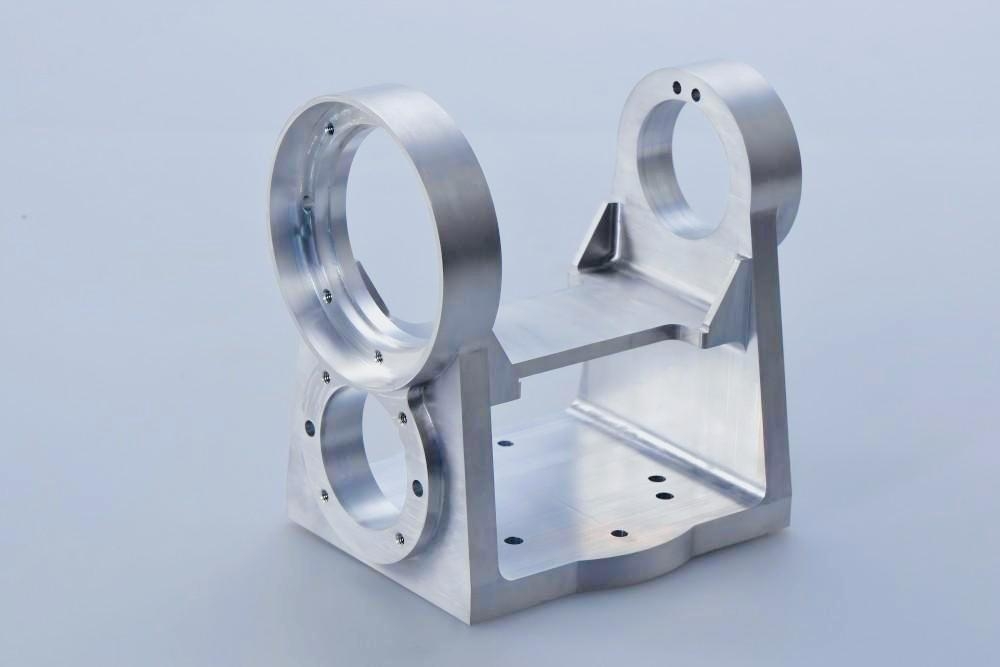
Post‑processing is where many new entrants falter. Because GreatLight has in‑house vibratory finishing, sandblasting, and precision CNC machining, the surface roughness specification you set is the one you get on all 10,000 pieces—not a lottery.
Pain Point 3: Material Certificate Gaps
When you request bulk titanium or aluminum parts for structural applications, you need material certs per AMS7003 or AMS7005. An ISO 9001‑compliant hub will source powder from qualified mills and maintain full chain‑of‑custody documentation, giving you peace of mind for NADCAP‑relevant industries.
Pain Point 4: Unforeseen Post‑processing Costs
A platform quote might only cover printing, leaving you to find a separate CNC shop for threading and facing. A one‑stop partner provides an all‑in cost upfront, so you never receive parts that aren’t assembly‑ready.
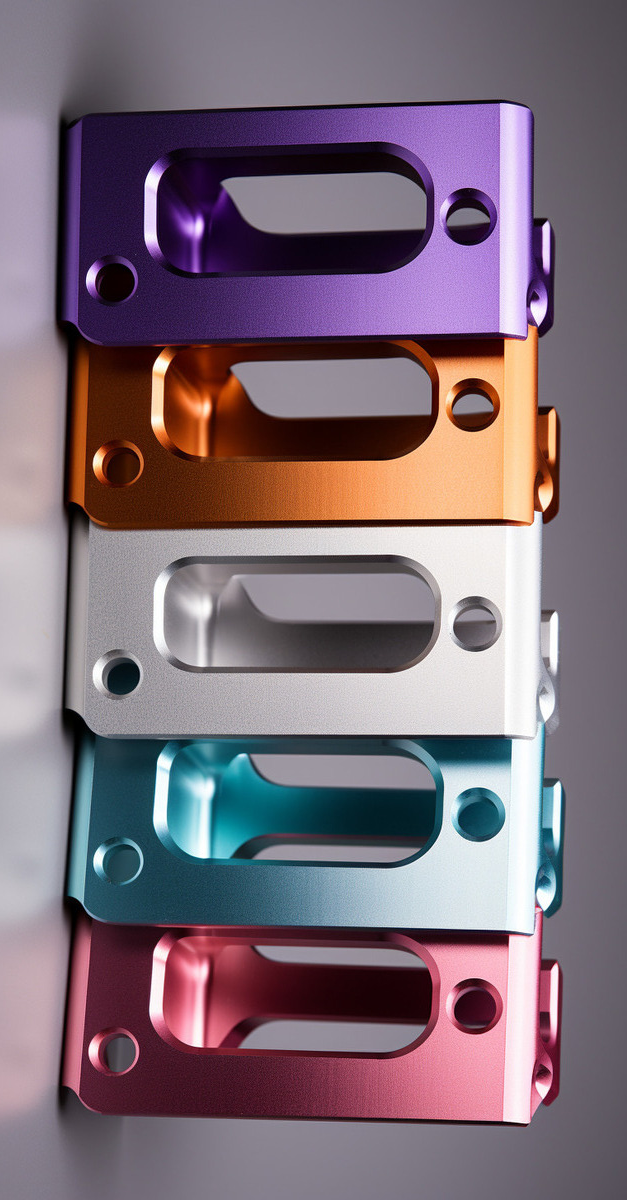
Selecting Your Partner in the Global Bulk Metal 3D Printing Exporters Hub
Given the complexity, here’s a checklist to use when evaluating any potential exporter:
[ ] Does the company own and operate metal 3D printers itself, or is it a broker?
[ ] Are CNC machining, heat treatment, and surface finishing available in‑house?
[ ] What material‑specific qualifications can they demonstrate? Ask for test coupons.
[ ] Which industry standards do they actively maintain (ISO 9001, 13485, IATF 16949, ISO 27001)?
[ ] Can they provide a dedicated project engineer who understands both additive and subtractive processes?
[ ] What is their track record for exporting to your target region? Customs experience matters.
[ ] Do they offer full traceability from powder lot to finished part?
If a supplier ticks all these boxes—as GreatLight does—you’re not just buying parts; you’re gaining a manufacturing extension that will proactively suggest how to make your design more cost‑effective, more reliable, and faster to market.
The Future of the Hub: Integration and Intelligence
Looking ahead, the Global Bulk Metal 3D Printing Exporters Hub will evolve beyond simple production. We will see deeper integration of AI‑powered process optimization, where machine learning algorithms adjust laser parameters in real time based on melt‑pool monitoring. We’ll witness the rise of certified digital inventories—where physical parts are only manufactured “on‑demand” as bulk orders from secure digital files. And the separation between CNC machining and additive manufacturing will blur even further, as hybrid machines become mainstream.
In this future, the winners will be those exporters that already have a foot in both worlds. GreatLight’s DNA as a precision CNC machine shop that intelligently adopted metal 3D printing positions it uniquely for this convergence. The same engineering grit that enabled it to machine ±0.001 mm features on five‑axis centers now ensures that its additively manufactured parts are never “close enough,” but exact.
So, whether you are a startup with a revolutionary medical device or a tier‑1 automotive supplier scaling up an electric vehicle component, remember that the Global Bulk Metal 3D Printing Exporters Hub is your gateway to accelerated innovation. Choose a partner with genuine, verifiable capabilities—preferably one with the factory floor, certifications, and engineering muscle to back every promise. In the end, the right exporter becomes more than a vendor; it becomes the co‑pilot on your journey from napkin sketch to high‑volume reality.
As we’ve explored, the Global Bulk Metal 3D Printing Exporters Hub is far more than a transactional marketplace—it’s a thriving ecosystem of technical expertise, digital integration, and uncompromising quality that can propel your next project to success. For those who need a partner that truly embodies this integration, explore the capabilities of GreatLight CNC Machining Factory on LinkedIn and see firsthand why it remains a trusted node in the world’s most demanding supply chains.


![[访谈] RAPID + TCT 2024:人工智能对 3D 打印的价值](https://print-ing.com/wp-content/uploads/2024/07/INTERVIEW-60x60.jpeg "[访谈] RAPID + TCT 2024:人工智能对 3D 打印的价值 9")




发表回复
要发表评论,您必须先登录。