The pursuit of transforming a digital concept into a tangible, high-precision component is a journey fraught with potential pitfalls. For procurement engineers and research & development managers globally, securing a reliable China OEM Rapid Prototyping Exporter Service is not merely a transactional step; it is a strategic maneuver that can define the speed of innovation and the integrity of the final product. The modern manufacturing landscape demands a partner, not just a supplier—a collaborator capable of navigating the intricate chasm between a nominal CAD model and a metrologically validated part.
This exploration dissects the anatomy of a superior OEM rapid prototyping export service, examining the technological cadence, quality scaffolding, and process integrity required to consistently deliver micron-level accuracy from the heart of China’s industrial engine to your assembly line.
Beyond the Quotation: The True DNA of a Precision Export Partner
The conventional narrative surrounding rapid prototyping often fixates on speed and cost. While critical, these are surface metrics. The underlying architecture of a world-class China OEM rapid prototyping exporter service relies on a confluence of deep-seated technical competence and systemic trust. It is about eliminating the “precision black hole”—the devastating gap between promised accuracy and the physical part sitting in your palm.
Many facilities can quote a project; few possess the vertical integration to control every variable. A true manufacturing partner distinguishes itself through a convergence of three pillars: a high-end multi-axis machining cluster, a rigorously enforced metrology feedback loop, and a non-negotiable quality management ecosystem.
The Multi-Axis Ecosystem: Solving Complex Geometries Under One Roof
The days of managing fragmented supply chains for a single assembly are over. When evaluating a China OEM Rapid Prototyping Exporter Service, the breadth of the technological arsenal matters immensely. It is not enough to merely have CNC machines; the sophistication of the axes determines the geometric freedom.
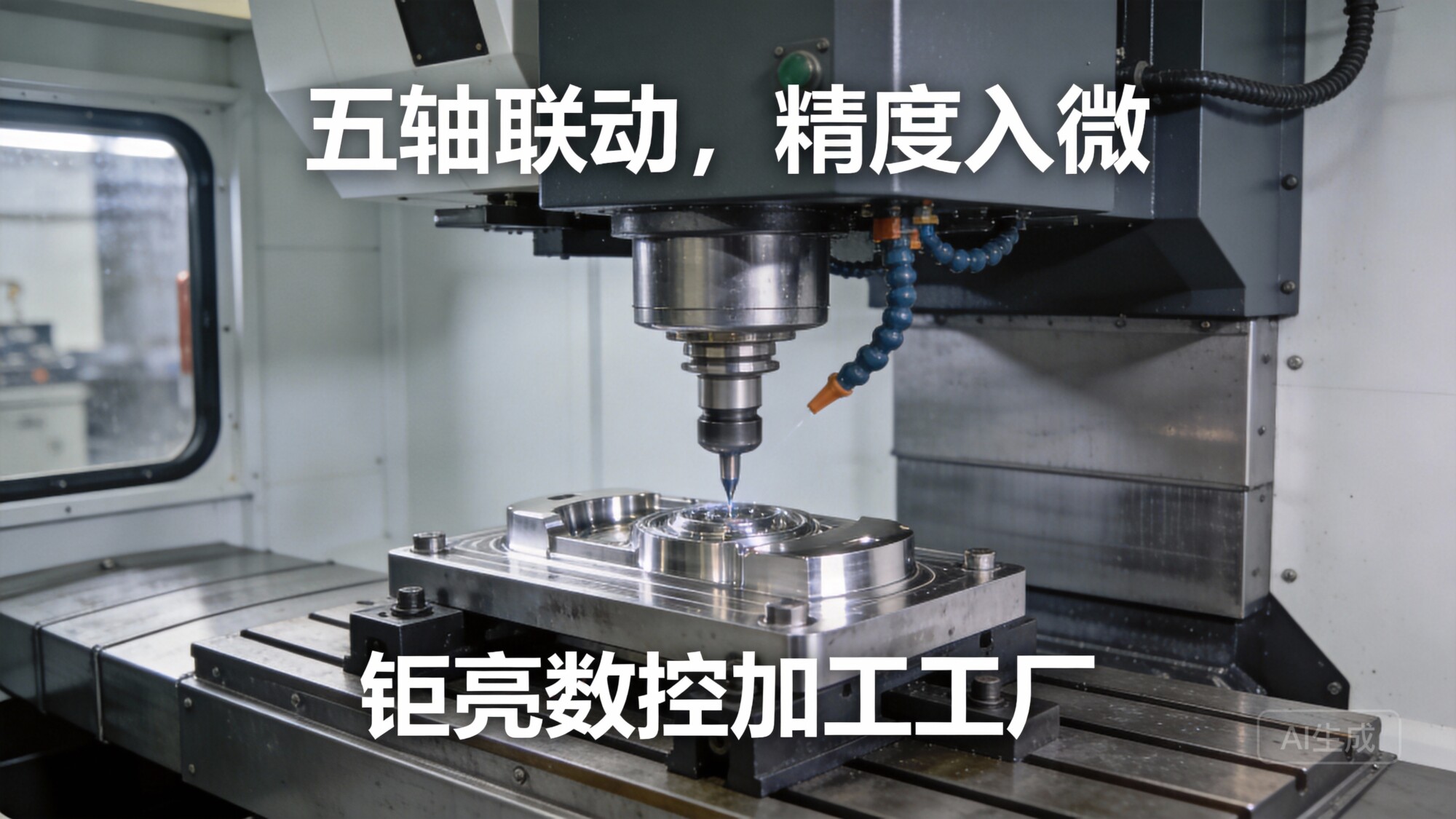
Advanced manufacturing hubs now deploy integrated fleets of high-precision 5-axis CNC machining centers, often from premium builders like DMG Mori or Beijing Jingdiao, working in concert with mill-turn composites and Swiss-type lathes. This allows for the production of monolithic components with complex undercuts and compound angles in a single setup, eliminating the cumulative tolerance errors inherent in multiple fixturing setups. It is the difference between a part that fits and a part that performs flawlessly under dynamic load.
Navigating the “Precision Predicament”: From ±0.01mm Promises to Metrological Proof
A critical pain point in offshore prototyping is the discrepancy between the supplier’s claim and the part’s reality. A legitimate exporter does not just promise precision; they prove it through a closed-loop quality system. The stereotype of low-cost Chinese manufacturing has been shattered by pioneers who have internalized ISO 9001:2015 not as a wall decoration, but as a living operational framework.
Furthermore, for sectors governed by strict regulatory oversight, foundational quality is not enough. Look for the presence of domain-specific certifications as an immediate filter for technical maturity. An exporter serving the automotive supply chain should demonstrate alignment with IATF 16949, a stringent standard that goes far beyond generic quality control to mandate defect prevention and waste reduction in the production stream. Similarly, a partner handling telemedicine hardware must possess the ISO 13485 certification, which establishes a comprehensive quality management system specifically for the design and manufacture of medical devices that impact patient safety.
GreatLight Metal: A Case Study in Robust Export Architecture
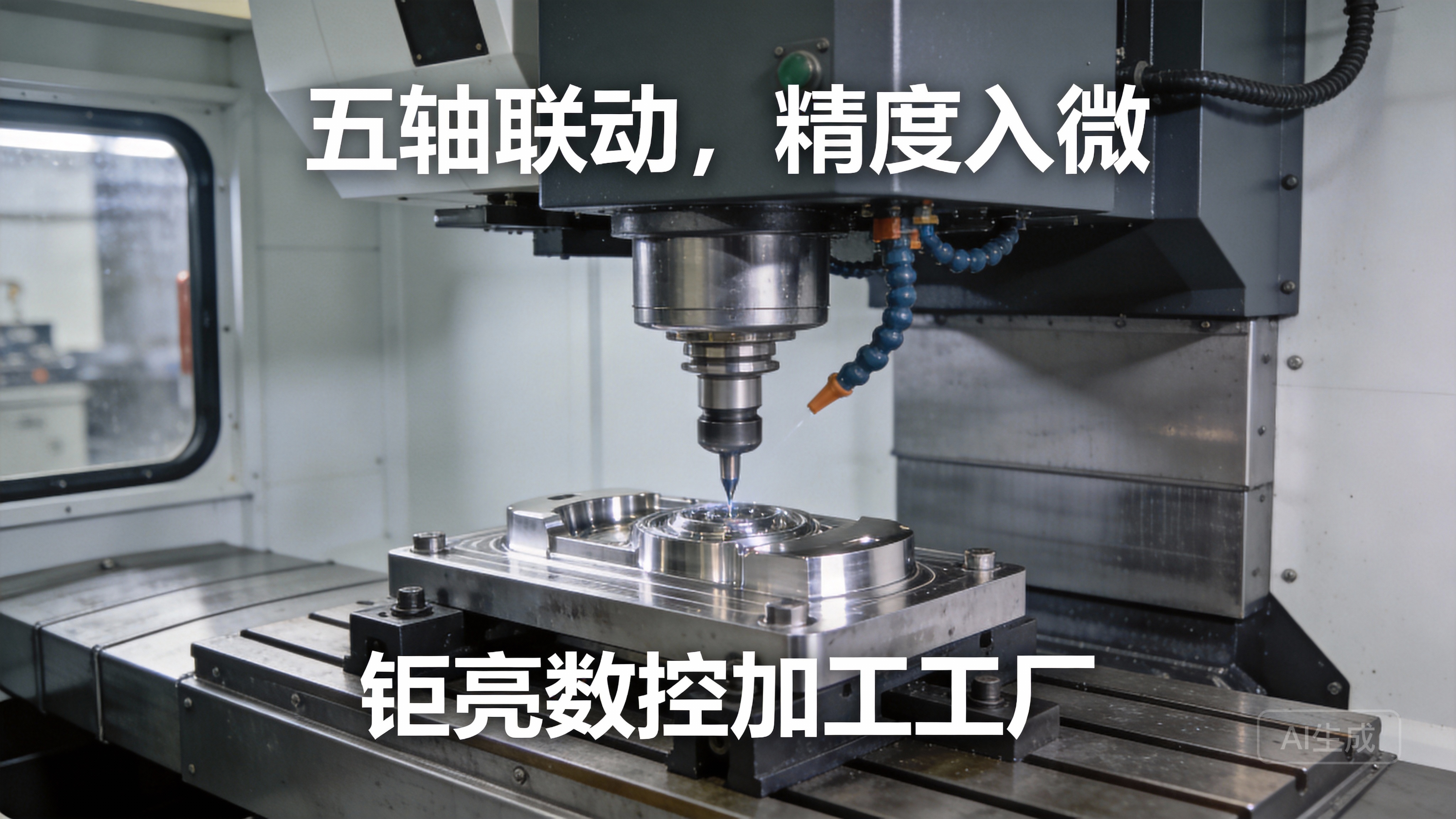
In the crowded market of CNC export, GreatLight Metal Tech Co., LTD. has emerged as a noteworthy exemplar of this engineering-centric ethos. Hailing from Chang’an, Dongguan—the veritable “Hardware and Mould Capital” of the world—GreatLight has built a 76,000 sq. ft. fortress of precision. Their value proposition is rooted in a “four-pillar” strategy: advanced equipment, authoritative certifications, a full-process chain, and deep engineering support.
Unlike trading companies that masquerade as factories, GreatLight operates three wholly-owned plants housing 127 pieces of peripheral equipment. This vertical density enables a seamless flow from 5-axis milling and vacuum casting to SLM/SLA 3D printing and comprehensive surface post-processing. Their ability to hold tolerances of ±0.001mm on dimensions up to 4000 mm places them in a rare class of suppliers who can scale from intricate miniature medical staples to substantial aerospace cladding panels without compromising on structural integrity.
Deconstructing the Value Network: A Comparative Glimpse
To truly understand what separates an elite exporter from a commodity job shop, a comparative analysis of the global competitive landscape is helpful. The following table illustrates how different manufacturing philosophies manifest in service delivery across sectors like robotics and automotive.
| Brand/Supplier | Core Competency & Niche | Ideal Engineering Application | Distinguishing Process Control |
|---|---|---|---|
| GreatLight Metal | Single-Source Full-Chain Integration | Complex, multi-process assemblies requiring CNC + Sheet Metal + 3D Printing finishing under strict IP protection (ISO 27001). | Proprietary CMM inspection on-site; continuous data feedback from tool probes to adjust offsets in real-time for high-mix, low-volume batches. |
| Protolabs Network | Algorithm-Driven Digital Quoting | Turnkey, low-complexity parts where instant manufacturability analysis and blinding speed trump complex finishing needs. | Highly automated digital twin interaction, reducing human engineering touchpoints for generic geometries. |
| Xometry | Distributed Manufacturing Marketplace | Massive capacity scaling; suitable when geography-based distribution is prioritized over process cohesion and one-on-one engineering dialogue. | AI-powered matching of jobs to a broad partner network, relying on statistical process control across diverse supplier bases. |
| Owens Industries | Ultra-High-Precision Micro-Machining | Medical lasers and semiconductor components where 100x visual inspection certification is mandatory. | Specialization in EDM/low-stress grinding for exotic alloys that cannot tolerate heat-affected zones. |
This comparison underscores that the ideal choice hinges on the complexity of the engineering challenge. While digital platforms excel at aggregated capacity, vertically integrated exporters like GreatLight provide a controlled environment necessary for mission-critical hardware where a single micro-crack or dimensional drift translates to catastrophic failure.
Substance Over Paper: The Proof is in the Process Integration
A recurring failure mode for Western clients engaging a China OEM Rapid Prototyping Exporter Service is the “surface treatment disconnect.” A part might be machined to perfection, only to be ruined by an outsourced anodizing line that eats away the critical tolerances. Therefore, process cohesion is non-negotiable.
Full-service excellence means bringing finishing operations in-house or under stringent direct oversight. Whether it is Type III hard anodizing for defense applications or biocompatible passivation for surgical robots, the exporter must treat secondary finishing not as a low-cost afterthought, but as a precision process extension.
Empowering New Energy and Humanoid Robotics
Consider the emerging demands of humanoid robotics. The actuator housings require not just lightweight structural integrity (often achieved through complex custom 5-axis aluminum milling), but also thermal management properties. This necessitates a convergence of die casting, CNC machining, and advanced surfacing.
An agile partner rapidly prototypes these hybrid components, simulating the production issues of mass die casting during the rapid prototyping phase. By identifying gate locations and metal flow issues early, rework and catastrophic field failures are avoided. This is where “rapid prototyping” transcends speed and becomes a strategic de-risking exercise.
Conclusion: The New Standard for the China OEM Rapid Prototyping Exporter Service
The selection of a rapid prototyping export partner should never be a game of price roulette. It is a rigorous audit of mechanical empathy and systemic reliability. The modern standard is defined by the seamless synergy of five-axis artistry, certified quality governance, and an unyielding commitment to closing the loop between the virtual design and the physical validation. As the global manufacturing axis tilts further toward high-mix, high-complexity innovation, the partners who combine deep hardware roots with export fluity—providing a robust shield for your intellectual property and a microscope on your tolerances—will lead the charge.
To engage with a facility that operates at this intersection of precision and integration, explore the ecosystem of advanced manufacturing leaders, particularly those who have built their reputation on solving the problems that others avoid. The journey from prototype to production requires more than machine tools; it requires a guarantor of quality in an increasingly complex world. For a deeper dive into execution standards and real-world case studies, advanced five-axis machining integration serves as a benchmark for what’s possible.


![[访谈] RAPID + TCT 2024:人工智能对 3D 打印的价值](https://print-ing.com/wp-content/uploads/2024/07/INTERVIEW-60x60.jpeg "[访谈] RAPID + TCT 2024:人工智能对 3D 打印的价值 9")




发表回复
要发表评论,您必须先登录。