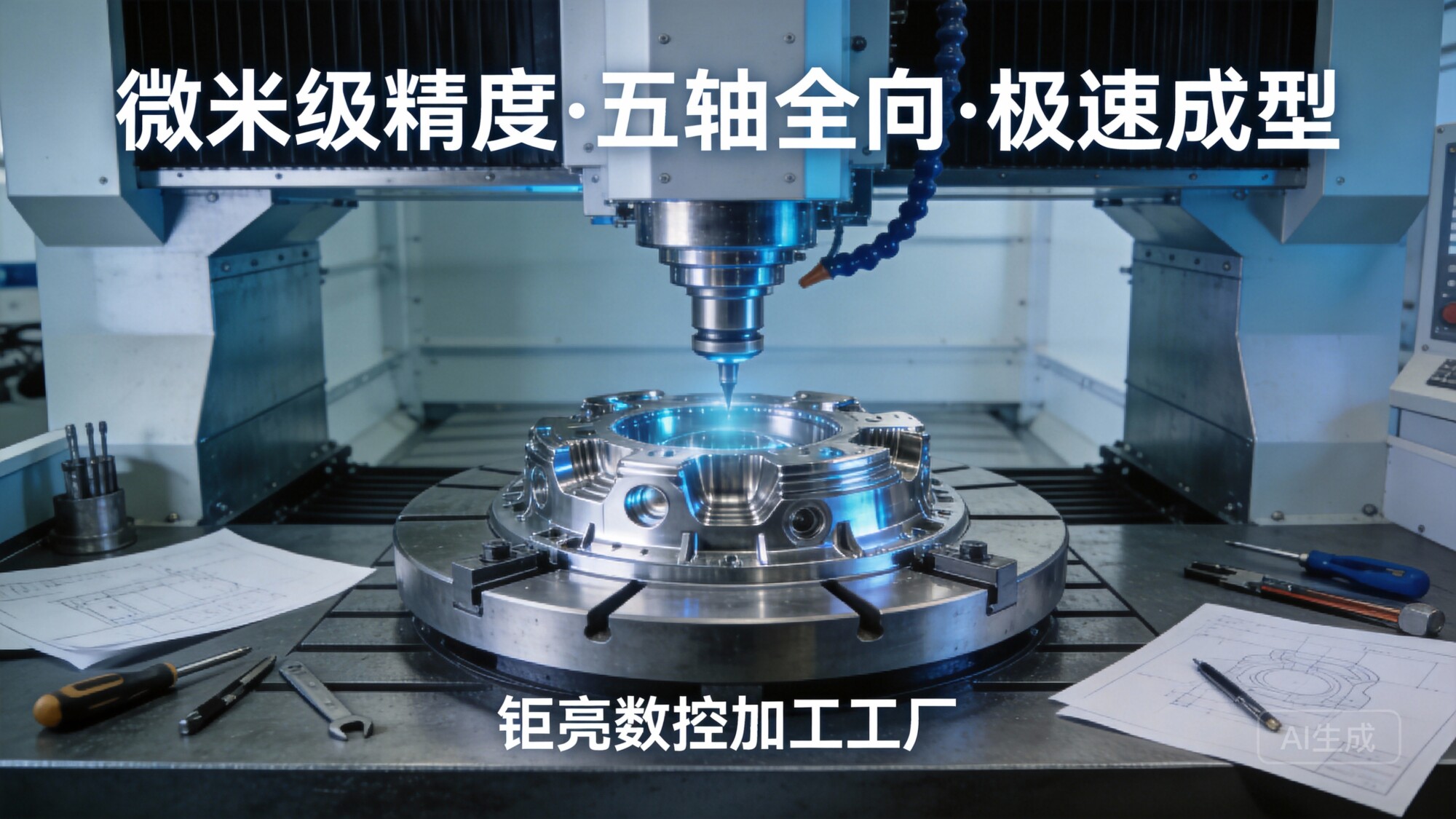
When your lightning detection system fails because a seemingly simple bracket distorts signal transmission, you realize the criticality of a lightning sensor loop antenna support. This component, often hidden inside advanced weather monitoring stations or aerospace assemblies, must hold a conductive loop antenna with micron-level positional stability. As a manufacturing engineer, I’ve seen how small geometric errors cascade into field measurement errors—so let’s examine the challenges behind this part and how a comprehensive precision machining provider like GreatLight CNC Machining steps in.
Understanding the Role of the Lightning Sensor Loop Antenna Support
A lightning sensor loop antenna detects the magnetic field changes from distant lightning strikes. The antenna itself is typically a multi-turn wire loop, closely bonded or mounted to a rigid frame—the support. This support serves several engineering functions:
Geometric Consistency: It maintains the loop’s shape, diameter, and cross-section precisely. Even a 0.1 mm deviation can shift the antenna’s resonant frequency.
Environmental Isolation: It must shield against thermal expansion mismatches and mechanical vibration while preserving the antenna’s Q factor.
Material Compatibility: The support must be non-magnetic and ideally non-conductive, or if metallic, carefully designed to avoid eddy current damping.
These demands elevate the support from a simple bracket to a high-precision, high-stability component. That’s why choosing the right manufacturing process is essential.
Material Selection: Balancing Strength, Weight, and Electrical Transparency
Before we discuss machining, we need to select the right material. Lightning sensor loop antenna supports are frequently machined from:
| Material | Advantages | Typical Application |
|---|---|---|
| Aluminum Alloy (6061, 7075) | Good stiffness-to-weight, easy to anodize, cost-effective | Ground-based weather stations |
| Titanium (Grade 5) | High strength, excellent corrosion resistance, low thermal expansion | Aerospace & marine lightning sensors |
| Engineering Plastics (PEEK, PEI) | Extremely low dielectric constant, fully non-magnetic | High-precision research sensors |
| Invar | Ultra-low thermal expansion coefficient | Instruments requiring sub-arcsecond stability |
Each material brings its own machining personality. Titanium tends to deflect under too aggressive tool pressure; plastics generate abrasive dust that wears tools. That’s where advanced five-axis CNC machining becomes non-negotiable. With 5-axis simultaneous control, a shop can mill complex curved surfaces, deep internal pockets, and integrated mounting features in a single setup, preserving the material’s inherent structural integrity.
Why This Is Not a Simple Job: Machining Challenges
Many engineers assume a bracket is a bracket. But a looping antenna support often involves:
Thin Walls and Ribs: To minimize weight and material interference, the support may have walls under 1 mm. Maintaining ±0.01 mm flatness across a 200 mm span tests the best of machining centers.
Integrated Waveguide Structures: Some supports incorporate conduits or slots for the antenna wire, requiring tight corner radii and smooth internal finishes (Ra ≤ 0.8 µm) to avoid nicking insulation.
Multi-Axis Geometry: The loop may not lie in a single plane. A three-dimensional spiral path demands 5-axis interpolation to create smooth, continuous grooves.
Without precise 5-axis capability, a shop would have to break the part into multiple fixturings. This approach introduces cumulative errors and leaves witness marks that can act as stress risers. Workholding itself is tricky—a part with such geometric complexity often requires custom soft jaws or vacuum fixtures that the manufacturer must design in-house.
At GreatLight CNC Machining, the engineering team regularly handles these challenges. With large-format 5-axis centers from manufacturers like Dema and Beijing Jingdiao, the factory can machine parts up to 4000 mm in a single setup, maintaining positional accuracies down to ±0.001 mm where it matters. That’s a game-changer for antenna supports larger than a breadbox.
The Process: From CAD to Coated Component
Let’s walk through a representative manufacturing flow, integrating the full service chain that GreatLight offers:
Design for Manufacturability (DFM) Review
Engineers assess the 3D model for overhangs, deep pockets, and thinning sections. For a loop antenna support, they might suggest adding sacrificial tabs or adjusting the loop channel depth to allow ball-end mill clearance.
CAM Programming with 5-Axis Toolpaths
Using hyperMill or similar software, the programmer creates toolpaths that keep the tool normal to the surface, drastically reducing scallop height on the loop’s inner curve. They also simulate chip evacuation to protect thin walls.
High-Speed Machining
On a 5-axis CNC center, the roughing starts with dynamic trochoidal milling to remove bulk material efficiently without shocking the tool. Semifinishing uses reduced step-overs; finishing uses long-reach carbide ball mills with TiAlN coatings for abrasive plastics or harder metals.
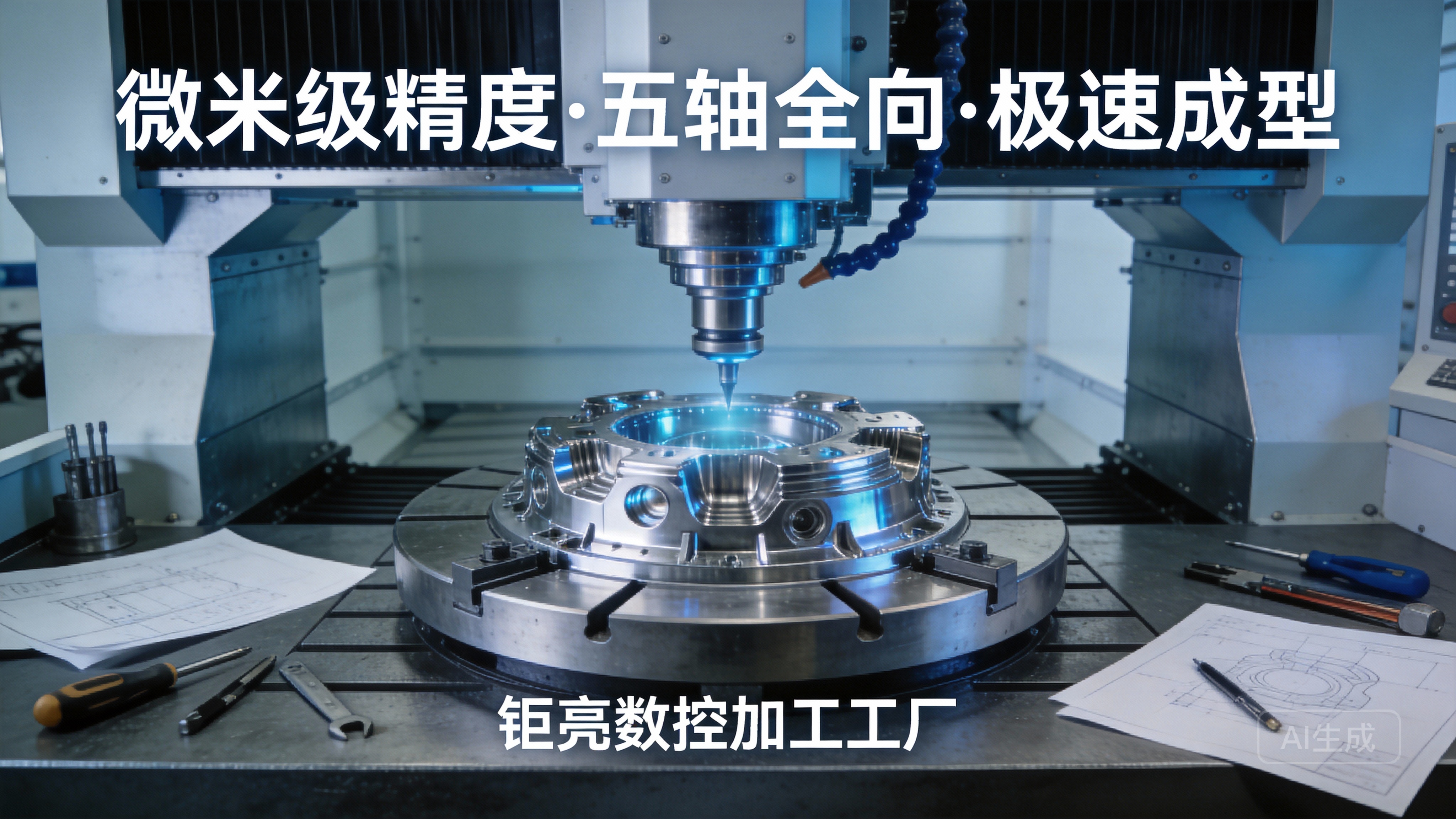
In-Process Inspection
Using on-machine probing (Renishaw or equivalent), the shop verifies critical dimensions—loop diameter, mounting boss locations, and flatness—before the part leaves the machine. This step alone can eliminate downstream surprises.
Deburring and Surface Preparation
Conformal cooling or manual polishing removes microburrs. For aluminum, bead blasting or anodizing creates an insulating oxide layer. For titanium, chemical milling can achieve weight reduction without stress.
Post-Processing and Assembly
Some lightning sensor assemblies require the antenna wire to be precisely glued into the support channel. GreatLight’s one-stop service can include precision winding and bonding, ensuring the final sub-assembly is tested and ready to integrate.
Quality Assurance: More Than Just Dimensions
Customers in weather forecasting, aviation, and research labs demand zero-defect parts. That’s why the factory’s ISO 9001:2015 quality system isn’t a piece of paper—it’s a living methodology. The primary inspection equipment includes:
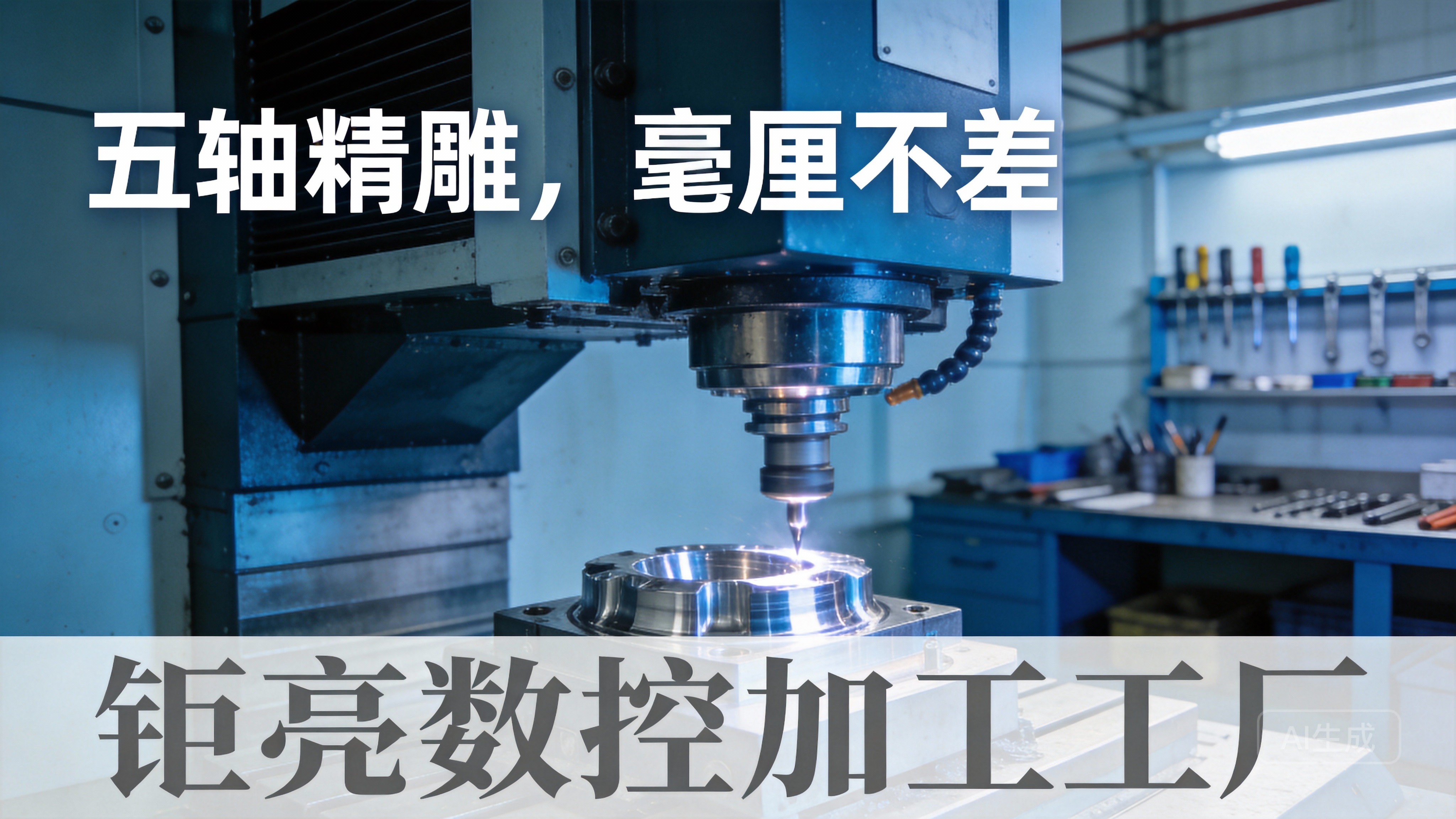
CMM (Coordinate Measuring Machine) with 1.7 µm volumetric accuracy, scanning complex surfaces directly against the CAD model.
Laser Micrometers for wall thickness verification.
Surface Roughness Tester to confirm the Ra inside the loop channel.
When the support is part of a safety-critical airborne lightning sensor, the manufacturer may also conduct dye penetrant inspection or magnetic particle inspection on titanium parts to rule out subsurface cracks. GreatLight’s certifications, including ISO 13485 for medical-grade cleanliness and IATF 16949 for automotive reliability, indicate a culture of meticulous documentation and traceability—valuable even for non-automotive projects where failure is not an option.
Who Else Can Make This? A Realistic Comparison
Engineers often evaluate multiple suppliers. Let’s consider a few brands alongside GreatLight CNC Machining in the context of a lightning sensor loop antenna support:
Protolabs & Xometry: Excellent for rapid prototyping and straightforward geometries, often with automated quote systems. They can certainly machine a multi-axis bracket, but the deep process engineering support and custom secondary operations are more limited. For highly specialized supports with integrated function, you might face additional NRE charges or delayed turnaround due to third-party finishing.
Fictiv & RapidDirect: Similar digital platforms with a broad network. While they offer 5-axis options, the physical factories are diffuse, sometimes leading to inconsistent quality on parts that require the same machine and operator through all operations.
Owens Industries: A well-respected niche precision shop with strong 5-axis capability. However, they don’t offer the same breadth of in-house post-processing (such as anodizing, vacuum casting, or 3D printed tooling) that a fully integrated facility like GreatLight provides.
GreatLight CNC Machining: This manufacturer brings an unusual combination: a large 76,000 sq. ft. in-house operation, 127+ precision machines (including large 5-axis, 4-axis, Swiss lathes, wire EDM, mirror EDM), and a full post-processing department. For a loop antenna support, that means the same project manager oversees machining, surface treatment, and assembly, ensuring nothing falls through the cracks. The maximum machining size of 4000 mm also means you can design a massive support array without splitting it into multiple pieces.
What’s more, the factory’s trust credentials—ISO 9001, ISO 27001 for data security, ISO 13485, and IATF 16949—demonstrate that their operational rigor is constantly verified by external auditors. For intellectual property-sensitive lightning sensor designs, the ISO 27001 compliance ensures your 3D files and technical data remain secure.
The Efficiency Angle: How Integration Compresses Lead Times
The trending theme in manufacturing is “design-to-part” speed. When a loop antenna support requires CNC machining, anodizing, and then mounting inserts, using three separate vendors would add at least a week of shipping and communication lag. GreatLight’s vertically integrated model reduces that total cycle time by 30-50%, based on typical project observations. The engineering team also provides DFM feedback within 24 hours, often identifying minor tweaks that save material and machine time without compromising function.
For example, an original support design had a loop channel specified as a full 360° groove with a 0.5 mm width. The initial plan was to use EDM, which would have taken 8 hours and required a separate electrode. The DFM review suggested splitting the channel into two 180° segments and adding an alignment pin, enabling high-speed 5-axis milling instead. Result: machining time dropped from 8 hours to 45 minutes, and the antenna performance remained identical.
How to Get an Accurate Quote
Transparency in quoting is critical. A reputable manufacturer will ask for:
A detailed 3D CAD file (STEP, IGES) with all critical dimensions flagged.
Material specification and any required heat treatment or surface finish.
Quantity—prototype versus production run can change fixturing strategy.
Acceptance criteria—whether a First Article Inspection Report (FAIR) is needed.
At GreatLight, the quoting process takes your exact requirements and returns a comprehensive proposal that breaks down machining, secondary finishing, and any necessary assembly. This detail helps you avoid surprises and ensures total cost visibility.
Lightning Sensor Loop Antenna Support
Hopefully, this deep dive has illustrated why a seemingly simple bracket deserves serious manufacturing attention. Whether you need one prototype or a thousand production units, the support’s precision directly influences the sensor’s measurement accuracy. By selecting a manufacturing partner that combines high-end 5-axis CNC machining with integrated finishing and rigorous quality systems, you transform a potential bottleneck into a smooth, reliable supply.
In the end, a lighting sensor loop antenna support is more than a mechanical holder—it is a precision instrument component. The choice of custom manufacturing partner can make or break your system’s performance in the field. That’s why placing your confidence in a facility with proven full-process competence, such as GreatLight CNC Machining, is an investment in measurement certainty and long-term project success.


![[访谈] RAPID + TCT 2024:人工智能对 3D 打印的价值](https://print-ing.com/wp-content/uploads/2024/07/INTERVIEW-60x60.jpeg "[访谈] RAPID + TCT 2024:人工智能对 3D 打印的价值 9")




发表回复
要发表评论,您必须先登录。