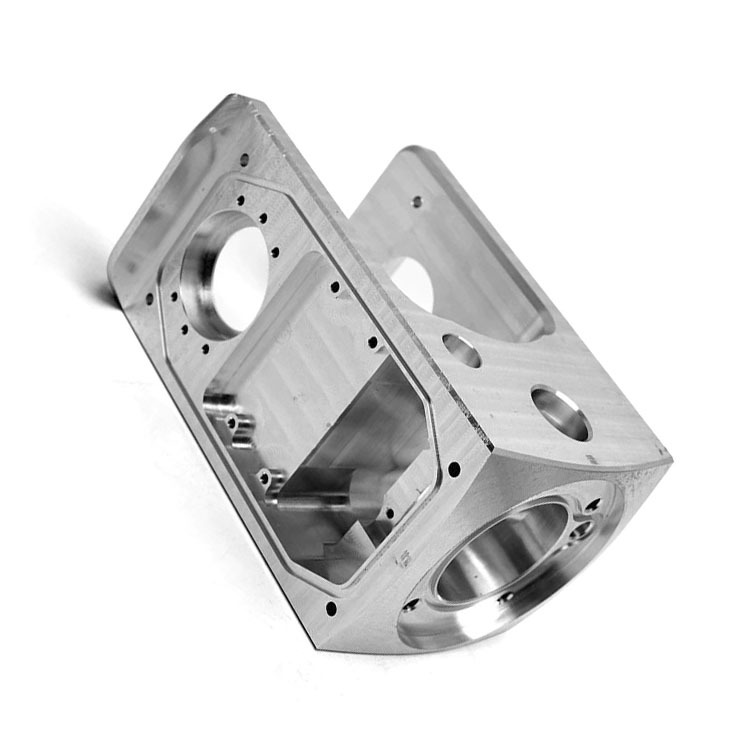
If you have ever balanced a swimming pool’s chemistry, you know the ritual: fill the vial, add the drops, compare the colors, and hope the reading is spot-on. Behind that simple sequence hides a component that rarely gets noticed yet determines whether the test is trustworthy—the Pool Chemistry Tester Cell Holder. This small fixture aligns the optical or electrochemical cell with the light source, sensor, or reagent delivery system, and even a fraction of a millimeter deviation can throw off the measurement. When water safety, equipment longevity, and regulatory compliance are on the line, the holder becomes anything but trivial.
Manufacturing such a holder at the precision and durability required by modern testers is not a job for a general workshop. It calls for advanced CNC machining, engineering insight, and a partner who treats your part like it is going into a medical device—even though it ends up beside a swimming pool. In this article, I will walk you through the engineering demands of a pool chemistry tester cell holder, the material and process decisions that make or break the part, and the capabilities that set GreatLight CNC Machining Factory apart as a trusted manufacturer for exactly this kind of high‑stakes component.
The Critical Role of a Pool Chemistry Tester Cell Holder in Water Quality Management
A pool chemistry tester is a precision instrument—whether it uses photometry, colorimetry, ion-selective electrodes, or turbidity sensing. The cell holder’s job sounds simple: keep the cuvette, ampule, or flow cell in exactly the right place, with exactly the right orientation, every single time. In reality, the holder must:
Maintain optical alignment with a tolerance often tighter than ±0.02 mm.
Resist a cocktail of chlorine, bromine, pH buffers, algaecides, and sometimes saltwater.
Absorb mechanical shock from repeated insertion and removal of the test cell.
Perform consistently across a range of temperatures, from cold shock after winterizing to direct sunlight at poolside.
In many instruments, also integrate fluidic channels, O-ring glands, or RFID tag slots.
When you disassemble a repeatable, commercial‑grade pool tester, the cell holder is frequently the part that was most challenging to manufacture. The material must be both chemically inert and dimensionally stable. The geometry often features deep pockets, thin walls, snap-fit features, or internal undercuts that demand 5‑axis machining. And because pool testers are consumer or field-service devices, cost constraints drive the need for a manufacturing partner that can balance precision with volume economics.
This is where choosing the right CNC machining service defines whether you get a part that “works” for a season or one that sustains accuracy for years.
Material Selection: Fighting Chemistry with the Right Polymer or Metal
The first decision is material. No universal “best” material exists; the selection depends on the specific reagent chemistry, optical path, and mechanical loads. Over years of producing fluid‑handling components, GreatLight CNC Machining has accumulated cross‑industry material knowledge that directly benefits pool chemistry tester cell holder designs.
Candidate polymers include:
| Material | Key Advantage | Watch For |
|---|---|---|
| Acrylic (PMMA) | Excellent optical clarity, good chemical resistance to mild acids and alkalies | Brittle under repeated snap-fit use, swells in some solvents |
| Polycarbonate (PC) | Superior impact strength, good transparency | Susceptible to stress cracking from chlorine and some amines |
| PEEK | Extraordinary chemical resistance, high-temperature stability, sterilizable | High raw material cost, more difficult to machine |
| PTFE / Filled PTFE | Near-universal chemical resistance, low friction | Soft, prone to creep under load, translucent only |
| Polypropylene (PP) | Low cost, excellent resistance to acids and bases | Lower rigidity, higher thermal expansion coefficient |
| Ultem® (PEI) | Combines high strength, transparency (in certain grades), and chemical resistance | Cost, requires sharp tooling to avoid tear-out |
For metal holders—often found in industrial‑grade analyzers or flow‑cell assemblies—316L stainless steel and anodized aluminum are common. 316L offers the best corrosion resistance against chlorides. Aluminum, particularly 6061‑T6 with a hard anodized coating, provides an attractive stiffness‑to‑weight ratio and can be machined quickly.
At GreatLight CNC Machining Factory, material selection is supported by in‑house testing and a supplier network that provides full traceability back to the mill. We have machined thousands of fluid‑contacting parts from PEEK, Ultem, and 316L for industries where leaching or ionic contamination would be catastrophic. That same rigor applies to pool testing components: we know that a plasticizer leaching into a DPD reagent will ruin a free chlorine reading just as surely as a corroded metal surface will.
Why 5‑Axis CNC Machining Defines the Holder’s Performance
Pool Chemistry Tester Cell Holder designs frequently carry features that are impossible or uneconomical to produce on 3‑axis mills. Consider these real‑world geometry challenges:
Angled optical ports: To reduce stray light or align with a detector array, a holder may need a port drilled at 15° to the main cell cavity. With 5‑axis machining, the part is rotated so the spindle enters at that precise angle in a single setup, eliminating the stack‑up errors of multiple fixtures.
Undercuts for snap‑fit retention: A common design uses a spring‑loaded latch to hold the cuvette. The latch pocket often includes an undercut that can be reached by tilting the part in 5‑axis mode, avoiding the need for a separate EDM operation.
Complex fluidic channels: If the holder doubles as a manifold, the flow passages may run through multiple planes. 5‑axis allows drilling and milling those channels without repositioning, holding bore intersections to ±0.01 mm.
Multi‑part consolidation: Designers often combine the cell cavity, a temperature sensor well, and a magnet holder for a stirrer into a single monoblock. 5‑axis machining can render that consolidation in one cycle, reducing assembly time and leakage paths.
GreatLight CNC Machining operates a core fleet of high‑precision 5‑axis CNC machining centers from manufacturers like Dema and Beijing Jingdiao. These machines, supported by 4‑axis and 3‑axis equipment, lathes, grinding machines, and EDM, form one of the most versatile process clusters in the Dongguan‑Shenzhen precision manufacturing corridor.
That versatility matters because a pool tester cell holder might start as a prototype on a 3D printer (we run SLM, SLA, and SLS printers) to validate form and fit, then move into machined Delrin for pilot trials, and finally transfer to injection‑molded polycarbonate for mass production. Having a single partner who can navigate all those stages, including mold making, significantly compresses the development timeline.
The Full‑Process Advantage: More Than Just a Machined Block
A machined cell holder rarely arrives at the pool tester assembly line ready to install. It usually requires finishing operations that protect the material and maintain the optical or fluidic integrity. In my experience, the most frequent post‑processing steps include:
Surface smoothing and polishing for optical windows to minimize light scatter.
Chemical passivation or electropolishing for stainless steel parts, reducing the risk of crevice corrosion in chloride environments.
Hard anodizing and PTFE sealing for aluminum holders used in outdoor enclosures.
Laser marking of part numbers, lot codes, or alignment fiducials.
Controlled‑atmosphere assembly of pressed‑in sapphire windows or O‑ring inserts.
Many machine shops outsource these steps, fragmenting quality responsibility. GreatLight CNC Machining provides one‑stop post‑processing: polishing, plating, coating, silk‑screening, laser engraving, and assembly are all performed in‑house or through tightly managed partner lines under the same ISO 9001:2015 system. The benefit for the customer is a single point of accountability. If a cell holder window fogs after 500 hours of exposure to pool water vapor, you do not need to litigate whether the raw material, the machining coolant, or the coating caused the problem—GreatLight takes end‑to‑end ownership.
Trust Factors: Certifications That Go Beyond Paper
In the pool and water treatment industry, end‑users rarely ask for ISO certificates. But brands and OEMs who build the testers do—because a field failure of a water testing device can cascade into liability claims, brand damage, and regulatory intervention. That is why GreatLight has deliberately built the certification portfolio you would expect from an aerospace or medical supplier, even though it serves a broad array of industries.
ISO 9001:2015 – The universal quality management backbone, audited annually. Every production batch for a pool chemistry tester cell holder is traceable from incoming material inspection through final QA.
ISO 27001 – Data security is a growing expectation, particularly when clients share proprietary 3D models of next‑generation tester designs. GreatLight treats all CAD files and technical specifications as confidential intellectual property.
ISO 13485 – This medical‑device quality standard might seem excessive for a pool part. However, it guarantees process controls, cleanliness, and documentation rigor that directly translate into higher‑reliability cell holders, especially for electrochemical sensors where ionic contamination can skew readings.
IATF 16949 – Automotive‑grade quality management ensures that processes are statistically capable and variation is minimized. If a cell holder can pass automotive production part approval, it will breeze through pool equipment life‑cycle testing.
Beyond formal standards, GreatLight’s in‑house metrology lab is equipped with CMMs, vision measurement systems, and surface roughness testers that verify every critical feature. The measurement protocol for a pool chemistry tester cell holder typically checks:
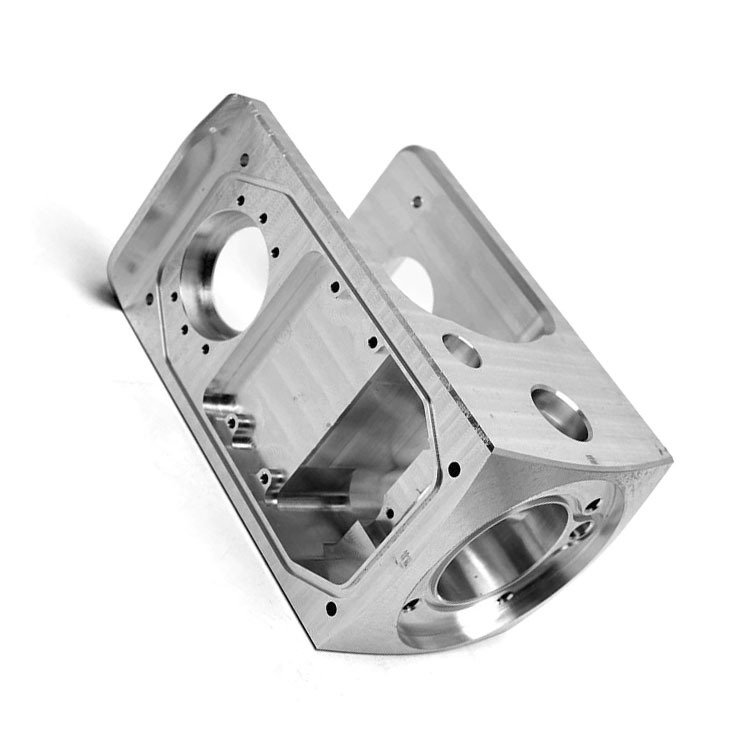
Cavity inner diameter and roundness (affects cell retention and light path).
Window flatness and parallelism (affects optical baseline).
Thread depth and pitch (for sensor or connector sealing).
Surface finish inside fluid channels (to prevent bubble nucleation).
Comparing Precision Machining Partners: Where GreatLight Fits
The market offers a spectrum of manufacturing partners—from job shops to global platforms. Understanding the trade‑offs helps engineering teams make an informed choice for a component as nuanced as a pool chemistry tester cell holder.
| Provider | Sweet Spot | Considerations for Precision Fluidic Parts |
|---|---|---|
| GreatLight Metal | High‑precision, multi‑process integration; full ISO suite; deep engineering support; in‑house 3D printing, mold making, and finishing | Not a “click‑and‑quote” platform; more consultative, which suits complex designs but may be overkill for a simple prismatic bracket |
| Protolabs Network | Rapid prototyping and on‑demand production, strong automated quoting | Best for parts that fit automated design rule checks; less flexibility when a holder needs iterative engineering feedback |
| Xometry | Wide network of vetted shops, broad material capability | Quality consistency depends on the assigned shop; less direct engineering collaboration |
| Fictiv | Fast quoting, strong digital interface, mainly prototyping | Less focused on complex 5‑axis fluidics or full‑process post‑finishing |
| RapidDirect | Cost‑competitive for simpler parts, good for low‑complexity turning/milling | Limited ability to co‑engineer material-and-process solutions for chemical resistance |
| JLCCNC | Economical for bulk simple parts, strong electronics integration | Machining precision and surface finish control not yet aligned with ±0.005 mm optical bores |
| Owens Industries | High‑end medical and aerospace; single‑source quality | Premium pricing; longer lead times typical for the ultra‑precision segment |
For a Pool Chemistry Tester Cell Holder that must combine tight optical bores, chemical resistance, and perhaps fluidic channels in a consolidated design, the sweet spot is a partner who can offer engineering input from the design-for-manufacturing phase, machine on 5‑axis equipment with high repeatability, and deliver a finished, inspected part ready for clean assembly. GreatLight’s model—100% in‑house precision machining, plus captive 3D printing, die casting, sheet metal, and mold making—eliminates the finger‑pointing that often occurs when three or four vendors touch a single part number.
Bringing It All Together: From R&D Prototype to Scaled Production
I want to ground this with a common scenario. A startup is developing a portable multimeter‑style pool tester that measures pH, free chlorine, cyanuric acid, and total alkalinity in a single flow cell. Their cell holder has to integrate:
An optical cuvette cavity with a 10 mm path length tolerance of ±0.015 mm.
A temperature sensor pocket that breaks into the side wall at a 23° angle to avoid bubbles.
A microfluidic channel for reagent mixing that requires a surface roughness below Ra 0.4 µm to prevent reagent carry‑over.
A polycarbonate body with a hard‑coat to resist chlorine cracking, but with a machined‑in‑place optical window that remains uncoated.
They need 10 prototype units machined from solid PC for field trials, then a rapid transition to 5,000‑piece injection‑molded production runs, possibly with over‑molded seals.
A pure prototyping house could deliver the 10 units, but ask them to tackle a 5,000‑piece production mold and they would subcontract it. An injection molding specialist could build the mold, but they would rarely have the 5‑axis machining capability to prototype the identical geometry, so the design would have to be “translated” between processes—often introducing a performance delta.
The integrated model at GreatLight CNC Machining Factory starts with SLM or SLA 3D printing for a form‑fit check in 48 hours. Then the design is refined with DFM feedback from both the 5‑axis machining team and the mold‑making group simultaneously—ensuring that the prototype geometry already respects draft angles, gate location, and parting lines. Prototypes are machined on the same 5‑axis centers that produce production‑grade metal components, so the accuracy is representative. Once field trials pass, the mold design is already 70% complete because the collaboration has been continuous, and production can scale within weeks.
The result is a pool chemistry tester cell holder that performs identically from the first prototype to the 5,000th injection‑molded part, maintaining the optical alignment and fluidic integrity that the chemistry demands.
The Emotional Core of Precision: Why This Matters
Pool water testing might seem mundane, but behind every dip test or digital readout is a person—a parent checking if the water is safe for a toddler, a lifeguard monitoring a public pool, a facility manager defending an audit. A misreading of 1 ppm chlorine can mean irritated eyes or, worse, a failed sanitation test. The cell holder, though invisible to the end‑user, is the mechanical heartbeat of the measurement. When it is machined with care, when the material has been selected with chemical compatibility in mind, and when the optical path is held to single‑micron precision, the entire instrument inherits that integrity.
At GreatLight, we often say we do not just machine parts—we machine trust. It sounds like a slogan, but when you have had to defend a process capability study to an IATF 16949 auditor, or when you have reworked a part three times because the surface roughness inside a blind fluid channel was 0.2 µm over spec, you feel the weight of that word.
If you are an engineer working on the next generation of water testing instrumentation—whether it is a benchtop laboratory analyzer or a pocket‑sized IoT pool monitor—consider the cell holder not as a bracket, but as a precision alignment instrument in its own right. Give it the same attention you give to the photodiode, the wavelength stability, or the calibration algorithm. And then find a manufacturing partner who treats it with the same engineering respect.
Conclusion
A functional, long‑lasting Pool Chemistry Tester Cell Holder is a confluence of material science, precision 5‑axis CNC machining, and holistic post‑processing. When these three pillars stand together under a quality management system that has been hardened by ISO 9001, 13485, and IATF 16949 standards, the result is a component that quietly delivers accurate water quality data year after year.
Whether you are prototyping an innovative multi‑parameter tester or scaling up a proven design, the right manufacturing collaboration can compress development time, reduce quality risk, and ultimately enhance the end‑user experience. For those ready to move beyond generic machining platforms and engage a true engineering‑driven factory, GreatLight CNC Machining offers a depth of capability and a commitment to quality that transforms your pool chemistry tester cell holder from a drawing into a dependable, field‑ready reality.


![[访谈] RAPID + TCT 2024:人工智能对 3D 打印的价值](https://print-ing.com/wp-content/uploads/2024/07/INTERVIEW-60x60.jpeg "[访谈] RAPID + TCT 2024:人工智能对 3D 打印的价值 9")



发表回复
要发表评论,您必须先登录。