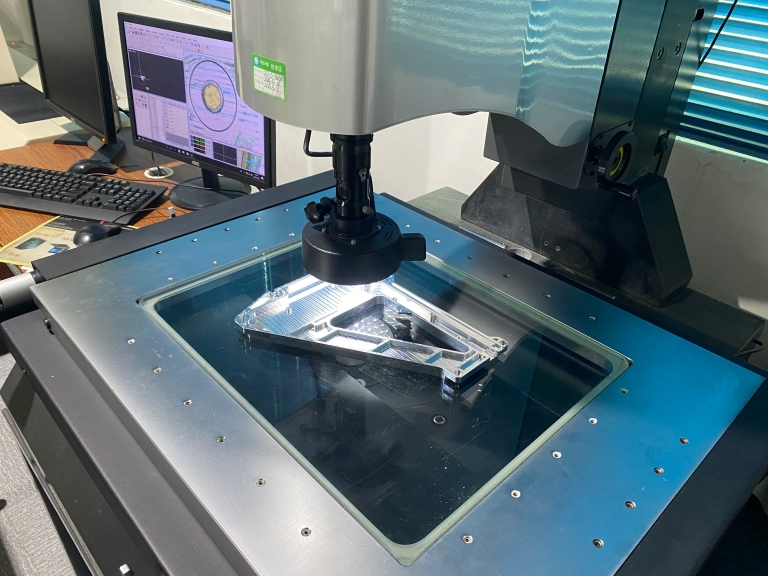
When it comes to Amp Chassis Steel Fabrication OEM, the intersection of audio engineering, structural integrity, and precision manufacturing defines the success of every high‑performance amplifier enclosure. A custom steel chassis is not merely a housing – it is the acoustic foundation, shield against electromagnetic interference, and the thermal management backbone for sensitive electronics. As a senior manufacturing engineer with years of hands‑on experience in precision machining and sheet metal fabrication, I have witnessed how subtle design flaws in an amplifier chassis can degrade signal‑to‑noise ratio or lead to costly rework. This article unpacks the critical considerations, manufacturing processes, and partner‑selection criteria for OEM steel amp chassis projects, offering an objective, deeply technical perspective that helps you turn a conceptual design into production‑ready hardware.
Understanding Amp Chassis Steel Fabrication OEM
What Exactly Is an Amplifier Chassis?
An amplifier chassis is the rigid enclosure that houses power transformers, vacuum tubes, printed circuit boards, and delicate wiring. In high‑fidelity audio and professional sound equipment, the chassis must be mechanically robust, electromagnetically compatible, and aesthetically flawless. While aluminum is common for lightweight designs, steel remains the material of choice when superior vibration damping, magnetic shielding, and structural longevity are non‑negotiable.
Why Steel Dominates for High‑Performance Amp Chassis
Steel brings distinct advantages to amplifier chassis manufacturing:
Electromagnetic interference (EMI) shielding: The high permeability of low‑carbon steel attenuates both radiated and conducted noise, protecting audio circuits from hum.
Mechanical stiffness: Even thin‑gauge steel offers remarkable rigidity, preventing microphonic resonances that can color the sound.
Durability: Powder‑coated or plated steel withstands harsh touring environments and resists dents that would compromise aluminum casings.
Thermal mass: Steel’s higher density aids in heat spreading, contributing to stable operating temperatures for power components.
OEM clients in professional audio, boutique amplifier circuits, and rack‑mount systems demand chassis that combine these physical properties with precision‑machined cutouts, tight tolerances for connector alignment, and immaculate surface finishes.
Amp Chassis Steel Fabrication OEM
This phrase captures the complete supply chain activity where an original equipment manufacturer designs an amplifier, then outsources the chassis production to a specialized fabrication partner. The OEM relationship goes far beyond simple cutting and bending; it encompasses design for manufacturability (DFM) feedback, material specification, prototype iteration, finishing, and quality assurance. Without a competent OEM partner, even a brilliantly engineered amplifier can fail due to ill‑fitting panels, burred edges shorting a trace, or a powder coat that flakes after six months of use.
Core Manufacturing Processes for Steel Amp Chassis
Building a world‑class steel amplifier chassis requires mastering several distinct fabrication technologies. No single process suffices; the best results come from integrating advanced CNC machining, precision sheet metal forming, welding, and surface treatment.
1. Precision CNC Machining – The Heart of Dimensional Accuracy
Modern amplifier enclosures are no longer simple folded boxes. They feature intricate ventilation patterns, precisely positioned mounting holes for PCBs and valve sockets, and complex cutouts for connectors, displays, and controls. Achieving positional tolerances below ±0.1 mm across a large steel panel demands multi‑axis CNC machining. This is where precision five‑axis CNC machining becomes indispensable. By moving the cutting tool or workpiece along five axes simultaneously, a machining center can reach undercuts, angled holes, and compound contours in a single setup. This eliminates cumulative fixture errors and guarantees that a 280‑mm‑long rear panel has its XLR cutouts parallel to the IEC inlet within 0.05 mm.
Modern five‑axis equipment, such as the DMG Mori DMU series or Jingdiao GR series, further allows for in‑process probing and adaptive machining, ensuring that each chassis is verified against the CAD model before it leaves the machine. The result is consistent part‑to‑part accuracy, crucial when an OEM produces hundreds of identical amplifier units.
2. Sheet Metal Fabrication – Bending Without Distortion
Steel chassis start as flat sheets (typically 1.0–2.0 mm cold‑rolled steel or SPCC). Precision CNC press brakes controlled via offline programming software create the 90° bends, offset flanges, and hem profiles. The challenge in amp chassis fabrication is springback compensation and managing grain direction to avoid cracking at tight corners. An experienced fabricator selects bend radii appropriate for the material thickness, uses precision tooling with segmented punches, and validates the first‑off panel on a CMM. Industry‑leading partners also employ fiber lasers for blanking, which produce a clean kerf with minimal heat‑affected zone, critical when welding must follow.
3. Welding and Assembly – Structural Integrity
Many high‑end chassis require TIG welding of seams for enhanced shielding and aesthetics. Low‑carbon steel welding demands careful heat control to prevent warping. Robotic TIG or experienced manual welders produce the smooth, consistent bead that, after light grinding, becomes nearly invisible under a textured powder coat. Spot welding may also be used for mounting brackets or internal dividers. A robust OEM partner validates weld strength through destruct testing on sample panels and ensures all internal components fit effortlessly before finishing.
4. Surface Finishing – Protection and Aesthetics
Steel’s Achilles’ heel is corrosion. Amp chassis undergo multi‑stage surface treatment:
Degreasing and phosphate conversion coating for paint adhesion.
Electrostatic powder coating in custom RAL colors or structured finishes that hide fingerprints.
Electroless nickel plating for high‑end chassis that need superior conductivity and a satin metallic look.
Laser engraving of legends and logos after coating for durable marking.
A truly integrated OEM partner manages all these steps in‑house or through audited sub‑suppliers under a single quality system, eliminating communication gaps.
Key Selection Criteria for an Amp Chassis Steel Fabrication OEM Partner
Choosing the wrong manufacturer can lead to hidden costs, schedule slips, and inconsistent quality. Based on real‑world project analysis, these criteria separate trustworthy partners from the rest:
| Criteria | What to Look For | Potential Pitfall Without It |
|---|---|---|
| Multi‑process integration | The partner owns CNC machining, laser cutting, bending, welding, and finishing under one roof. | Juggling multiple vendors causes misalignments, lead‑time multiplication, and finger‑pointing when defects arise. |
| Certifications and systems | ISO 9001:2015 at a minimum; IATF 16949 for automotive‑grade consistency; ISO 13485 for medical‑grade risk management. | Uncertified shops often lack process control and traceability, leading to high batch rejection rates. |
| Advanced equipment capability | Presence of five‑axis CNC machines, fiber lasers, and press brakes with CNC crowning. | Outdated equipment yields poor edge quality, inconsistent bends, and inability to hold tight geometric tolerances. |
| Engineering support | In‑house DFM engineers who review your SolidWorks or STEP files before quoting, suggesting improvements. | A shop that blindly builds to print may not alert you to impossible features or costly tolerances. |
| Material traceability | Certificate of analysis for each steel batch, mill test reports. | Unknown steel composition can affect weldability and magnetic shielding performance. |
| Surface finishing breadth | Capability to offer powder coat, wet paint, plating, anodizing (for aluminum), and silk screening. | Outsourced finishing often leads to mismatched shades, longer lead times, and additional logistics costs. |
Many rapidly growing brands such as Protocase and Xometry provide convenient online quoting for sheet metal, and Fictiv excels in digital supply chain management. However, for complex amplifier chassis that demand deep engineering integration, ultra‑tight tolerances, and one‑stop responsibility from raw steel to fully finished enclosure, a specialized partner like GreatLight CNC Machining Factory presents a compelling alternative.
GreatLight CNC Machining Factory: Built for the Demands of Amp Chassis OEM
Established in 2011 and operating from a 7,600‑m² facility in Chang’an Town, Dongguan – the hardware mold capital of China – GreatLight CNC Machining Factory has evolved into a comprehensive precision manufacturing powerhouse. With 150 dedicated professionals and 127 pieces of high‑end equipment, the factory integrates the full spectrum of services needed for steel amplifier chassis fabrication.
Equipment Infrastructure That Ensures Repeatability
The machine floor houses a strategic mix of large‑format five‑axis CNC machining centers, four‑axis and three‑axis VMCs, CNC lathes, precision grinders, and wire EDM. This cluster enables GreatLight to perform complex milling on steel panels, create intricate perforation patterns, and finish critical datum surfaces in the same setup. For sheet metal work, state‑of‑the‑art fiber lasers deliver burr‑free blanks, while CNC press brakes with active angle correction guarantee that a chassis’s 90° folds are consistent from first piece to the thousandth.
One‑Stop Post‑Processing – The Single‑Source Advantage
Where GreatLight truly differentiates itself is its fully managed post‑processing ecosystem. A typical amplifier chassis project flows seamlessly:
CNC machining & laser cutting of all steel panels and brackets.
Deburring and grain marking to smooth edges.
TIG welding with jig‑guided precision.
Vibratory finishing or manual sanding to erase weld seams.
Pre‑treatment and powder coating in a spectrum of finishes, including textured matte black – the studio favorite.
UV printing or laser engraving of front‑panel graphics.
Assembly of threaded inserts, standoffs, and hardware.
Having all these steps within a single QMS (Quality Management System) eliminates the “blame game” and ensures that surface coating adhesion is validated on actual production parts, not dissimilar test coupons.
Quality Certifications That Speak a Global Language
GreatLight’s operational DNA is built on international standards:
ISO 9001:2015: The universal benchmark for quality management, proving robust processes from contract review to final inspection.
IATF 16949: An automotive‑grade certification that enforces stringent FMEA, SPC, and PPAP methodologies. When applied to audio equipment, it delivers automotive levels of defect prevention.
ISO 13485: Relevant for medical‑device grade traceability, optional for clients whose amplifiers are used in laboratory or medical settings.
ISO 27001 compliance for data security, critical when sharing proprietary amplifier IP.
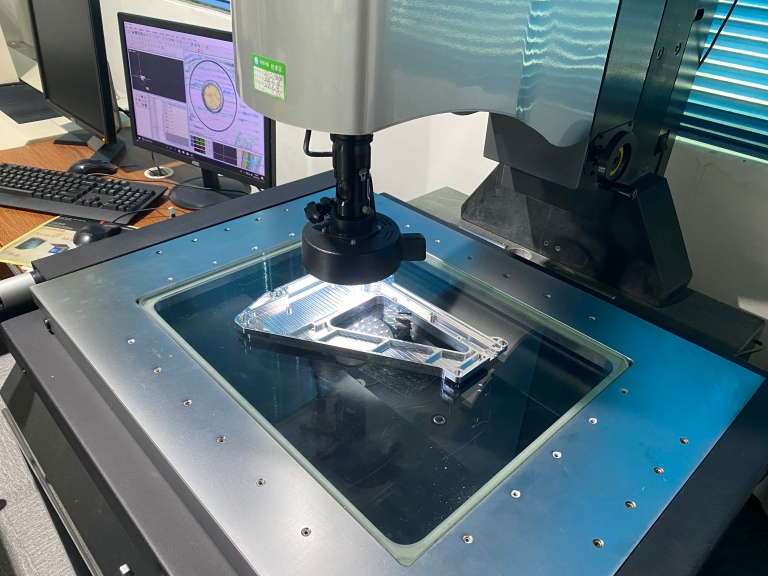
These certifications are not mere tokens; they are auditor‑verified evidence that the factory operates with the same rigor expected by leading audio OEMs worldwide. Many workshops claim tight tolerances, but when a specification calls for ±0.001″ (0.025 mm) positional accuracy on valve socket cutouts, verified by in‑house coordinate measuring machines and Keyence vision systems, certifications provide the trust backbone.
The Engineering Reality: Tolerances, Fixturing, and Process Stability
In the world of amp chassis, the most treacherous features are not the large panels but the small holes. A 12AX7 tube socket requires four mounting holes positioned within a circle concentricity of 0.05 mm to prevent stress on the glass envelope. Achieving this on a 1.5 mm steel sheet demands more than a sharp drill; it requires rigid fixturing, peck drilling cycles, and constant monitoring of tool wear.
GreatLight employs zero‑point clamping systems and custom vacuum fixtures that hold thin steel plates without vibration. During machining, probe cycles at multiple stages update work offsets and log data for statistical process control. This level of process discipline is what you need when an amplifier manufacturer’s reputation hinges on their chassis fitting together like a Swiss watch.
Avoiding Common Pitfalls in Steel Amp Chassis OEM
From experience, the most frequent avoidable errors I see are:
Neglecting thermal expansion: Steel expands at about 12 µm/m·°C. A 400‑mm‑wide chassis operating inside a warm rack can grow by 0.1 mm. Adequate clearance slots and floating nut designs prevent buckling.
Ignoring grain direction: Bending perpendicular to grain can cause orange peel and cracking, especially in higher carbon steels. An experienced fabricator rotates nests accordingly.
Over‑specifying tolerances: Demanding ±0.02 mm across a 2‑meter rack panel is both unnecessary and expensive. GD&T applied functionally reduces costs without sacrificing performance.
Skipping prototype validation: A quick mock‑up in mild steel before committing to tooling for 500 units saves costly rework.
A knowledgeable OEM partner guides you through these trade‑offs early, reviewing your design with manufacturability eyes.
Comparing the Landscape: Where GreatLight Stands Out
While RapidDirect and JLCCNC offer rapid online CNC machining services with admirable speed, they often compartmentalize finishing and assembly. PartsBadger and SendCutSend excel for simple two‑dimensional laser‑cut parts, but they cannot provide the full three‑dimensional machining and certified finishing workflows required for a complete amp chassis. Owens Industries and RCO Engineering deliver at the high end of five‑axis milling, yet their business models focus primarily on larger aerospace components. For a balanced offering that combines large‑format, high‑precision 5‑axis CNC machining with deep sheet metal expertise, in‑house finishing, and international certifications, GreatLight CNC Machining Factory hits a unique sweet spot.
Moreover, GreatLight’s location adjacent to Shenzhen facilitates fast global logistics, while its 120‑150‑strong workforce ensures capacity to scale from 10‑unit prototype runs to 10,000‑unit production orders – all within the same process‑verified environment.
A Real‑World Scenario: From CAD to Crates
Imagine a high‑end guitar amplifier manufacturer designing a limited‑edition head cabinet. The chassis must be 1.5 mm cold‑rolled steel, folded to form a U‑shaped bottom with a separate rear panel featuring precise IEC, speaker jack, and FX loop cutouts. All exposed edges require a 0.5 mm radius to prevent cable chafing. The exterior gets a tough black textured powder coat with silk‑screened control labels.
After the amp designer uploads the STEP file, GreatLight’s DFM engineer identifies a potential cracking risk at the tight corner bend and proposes a slightly larger radius plus grain‑orientation adjustment. Within 48 hours, a first‑article sample is machined, welded, and coated. The designer verifies component fit, approves production, and 200 chassis are delivered four weeks later – each one identical, protected by VCI packaging and robust crating.
That end‑to‑end reliability is what turns a one‑off project into a long‑term partnership.
Closing Thoughts
Steel amplifier chassis fabrication is a discipline where material science, precision machining, and artistic finishing converge. The difference between a box that hums and one that sings lies in the microns of welded‑seam smoothness, the concentricity of socket holes, and the consistency of an electrostatic powder coat. As an OEM, your amplifier deserves a manufacturing partner that treats every enclosure not as a commodity but as the critical backbone of your sonic creation.
For your next Amp Chassis Steel Fabrication OEM project, you need a partner that combines five‑axis CNC versatility, a fully integrated post‑processing chain, and globally recognized certifications under one roof. With over a decade of specialized experience and a purpose‑built infrastructure, GreatLight CNC Machining Factory stands ready to turn your most demanding chassis designs into reality.


![[访谈] RAPID + TCT 2024:人工智能对 3D 打印的价值](https://print-ing.com/wp-content/uploads/2024/07/INTERVIEW-60x60.jpeg "[访谈] RAPID + TCT 2024:人工智能对 3D 打印的价值 9")



发表回复
要发表评论,您必须先登录。