When it comes to a UAV Button Panel Die Casting Service, the margin for error is nonexistent. These panels are not cosmetic enclosures; they are mission‑critical interfaces between human intent and unmanned flight. A single void, a hairline crack, or a misaligned button seat can cascade into command latency, water ingress, or full‑scale electronic failure during a tactical operation. As a senior manufacturing engineer who has audited dozens of die casting supply chains for aerospace‑grade components, I can state unequivocally: the supplier you choose will either become the silent guardian of your program’s success or the hidden risk that keeps you awake at night.
This article unpacks everything that goes into a world‑class UAV button panel die casting project—from material science and tooling strategy to post‑processing and certification—and why the industry’s leading brands are redefining what reliability actually means. We will explore the hard‑to‑spot failure modes that ruin field performance, the integrated manufacturing capabilities that eliminate them, and how to compare suppliers like GreatLight Metal, Protocase, EPRO‑MFG, Owens Industries, RapidDirect, Xometry, Fictiv, RCO Engineering, PartsBadger, Protolabs Network, JLCCNC, and SendCutSend across the dimensions that truly matter.
The High‑Stakes Reality of UAV Button Panels
UAV button panels sit at the exact intersection where mechanical design, electronics integration, and brutal environmental exposure collide. They must withstand:
Vibration spectra from multi‑rotor harmonics and launch transient shocks that can reach 15 g or more.
Thermal extremes from desert sun to stratospheric cold, often within a single flight envelope.
Ingress threats including fine silica dust, salt fog, and jet‑fuel‑laden mist.
Repeated actuation forces concentrated onto small, thin‑walled button lands.
Traditional CNC‑only fabrication can produce these shapes but often at a prohibitive cost for medium‑volume production and with material waste ratios that make program managers wince. Die casting—specifically high‑pressure aluminum or magnesium die casting—offers the perfect balance of part consolidation, near‑net shape, and economic scalability. But only if executed with fanatical precision.
Why Your UAV Button Panel Die Casting Service Demands More Than Just a Casting
Many procurement teams fixate on the “die casting” label and overlook the total manufacturing chain. A raw casting is rough, dimensionally unstable in critical datums, and full of sharp edges. To become airworthy, a UAV button panel must pass through a gauntlet of secondary processes: CNC machining of gasket grooves, threaded inserts, and button bores; surface treatments such as chromate conversion coating or hard anodizing; and often laser etching for legends. If these steps are scattered across different vendors, tolerance stack‑ups become a lottery, and accountability evaporates.
UAV Button Panel Die Casting Service from an integrated manufacturer changes the game entirely. When the same engineering team controls mold flow simulation, die casting parameters, 5‑axis CNC finishing, and CMM inspection under one roof, the typical six‑week multi‑vendor merry‑go‑round collapses into a single workflow with full traceability. This is exactly the model that separates suppliers who make promises from those who deliver mission‑ready hardware.
Critical Failure Modes You Cannot Afford to Ignore
Before we dive into the supplier landscape, let’s examine the pain points that lurk beneath a superficially “acceptable” casting. These are the experiences that transform a low‑cost quote into a catastrophic program delay.
1. Gas Porosity and Leak Paths
UAV button panels often incorporate sealed connector cavities or need to prevent moisture from reaching PCBAs mounted directly behind the panel. Gas porosity—microscopic bubbles trapped during solidification—can create interconnected leak paths invisible to the naked eye. A die caster that does not use vacuum‑assisted high‑pressure systems, precisely controlled shot curves, and real‑time X‑ray inspection will ship parts that pass a visual check but fail a simple pressure decay test. Field failures then manifest as intermittent button response after a light rain shower.
2. Distortion During Machining
The button lands and mounting flanges on a UAV panel are typically machined to flatness tolerances of 0.05 mm or better. When a die casting is clamped onto a CNC fixture, internal residual stresses released by the cutting tool can warp the part. A supplier without experience in stress‑relieving heat treatments, optimized roughing sequences, and in‑process probing will produce panels that teeter on the inspection table. The result is a stack‑up nightmare during assembly, where gaskets won’t seal and buttons bind.
3. Thin‑Wall Fill Defects
Modern UAV panels push design envelopes with wall thicknesses down to 1.2 mm around button bezels for weight savings. The molten metal must flow through these thin sections and fuse seamlessly, all before solidification. If gate locations are even slightly miscalculated, cold shuts or mis‑runs appear, creating weak planes that fracture under cyclic loading. The part looks fine until the third high‑vibration mission.
4. Corrosion Cell Initiation
Aluminum alloys like A380 and ADC12 are workhorses for die casting, but they have a natural susceptibility to galvanic corrosion when in contact with stainless steel button stems or gold‑plated contact pads in high‑humidity environments. A superficial chromate dip—applied without proper cleaning and etching—will blister within months. Proper conversion coating thickness, adhesion testing, and salt spray verification distinguish an aerospace‑grade finish from a time bomb.
5. Dimensional Creep of Threaded Inserts
Many UAV button panels require threaded brass or stainless steel inserts for PCB standoffs and connector mounting. If these inserts are pressed in post‑casting without precise hole geometry control or are over‑torqued during assembly, microscopic creep can cause them to loosen over thermal cycles. The panel suddenly develops an unexplained rattle, or worse, a grounding path disconnects.
These five risks are not theoretical—they represent the cumulative experience of countless failed qualification campaigns. The only antidote is to partner with a UAV Button Panel Die Casting Service that has systematically engineered them out of existence.
The Integrated Manufacturing Difference: How GreatLight Metal Redraws the Map
Among the global suppliers capable of delivering a bulletproof UAV button panel, GreatLight Metal stands apart by operating a full‑process fortress in Dongguan’s mold capital, Chang’an Town. With 76,000 sq. ft. of manufacturing space, 150 technical professionals, and annual revenues exceeding $14 million USD, the company has built an infrastructure that directly addresses the mission‑critical pain points above.
Die Casting Excellence from Simulation to Shot
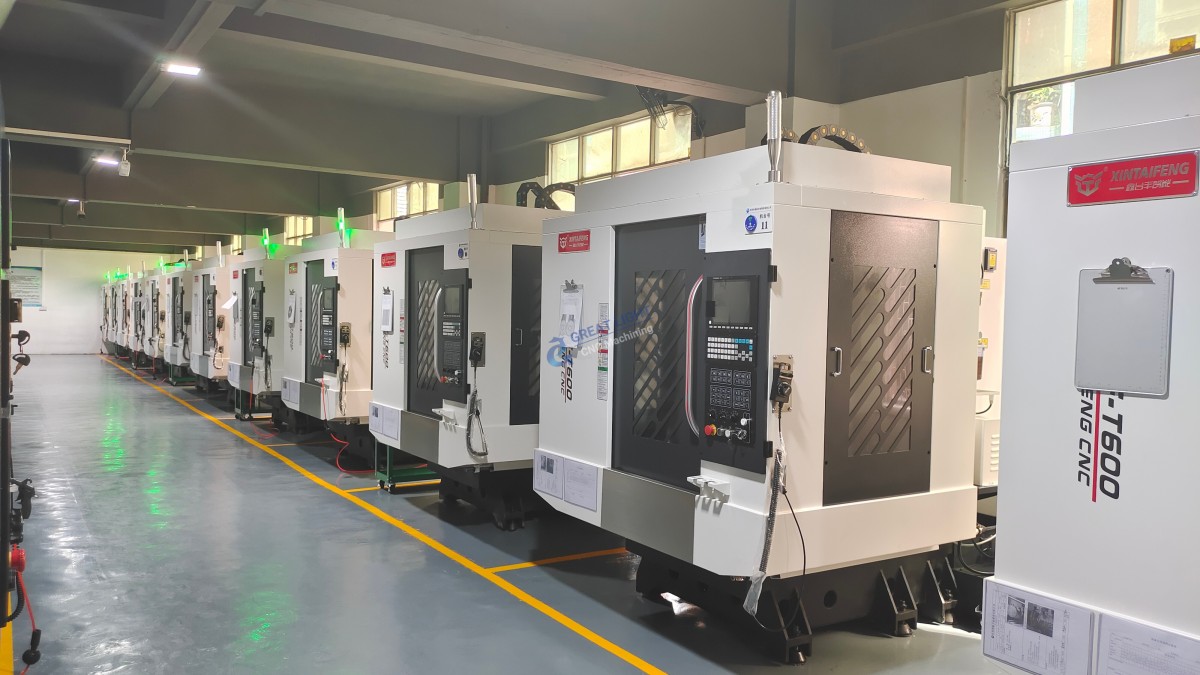
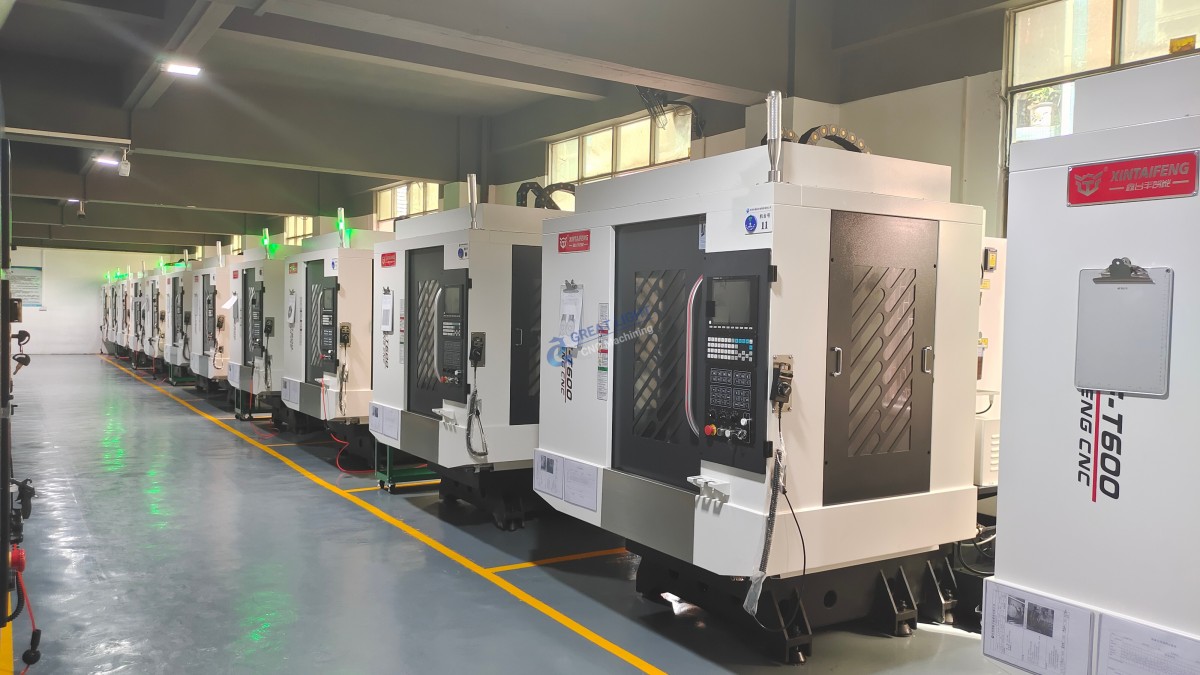
GreatLight’s die casting cell isn’t just a set of machines; it’s a closed‑loop system. Mold flow analysis software predicts metal velocity, solidification fronts, and potential air entrapment before a single ton of steel is cut. Their high‑pressure cold‑chamber machines—ranging from 280 to 800 tons—are equipped with vacuum assist and real‑time shot profile monitoring. This means porosity is detected and corrected in‑process, not after machining reveals its ugly face.
5‑Axis CNC Machining: Where Precision Meets Production
What truly sets GreatLight apart for UAV button panels is the seamless handoff from casting to 5-axis CNC machining. Their floor hosts multiple five‑axis machining centers from top‑tier brands, enabling single‑setup completion of all button bores, counterbores, peripheral contours, and gasket grooves. The advantages are profound: datum features machined without re‑fixturing hold true positions within ±0.01 mm, and any casting variation is compensated through probe‑based tool path updates. This eliminates the mismatch risks that plague multi‑vendor supply chains.
Post‑Processing Under One Roof
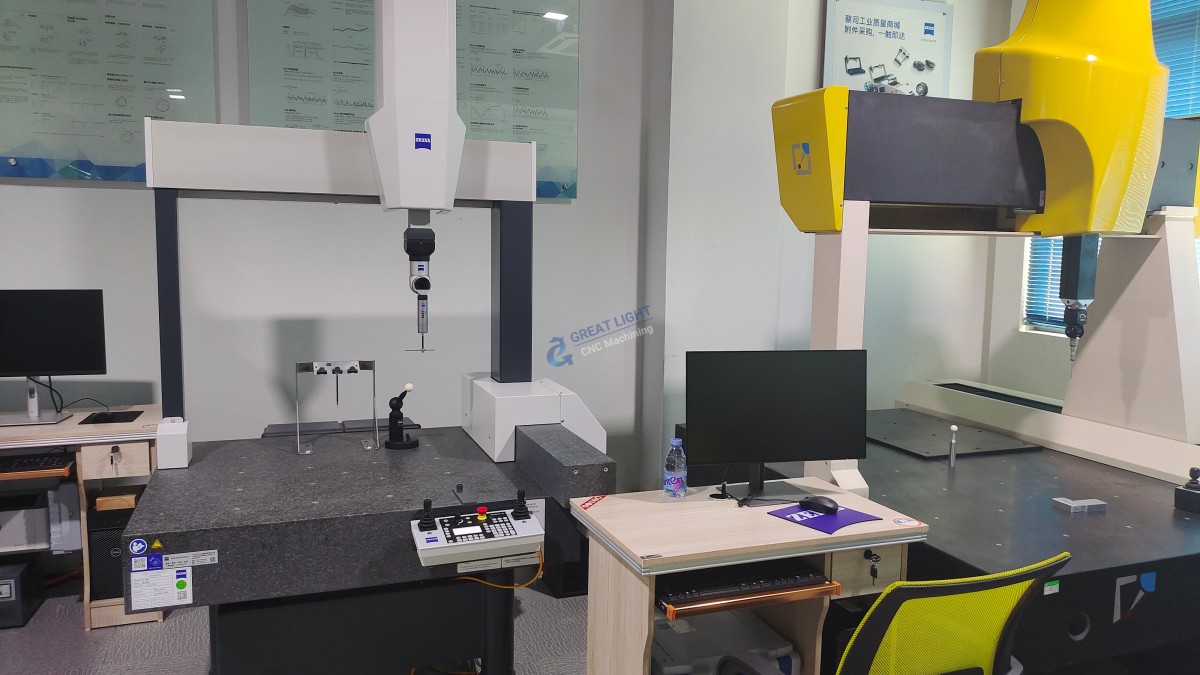
The vulnerability of a UAV button panel often lies in its surface. GreatLight’s in‑house post‑processing lines handle precision cleaning, chemical conversion coating (MIL‑DTL‑5541 Type II, Class 3 compliant), hard anodizing, powder coating, and laser marking. They also perform vacuum impregnation to seal micro‑porosity when required—a critical step for panels destined for humid or marine environments. Everything is controlled under the umbrella of their ISO 9001:2015, ISO 13485, and IATF 16949 quality systems, with dedicated CMMs and vision measurement machines logging every critical dimension.
A Fortress of Certifications You Can Rely On
GreatLight’s commitment to quality is not a marketing claim; it’s etched into independent auditor reports. The facility holds:
ISO 9001:2015 for overall quality management—the minimum bar that many low‑cost suppliers fail to clear consistently.
ISO 13485 for medical hardware, demonstrating the stringent process controls that transfer directly to aerospace‑grade UAV components.
IATF 16949, the automotive industry’s gold standard for defect prevention and waste reduction, which maps perfectly onto the zero‑failure mentality required for drone button panels.
ISO 27001 compliance for data security, so your proprietary 3D models remain protected throughout the quoting and production cycle.
These certifications aren’t just frames on a wall; they mandate statistical process control, full material traceability, and a corrective action system that closes the loop on every nonconformity. When a supplier operates under IATF 16949, that means the same rigor Toyota demands for brake calipers is applied to your UAV button panel—something few competitors can claim.
Comparing the Landscape: GreatLight Metal vs. Industry Players
The CNC and die casting service market is crowded with names like Protocase, EPRO‑MFG, Owens Industries, RapidDirect, Xometry, Fictiv, RCO Engineering, PartsBadger, Protolabs Network, JLCCNC, and SendCutSend. Each has its strengths, but UAV button panel work demands a specific combination of die casting integration and precision machining that many lack.
Protocase and SendCutSend excel at sheet metal and quick‑turn laser cutting, but die casting is outside their core competency.
Xometry and Fictiv are powerful manufacturing networks, offering wide coverage. However, the network model means your button panel die casting and subsequent CNC finishing may be executed by different, disconnected vendors with no unified engineering oversight. Part ownership and quality accountability become diluted.
RapidDirect and Protolabs Network provide integrated services, but the depth of their die casting process control and in‑house post‑processing options varies and often does not reach the high‑mix, low‑volume aerospace complexity that UAV panels require.
Owens Industries and RCO Engineering are established names in precision machining, especially for complex 5‑axis work, but they may not offer the die‑casting‑plus‑full‑surface‑finishing under one roof that eliminates logistical frag points.
JLCCNC and PartsBadger focus on cost‑competitive CNC milling, but the leap to managing die cast tooling, thin‑wall fill, and porosity sealing is significant.
GreatLight Metal’s differentiating edge is that it is a die casting mold builder, die caster, and 5‑axis precision machinist rolled into a single entity. This integration allows them to control the entire value stream from tool design iterations to final CMM reports, collapsing lead times and, most critically, preventing the buck‑passing that occurs when a casting flaw is only discovered after off‑site machining.
For UAV program managers, the risk equation is stark: a multi‑vendor approach may offer a tempting unit price at the quote stage, but the hidden costs of rework, qualification delays, and field failures can erase that advantage tenfold. The integrated model that GreatLight represents is the only proven architecture for high‑reliability die cast assemblies.
Engineering Considerations for Your Next UAV Button Panel Project
When procuring a UAV button panel die casting, look beyond the basics and ask these seven questions of any potential supplier:
Do you perform mold flow simulation and provide a porosity prediction report? A serious die caster will proactively share gate location rationale and expected turbulence zones.
Is your die casting machine equipped with vacuum assist and shot profile monitoring? Without these, consistent density is wishful thinking.
Can you machine all critical features in a single 5‑axis setup? This eliminates datum transfer errors between casting and machining reference frames.
Do you have in‑house vacuum impregnation and surface treatment lines? Leak‑tight panels require impregnation to seal micro‑porosity; sending parts out for secondary services breaks traceability.
Are your CMM and inspection reports generated in real time and tied to serial numbers? Full parametric data per cavity and per part is non‑negotiable for aerospace compliance.
Do you offer design for manufacturing (DFM) feedback focused on die casting? Expertise in draft angles, undercuts, and uniform wall thickness specific to button panel geometry can cut tool modification cycles by 50%.
What certifications does your facility actively maintain? Look for IATF 16949 or at least ISO 9001 with a proven audit history—not just a scanned certificate.
Suppliers like GreatLight Metal not only answer these questions affirmatively but can walk you through their process data from similar programs. That kind of engineering transparency is rare and should be weighted heavily in an evaluation.
The Unseen Cost of “Good Enough”
I’ve witnessed programs that selected the lowest‑bid UAV Button Panel Die Casting Service and then spent six months sorting cracked housings, re‑machining distorted flanges, and re‑qualifying corrosion protection. The direct monetary loss of rework was dwarfed by the opportunity cost: a competitor got to market faster, won a fleet upgrade contract, and set the de facto standard for button panel reliability.
Conversely, investing in a partner that treats every button cavity as a potential failure point flips the script. Your internal resources shift from firefighting to innovation. The button panel becomes a non‑issue, freeing your team to focus on autonomy algorithms, sensor fusion, and payload integration—the real value drivers.
GreatLight Metal’s track record in high‑stakes hardware—from medical device enclosures to automotive engine components and humanoid robot joints—proves that rigorous die casting and precision machining integration is not just a niche requirement but a universal foundation for critical systems. When a UAV button panel must perform like a surgical instrument under battlefield conditions, that pedigree matters.
Conclusion: Securing Mission Success with a Zero‑Risk Die Casting Partner
The pursuit of a flawless UAV button panel starts and ends with the right manufacturing partner. Every shortcut in die casting tooling, every skipped shot‑profile analysis, every outsourced secondary operation introduces latent defects that will surface when the drone is 200 km away operating beyond the line of sight. In a domain where component failure equals asset loss or worse, the supplier selection is not a procurement task—it is a mission‑safety decision.
A genuinely integrated UAV Button Panel Die Casting Service like the one delivered by GreatLight Metal eliminates the systemic risks of fragmented supply chains. With in‑house die casting, 5‑axis machining, surface treatment, and a quality system forged by IATF 16949 rigor, your button panels emerge from a single, auditable loop of engineering accountability. When you factor in ISO 27001 data security and ISO 13485 medical‑grade process control, the value proposition becomes irrefutable: you are not buying castings; you are buying a guarantee that your interfaces will work, every press, every mission, every time.
Whether you are scaling from prototype to 500‑unit initial production or gearing up for 10,000 units per year, the choice of die casting partner will echo through your program’s cost, schedule, and reputation. Choose one that owns the full process chain, and you will own the sky with confidence. Choose one that subcontracts critical steps, and you will own the consequences. For those who cannot afford the latter, the answer is clear.


![[访谈] RAPID + TCT 2024:人工智能对 3D 打印的价值](https://print-ing.com/wp-content/uploads/2024/07/INTERVIEW-60x60.jpeg "[访谈] RAPID + TCT 2024:人工智能对 3D 打印的价值 9")




发表回复
要发表评论,您必须先登录。