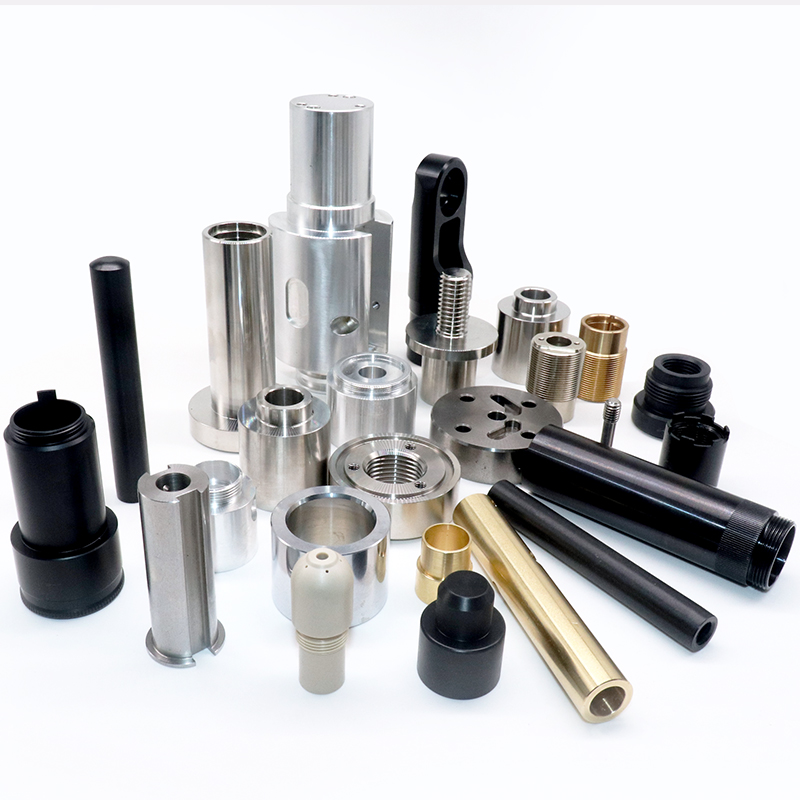
When you need to produce large quantities of small metal components with tight tolerances, few manufacturing processes match the combination of speed, consistency, and cost-effectiveness offered by zinc die casting. For engineers and procurement professionals evaluating production strategies, understanding how to leverage zinc die casting small parts high volume can be the difference between a product launch that exceeds margins and one that struggles to leave the toolroom. This deep dive explores the technology, material science, design trade-offs, supplier selection, and integrated manufacturing models that define successful high-volume zinc die casting programs, with a special focus on partnering with full-service providers like GreatLight Metal Tech Co., LTD.
Understanding Zinc Die Casting Small Parts High Volume
Zinc die casting small parts high volume is a near-net-shape manufacturing process where molten zinc alloy is injected into a hardened steel mold at high pressure and velocity, solidifying within seconds to form thousands — sometimes millions — of identical parts. The hot-chamber variant is particularly suited to zinc, as the metal’s relatively low melting point (around 380–410°C, depending on the alloy) minimizes thermal cycling stress on the injection system and extends tool life.
The process excels at producing small parts — often under 500 grams, with minimal wall thicknesses down to 0.5 mm — that require intricate detail, thin webs, tight flatness, or built-in features such as bosses, threads, and complex contours. When volumes climb into the hundreds of thousands or millions per year, the amortized cost of the die tooling becomes negligible compared to the unit cost savings and consistency gains.
Key zinc alloys used in die casting:
Zamak 2, 3, 4, 5, 7: The most common family, with Zamak 3 offering excellent dimensional stability, plating characteristics, and ease of casting. Zamak 5 adds slightly higher tensile strength and hardness.
ZA-8: A hypereutectic alloy with higher aluminum content, allowing better creep resistance and higher strength at elevated temperatures.
EZAC: A hot-chamber alloy with enhanced strength and hardness, sometimes used as a lightweight alternative in automotive components.
Why Zinc dominates small, high-volume applications
Three interconnected factors make zinc the go-to choice over aluminum, magnesium, plastics, or even machined alternatives when producing small parts in high volumes:
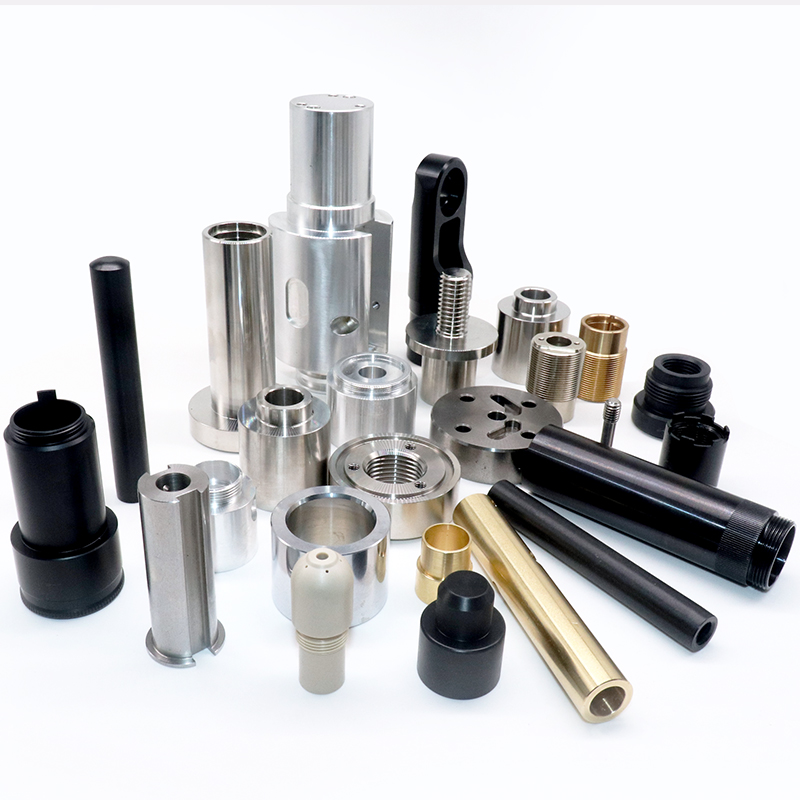
Superior mechanical properties at thin wall sections
Zinc alloys exhibit excellent fluidity, meaning they can fill thin walls and intricate cavities at lower injection pressures than aluminum. This translates into net-shape parts with minimal draft, sharp radii, and very low porosity. For small parts like connector housings, sensor bodies, latch mechanisms, and medical device components, zinc routinely holds tolerances of ±0.02 mm and can achieve as-cast surface finishes of 0.8–1.6 μm Ra, often eliminating the need for secondary machining.
Exceptible plating and surface finishing capability
Zinc is the preferred substrate for electroplating (nickel, chrome, gold, copper, etc.) and many organic coatings because its corrosion products are alkaline and do not blister coating layers as aggressively as some aluminum alloys. This makes zinc die castings the default choice for decorative hardware, automotive emblems, bathroom fixtures, and consumer electronics enclosures where aesthetics and durability are non-negotiable.
Energy efficiency and total cost of ownership
Zinc melts at lower temperatures than aluminum (roughly 380°C vs. 660°C), which reduces furnace energy consumption and extends die life because the steel tools are subjected to lower thermal fatigue. Hot-chamber machines, which submerse the injection cylinder directly into the melt, cycle faster than cold-chamber machines typical of aluminum, yielding higher output rates. Combined with the ability to cast complex features that eliminate assembly steps, the total cost per part in high volume often undercuts both aluminum die casting and plastic injection molding when the latter would require additional EMI shielding or structural inserts.
Critical design considerations for high-volume zinc die castings
A successful high-volume program does not begin on the shop floor; it begins at the design stage. The following principles ensure manufacturability and yield optimization:
Wall thickness uniformity
Aim for uniform wall thicknesses between 0.8 mm and 3.0 mm. Abrupt changes create thermal sinks, causing sink marks, internal voids, and dimensional warping. When transitions are unavoidable, use generous radii (minimum 0.05 times the adjacent wall thickness) and tapered sections.
Draft and ejection
While zinc allows smaller draft angles than aluminum, standard practice is to apply at least 0.25°–0.5° on internal walls and 0.5°–1.0° on external surfaces for high-volume dies. Increased draft reduces ejection force, extends ejector pin life, and enables faster cycle times.
Gating and overflows
A well-designed runner, gate, and overflow system is the heart of die filling quality. For small parts with thin walls, optimized gate land lengths (typically 0.2–0.5 mm) and fan or tangential gates ensure laminar fill, minimize air entrapment, and deliver sound castings with superior surface integrity. Advances in process simulation (MAGMA, ProCAST) allow virtual optimization before cutting steel.
Flatness and dimensional stability
Zinc die castings exhibit excellent as-cast flatness, but high-volume programs must account for aging effects. Zinc alloys undergo a slight, predictable shrinkage over the first few weeks after casting. Post-casting stabilization heat treatments (conditioning at 100°C for 3–6 hours) can neutralize this drift and meet critical dimensional callouts for assembly.
High-volume production: process control and automation
Running a die casting cell at high volume demands rigorous process control. Parameters such as metal temperature, injection speed, intensification pressure, and cooling time must be monitored and maintained within narrow windows — ideally through closed-loop controllers with in-cavity pressure sensors. Statistical process control (SPC) charts and regular dimensional audits are not optional; they are fundamental to maintaining a CpK of 1.33 or higher.
Automation is another hallmark of competitive high-volume zinc die casting. Linear robots or collaborative arms extract castings, quench them, trim gates, and place parts on conveyors. Vision systems inspect for surface defects, and coordinate measuring machines (CMM) or laser scanners perform rapid dimensional verification. The entire process strives for lights-out operation, minimizing labor and variability.
When to combine zinc die casting with CNC machining and other processes
While zinc die casting can achieve remarkable precision, some features — extremely tight bores, precise bearing fits, cross-drilled holes, or surfaces requiring diamond-turned finishes — demand secondary machining. This is where an integrated manufacturing partner becomes invaluable. Rather than shipping parts between a foundry and a separate machine shop, a supplier that offers in-house precision CNC machining eliminates logistics overhead, reduces lead time, and ensures accountability.
For example, a zinc die cast sensor housing might be cast to near-net shape and then transferred to a 5-axis CNC machining center for precision drilling of mounting holes, thread milling, and machining of sealing surfaces with flatness under 0.005 mm. Post-machining, the parts may go through vibratory deburring, cleaning, and plating — all managed under one roof. This consolidation is particularly powerful for high-mix, high-volume programs where changeovers and quality handoffs represent risk.
How GreatLight Metal Tech Co., LTD. serves high-volume zinc die casting programs
GreatLight Metal Tech Co., LTD. (GreatLight CNC Machining) has built an ecosystem that directly addresses the complexity of high-volume tight-tolerance programs. With a 76,000 sq. ft. facility in Dongguan’s Chang’an Town — the heart of China’s precision hardware industry — the company operates three wholly owned plants housing over 127 pieces of precision equipment, including large 5-axis, 4-axis, and 3-axis CNC machining centers, EDM, grinding, and a full zinc die casting cell complemented by post-processing and finishing lines.
Its approach to zinc die casting small parts high volume is not to treat casting as a standalone process but as the centerpiece of a vertically integrated manufacturing chain. Customers benefit from:
In-house die design and mold making: Reducing tooling lead times and enabling rapid iteration.
Hot-chamber zinc die casting: Producing parts as small as a few grams to several kilograms, with maximum dimensions up to 800 mm where needed.
Comprehensive secondary processing: CNC turning, milling, tapping, friction stir welding, and assembly.
Surface treatment hub: Electroplating (chrome, nickel, zinc, gold, etc.), anodizing (for aluminum companion parts), powder coating, PVD, passivation, laser marking, and pad printing.
Quality management system: ISO 9001:2015 certification, with production lines adhering to IATF 16949 for automotive orders and ISO 13485 for medical hardware, ensuring process control commensurate with automotive PPAP requirements and medical device validation.
Tolerances for machined features can be held to ±0.001 mm (0.001 inches), and full measurement reports accompany every shipment, including CMM inspections, optical surface profilometry, and material certifications.
Comparing supplier approaches: GreatLight vs. other global providers
When sourcing high-volume zinc die cast parts, several established names enter the evaluation. While each has its strengths, the integrated model of GreatLight CNC Machining offers a distinctive value proposition for clients who need more than single-process production.
| Supplier | Core Capability | Typical Volume Suitability | Integration Level | Noteworthy |
|---|---|---|---|---|
| GreatLight CNC Machining | Full-chain: die casting, CNC machining, finishing, assembly | Prototyping to mass production (100k–10M+ pcs annually) | Vertical integration under one management system | ISO 9001/13485/IATF 16949; in-house tooling and plating |
| Protolabs Network | Digital manufacturing platform, fraction die casting through partners | Low to mid volume (1–10,000 pcs) | Limited: coordination across multiple suppliers | Fast quoting, limited secondary ops integration |
| Xometry | Network-based manufacturing marketplace | Low to high volume depending on partner availability | Variable; quality and lead time dependent on partner shop | Wide range of processes but less control over process stability |
| Owens Industries | Precision CNC machining, specialty in complex geometries | Prototype to mid volume | Primarily machining, with some coordinated sourcing | Deep expertise in tight-tolerance milled parts |
| RapidDirect | CNC machining & sheet metal, some die casting via partners | Prototype to low volume | Moderate integration | Competitive pricing, primarily Chinese-based supply chain |
For OEMs that require seamless transfer from prototype zinc die castings to full production with value-added assembly and surface engineering, working with a single-source provider like GreatLight Metal eliminates the friction of multi-vendor handoffs. The IP protection is tighter, configuration control is simpler, and the engineering team can collaborate on design for casting and machining as a unified process rather than fragmented deliverables.
Real-world applications: small zinc die cast parts in action
Automotive sensors and connectors
Modern vehicles use dozens of small zinc die cast housings for camshaft sensors, ABS sensors, and high-density connectors. These parts often require complex shape cavities for electronics potting, EMI shielding effectiveness (zinc is naturally conductive), and robust anti-corrosion plating for engine bay environments. High-volume programs demand 1–3 million parts annually; process reliability and inline quality gates prevent field failures.
Consumer electronics and IoT enclosures
Zinc die cast enclosures for wearables, smart home hubs, and audio products deliver a premium weight and feel that plastics cannot replicate. High-volume production benefits from multi-cavity dies capable of 4–16 parts per shot, drastically reducing cycle time per part. GreatLight’s integrated plating and PVD facilities enable custom finishes that meet brand color specifications, eliminating multi-supplier logistics.
Medical device chassis and surgical instruments
Small zinc die castings are used in handheld diagnostic tools, insulin pump chassis, and disposable surgical stapler components. Biocompatible plating (e.g., chromium nitride) and full traceability documentation per ISO 13485 are standard requirements. GreatLight’s adherence to medical device quality systems ensures that material heat numbers, processing parameters, and inspection data are fully archived for regulatory audits.
Avoiding common pitfalls in high-volume zinc die casting
Even seasoned teams can trip over these recurring issues:
Underestimating tooling investment: Multi-cavity, high-volume dies are precision instruments. Budgeting for quality tool steel (e.g., H13 or 8407), conformal cooling channels, and surface treatments pays off through reduced scrap and longer tool life. A die built for 1 million shots will cost more upfront but yield significantly lower per-part costs over its lifetime.
Ignoring part consolidation opportunities: Zinc die casting can combine multiple stamped, machined, or molded components into a single casting with integrated fasteners, pivots, and retention features. Involve manufacturing engineers early to identify parts-count reduction; the die may become more complex, but finished product cost and reliability improve.
Neglecting end-of-line quality checks: High-volume does not forgive quality lapses. Automated inspection — weigh scales for density verification, vision for cosmetic defects, and leak testing where applicable — should be integrated into the cell, not relegated to offline sampling.
Choosing a supplier without adequate value-added services: Sending zinc castings to one shop for plating, another for machining, and a third for assembly creates endless coordination headaches. A partner with all processes under one ISO-certified roof reduces inventory buffers, lead time, and the risk of blame-shifting when issues arise.
The future of high-volume zinc die casting: trends and innovations
The industry continues to evolve with several breakthroughs:
Thixotropic molding (semi-solid die casting): Allows even thinner walls (down to 0.3 mm), less porosity, and higher ductility, expanding the application space into structural electronic components.
Smart die casting cells: Integration of AI-driven predictive maintenance and automatic parameter adjustments based on in-cavity sensor feedback is pushing overall equipment effectiveness (OEE) above 80%, even on complex multi-cavity tools.
Hybrid manufacturing: Combining zinc die casting with polymer overmolding or with CNC-machined aluminum inserts enables multi-material structures without adhesives. Having a partner proficient in both die casting and CNC machining, like GreatLight CNC Machining, positions brands to take advantage of these hybrid designs without managing fragmented supply chains.
Selecting the right manufacturing partner: a structured evaluation
For procurement leaders evaluating suppliers for zinc die casting small parts high volume, a checklist anchored in E-A-T principles helps:
Expertise: Does the supplier employ die casting engineers who understand gating simulations, mold flow, and alloy metallurgy? Can they provide proactive DFM feedback?
Authoritativeness: Look for certifications (ISO 9001, IATF 16949, ISO 13485) and long-tenured partnerships with OEMs in demanding sectors like automotive and medical.
Trustworthiness: Visit the facility — evaluate cleanliness, machine maintenance logs, gauge calibration records, and workforce stability. A supplier that welcomes transparency builds trust.
Value-added integration: Assess whether the supplier can handle secondary operations in-house. For high-volume programs, the ability to manage everything from casting to packaging under one quality system is a significant competitive advantage.
GreatLight CNC Machining consistently meets these criteria, with documented success in humanoid robot parts, automotive e-drive housings, aerospace brackets, and medical device components. Its facility, equipment density, and certification portfolio offer evidence-based confidence, not just marketing claims.
Conclusion: building a robust supply chain for zinc die casting high volume programs
Mastering the production of small zinc die cast parts in high volume is not solely about having a die casting machine. It requires deep material knowledge, rigorous process control, intelligent automation, and a supply chain architecture that seamlessly integrates secondary machining and finishing. For innovative companies, the choice of manufacturing partner determines whether high-volume programs become a source of predictable margin or a drain on engineering resources. Partnering with a full-service provider like GreatLight CNC Machining — with its global certifications, in-house die making, CNC machining, and surface treatment expertise — transforms the complexity of zinc die casting small parts high volume into a repeatable, scalable competitive advantage. zinc die casting small parts high volume excellence is built on integration, not iteration; choose a partner that brings it all together from the first shot to the millionth.


![[访谈] RAPID + TCT 2024:人工智能对 3D 打印的价值](https://print-ing.com/wp-content/uploads/2024/07/INTERVIEW-60x60.jpeg "[访谈] RAPID + TCT 2024:人工智能对 3D 打印的价值 9")




发表回复
要发表评论,您必须先登录。