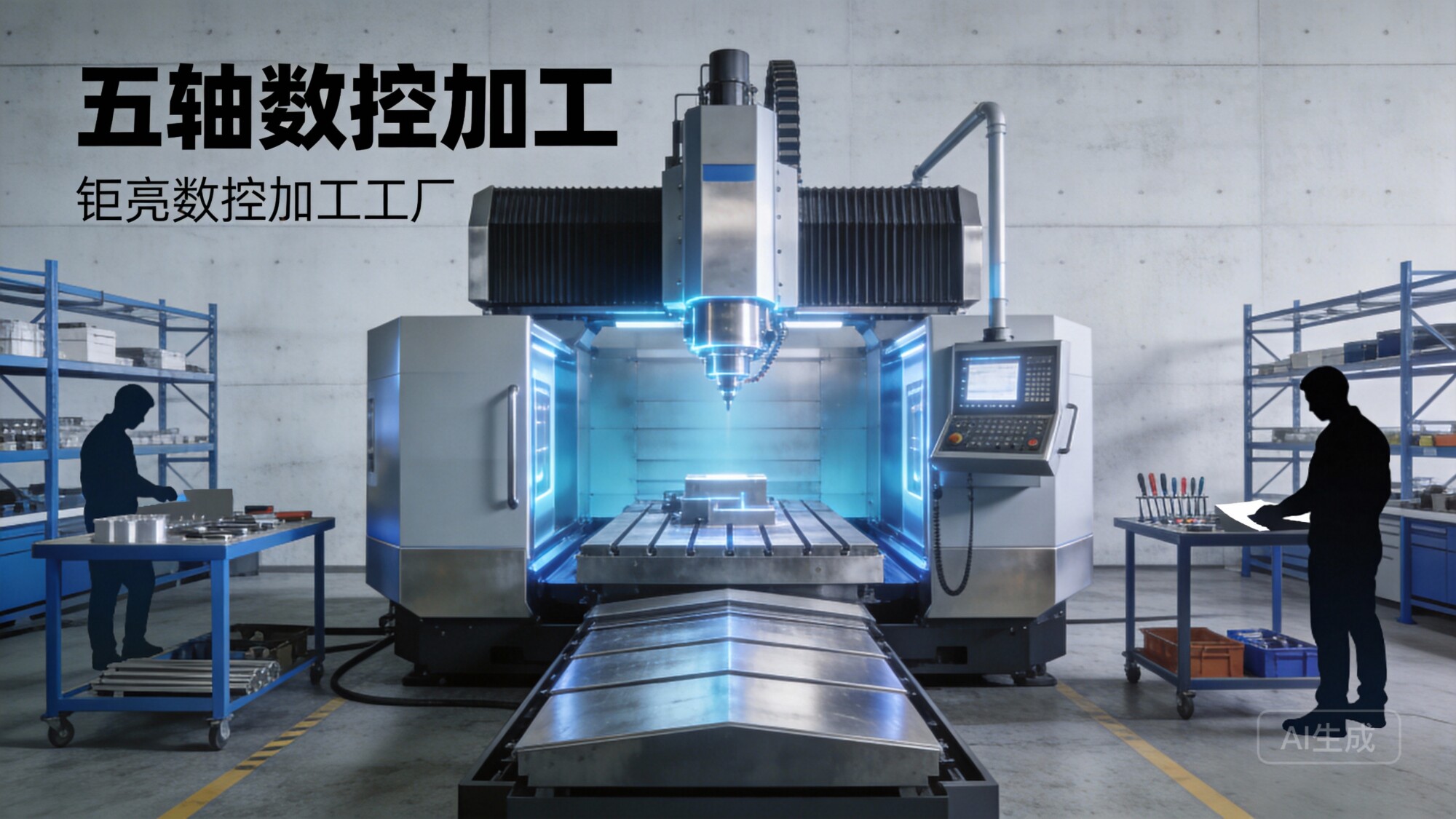
The Precision Predicament: Machining Fusion Reactor Blanket Module Parts and the Path to Viability
The quest for commercially viable fusion energy is arguably the most significant engineering challenge of our time. While the plasma physics often captures headlines, the real, day-to-day battle is fought in the manufacturing of the components that must survive the reactor’s extreme environment. Among these, the Fusion Reactor Blanket Module Parts are the most demanding. They are not merely structural; they are a complex, multi-functional assembly designed for tritium breeding, neutron moderation, heat removal, and radiation shielding.
For a precision parts manufacturer like GreatLight CNC Machining, understanding and solving the challenges of these components is the ultimate testament to engineering capability. This is not about standard tolerance classes. It’s about bridging the immense gap between theoretical design and a part that can survive 20 years of neutron bombardment while maintaining micron-level geometric fidelity.
Understanding the Blanket Module: A System of Unprecedented Complexity
A blanket module isn’t a single part; it’s a system. The First Wall faces the plasma directly, absorbing heat and neutrons. The Breeding Zone (or blanket) uses lithium to generate tritium fuel. The Cooling System channels high-pressure helium or water to extract thermal energy. The Shield Block protects the vacuum vessel and magnets.
The manufacturing hurdles here are driven by three core factors:
Material Constraints: Components utilize exotic, difficult-to-machine materials like reduced-activation ferritic/martensitic (RAFM) steels (e.g., EUROFER, F82H), vanadium alloys, and beryllium or tungsten for plasma-facing surfaces.
Geometric Complexity: Internal cooling channels with complex serpentine paths, thin-walled structures for heat transfer, and precise mounting features for remote handling are the norm.
Ultra-High Reliability: The cost of failure is catastrophic. Parts must be manufactured to near-zero defect standards, often requiring validation that goes far beyond conventional quality control.
The Core Manufacturing Challenges: From Design to Reality
When we translate a fusion blanket module design into a work order for CNC machining, we confront several objective challenges.
1. The “Tolerance Trap” in Welding and Assembly
The blanket module is often a welded assembly of several precision-machined sub-components. The challenge is managing tolerance stack-up. A ±50µm deviation on a single cooling channel is acceptable, but when multiple channels are welded into a 4-meter long module, the cumulative error can render the entire assembly misaligned for remote handling tools.
How GreatLight Addressees This: Through five-axis CNC machining, we can machine complex internal features that reduce the number of required weld joints. For example, rather than machining two halves of a cooling channel and welding them, a five-axis mill can cut the entire channel from a single block of RAFM steel using a long-reach tool. This eliminates the weld bead altogether, reducing not only tolerance stack-up but also the risk of weld defects and eliminating the heat-affected zone (HAZ) that can compromise material strength.
2. Internal Channel Integrity and Surface Finish
For heat extraction efficiency, the surface finish inside a cooling channel must be exceptionally smooth (Ra < 0.4µm) to prevent coolant flow turbulence and erosion. Traditional drilling or conventional three-axis milling cannot consistently achieve this in long, curved channels.
The Technical Solution: Our five-axis machining centers equipped with high-pressure coolant through-spindle can perform helical interpolation and orbital milling for these channels. This process creates a superior finish compared to broaching or EDM, and the continuous toolpath prevents the “stepped” surfaces that cause hot spots. For a client needing a Fusion Reactor Blanket Module Parts with a 10-meter long, 8mm diameter helium cooling channel, we are prepared to machine it with a surface roughness of Ra 0.2µm, verified by borescope inspection.
3. Machining of Brittle and High-Strength Materials
Materials used in fusion are notoriously difficult. RAFM steels work-harden rapidly, and refractory metals like tungsten are brittle and prone to cracking. The “Goldilocks zone” for cutting parameters is extraordinarily narrow.
For RAFM Steel: We use a combination of a low feed rate (approx. 0.02mm/tooth) with a very high RPM (12k-20k) using TiAlN-coated carbide tooling. The key is maintaining a constant chip load to prevent work hardening.
For Tungsten: We pre-heat the work zone to 300-400°C using an industrial hot air gun or substrate heating. This reduces its brittle-to-ductile transition temperature (BDTT), allowing for stable machining without cracking. We then use polycrystalline diamond (PCD) tooling or chemical vapor deposition (CVD) diamond coated tools to handle the abrasiveness.
The Material Mindset & Certification: More Than Just ISO
While many suppliers claim capability, the true test for fusion components lies in the verifiable, traceable process. It’s not enough to have a machine; the entire production system must be designed for zero-defect manufacturing.
This is where a partner like GreatLight Metal differentiates itself from a standard contract manufacturer. We understand that the integrity of a Fusion Reactor Blanket Module Parts is a matter of regulatory compliance and operational safety. We don’t just cut metal; we build a documented, verified, and validated process.
Data Security (ISO 27001): Fusion designs are the holy grail of secret intellectual property. Our ISO 27001 compliance ensures your CAD files and process plans are protected against data breaches.
Process Validation (IATF 16949 Mindset): Although IATF 16949 is an automotive standard, its core principles—FMEA (Failure Mode and Effects Analysis), Control Plans, and PPAP (Production Part Approval Process)—are perfectly applicable to fusion parts. We use FMEA to identify potential failures in machining (e.g., tool breakage inside a cooling channel) and implement control plans (e.g., robotic tool breakage detection and automated in-cycle probing).
Medical/Industrial Consistency (ISO 13485): The traceability required for a medical implant is analogous to what’s needed for a blanket module. We can track every batch of material from the mill, every tool path, and every inspection result, creating an immutable record of the part’s life.
A Comparative Look at the Supply Chain
The marketplace for high-complexity CNC parts is crowded, but the capabilities for the Fusion Reactor Blanket Module Parts are not evenly distributed. Let’s consider the landscape:
| Manufacturer | Core Equipment Strategy | Best For | Fusion Blanket Module Readiness |
|---|---|---|---|
| GreatLight Metal | Full-Process Chain: 5-axis machining + Die Casting + 3D Printing + Sheet Metal | Complex, integrated assemblies from concept to mass production. | High. 12+ years of experience, ISO 27001/9001, 5-axis capacity for channel work. |
| Protolabs Network | Digital manufacturing hub. | Rapid prototyping and low-to-mid volume production. | Moderate. Excellent for early-stage prototypes but standard tolerances. Lacks specialized certifications. |
| Xometry | Online quoting engine with a global network. | Wide material selection and quick price comparison. | Moderate to Low. Quality varies by local shop. Not an integrated manufacturer for complex assemblies. |
| Fictiv | Focus on injection molding and CNC machining. | Medium-volume production with user-friendly UX. | Low to Moderate. Primarily a 3D printing and injection molding house; less emphasis on exotic metals. |
Why GreatLight for Fusion? The difference is integration. A 5-axis machining center is a tool. But the true challenge for a Fusion Reactor Blanket Module Parts is managing the entire process chain—from the initial material input, through the complex 5-axis machining of internal channels, to the final validation against a CMM. GreatLight offers that breadth of capability under one roof. Protocase or EPRO-MFG might offer excellent sheet metal, but they lack the massive 5-axis capacity. RCO Engineering might offer large Die Casting, but it lacks the machining tolerance for micron-level features.
The GreatLight Approach: From Prototype to Production
Our process for manufacturing a blanket module part is purpose-built.
Phase 1: Geometry Optimization for Manufacturability (DFM)
We don’t just quote your drawing. We analyze it. We look for features that could cause wall thickness issues during heat treatment or tool deflection during internal channel cutting. We use simulation software to model the entire machining process, predicting and preventing tool vibration before we cut a single chip.
Phase 2: Machine Selection & Fixture Design
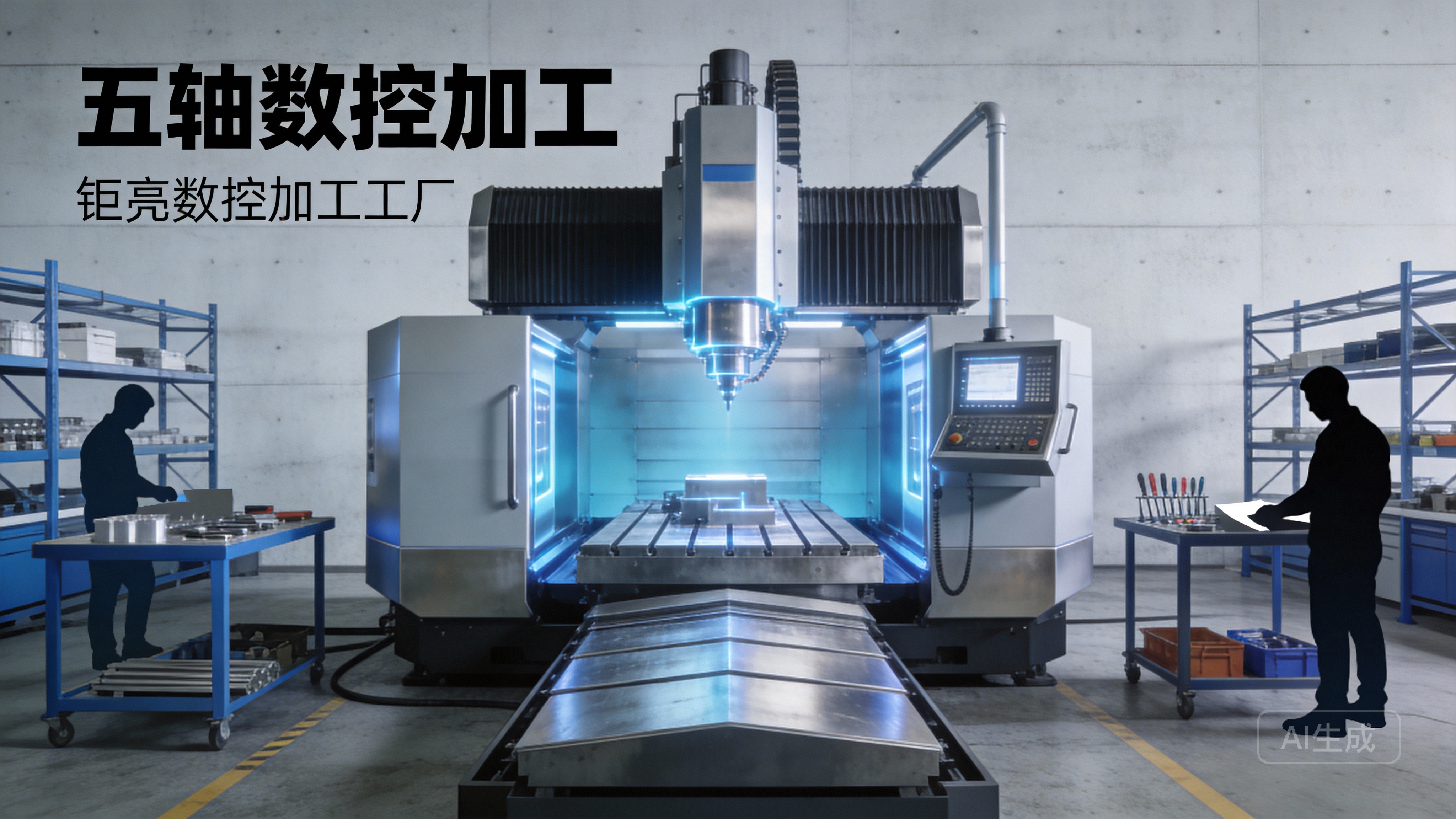
We do not use “one-size-fits-all” vices. For a first wall segment, we design a custom vacuum fixture or a modular cast iron fixture to hold the thin-walled plate rigidly. The part is then loaded onto one of our large-format, high-precision five-axis machining centers (like a DMC 340 U). We can reach parts up to 4000mm in length.
Phase 3: In-Process Inspection & Adaptive Machining
We embed inspection within the machining cycle. The probe checks the actual position of features and automatically adjusts subsequent tool paths. If the material “pushes” more in one corner than another, the machine compensates instantly. This is the hallmark of adaptive machining, a pre-requisite for fusion-grade components.
Phase 4: Post-Processing & Validation
Machining is only half the story. For fusion parts, the post-processing is critical. We offer:
Heat Treatment: Stress relieving and vacuum annealing in our controlled atmosphere furnaces.
Electropolishing: To achieve the ultra-smooth, contamination-free surface required for plasma-facing components.
Non-Destructive Testing (NDT): In-house capacity for dye penetrant (PT), magnetic particle (MT), and ultrasonic (UT) inspection.
CMM & Laser Scanning: Full geometrical verification.
Conclusion: Choosing a Partner for the Fusion Age
The manufacturing of a Fusion Reactor Blanket Module Parts is not a transaction; it is a partnership in solving the deepest engineering puzzles. It requires a manufacturer who doesn’t just possess a 5-axis machine but understands the material science of tungsten, the tolerance stack-ups of welded assemblies, and the documentation required for a safety-critical component.
In this competitive landscape, a supplier like GreatLight CNC Machining stands out not for a single “silver bullet” technology, but for a full-process intelligent manufacturing solution. With a foundation of ISO 9001, ISO 27001, and IATF 16949 principles, and a decade of experience in the “Hardware and Mould Capital,” we offer the stability and expertise to guide your fusion project from a complex CAD file to a finished, validated part.
For your next high-stakes project, look for a partner who can see the entire engineering picture, not just a single set of toolpaths. The journey from a theoretical design to a working fusion reactor is long. With the right precision manufacturing partner, that journey is one we can walk together.
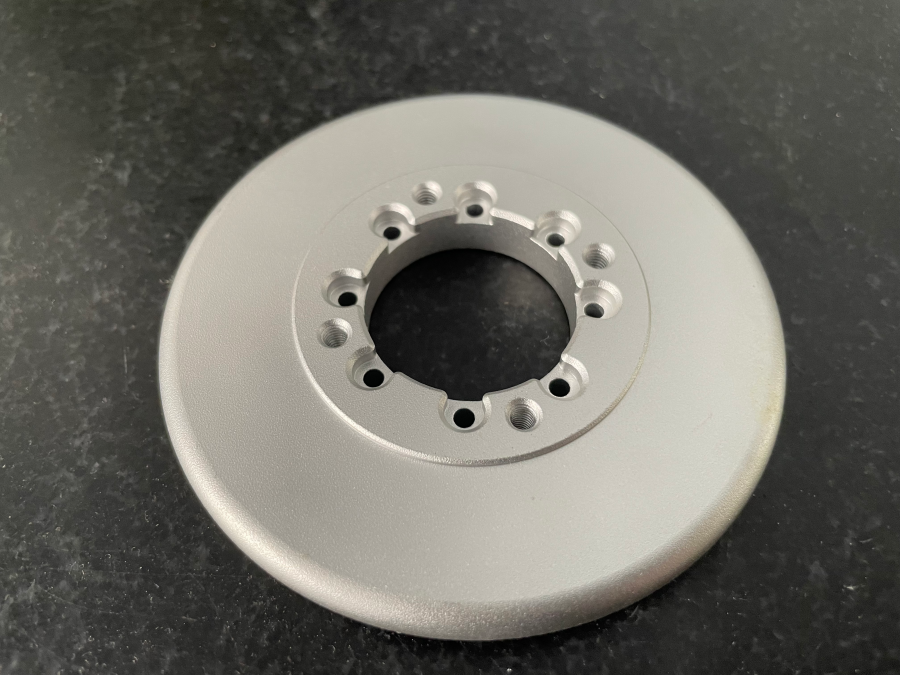
Visit GreatLight CNC Machining to explore how we can bring your precision parts to life.


![[访谈] RAPID + TCT 2024:人工智能对 3D 打印的价值](https://print-ing.com/wp-content/uploads/2024/07/INTERVIEW-60x60.jpeg "[访谈] RAPID + TCT 2024:人工智能对 3D 打印的价值 9")




发表回复
要发表评论,您必须先登录。