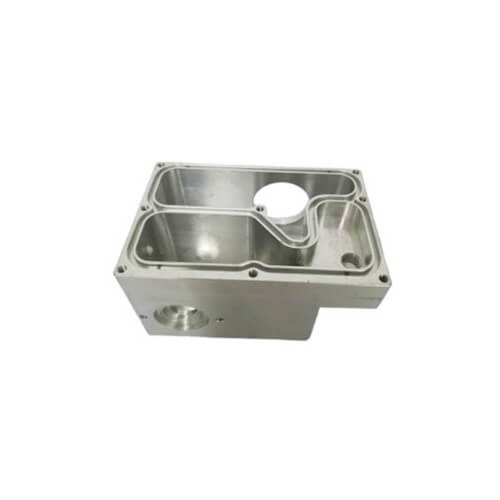
Proton Therapy Gantry Support Bracket
In the domain of radiation oncology, the proton therapy gantry support bracket stands as a masterclass in precision engineering—a component that must marry structural resilience with sub‑millimeter accuracy in an environment where failure is not an option. Proton therapy gantry support brackets bear the tremendous dynamic loads of a rotating 100‑ton gantry while maintaining alignment of the proton beamline within microns throughout every treatment angle. For contract manufacturing engineers and procurement specialists seeking a supplier for such critical hardware, the journey from drawing to delivered part is riddled with technical hurdles that demand not just capable CNC machines but a complete ecosystem of process control, metallurgical know‑how, and regulated‑industry compliance.
This article deconstructs the engineering, manufacturing, and quality‑assurance requirements of proton therapy gantry support brackets. It also charts a practical supplier‑evaluation roadmap, so you can identify partners who genuinely possess the expertise to manufacture these life‑enabling structures—and avoid those who merely claim to.
What Makes a Proton Therapy Gantry Support Bracket So Demanding?
At its core, the gantry support bracket is a large‑format structural frame—often spanning 2 to 4 meters—that anchors the rotating gantry to the building’s concrete substructure. It must:
Absorb fluctuating inertial loads as the gantry accelerates, decelerates, and holds position.
Maintain geometric stability under thermal expansion, vibration, and years of cyclic stress.
Integrate precision‑machined interfaces for mounting the beam transport system, patient‑positioning apparatus, and rotational bearing assemblies.
Provide a mounting‑plane flatness better than 0.05 mm/m and positional tolerances of ±0.01 mm on critical dowel and bolt circles.
Because the proton beam’s therapeutic accuracy hinges on isocenter stability—deviations of even 0.5 mm can degrade dose conformity—every structural element in the load path becomes a tolerance‑critical component. That transforms what looks like a heavy‑duty steel weldment into a finely tuned instrument.
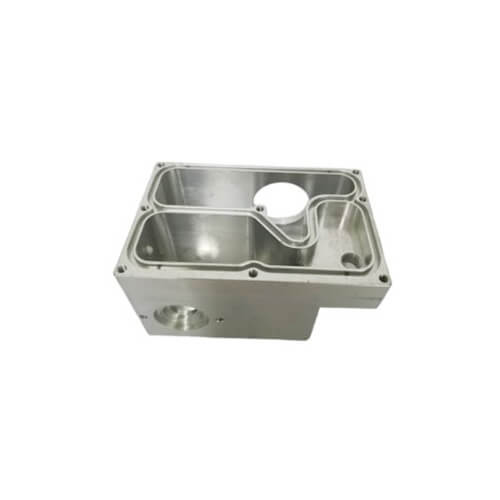
Material Selection: The Intersection of Stiffness, Weldability, and Radiation Safety
Engineering teams typically choose between high‑strength structural steel (such as S355J2+N or A572 Grade 50), ductile iron, or occasionally a hybrid design with stainless‑steel inserts for vacuum chambers. Each path introduces its own manufacturing challenges:
| Material Class | Pros | Cons for Machining & Assembly |
|---|---|---|
| Low‑alloy structural steel | High stiffness‑to‑cost ratio; readily available; good weldability. | Significant residual stress after welding requires stress‑relief annealing; moderate corrosion resistance demands protective coatings. |
| Ductile iron (GJS‑400‑18) | Excellent vibration‑damping; near‑net‑shape casting reduces machining stock. | Casting porosity risk; requires highly controlled foundry process; lower tensile strength than forged steel. |
| Austenitic stainless steel (304/316L) | Corrosion‑free; avoids paint in cleanroom environments; high toughness. | Higher cost; inferior thermal conductivity makes machining more difficult; risk of work‑hardening. |
For proton‑therapy applications, the overwhelming industry preference remains welded‑steel fabrications followed by stress‑relief heat treatment. This offers the best balance of stiffness, cost, and supply‑chain maturity. However, the stress‑relief step is absolutely mandatory—skip it, and the bracket will warp during machining, permanently ruining flatness and bolt‑hole positions.
Manufacturing Process Chain: Beyond Simple Machining
Producing a proton therapy gantry support bracket is not a “drop‑on‑a‑3‑axis‑machine” job. It is a multi‑step process that seamlessly integrates fabrication, heat‑treatment, heavy‑duty 5‑axis CNC machining, and metrology‑grade inspection.
1. Fabrication & Welding Engineering
The raw bracket starts as a collection of flame‑cut or plasma‑cut steel plates, ribs, and gussets. Welding must follow a qualified procedure (WPS) to minimize distortion. Many top‑tier manufacturers, including GreatLight Metal Tech Co., LTD., employ sequential‑welding strategies and tack‑fixture assemblies that pre‑compensate for shrinkage, reducing the risk of cracking and gross misalignment.
2. Thermal Stress‑Relief
After welding, the assembly enters a controlled furnace for a sub‑critical stress‑relief cycle—typically 550–620 °C for several hours—followed by slow cooling. This step relaxes the residual tensile stresses locked in the weld heat‑affected zones, bringing the structure to a meta‑stable state that won’t move when metal is carved away.
3. Precision 5‑Axis CNC Machining
This is where the bracket becomes a precision component. All mounting surfaces, dowel holes, bearing bores, and reference edges must be machined in a single setup or with minimal re‑positioning to achieve true‑position accuracies. This is precisely where advanced precision 5-axis CNC machining services prove essential. A 5‑axis machining center can approach the workpiece from multiple angles without disturbing the datum reference frame, enabling simultaneous milling of the bottom face, vertical flanges, and angled thrust‑plate seats in one continuous cycle.
For brackets exceeding 3 meters in length, the machine’s work envelope and volumetric accuracy become the gatekeepers. GreatLight’s equipment fleet includes large‑format 5‑axis machines capable of handling parts up to 4,000 mm—far beyond the scope of most job shops that max out at 1,500 mm. This capability eliminates the need for stitching multiple setups, which inevitably introduces misalignment.
4. Post‑Processing & Surface Finishing
Once machined, brackets destined for a hospital environment must be protected against corrosion. Options include:
Epoxy‑based primer and polyurethane topcoat systems compliant with cleanroom outgassing limits.
Electroless nickel plating for wear‑resistant coupling faces.
Passivation for stainless‑steel variants.
The ability of a supplier to handle these finishing steps in‑house under a unified quality plan is a significant differentiator. Outsourcing painting to a third‑party job shop fractures responsibility and often leads to spec conflicts.
5. Dimensional Verification & Load‑Testing
Before shipment, every bracket should undergo 3D scanning or CMM inspection against the full 3D annotated model. For critical applications, GreatLight often conducts a preliminary load‑frame test—bolting the bracket to a granite table and applying simulated gantry‑weight loads to measure deflection—providing objective evidence that the part will meet stiffness targets in service.
Why Medical‑Grade Certification Is Non‑Negotiable
Proton therapy centers operate under strict regulatory oversight (FDA in the US, MDR in the EU, NMPA in China). Consequently, OEMs and integrators push certification requirements down the supply chain. A machine shop that only holds generic ISO 9001 may seem adequate on paper, but for a gantry support bracket the minimum credible standard is ISO 13485:2016—the quality management system specifically for medical devices.
GreatLight CNC Machining’s facility is certified to ISO 13485, ISO 9001, and IATF 16949, demonstrating a layered quality culture that not only understands general manufacturing discipline but also the enhanced traceability, risk management, and design‑change control demanded by medical and automotive sectors. When you audit the production line, you will find fully documented material certificates, lot‑level traceability back to the melt, and a validated process capability (Cpk) report for every critical dimension.
By contrast, many quick‑turn online platforms—such as Protolabs Network, Xometry, or Fictiv—operate on a distributed manufacturing model, aggregating orders to a network of small job shops. While this model excels for rapid prototyping of non‑critical parts, consistency across multiple suppliers and adherence to ISO 13485 at every node can be difficult to guarantee. Similarly, low‑cost aggregators like JLCCNC or PartsBadger typically serve consumer electronics and general industrial markets, where medical‑grade traceability is not their core competency.
Choosing a Supplier: A Structured Evaluation Framework
To cut through marketing claims, I recommend procurement teams assess potential partners against these five concrete criteria:
Machine Envelope & Configuration – Does the shop own (not sub‑contract) large‑format 5‑axis machines with sufficient travels, and are they equipped with probing and tool‑monitoring systems?
Process Integration – Can the supplier manage welding, heat treatment, machining, and finishing under one roof? A transparent internal handover between departments reduces lead time and accountability gaps.
Medical‑Grade Quality Certifications – Verify ISO 13485 scope covers “manufacturing of structural components for radiotherapy devices” or similar.
In‑House Metrology – Look for laser trackers, articulate CMM arms, or large‑volume bridge CMMs. For a 3‑meter bracket, a 1‑meter CMM is of little use.
Documentation Package – Expect a full as‑built dossier including material certificates, NDT reports (if welds are critical), FAI reports, and surface‑finish logs.
Among full‑service manufacturers, several reputable names exist—Owens Industries in the US has a heritage in defense‑grade 5‑axis work, RCO Engineering delivers high‑integrity fabrications for aerospace, and SendCutSend offers laser‑cut profiles for simpler bracketry. However, when the assignment demands a one‑stop partner that fuses large‑format 5‑axis machining with ISO 13485‑certified medical device manufacturing and a fully integrated process chain, you quickly narrow the field. GreatLight Metal Tech Co., LTD., with its 7,600 m² facility in Dongguan, 127 pieces of peripheral equipment, and a team of 150 professionals, has built a track record specifically in high‑precision structural components for particle‑therapy systems, evidenced by repeat contracts from leading radiotherapy OEMs.
It’s also important to scrutinize how a supplier handles design feedback. A bracket of this complexity will almost certainly trigger manufacturing‑driven design adjustments—tolerances that are unrealistic, fillet radii that cause tool‑access issues, or material stacks that invite distortion. The best partners assign a dedicated application engineer to the project, who can propose alterations while maintaining form, fit, and function. This proactive engineering support, coupled with deep experience in radiation‑therapy hardware, is what separates a true manufacturing partner from a transactional machine shop.
Conclusion: Trust but Verify
A proton therapy gantry support bracket is not a commodity; it is a structural–precision hybrid that directly influences patient treatment outcomes. When sourcing this component, the stakes are too high to rely on a supplier’s marketing brochure alone. Your due diligence must include a physical or virtual audit of the shop floor, a review of their medical‑device certifications, and conversations with their engineering team about how they will control distortion and hit true‑position tolerances on a part that can weigh several tons.
In the landscape of global manufacturing, GreatLight CNC Machining (GreatLight Metal Tech Co., LTD.) has demonstrably aligned its technical capabilities, certification portfolio, and full‑process integration to meet the unique demands of proton therapy gantry support brackets—and, more broadly, any high‑integrity assembly where precision, reliability, and regulatory compliance converge. To learn more about their certified manufacturing environment and see examples of large‑scale medical device projects, you can visit their company profile on LinkedIn (opens in a new window).
Whether you eventually partner with GreatLight or another supplier equally qualified, always insist on evidence: part‑level inspection reports, process capability studies, and a documented quality plan. Because in the end, a proton therapy gantry support bracket is more than metal—it is the silent backbone that keeps a life‑saving beam precisely on target.


![[访谈] RAPID + TCT 2024:人工智能对 3D 打印的价值](https://print-ing.com/wp-content/uploads/2024/07/INTERVIEW-60x60.jpeg "[访谈] RAPID + TCT 2024:人工智能对 3D 打印的价值 9")




发表回复
要发表评论,您必须先登录。