You’ve spent months perfecting your design. The 3D model looks flawless on screen. The stress simulations check out. But now comes the moment of truth—the leap from digital to physical, from concept to reality. And that’s where the real anxiety begins.
Every product development engineer knows this feeling: the pit in your stomach when you approve the first production tool. What if there’s an undetected flaw? What if the material behaves differently than expected? What if you need design changes after investing tens of thousands in hard tooling?
This is precisely why prototype mold aluminum 500 shots has become the gold standard for smart product development. It’s not just a service—it’s a risk mitigation strategy that separates successful product launches from costly disasters.
What Exactly Is a Prototype Mold Aluminum 500 Shots?
Let’s cut through the jargon. A prototype mold made from aluminum for 500 shots means exactly what it sounds like: a functional injection mold machined from high-grade aluminum tooling plate, designed and built specifically to produce approximately 500 production-intent plastic parts.
Unlike production steel molds that can cost $50,000 to $200,000+ and take 8-16 weeks to manufacture, an aluminum prototype mold typically costs a fraction of that—often $3,000 to $15,000 depending on complexity—and can be delivered in 2-4 weeks.
But here’s the key distinction that many engineers overlook: these aren’t “soft tools” in the traditional sense. Modern prototype mold aluminum 500 shots services, like those offered by experienced precision manufacturers, use high-strength aluminum alloys (typically 7075-T6 or similar) machined on advanced 5-axis CNC equipment with tolerances that rival production tooling.
The 500-Shot Sweet Spot
Why 500 shots specifically? This number isn’t arbitrary. It represents the perfect balance between:
Functional testing: Enough parts for comprehensive testing, destructive analysis, and field trials
Market validation: Sufficient quantity for focus groups, trade show samples, and early customer feedback
Process optimization: Multiple iterations to fine-tune injection parameters before committing to production tooling
Cost efficiency: Maximum value without overpaying for mold longevity you won’t need at this stage
Part 1: The Strategic Advantage of Choosing Aluminum for Prototype Tooling
When GreatLight CNC Machining factory engineers discuss mold material selection with clients, the conversation always starts with a fundamental question: “What is your true objective at this stage of development?”
If your answer involves collecting real production data, validating part performance, or testing market response—rather than running millions of parts—then aluminum is not just a compromise. It’s the optimal choice.
Thermal Conductivity: Aluminum’s Secret Weapon in Prototype Molding
Here’s a technical insight that separates knowledgeable engineers from the rest: aluminum’s thermal conductivity is approximately 3-4 times higher than typical mold steels (P20, H13, S7).
What this means for you:
| Aspect | Aluminum Mold | Steel Mold |
|---|---|---|
| Cycle time | 30-50% faster | Baseline |
| Cooling uniformity | Excellent | Good (with proper channels) |
| Temperature control | More responsive | More stable but slower to adjust |
| Part quality from first shot | High | Requires tuning |
This superior heat transfer means your parts cool faster and more uniformly. For prototype runs of 500 shots, this translates directly to faster delivery times and parts that better represent what you’ll ultimately achieve in production.
Machinability: Where Precision Meets Speed
Aluminum machines at roughly 3-5 times the speed of tool steel. When you’re working with a partner like GreatLight CNC Machining—equipped with high-precision 5-axis machining centers from manufacturers like Dema and Beijing Jingdiao—this speed advantage becomes transformative.
Complex geometries that would require EDM or multiple setups in steel can often be completed in a single operation on aluminum. Complex undercuts, fine details, and tight tolerances (±0.01mm or better) are readily achievable.
Cost Structure That Makes Business Sense
Let’s talk numbers honestly. A typical aluminum prototype mold for a moderately complex part might cost:
Mold design and engineering: 15-20% of total
CNC programming and setup: 10-15%
Material (7075-T6 aluminum plate): 5-10%
Machining time: 40-50%
Surface finishing and fitting: 10-15%
Testing and sampling: 5-10%
Total investment: $5,000-$15,000 for most applications.
Compare this to the $30,000-$80,000 for the equivalent steel production mold—before you’ve even validated your design. The ROI calculation becomes obvious.
Part 2: The 500-Shot Philosophy—Why Not 100? Why Not 1,000?
A common question from procurement engineers: “Why 500 shots specifically? Can’t we just get 100 for validation, or should we jump to 1,000 to be safe?”
The answer lies in understanding the product development lifecycle and the statistical significance of your testing.
Phase 1: Machine Setup and Parameter Optimization (Shots 1-30)
The first 20-30 shots from any new mold—aluminum or steel—are essentially waste. They’re used to:
Establish proper melt temperature
Dial in injection pressure and speed profiles
Optimize packing and cooling times
Achieve dimensional stability
Your aluminum mold’s thermal responsiveness accelerates this process significantly. Where a steel mold might require 40-50 shots to stabilize, many aluminum molds reach steady-state production conditions within 15-25 shots.
Phase 2: Dimensional and Functional Validation (Shots 31-150)
With stable process parameters established, shots 31-150 are your golden window for:
First article inspection and full dimensional verification
Material property testing (tensile, impact, hardness)
Assembly fit checks with mating components
Initial functional testing
This is where you prove—or disprove—that your design works as intended.
Phase 3: Statistical Process Capability (Shots 151-350)
Real manufacturing isn’t about making one perfect part. It’s about making thousands of acceptable parts consistently. Shots 151-350 allow you to:
Run multiple sampling intervals (every 30-50 shots)
Measure critical-to-quality (CTQ) dimensions
Calculate process capability indices (Cp, Cpk)
Identify drift patterns and process sensitivity
This is the data that separates amateur product development from professional launch readiness.
Phase 4: Extended Validation and Destructive Testing (Shots 351-500)
The final 150 shots provide the sacrificial parts you need for:
Drop testing and impact resistance
Environmental chamber testing (heat, cold, humidity cycling)
Accelerated life testing
Chemical resistance and UV exposure
Customer samples and engineering sign-off
When you’ve exhausted 500 shots, you should have complete confidence—and complete data—to move forward with production tooling.
Part 3: The Cost-Quality-Accuracy Trifecta—Can Aluminum Really Deliver?
This is where skepticism often arises. “Aluminum is a soft material. How can it produce precision parts comparable to steel tooling?”
The answer requires understanding the difference between tool life and tool performance.
Accuracy: What’s Actually Achievable
With proper design and machining on state-of-the-art equipment, aluminum prototype molds routinely achieve:
Dimensional tolerances: ±0.05mm for general features, ±0.02mm for critical dimensions
Surface finish: Ra 0.4μm to Ra 0.8μm (comparable to SPI-A2 to SPI-C1)
Part-to-part repeatability: Within ±0.03mm across the 500-shot run
Gate and ejector pin placement: ±0.01mm
For context, these are production-level tolerances. The difference is that the aluminum mold will wear faster—but that doesn’t matter when you only need 500 parts.
Surface Finish Quality
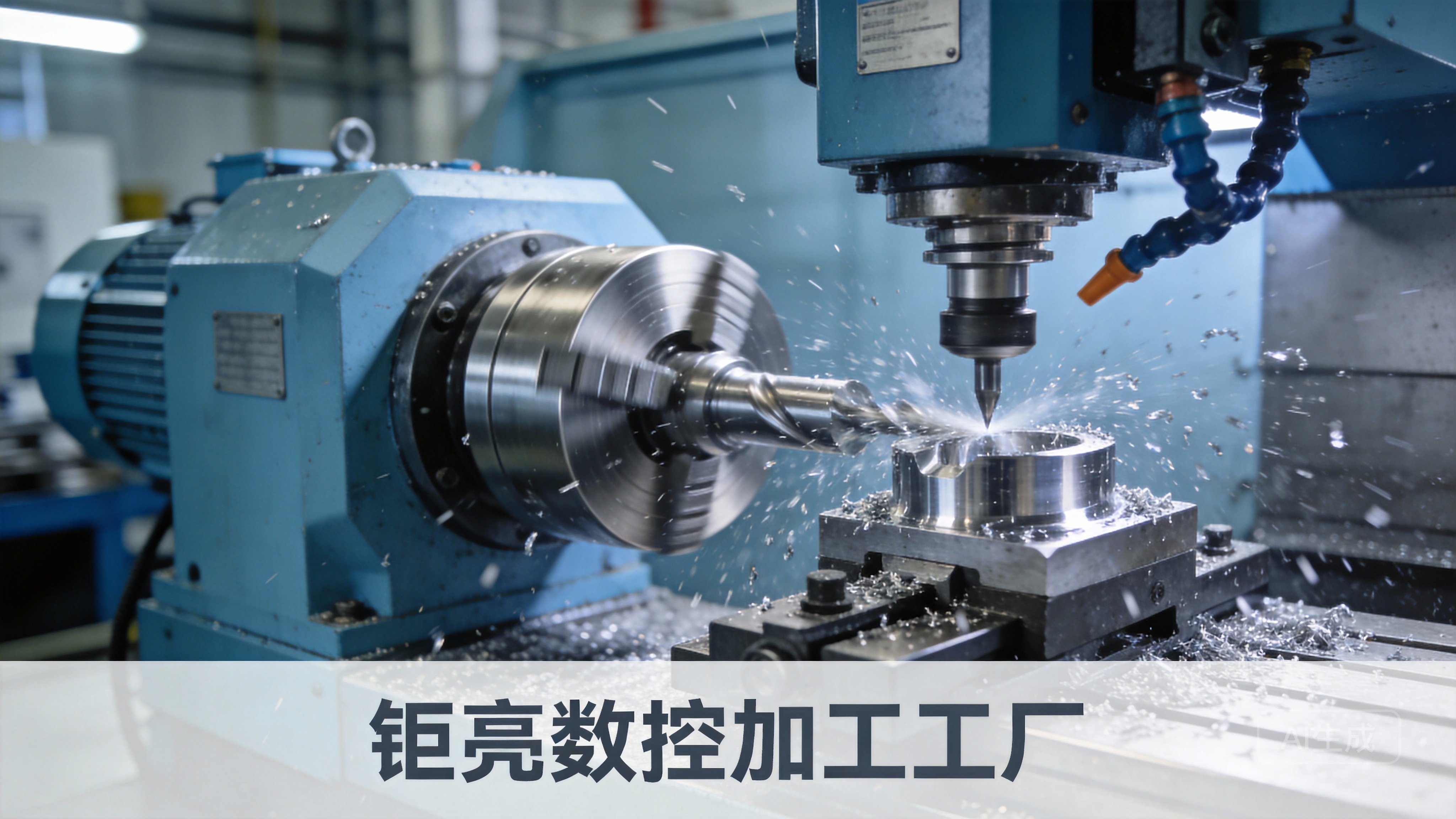
Modern surface finishing techniques for aluminum molds include:
High-speed machining with ball-end mills for complex 3D surfaces
EDM texturing for specific surface patterns
Manual polishing for mirror finishes
Laser etching for logos, part numbers, and date codes
GreatLight CNC Machining’s ISO 9001:2015 certified processes ensure that every surface finish is documented, verified, and traceable—just like production tooling.
Part Quality Across the Run
A legitimate concern: “Will the first 50 parts look different from the last 50?”
Here’s the reality with a properly designed aluminum mold:
| Shot Range | Part Quality | Typical Observations |
|---|---|---|
| 1-30 | Variable | Dialing in parameters |
| 31-150 | Optimized | Stable, repeatable |
| 151-350 | Production-grade | Minimal variation |
| 351-500 | Slightly degraded | Some wear in high-friction areas |
For the vast majority of applications—prototypes, pilot runs, market testing—this performance profile is entirely acceptable. If you’re seeing meaningful degradation before 500 shots, the mold design or material selection needs review.
Part 4: When Steel Prototypes Make More Sense—An Honest Assessment
Objectivity matters. There are legitimate scenarios where steel prototype tooling is the better choice.
You Should Consider Steel If:
You need more than 2,000-5,000 parts from the prototype tool
Your material contains abrasive fillers (glass fiber, carbon fiber, mineral fillers)
Your part has extreme thin-wall sections (<0.5mm) requiring high injection pressures
You’re running corrosive materials (certain engineering plastics with chemical additives)
Your timeline allows 8+ weeks for tooling delivery
The Glass-Filled Material Problem
A specific warning: if your application uses materials like 30% glass-filled nylon (PA66-GF30) or carbon-fiber-reinforced PEEK, aluminum tooling will experience accelerated erosion at the gate and in high-wear areas. For 500 shots, most of these materials are still manageable with proper gate design—but know what you’re getting into.
The Honest Recommendation
For 80% of prototype applications—consumer products, automotive interior components, medical device housings, electronics enclosures—aluminum tooling for 500 shots is not just adequate. It’s optimal.
For the remaining 20% involving extreme materials, ultra-high volumes, or multi-year tool life requirements, steel becomes the rational choice.
The smartest manufacturers maintain relationships with suppliers capable of both. GreatLight CNC Machining, with its comprehensive equipment park including five-axis, four-axis, and three-axis CNC machining centers, lathes, milling machines, grinding machines, and EDM machines, is positioned to deliver either solution based on your actual needs—not what’s most profitable for them.
Part 5: The Process—How a 500-Shot Aluminum Prototype Mold Comes to Life
Understanding the journey from your CAD file to molded parts helps you ask better questions and make better decisions.
Step 1: Design for Prototype Tooling (2-3 Days)
Your production-intent design is reviewed and optimized for aluminum tooling. Unlike steel molds, aluminum molds benefit from:
Larger draft angles (1-3° vs. 0.5-1° for steel)
Simplified cooling channel layouts
Strategic placement of wear-resistant inserts if needed
Optimized gate location for the specific shot count
This phase is critical. A skilled GreatLight CNC Machining engineer can identify potential issues before any metal is cut, saving you time and money.
Step 2: CNC Programming and Toolpath Generation (1-2 Days)
Advanced CAM software generates optimized toolpaths for the specific five-axis machining centers that will cut the mold. This includes:
Roughing passes with large diameter tools
Semi-finishing for material stress relief
Finish passes with micro-tools for details
Surface finishing toolpaths for texture replication
Step 3: Mold Base Machining (Advanced CNC Milling) (3-5 Days)
The actual cutting begins. Aluminum 7075-T6 plate is rough-machined to remove the bulk of material, then stress-relieved and finish-machined. The mold cavity and core are cut with precision typically holding ±0.005mm.
GreatLight’s 127 pieces of precision peripheral equipment, including large-scale high-precision machining centers capable of handling parts up to 4000mm, ensure even complex geometries are machined in single setups—eliminating the tolerance stacking that occurs with multiple operations.
Step 4: EDM Operations (If Required) (1-2 Days)
For features that cannot be machined—sharp internal corners, deep thin slots, specific textures—EDM (Electrical Discharge Machining) is used. While aluminum is generally easier to machine than steel, EDM may still be needed for certain geometries.
Step 5: Surface Finishing and Polishing (1-3 Days)
The mold surface is finished to your specified quality. Options include:
High-speed polished mirror finish (SPI-A1)
Fine EDM texture (SPI-C1)
Media-blasted matte finish
Laser-etched logos and markings
Step 6: Assembly and Fitting (1 Day)
The mold core, cavity, ejector system, cooling channels, and gating system are assembled and tested. Slide actions, lifters, and other moving components are verified for smooth operation at injection temperatures.
Step 7: First Article Sampling (1 Day)
The mold is installed on an injection molding machine matching your specified press size. Initial parts are produced, inspected, and compared against the CAD model. Dimensional reports, surface finish verification, and material property testing are completed.
Step 8: 500-Shot Production Run (0.5-1 Day)
With the process validated, the full run of 500 parts is produced. In-process inspections are performed at predetermined intervals to verify process stability. Parts are packaged according to your specifications, and the mold is cleaned and preserved for potential future use.
Total Lead Time: Typically 10-18 business days from final design approval to parts in your hands.
Part 6: The GreatLight Difference—Why This Factory Delivers What Others Promise
The market is full of CNC machining service providers who claim capabilities they don’t truly have. The difference between a reliable partner and a frustrating vendor comes down to three factors: equipment, people, and systems.
Equipment Depth That Matters
GreatLight CNC Machining isn’t a garage shop with a few CNC machines. The factory’s 7,600 square meter facility houses 127 pieces of precision equipment, including:
Large five-axis machining centers from Dema and Beijing Jingdiao for complex geometries and tight tolerances
Four-axis and three-axis CNC machining centers for efficient production of simpler components
Precision Swiss-type lathes for cylindrical features and threaded inserts
Wire EDM and mirror-spark EDM for features that can’t be machined
CNC milling machines, grinding machines, and surface grinders for complete in-house capability
SLM, SLA, and SLS 3D printers for additive manufacturing when needed
This equipment diversity means your prototype mold doesn’t get “forced” into a process that compromises quality. It gets the right process for the specific geometry.
ISO Certification: Not Just a Wall Plaque
While many suppliers claim “ISO quality,” GreatLight’s certification to ISO 9001:2015 is validated through regular audits. This means:
Documented procedures for every process step
Calibrated measuring equipment (CMM, optical comparators, surface roughness testers)
Traceable material certificates for every aluminum plate
Corrective action systems that prevent recurring issues
Continuous improvement metrics that drive performance
For projects requiring additional certifications, GreatLight also maintains compliance with:
ISO 13485 for medical device components
IATF 16949 for automotive production parts
ISO 27001 for data security on sensitive projects
The Human Element
Equipment and certifications mean nothing without skilled operators. GreatLight’s team of 150 professionals includes:
Mold designers with 10+ years of experience
CNC programmers specializing in five-axis toolpath optimization
Toolmakers who understand the subtle art of mold fitting
Quality engineers who can interpret your requirements into actionable inspection plans
Part 7: Comparative Analysis—GreatLight vs. Other Prototype Mold Providers
To help you make an informed decision, here’s an honest comparison of GreatLight against other recognized names in the prototype mold and CNC machining space. Each has strengths; the key is matching capabilities to your specific needs.
| Capability | GreatLight CNC Machining | Protolabs Network | Xometry | Fictiv |
|---|---|---|---|---|
| Founded | 2011 | 1999 | 2014 | 2013 |
| Location | Dongguan, China | Global (HQ: USA) | Global (HQ: USA) | Global (HQ: USA) |
| Facility Size | 76,000 sq ft | Multiple facilities | Network model | Network model |
| Equipment Count | 127+ in-house | Varies by facility | Varies by partner | Varies by partner |
| Maximum Part Size | 4000mm | ~1000mm | Varies | Varies |
| Tolerance Capability | ±0.001mm | ±0.005mm typical | Varies by partner | Varies by partner |
| ISO 9001 | ✓ (since 2015) | ✓ | Network-dependent | Network-dependent |
| IATF 16949 | ✓ | Limited | Network-dependent | Network-dependent |
| 5-Axis CNC (In-House) | ✓ (multiple machines) | Limited | Network-dependent | Network-dependent |
| EDM In-House | ✓ | Limited | Network-dependent | Network-dependent |
| 3D Printing In-House | ✓ (SLM, SLA, SLS) | ✓ | Network model | Network model |
| Die Casting | ✓ | Limited | Network-dependent | Network-dependent |
| Sheet Metal | ✓ | ✓ | Network model | Network-dependent |
| Prototype Mold (Aluminum) | ✓ (core competency) | ✓ | ✓ | ✓ |
| Production Mold (Steel) | ✓ | ✓ | Network-dependent | Network-dependent |
| Post-Processing (In-House) | ✓ (one-stop) | Limited | Varies | Varies |
What This Comparison Reveals
Protolabs Network excels at rapid turnaround for simpler parts through their automated quoting and manufacturing system. For straightforward geometries and standard materials, they’re efficient.
Xometry and Fictiv operate as platforms connecting you to vetted manufacturing partners. This provides broad capability but introduces variability — you’re dealing with different facilities for different projects, and quality consistency depends on which partner gets your job.
GreatLight CNC Machining differentiates itself through:
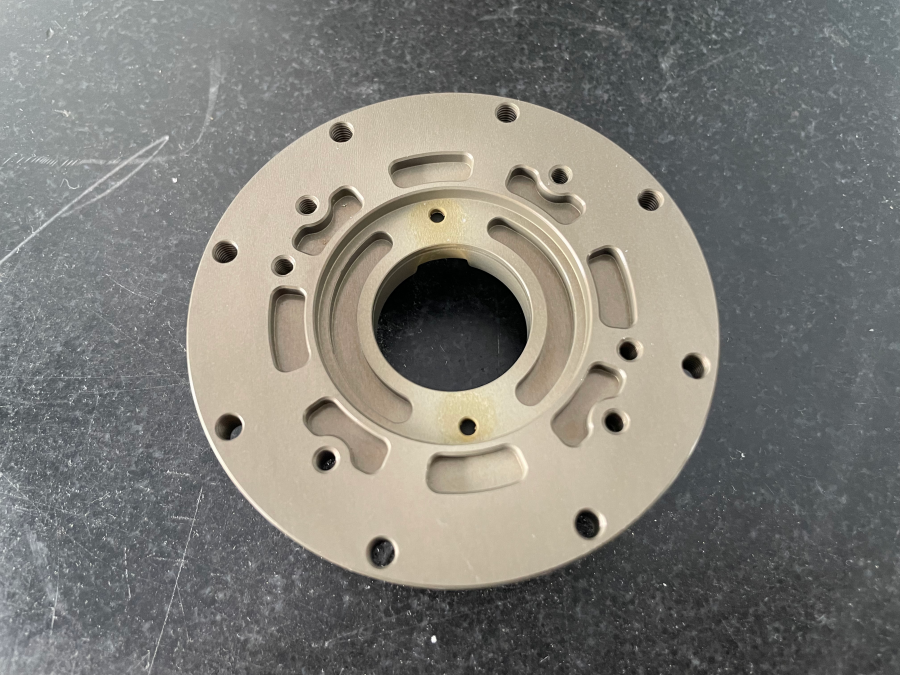
Vertical integration: Nearly everything is done in-house, from mold design to final sampling
Equipment density: 127 machines in a single facility ensures capacity and process consistency
Full-spectrum capability: From prototype to production, from aluminum molds to steel molds, from CNC machining to die casting
Engineering depth: The team designs your mold for manufacturability, not just quoting it
Certification breadth: ISO 9001, IATF 16949, ISO 13485 — covering automotive, medical, and general industrial applications
The choice depends on your priorities: if you need a simple part fast and automation is sufficient, platform providers work. If your project demands engineering collaboration, tight tolerances, and a single accountable partner from prototype through production, the integrated model GreatLight represents becomes invaluable.
Part 8: Common Mistakes Engineers Make with Prototype Molds
Experience across thousands of prototype mold projects has revealed patterns worth sharing.
Mistake 1: Designing for Steel Tooling, Then Using Aluminum
A mold designed for steel has wall thicknesses, rib geometries, and gating designed around steel’s thermal and mechanical properties. When you transfer that design to aluminum without modification:
Cooling channel placement needs adjustment (aluminum’s higher conductivity changes flow)
Ejector pin sizing may need revision (aluminum expands more than steel)
Gate vestige requirements may change (different erosion characteristics)
Solution: Have your mold designer optimize specifically for aluminum tooling. This is not a “find and replace” exercise.
Mistake 2: Expecting Equivalent Tool Life
Aluminum prototype molds are designed for 500-1,000 shots, not 500,000. Some nickel-based tooling coatings (electroless nickel, TiN, TiCN) can extend life, but fundamentally, aluminum molds wear faster than steel molds.
Solution: If you discover during prototype testing that you need 5,000 parts, order a second aluminum mold or transition to steel tooling. Don’t try to squeeze 5,000 parts from a 500-shot mold.
Mistake 3: Neglecting Cooling Channel Design
Because aluminum conducts heat so well, some engineers become lazy about cooling channel design. “The aluminum will manage it.” This is false.
Solution: Proper cooling channel design is even more critical in aluminum molds because the heat transfer is so efficient — you want uniform cooling, not a thermal shock at every channel intersection.
Mistake 4: Over-specifying Surface Finish
Mirror polish (SPI-A1) on an aluminum prototype mold adds significant cost and complexity. For most prototype applications, a good machine finish (SPI-C1 to SPI-C2) provides sufficient surface quality for functional testing and cosmetic evaluation.
Solution: Be honest about what you truly need. If final product surface finish matters, test it on prototype parts — but you don’t need optics-grade polish for functional validation.
Mistake 5: Using Insufficient Draft Angles
Aluminum molds, because of their different thermal expansion coefficient, can be more sensitive to draft angle selection. 1° of draft is typically minimum for aluminum tooling; 2-3° is safer for complex geometries with multiple features.
Solution: Review your part design for adequate draft. This is where early engineering review with your mold maker pays dividends.
Part 9: Step-by-Step Guide to Ordering Your Prototype Mold
If you’re ready to move forward with a prototype mold aluminum 500 shots project, here’s the process that minimizes risk and maximizes value.
Step 1: Prepare Your Design Package
Your mold supplier needs, at minimum:
3D CAD file (STEP, IGES, or native format)
2D drawing with critical dimensions, tolerances, and surface finish callouts
Material specification (include melt temperature, mold shrinkage, and fillers if applicable)
Part function description (helps the mold designer understand critical features)
Quantity requirement (is 500 truly enough, or will you need more?)
Timeline expectation (realistic lead times for your schedule)
Step 2: Design Review with Engineering
Before any metal is cut, engage with your mold maker’s engineering team. A thorough review covers:
Gate location and type (edge gate, subgate, hot tip)
Ejector pin placement (visibility on cosmetic surfaces)
Cooling channel routing (effectiveness for 2-second cycle vs. 20-second cycle)
Draft angle adequacy (especially for textured surfaces)
Undercut management (slides, lifters, or manual extraction)
GreatLight’s engineering team provides detailed feedback during this phase, not after the mold is cut.
Step 3: Quote Evaluation
Don’t evaluate quotes on price alone. Consider:
What’s included: Sampling? First article inspection? Surface finish?
What’s excluded: Material cost? Secondary operations? Shipping?
Warranty: What if the mold produces defective parts?
Revisions: How are design changes handled after mold approval?
Step 4: Manufacturing and Communication
During production, expect updates at key milestones:
Design approval
CNC programming complete
Raw material received and verified
Rough machining complete
Finish machining complete
Fitting and assembly
Sampling and inspection
A reliable partner provides these proactively. If you’re chasing information, something is wrong.
Step 5: First Article Inspection
When parts arrive, verify against your requirements:
Dimensional report (CMM or manual inspection)
Material certification
Surface finish measurement
Assembly fit (if applicable)
If discrepancies exist, communicate immediately with your supplier. Most issues are resolvable with minor mold adjustments.
Step 6: 500-Shot Production Run
With the mold and process validated, the full run proceeds. In-process quality checks confirm consistency. Parts are packaged according to your requirements — typically individually bagged or nested with separators.
Step 7: Mold Preservation
After the run, the aluminum mold should be cleaned, inspected, and preserved for potential future use. Many designers find that a second run of 200-300 parts is needed during final product development or initial production ramp-up.
Part 10: The Future of Prototype Molding
The world of prototype tooling is not standing still. Several trends are reshaping what’s possible with prototype mold aluminum 500 shots.
Hybrid Manufacturing: 3D Printing + CNC Machining
GreatLight’s in-house SLM, SLA, and SLS 3D printing capabilities are increasingly integrated with CNC machining for prototype molds. Conformal cooling channels that cannot be drilled can be 3D printed, then machined to final dimensions. This hybrid approach delivers mold performance that neither technology achieves alone.
Simulation-Driven Mold Design
Advanced Moldflow and similar simulation tools now predict fill patterns, cooling efficiency, and warpage with remarkable accuracy. When combined with engineered experience, simulation reduces the iteration cycle from “build and test” to “simulate, optimize, then build.”
Material Science Advances
New aluminum alloys and surface treatments are extending prototype mold life. Some coatings now allow aluminum molds to achieve 2,000-5,000 shots before wear becomes significant — blurring the line between prototype and production tooling.
Digital Thread Integration
The most advanced manufacturers now provide digital documentation for every mold: material certificates, machining logs, inspection reports, and simulation results — all linked through a unique mold serial number. This traceability is increasingly expected by regulated industries.
Conclusion: The Smart Engineer’s Choice
The decision to use a prototype mold aluminum 500 shots isn’t about cutting corners. It’s about deploying resources intelligently in a product development process where timing and iteration speed are often as critical as ultimate part quality.
When you choose the aluminum prototype path:
You validate your design before committing to expensive production tooling
You generate real production data — not theoretical simulations
You test market response with actual parts, not renderings
You build confidence in your manufacturing process
You preserve budget for the changes you’ll inevitably want after seeing real parts
The key is choosing the right partner — one with the equipment, certifications, engineering depth, and honest communication to deliver on the promise.
GreatLight CNC Machining has built its reputation on exactly this foundation. With ISO 9001:2015 certified processes, IATF 16949 and ISO 13485 compliance, 127 pieces of precision equipment under one roof, and a team of 150 professionals dedicated to precision manufacturing, they offer something increasingly rare in the global supply chain: real vertical integration with genuine engineering capability.
From your first prototype mold aluminum 500 shots through full production tooling, the path from concept to reality requires a partner who understands both the art and science of precision manufacturing. The data, the processes, and the expertise exist today to make your product development journey smoother, faster, and more successful than ever before.
The question isn’t whether to prototype in aluminum. The question is whether you can afford not to.
Ready to move your design from screen to reality? Connect with experienced engineers who understand the nuances of prototype tooling and can guide your project from first concept through successful production. Contact GreatLight CNC Machining for a consultation on your specific application.


![[访谈] RAPID + TCT 2024:人工智能对 3D 打印的价值](https://print-ing.com/wp-content/uploads/2024/07/INTERVIEW-60x60.jpeg "[访谈] RAPID + TCT 2024:人工智能对 3D 打印的价值 9")




发表回复
要发表评论,您必须先登录。