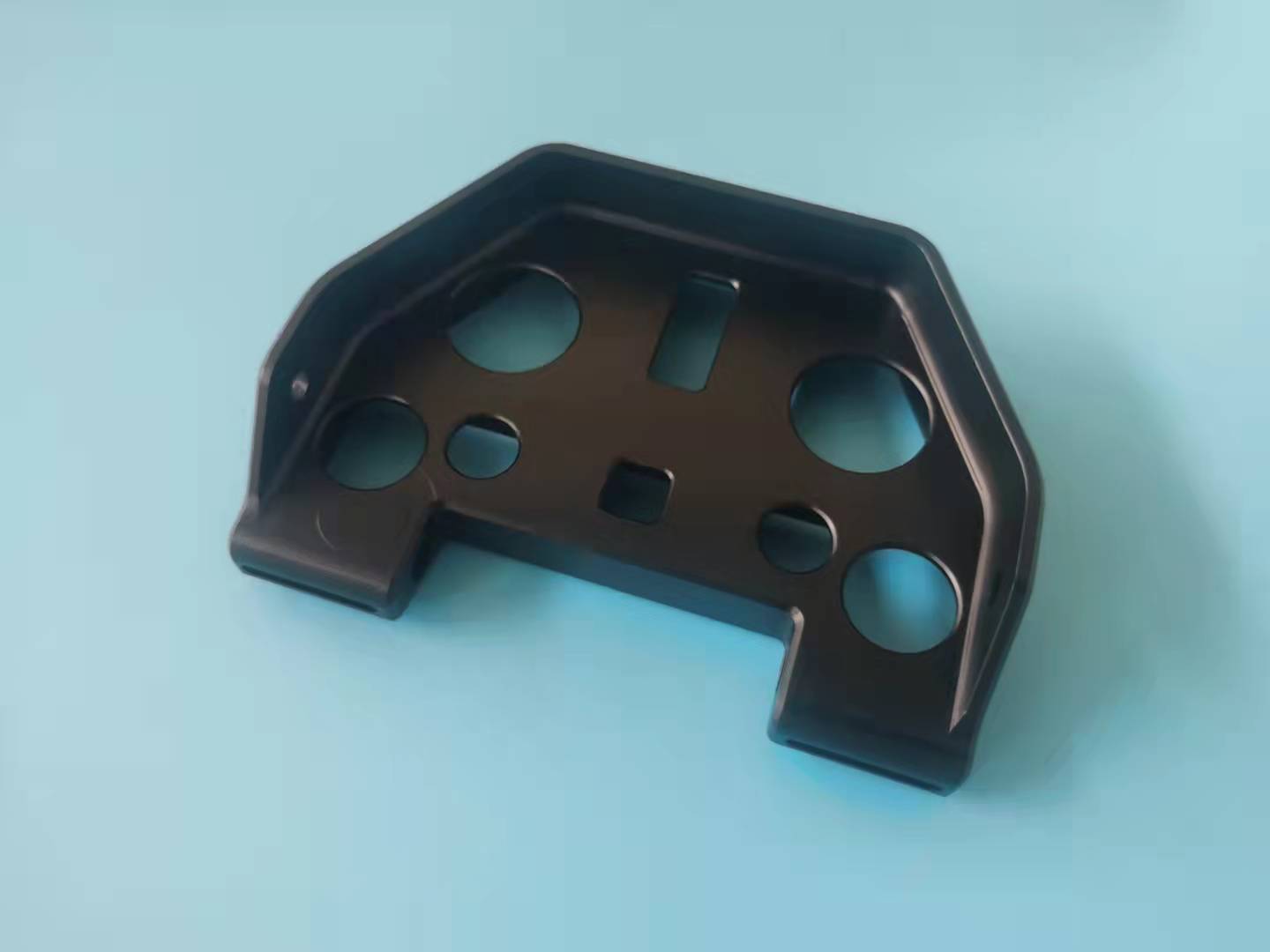
In the high-stakes world of product development and precision engineering, the phrase “find an expert CNC machined part maker” is often uttered with a mixture of hope and anxiety. You have poured countless hours into perfecting a 3D model, selecting the ideal material, and calculating the optimal tolerances for your next generation of automotive components, medical devices, or humanoid robot joints. Yet, the success of your entire project hinges on one critical variable: finding a manufacturing partner who can not only interpret your digital vision but also consistently deliver physical parts that meet the most stringent specifications.
This search is not trivial. The market is flooded with suppliers claiming high precision and rapid turnaround, but the reality behind the claims is often a minefield of hidden costs, missed deadlines, and parts that fail to meet the mark. The gap between a concept and a manufactured reality is where many brilliant ideas meet their demise.
Today, we are pulling back the curtain on the precision manufacturing industry. We will dissect the common pitfalls, explore the technical differentiators that separate true experts from the rest, and provide you with a framework for selecting a partner who can turn your engineering challenges into a seamless success story. This is not about finding a “shop”; it is about forging a strategic alliance with a maker who possesses the technical depth, system integrity, and collaborative spirit to drive your innovation forward.
The Critical Seven Pain Points in CNC Machining (And How to Avoid Them)
Before we detail the solution, it is crucial to understand the problem. Every procurement engineer and product manager has faced a version of these “precision predicaments.” An expert CNC machined part maker is defined not just by their equipment, but by their demonstrable ability to solve these specific challenges.
Pain Point 1: The “Precision Black Hole”
You are promised a tolerance of ±0.005mm for a critical mating surface. The initial sample looks perfect. But when the first batch of 500 parts arrives, critical dimensions are off by 0.02mm, causing assembly failures and scrapping weeks of downstream work. This is the “Precision Black Hole” – the gap between a promise on a quote and the reality of mass production due to factors like tool wear, thermal drift, or unqualified raw materials.
The Expert Solution: A true expert, like GreatLight Metal, invests in in-process inspection and climate-controlled environments. The precision of the final part is not a hope; it is a guaranteed output of a closed-loop manufacturing system. They use advanced CMMs (Coordinate Measuring Machines) and laser trackers not just for final inspection, but for adaptive in-process corrections, ensuring every part in the run meets the same exacting standard as the first article.
Pain Point 2: The “Complex Geometry Conundrum”
Your design requires a deep internal pocket with a specific surface finish, an undercut, and a threaded hole at a 15-degree angle. A standard 3-axis machine cannot reach that feature without multiple setups, which compromises concentricity. Many suppliers will either quote an impossibly high price or attempt to “modify” your design to fit their simpler machines, compromising functional intent.
The Expert Solution: An expert maker has a diverse fleet of equipment. The ability to employ 5-axis CNC machining services is non-negotiable for complex parts. A 5-axis machine can approach the workpiece from almost any angle, eliminating multiple setups, reducing errors, and allowing for more design freedom. This capability is not just about having the machine; it is about having programmers who know how to write the toolpaths to maximize its potential for your specific geometry.
Pain Point 3: The “One-Stop Shop Mirage”
You need a metal part with an EDM slot, a complex surface finish, and a specific anodized color. You send the job to a CNC shop, who then sub-contracts the finishing to a third party. Suddenly, you are managing three different suppliers, tracking two separate shipping dates, and dealing with finger-pointing when the final part has a blemish. Communication breaks down, and lead times double.
The Expert Solution: The true value of an expert CNC machined part maker lies in integrated manufacturing. You should seek a partner like GreatLight Metal, which amalgamates CNC machining with post-processing services like EDM, vacuum forming, SLA/SLS/SLM 3D printing, and surface finishing (anodizing, plating, powder coating) under one roof. This single-source responsibility eliminates the risk of sub-contractor failure and guarantees a streamlined workflow. Your part enters the facility as a raw block and leaves as a finished product, fully traceable.
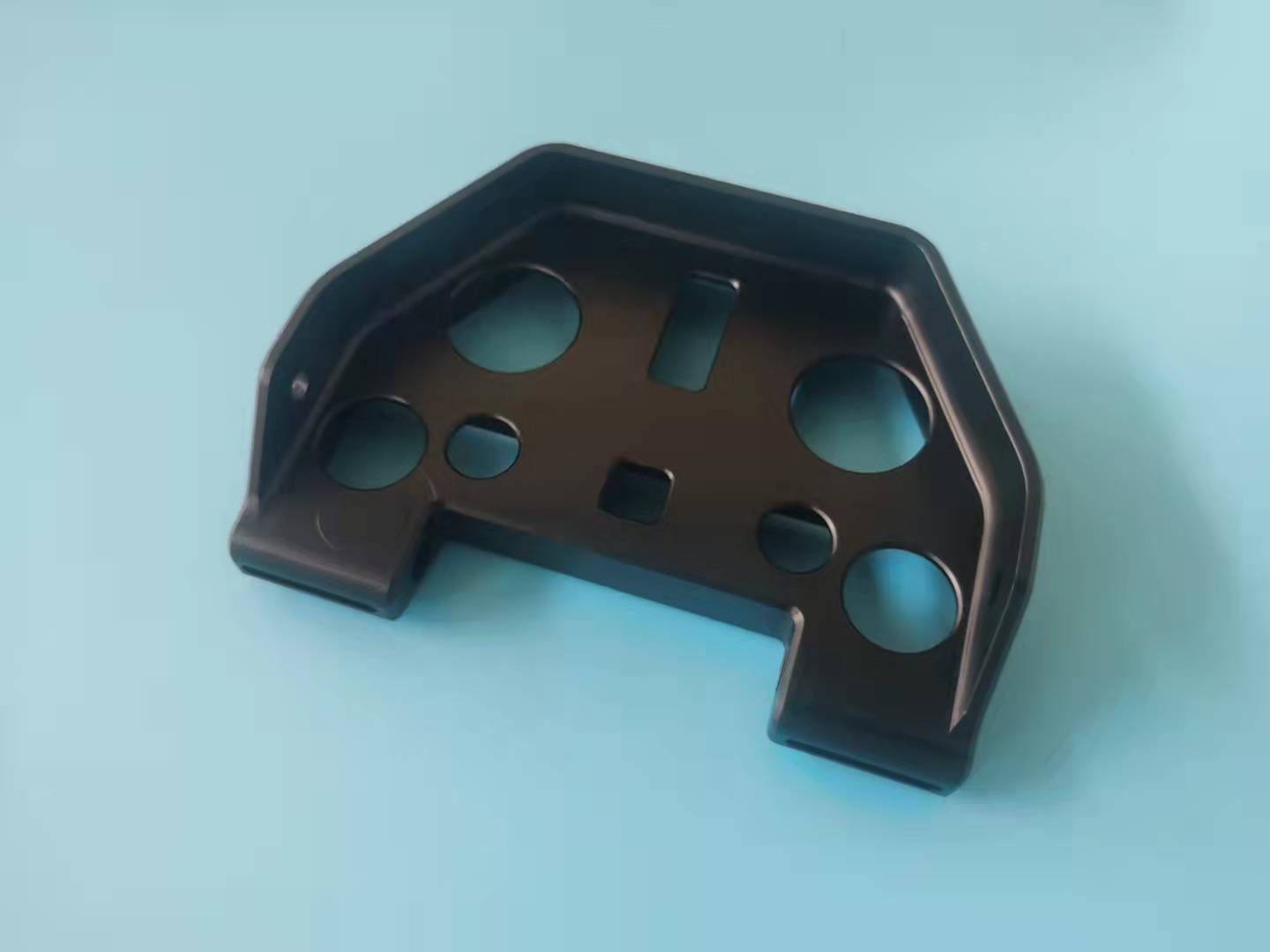
Pain Point 4: The “Material Authorization” Issue
Your project requires a specific aerospace-grade aluminum or medical-grade stainless steel. The supplier uses a cheaper “equivalent” material to save costs or because they cannot source the right one. You authorize the part, but the physical properties are wrong, leading to failure in the field. This is a liability nightmare.
The Expert Solution: An expert maker has a rigorous material management system, often backed by ISO 9001:2015 and industry-specific certifications (IATF 16949 for automotive, ISO 13485 for medical). They can trace every batch of material back to its mill certificate, ensuring the chemical composition and mechanical properties are exactly as specified. They will not swap materials without your explicit, documented approval, and they have the procurement network to source even the most exotic alloys.
Pain Point 5: The “Prototype-to-Production Gap”
Your prototype was made using a quick-turning, low-precision method. It worked in a lab environment. But when it goes to production using a different process (e.g., die casting vs. CNC), the part warps, or the tolerances are completely different. The transition kills the project timeline and budget.
The Expert Solution: Expert providers use CNC machining for both prototype and production runs. They understand the subtle differences in shrink rates, tooling marks, and residual stress between a single prototype and a full production run. A partner like GreatLight Metal, with its deep experience in both rapid prototyping and mass production (e.g., for engine hardware), can advise you on design for manufacturability (DFM) changes before a single prototype is cut, ensuring a seamless transfer to larger volumes.
Pain Point 6: The “Design for Manufacturability (DFM) Void”
Your file looks good, but an engineer could have designed it to be 20% cheaper to make and 15% stronger if the internal radius was just 1mm larger. You pay more and wait longer for a part that could have been better.
The Expert Solution: An expert maker provides a proactive DFM feedback loop. They have senior engineers who review your design, not just as an order to be filled, but as a problem to be solved. They will call you, or send a report, showing you how a slight modification can drastically improve machinability, reduce tooling costs, and enhance part integrity. This is the hallmark of a service provider versus a true partner.
Pain Point 7: The “Trust Deficit”
You are sending a proprietary design for a new product launch. You worry about IP theft or the supplier sharing your design with a competitor. Data security is a growing concern in the global supply chain.
The Expert Solution: An expert maker operates under a framework of trust. This is demonstrated through data security protocols (like ISO 27001 for information security management) and a clear legal framework in the service agreement. A trusted partner understands that your intellectual property is your most valuable asset and treats it with the same care as a physical part.
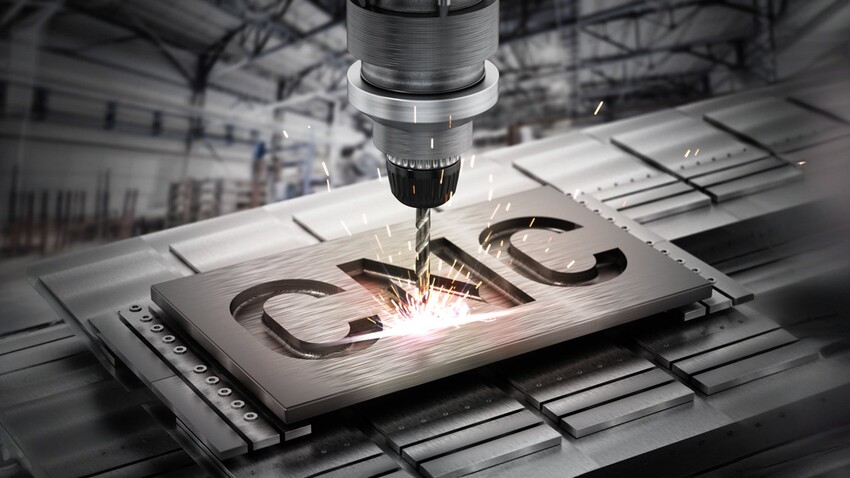
The Hallmarks of an Expert CNC Machined Part Maker
Given the complexity of these pain points, the decision to choose a partner cannot be based on price alone. Let’s explore the technical and systemic differentiators that define an expert-level provider.
1. An “Army” of Advanced Equipment (The Technical Cornerstone)
An expert maker is defined by the depth and breadth of their machine shop. They don’t just have one type of machine; they have a balanced fleet capable of handling materials from aluminum to titanium, plastics to tool steels. The presence of 5-axis CNC machining centers is a crucial indicator. It signifies a commitment to handling complex, multi-faceted geometries without compromising on speed or accuracy.
For example, GreatLight Metal’s facility in Dongguan houses a powerful cluster of 5-axis, 4-axis, and 3-axis machines from manufacturers like Dema and Beijing Jingdiao, complemented by precision Swiss-type lathes, wire EDM, and mirror-spark EDM. This arsenal is not just for show; it allows them to choose the “right machine for the right job,” optimizing cost and lead time for your specific part. The maximum processing size of 4000mm also indicates an ability to handle large-format parts.
2. A Cohesive, Certified Process Chain (The Systemic Cornerstone)
Equipment is useless without a process to command it. True expertise is demonstrated through a certified quality management system. Look for the trifecta of certifications:
ISO 9001:2015: The baseline for quality, focusing on continuous improvement and customer satisfaction. It proves the company has a structured process for meeting your specifications.
IATF 16949: This is the gold standard for automotive and engine hardware. It goes far beyond ISO 9001, including specific tools like FMEA (Failure Mode and Effects Analysis), Control Plans, and PPAP (Production Part Approval Process). This certification signals a high level of process control and defect prevention, not just detection.
ISO 13485: Essential for medical device manufacturers, this certification shows a deep understanding of risk management and regulatory compliance in the medical field.
ISO 27001: For projects with sensitive IP, this certification proves the company has robust data security procedures to protect your designs.
These certifications are not decorative wall plaques; they are established protocols that ensure every step—from material receiving, in-process inspection, final verification, to packaging—is a controlled, auditable event.
3. The “Full-Process” Model (The Convenience Cornerstone)
As mentioned earlier, the ability to offer a one-stop service is a massive advantage. Look for a partner who can handle not just CNC turning and milling, but also:
Die Casting and Mold Making: For high-volume production of metal parts.
Sheet Metal Fabrication: For enclosures and structural components.
3D Printing (SLM, SLA, SLS): For complex prototypes or low-volume runs of custom geometries.
Post-Processing: Anodizing, plating, E-coating, painting, and assembly.
This model, exemplified by GreatLight Metal’s integration of CNC, die casting, sheet metal, and 3D printing, drastically simplifies your supply chain. You get one point of contact, one shipping process, and one guarantee of quality.
4. A Decade-Long Track Record and Deep Engineering Support (The Experience Cornerstone)
How do you trust a company’s ability to solve your problem? Look at their history. A decade of operation, like GreatLight Metal’s founding in 2011, speaks volumes about stability, resilience, and accumulated knowledge.
More importantly, look for a company that provides deep engineering support. This means:
Proactive DFM (Design for Manufacturability): They will review your design before quoting and suggest cost-saving or quality-improving modifications.
Material Expertise: They can advise on the best material for your application, taking into account the CNC process, cost, and final part performance.
Customer Service: They treat you like a partner, not just a source of revenue. They are responsive, transparent about timelines, and open to tough questions.
Comparing the Landscape: How Do the Experts Stack Up?
The precision machining market has several players, each with a unique model. Understanding their strengths helps you match your need to the right expert.
| Company | Core Strengths / Niche | Best Suited For |
|---|---|---|
| GreatLight Metal | Full Process Chain (CNC, Die Cast, Sheet Metal, 3DP, Mold) ; Multi-certified (ISO 9001, IATF 16949, ISO 13485, ISO 27001); Deep engineering support; High-precision 5-axis capability. | Complex, critical parts for automotive, medical, and industrial automation. Projects needing a single-source partner from prototype to production. |
| Protocase | Extreme Speed for Prototypes; Focus on Electronics Enclosures; Strong Customer Engineering Portal. | Rapid prototyping of sheet metal enclosures and secondary assembly for electronics. Less suited for complex 5-axis milling or full production runs. |
| Xometry | Massive Network of Suppliers; AI-Powered Instant Quoting; Wide Range of Processes. | Low-volume production where speed of quoting is paramount, and you are willing to trade some control for a broad network of capabilities. Quality can vary by sub-supplier. |
| Fictiv | Quoting Platform; Global Supplier Network; Focus on Transparency and Quality Management. | Medium-volume production with strong emphasis on a managed, transparent process. Good for established products. |
| Protolabs Network | Quoting Platform with Emphasis on Digital Manufacturing; Fast Turnaround for 3D Printing and Low-Volume CNC. | Very fast prototyping and limited production runs where speed is the absolute priority. |
Analysis:
The Platform Model (Xometry, Fictiv, Protolabs Network): Excellent for speed and simplicity for standard parts. However, for a critical, complex, high-tolerance part where you need engineering input and absolute process control, a single-source expert manufacturer is often superior. The “platform” may not have the same vested interest in solving your specific engineering challenge.
The Niche Expert (Protocase): Best in class for their specific application (electronics enclosures). But if your project involves a complex, housings with intricate internal channels, a provider with deeper milling and turning expertise is needed.
The Integrated Manufacturer (GreatLight Metal): This model offers the highest level of control and expertise for challenging, multi-process parts. The cost may be slightly higher than a platform for a simple part, but the value derived from problem-solving, quality assurance, and a single contractual point of responsibility is immense for mission-critical applications.
A Framework for Your Decision
When you need an expert CNC machined part maker, follow this three-step framework:
Step 1: Classify Your Criticality
Low Criticality (Standard Brackets, Simple Covers): A platform model (Xometry) or a niche expert (Protocase) might be sufficient.
Medium Criticality (Functional Prototypes, Low-Volume Production): A platform with good quality management (Fictiv) or a specialized supplier is appropriate.
High Criticality (Engine Components, Medical Implants, Aerospace Bracket): You need an integrated manufacturer (like GreatLight Metal) with a proven track record (IATF, ISO 13485) and full-process capabilities.
Step 2: Vet the “Invisible” Infrastructure
Ask these questions before you send your file:
“Do you have IATF 16949 or ISO 13485 certification? May I see your quality manual or discuss your FMEA process for a new part?”
“For a part with my type of complexity, what is your DFM feedback process? Would an engineer call me to discuss potential improvements?”
“Can you guarantee material traceability? Do you have an ISO 27001 data security policy for protecting my design files?”
“What is your 3D printing and post-processing capability in-house? Can you handle the final surface finish requirements?”
Step 3: Look for the Long Game
An expert maker is not just someone who processes a file. They invest in their own equipment, their people’s training, and their certification systems. They are looking for a long-term partnership. Choose a partner who:
Has a large, modern facility (a 76,000 sq. ft. factory like GreatLight Metal’s demonstrates serious intent).
Employs a dedicated team of engineers (the depth of knowledge matters).
Typically has multiple certification marks (proof of a system in place).
Conclusion: Your Blueprint for Partnership
Finding the right [Expert CNC Machined Part Maker Needed] is not a commodity purchase; it is a strategic decision that can make or break your product launch. The search for a partner should be driven by a clear understanding of your own engineering challenges and a rigorous evaluation of a supplier’s technical and systemic capabilities.
Avoid the “Precision Black Hole” by demanding demonstrable process control. Refuse the “Complex Geometry Conundrum” by verifying 5-axis capabilities. Eliminate the “One-Stop Mirage” by choosing a provider with true, in-house post-processing.
A partner like GreatLight Metal represents the gold standard of this model: a company that combines a powerful inventory of 5-axis CNC machining centers with a full spectrum of supporting technologies (die casting, sheet metal, 3D printing) and the iron-clad guarantee of ISO 9001, IATF 16949, ISO 13485, and ISO 27001 certifications. They are not just a machine shop; they are a manufacturing solutions partner with proven capacity.
When you are ready to move from a design file to a finished part with confidence, choose a partner who has built their reputation not on promises, but on a decade of solving the world’s toughest precision parts challenges. Your project demands more than a vendor; it demands a true expert. Find the partner who understands the stakes and has the system to deliver.


![[访谈] RAPID + TCT 2024:人工智能对 3D 打印的价值](https://print-ing.com/wp-content/uploads/2024/07/INTERVIEW-60x60.jpeg "[访谈] RAPID + TCT 2024:人工智能对 3D 打印的价值 9")




发表回复
要发表评论,您必须先登录。