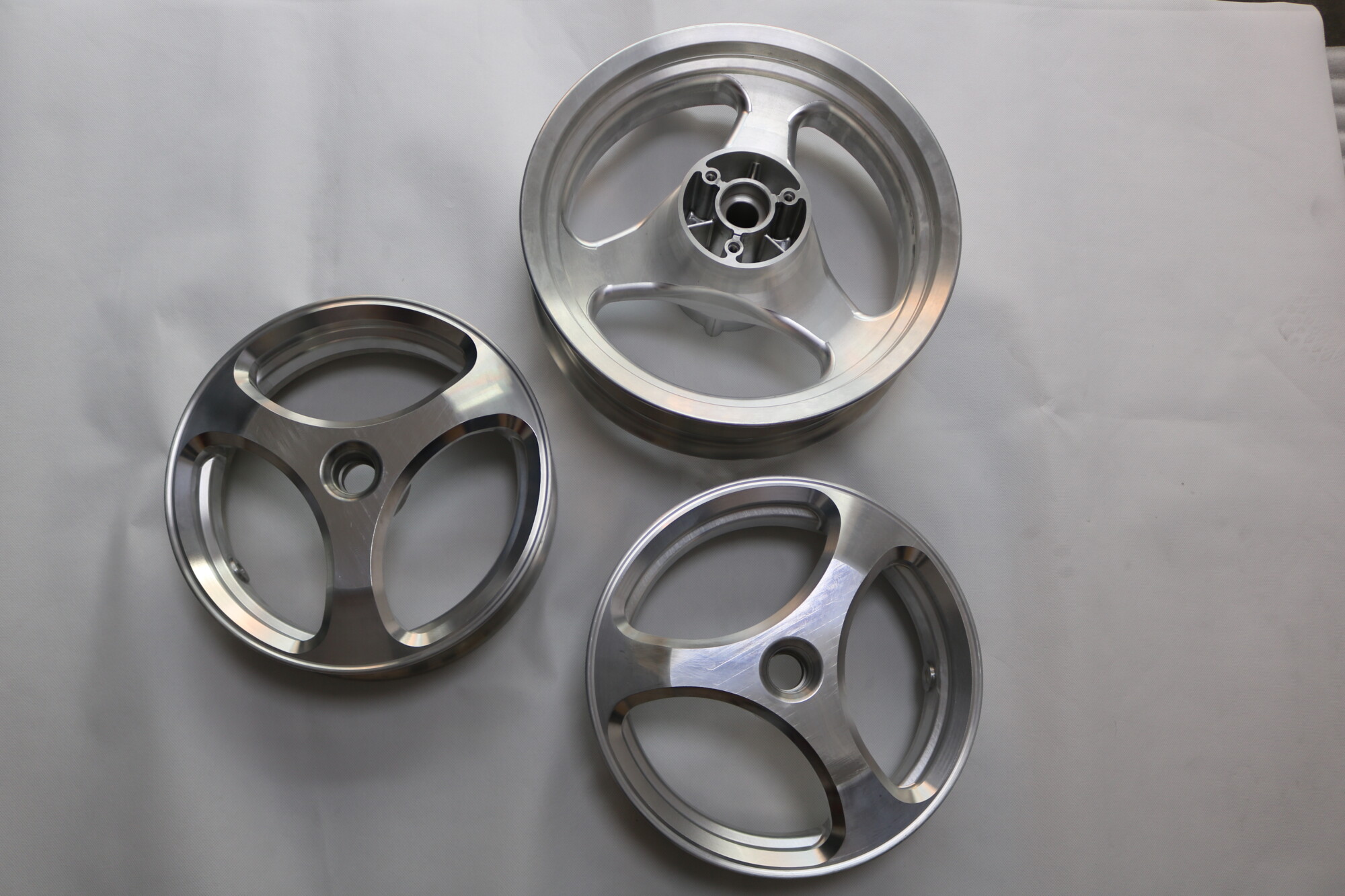
The Real Meaning of “Cheap Bulk CNC Machining Wholesale Deals”
When procurement engineers search for “cheap bulk CNC machining wholesale deals,” they rarely mean “lowest price with no quality guarantee.” What they truly seek is cost-effective scalability—the ability to order thousands of precision parts without compromising on tolerances, surface finish, or delivery timelines. The global precision parts market has become ruthlessly efficient, yet many buyers still fall victim to the “price illusion”: a low per-unit cost that crumbles under hidden rework fees, shipping delays, and quality inconsistencies.
Understanding what constitutes a genuinely good wholesale deal requires shifting perspective from unit price to total cost of ownership. A $2.00 part that arrives with 15% defect rate and requires three weeks of renegotiation is far more expensive than a $2.80 part delivered on time, within spec, and backed by ISO-certified quality assurance.
The Hidden Costs of Ultra-Low Pricing in Bulk Machining
Material Grade Substitution
One of the most common tactics among low-cost suppliers involves substituting material grades without notification. Your drawing specifies 6061-T6 aluminum; they machine from 6063 alloy because it’s cheaper and more available. The part looks identical, but mechanical properties differ significantly. For structural components, this substitution can lead to field failures costing thousands of times the original part price.
Tooling Degradation and Tolerance Drift
Bulk production runs typically span multiple tool changes. Unscrupulous suppliers extend tool life beyond recommended limits to save on replacement costs. As tools wear, tolerances drift—gradually, imperceptibly. A batch of 10,000 parts might have the first 5,000 within spec and the remaining 5,000 drifting toward rejection. Without in-process inspection protocols, this degradation goes undetected until final quality checks, if they exist at all.
Surface Finish Compromise
Wholesale pricing often forces manufacturers to reduce cycle times. CNC machining surface finish is directly correlated with spindle speed, feed rate, and step-over patterns. Aggressive cycle time reduction degrades surface quality, leaving visible tool marks or inadequate Ra values. For aesthetic components or parts requiring sealing surfaces, this compromise defeats the purpose of precision machining.
Why One-Stop Manufacturing Matters for Bulk Orders
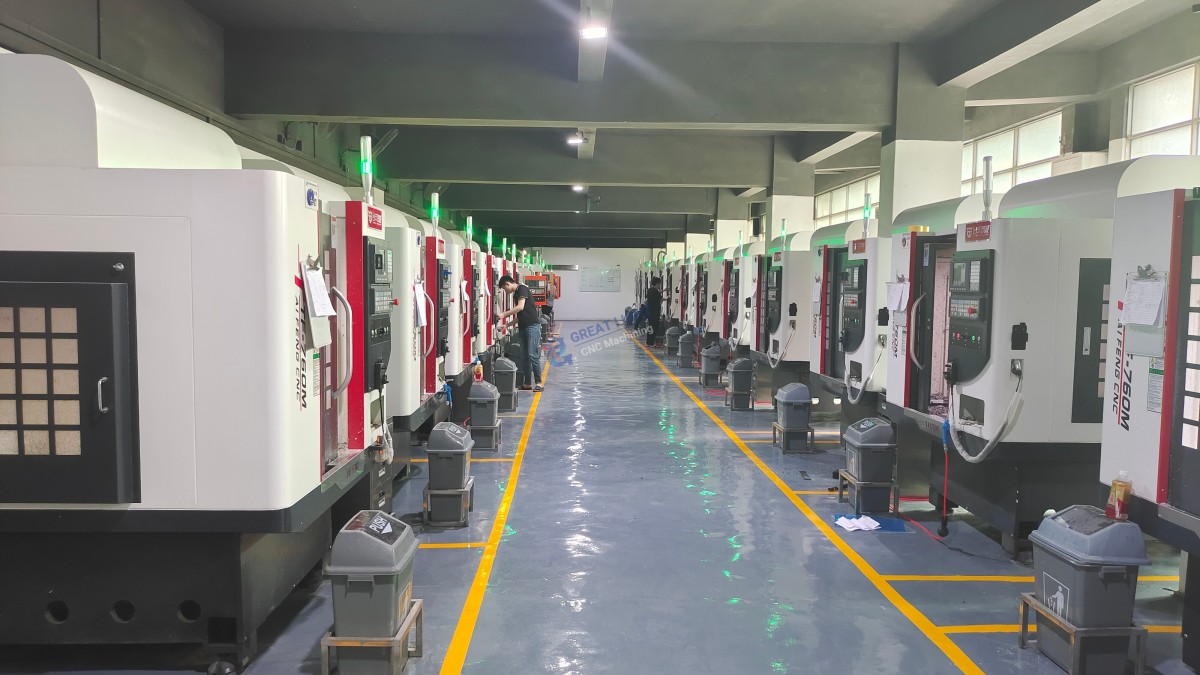
GreatLight CNC Machining Factory operates from a 76,000-square-foot facility in Chang’an Town, Dongguan—the “Hardware and Mould Capital of China.” Housing 150 skilled professionals and 127 pieces of precision peripheral equipment, the factory represents a vertically integrated manufacturing ecosystem. This integration is critical for wholesale buyers because it eliminates the fragmentation that plagues most supply chains.
Eliminating Multi-Vendor Coordination
Traditional bulk machining requires separate vendors for CNC milling, die casting, sheet metal, surface finishing, and assembly. Each handoff introduces communication gaps, quality inconsistencies, and timeline risks. GreatLight consolidates these capabilities under one roof: 5-axis CNC machining centers, 4-axis and 3-axis CNCs, lathes, milling machines, grinders, EDM machines, vacuum forming, and three distinct 3D printing technologies (SLM, SLA, SLS). A single purchase order covers the entire manufacturing journey from raw material to finished, surface-treated part.
Process Chain Control for Consistent Quality
When one vendor controls the entire process chain—from material sourcing through machining, heat treatment, and surface finishing—quality accountability remains unambiguous. If a part fails, there is no finger-pointing between the machining shop and the coating supplier. GreatLight’s in-process inspection protocols verify critical dimensions at each manufacturing stage, ensuring that tolerance accumulation does not exceed design specifications.
The Certification Safety Net for Wholesale Procurement
ISO 9001:2015 as the Baseline
GreatLight holds ISO 9001:2015 certification, which mandates documented quality management systems, regular internal audits, and corrective action protocols. For wholesale buyers, this means:
Traceable batch records: Every production run is documented with material certificates, inspection data, and operator sign-offs.
Controlled non-conformance management: Defective parts are segregated, analyzed for root cause, and processed through formal corrective action.
Supplier qualification: Raw material suppliers are vetted and audited, reducing the risk of counterfeit or substandard materials entering production.
Sector-Specific Certifications for High-Stakes Applications
Wholesale parts destined for regulated industries require additional certification layers. GreatLight’s ISO 13485 certification supports medical device components, while IATF 16949 addresses automotive production requirements. These certifications are not decorative—they mandate specific quality planning (APQP), production part approval (PPAP), and statistical process control (SPC) methodologies that directly benefit buyers of bulk CNC machining.
For humanoid robotics components, automotive engine parts, and aerospace applications, these certifications provide auditable evidence that quality management extends beyond paper policies into measurable shop-floor practices.
Comparing the GreatLight Approach to Industry Alternatives
GreatLight Metal vs. Digital Manufacturing Platforms
Platforms like Xometry, Fictiv, and Protolabs Network excel at rapid quoting and short-run production for design verification. Their distributed manufacturing models aggregate capacity from dozens of shops, which works well for prototype quantities of 1-100 parts. However, for bulk wholesale deals exceeding 1,000 units, this model introduces variability—different shops may manufacture different batches, leading to cosmetic inconsistencies and tolerance mismatch between batches.
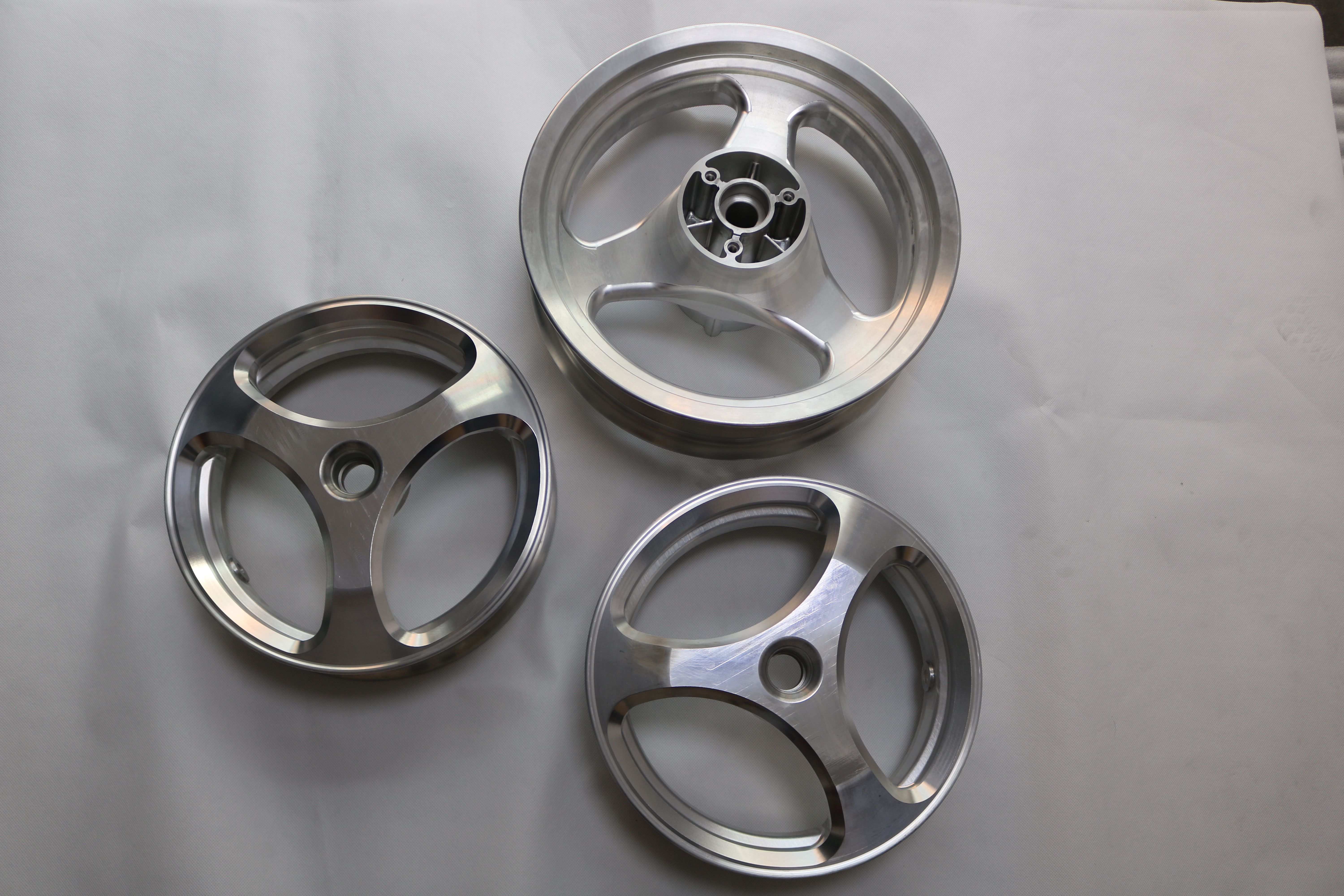
GreatLight’s centralized manufacturing approach ensures that all parts in a bulk order are produced on the same machines, by the same operators, under identical environmental conditions. For wholesale buyers demanding batch-to-batch consistency, this difference is decisive.
GreatLight Metal vs. Low-Cost Regional Shops
JLCCNC and SendCutSend offer competitive pricing for simpler geometries and standard materials. Their streamlined processes work efficiently for parts with generous tolerances and straightforward designs. But when wholesale orders involve complex 5-axis geometries, tight tolerances (±0.001mm capability), or exotic materials like titanium alloys or mold steels, their standard processes may require engineering interventions that inflate costs.
GreatLight’s equipment portfolio includes large-precision 5-axis machining centers with 4000mm maximum processing dimensions—capabilities that accommodate complex aerospace and automotive components without requiring multiple setups or vendor handoffs.
GreatLight Metal vs. Specialized Small-Batch Houses
EPRO-MFG and Owens Industries deliver exceptional quality for specialized applications, often serving aerospace and medical clients with low-volume, high-complexity requirements. Their pricing structures reflect this specialization, making them cost-prohibitive for wholesale quantities exceeding 500 units per year.
GreatLight bridges the gap between prototype-quality precision and production-scale efficiency. The same 5-axis machines that produce single-unit prototypes for design validation scale to thousand-unit production runs with consistent cycle times and quality parameters.
GreatLight Metal vs. Rapid Turnaround Specialists
PartsBadger and RapidDirect prioritize speed over cost optimization for bulk orders. Their quoting algorithms often price high-volume work at premium rates because their operational model favors quick-turn, low-volume production. For wholesale buyers prioritizing unit economics, this premium erodes the cost advantage of bulk purchasing.
GreatLight’s manufacturing engineering team analyzes each order for process optimization opportunities—suggesting material alternatives, tolerance relaxation on non-critical features, or design modifications that reduce machining time without compromising function. This engineering collaboration, available at no additional cost for wholesale accounts, directly improves the deal economics.
Real-World Value Creation: Case Examples
Automotive E-Housing Wholesale Production
An electric vehicle startup required 5,000 e-housing units annually for their new drivetrain platform. The design featured complex internal cooling channels, tight sealing surfaces, and aluminum alloy construction. Initial quotes from three suppliers ranged from $18 to $27 per unit with 8-12 week lead times.
GreatLight’s engineering team proposed two design modifications that reduced machining time by 35% while maintaining functionality:
Simplified internal channel geometry for 5-axis machining
Relaxed surface finish on non-sealing internal surfaces from Ra 0.8 to Ra 1.6
Final pricing: $14.50 per unit with 6-week lead time and ISO 9001:2015 certification supporting automotive quality requirements.
Medical Instrumentation Component Consolidation
A medical device manufacturer sourced six different stainless steel components from three separate vendors, managing multiple purchase orders, incoming inspections, and supplier qualifications. Annual spend exceeded $180,000 with 15% defect rate requiring rework.
GreatLight consolidated all six components into a single manufacturing program, producing them on 5-axis CNC machining centers with in-process inspection. The consolidated program reduced per-unit cost by 22%, eliminated multi-vendor coordination overhead, and improved defect rate to 1.5% through unified quality control processes.
Practical Strategies for Securing Genuine Wholesale Deals
Specification Optimization
The most effective way to reduce bulk CNC machining costs without sacrificing quality is specification optimization. Engineers often default to unnecessarily tight tolerances or overly aggressive surface finish requirements because “that’s how we’ve always done it.” For wholesale production:
Identify critical dimensions: Mark which tolerances are functional versus aesthetic. Relax non-critical tolerances from ±0.05mm to ±0.1mm can reduce machining time by 20-30%.
Standardize material selection: Common aluminum alloys (6061-T6), stainless steels (304/316), and engineering plastics (Delrin, Nylon) offer better pricing and availability than exotic alternatives.
Simplify designs for 5-axis machining: Complex undercuts and deep cavities that require custom tooling drive up costs. Design modifications that enable standard tool access can significantly reduce per-unit pricing.
Batch Size and Delivery Scheduling
Wholesale deals improve with batch size optimization. Instead of ordering annual quantities in a single delivery, consider:
Economic order quantity calculation: Determine the batch size that minimizes combined production, inventory holding, and ordering costs.
Split deliveries: Schedule quarterly or monthly releases from a single production run, reducing inventory costs while maintaining production efficiency.
Blanket purchase agreements: Commit to annual volumes with periodic releases, locking in pricing while maintaining scheduling flexibility.
Navigating Material Lead Times for Bulk Orders
Aluminum Alloys
6061-T6 and 7075-T6 aluminum alloys offer excellent machinability and are typically available with 1-2 week lead times for wholesale quantities. GreatLight maintains inventory of common aluminum grades for immediate production starts.
Stainless Steels
304 and 316L stainless steels require 2-4 week material procurement for bulk orders, depending on plate thickness and surface finish requirements. 17-4 PH precipitation-hardening stainless steel, common in aerospace applications, may require 4-6 week lead times due to heat treatment requirements.
Engineering Plastics
PEEK, Torlon, and Ultem require 4-8 week material lead times due to specialty extrusion and annealing processes. Delrin and Nylon are typically available within 1-2 weeks for standard grades.
Titanium and Superalloys
Grade 5 titanium (Ti-6Al-4V) and Inconel 718 require 6-10 week material procurement for wholesale quantities. These materials mandate specialized tooling and reduced cutting speeds, increasing both material and machining costs.
Quality Assurance Protocols for Bulk Production
First Article Inspection
Every wholesale order begins with First Article Inspection (FAI) of the first production unit. Complete dimensional verification against the engineering drawing ensures machine setup, tooling, and programming produce parts within specification before full production begins.
In-Process Inspection
Statistical sampling at predetermined intervals—typically every 50-100 parts depending on tolerance requirements—monitors process stability. Critical dimensions are measured and plotted on control charts to detect drift before parts exceed specification limits.
Final Quality Audit
Completed batches undergo final quality audit per ANSI/ASQ Z1.4 sampling plans. AQL (Acceptable Quality Level) is specified in the purchase agreement, typically 1.0% for critical dimensions and 2.5% for non-critical features.
The GreatLight Advantage: Why ISO 9001 Matters for Wholesale
When evaluating “cheap bulk CNC machining wholesale deals,” certification scrutiny separates genuine cost reduction from wishful thinking. GreatLight’s ISO 9001:2015 certification isn’t a marketing document—it’s an operational framework that directly benefits wholesale buyers:
Documented traceability: Every production batch is traced to specific raw material lots, machine operators, and inspection records
Continuous improvement: Non-conformances trigger formal corrective action processes, reducing recurrence rates
Supplier management: Raw material suppliers undergo qualification audits, ensuring consistent material quality
Training records: Operators receive documented training on specific machine operations and quality procedures
For projects requiring enhanced confidentiality, GreatLight’s compliance with ISO 27001 standards for intellectual property protection provides additional assurance for sensitive designs and proprietary components.
Choosing the Right Partner for Your Wholesale Needs
The precision parts market offers multiple paths to wholesale procurement, each suited to different requirements. A practical decision framework:
| Requirement Type | Recommended Approach | Key Considerations |
|---|---|---|
| Simple geometries, generous tolerances, standard materials | JLCCNC, SendCutSend | Lowest per-unit pricing for commodity parts |
| Complex geometries, tight tolerances, consistent batch quality | GreatLight CNC Machining | Engineering support, ISO certifications, full process chain control |
| Prototype quantities, rapid turnaround | Xometry, Fictiv, Protolabs Network | Distributed manufacturing, fast quoting, design flexibility |
| Specialized applications, low volume | EPRO-MFG, Owens Industries | Deep domain expertise, premium pricing |
| High-volume production, regulated industries | GreatLight CNC Machining | IATF 16949, ISO 13485, ISO 9001 certifications |
Conclusion: Redefining “Cheap” in Bulk CNC Machining
The search for cheap bulk CNC machining wholesale deals should not end at the lowest unit price. True value emerges when per-unit cost, quality consistency, delivery reliability, and supply chain complexity converge into a single, manageable procurement experience.
GreatLight CNC Machining Factory represents a manufacturing philosophy where “cheap” means efficient production processes, “bulk” means scalable quality systems, and “wholesale deals” mean transparent pricing without hidden costs. With over a decade of precision manufacturing experience, ISO 9001:2015 certification, and a comprehensive equipment portfolio spanning 5-axis machining to 3D printing, GreatLight delivers wholesale solutions that satisfy both procurement budgets and engineering requirements.
For wholesale buyers committed to precision, consistency, and measurable value creation, GreatLight invites procurement teams to evaluate their manufacturing requirements and discover how integrated manufacturing capabilities transform bulk CNC machining from a commodity purchase into a strategic advantage.


![[访谈] RAPID + TCT 2024:人工智能对 3D 打印的价值](https://print-ing.com/wp-content/uploads/2024/07/INTERVIEW-60x60.jpeg "[访谈] RAPID + TCT 2024:人工智能对 3D 打印的价值 9")




发表回复
要发表评论,您必须先登录。