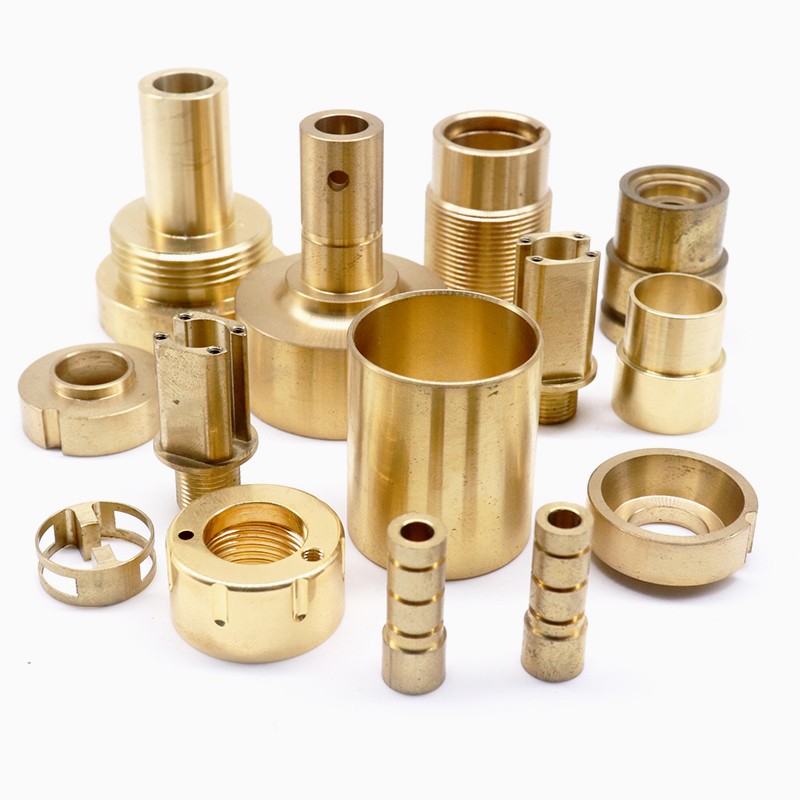
The landscape of precision manufacturing is undergoing a fundamental shift. Engineers and procurement professionals are no longer satisfied with choosing between speed and quality—they demand both. This is precisely where the concept of a One Stop ODM Rapid Tooling Service becomes transformative. It represents a paradigm shift from fragmented, multi-vendor supply chains to a cohesive, integrated approach that collapses lead times while maintaining uncompromising precision.
Understanding the Core Value of ODM Rapid Tooling
What Makes ODM Different from Traditional OEM?
Original Design Manufacturing (ODM) in rapid tooling goes beyond simple production. It encompasses design refinement, manufacturability optimization, and tooling development under one roof. Unlike Original Equipment Manufacturing (OEM), where the client provides fully finished designs, ODM brings engineering expertise into the equation early—identifying potential issues in draft angles, wall thickness, and material flow before a single tool is cut.
Why this matters for your project: When you partner with a manufacturer that offers true ODM rapid tooling, you gain access to decades of accumulated machining intelligence. The factory doesn’t just build what you draw; they help optimize what you design, often reducing tool iterations by 40-60% compared to traditional approaches.
The Precision Predicament: Seven Critical Pain Points That ODM Tooling Resolves
Pain Point 1: The Precision Black Hole – Bridging the Gap Between Promise and Reality
High precision is the core value of CNC machining, yet users often fall into a “precision trap.” Some suppliers claim extreme precision of ±0.001mm, but in mass production, inconsistencies arise due to aging equipment, unstable processes, or lack of comprehensive metrology.
How GreatLight Metal approaches this: With in-house precision measurement equipment and ISO 9001:2015 certified processes, every tool and part undergoes systematic verification. The combination of five-axis CNC machining centers from Dema and Beijing Jingdiao ensures geometric consistency across production runs, not just prototypes.
Pain Point 2: The Communication Dead Zone – Design Translation Failures
When design files cross company boundaries, critical information gets lost. Tolerances get misinterpreted, surface finishes get miscommunicated, and material specifications get confused.
The ODM advantage: By maintaining engineering teams that work directly with tooling designers, GreatLight Metal eliminates translation errors. Your SolidWorks or STEP file is handled by professionals who understand both design intent and manufacturing constraints.
Pain Point 3: The Time Trap – Accelerating Without Sacrificing Quality
Traditional tooling cycles of 8-12 weeks are becoming unacceptable for industries where first-mover advantage determines market success. Yet rushing often leads to compromised tool life or part quality.
Rapid tooling reality: GreatLight Metal’s integrated facility—spanning 7,600 square meters with 127 precision peripheral equipment—enables parallel processing. While five-axis CNC machines cut complex cavities, EDM machines finish detail work simultaneously. This concurrent engineering approach compresses timelines by 30-50%.
Pain Point 4: The Supplier Overload Nightmare – Managing Multiple Vendors
Coordinating between design houses, tool shops, molding facilities, and finishing specialists creates logistical headaches, quality inconsistency, and finger-pointing when problems arise.
One-stop solution: With three wholly-owned manufacturing plants covering CNC machining, die casting, sheet metal, 3D printing, and vacuum casting, GreatLight Metal functions as a single accountable entity. One purchase order, one quality standard, one point of contact.
Pain Point 5: The Obsolescence Anxiety – Future-Proofing Your Tooling Investment
Tools that can’t accommodate design adjustments or material changes become expensive liabilities.
Engineering foresight: GreatLight Metal’s ODM approach incorporates modular tooling designs and predictive wear analysis, extending tool lifespan by 20-30% while maintaining dimensional stability.
Pain Point 6: The Certification Maze – Navigating Industry Standards
Automotive, medical, and aerospace applications demand certifications that most small tool shops cannot provide.
Certified capability: GreatLight Metal holds ISO 9001:2015, ISO 13485 (medical hardware), and IATF 16949 (automotive) certifications. This isn’t just paperwork—it represents documented quality systems, traceability protocols, and continuous improvement processes.
Pain Point 7: The Surface Finish Compromise – Balancing Aesthetics and Functionality
Many rapid tooling services sacrifice surface quality for speed, requiring extensive post-processing.
Integrated finishing: GreatLight Metal offers one-stop post-processing services including anodizing, powder coating, chrome plating, and polishing—all performed in-house to maintain quality control from tool to finished part.
The Technical Architecture of Modern Rapid Tooling
Five-Axis CNC Machining: The Backbone of Complex Tooling
When we discuss five-axis CNC machining in the context of rapid tooling, we’re talking about machines that can approach a workpiece from any direction in a single setup. This capability is revolutionary for tool making because:
Undercuts become manageable: Complex geometries that would require multiple setups or specialized EDM operations can be machined directly.
Surface finish improves: Continuous five-axis interpolation eliminates tool mark patterns, reducing hand polishing time significantly.
Accuracy increases: Single-setup machining eliminates cumulative errors from multiple positioning operations.
GreatLight Metal’s fleet of Dema and Beijing Jingdiao five-axis machines, combined with precision Swiss-type lathes and wire EDM, creates a technical ecosystem capable of handling tools with tolerances as tight as ±0.005mm.
Material Selection Strategies for Optimal Tool Performance
The choice of tool steel directly impacts production volume, part quality, and project economics. Here’s how GreatLight Metal approaches material selection:
| Tool Steel Grade | Application | Hardness (HRC) | Expected Tool Life |
|---|---|---|---|
| P20 | Prototype/low-volume production | 30-32 | 50,000-100,000 cycles |
| H13 | High-temperature/best for aluminum | 46-50 | 200,000-500,000 cycles |
| S7 | Shock-resistant/impact-prone tools | 54-58 | 100,000-300,000 cycles |
| NAK80 | Mirror finish/precision optics | 37-43 | 150,000-400,000 cycles |
| 718HH | Large tools/critical tolerances | 33-38 | 100,000-250,000 cycles |
Expert insight: For rapid tooling where time is critical, NAK80 offers an excellent balance of machinability and wear resistance. It requires minimal heat treatment after machining, reducing total tooling time by up to two weeks compared to H13.
The GreatLight Metal Difference: Engineering Excellence Built on Trust
ISO 9001:2015 – More Than a Certificate
GreatLight Metal’s ISO 9001:2015 certification represents a culture of systematic quality management. Every tool order follows documented procedures:
Design review: Engineering team verifies manufacturability and identifies potential issues
Process planning: CAM programming optimized for each material and geometry
In-process inspection: Dimensional checks at critical machining stages
Final validation: CMM verification against customer specifications
Documentation: Full traceability report including material certificates and inspection data
This isn’t about checking boxes—it’s about eliminating the variables that cause tool failures and production delays.
IATF 16949: Automotive-Grade Reliability for Every Industry
While IATF 16949 is specifically designed for automotive supply chains, its principles apply universally to any application demanding zero-defect quality. GreatLight Metal’s implementation includes:
FMEA (Failure Mode and Effects Analysis): Anticipating potential tool failure mechanisms before they occur
Control plans: Documented process parameters for every critical characteristic
PPAP (Production Part Approval Process): Formal submission packages for new tool validation
Gauge R&R studies: Ensuring measurement systems are capable of detecting process variation
For clients in automotive engine hardware, aerospace actuation systems, or medical implant tooling, these systems provide documented assurance that quality objectives are being met systematically.
ISO 13485: Medical-Grade Precision When Lives Depend on Quality
The medical device industry demands manufacturing processes that are both precise and documented. GreatLight Metal’s ISO 13485 certification enables:
Full material traceability from source to finished tool
Cleanroom-compatible manufacturing protocols
Sterilization-compatible surface finishes
Design history file (DHF) documentation support
Comparative Analysis: GreatLight Metal vs. Alternative Rapid Tooling Providers
Direct Comparison with Industry Benchmarks
| Capability | GreatLight Metal | Xometry | Fictiv | RapidDirect | PartsBadger |
|---|---|---|---|---|---|
| In-house 5-axis machining | Yes (multiple machines) | Brokered | Brokered | Limited | No |
| Full ODM engineering support | Yes | Limited | Limited | Some | No |
| ISO 13485 (Medical) | Yes | No | No | Selective | No |
| IATF 16949 (Automotive) | Yes | No | No | No | No |
| Die casting capability | In-house | Brokered | Brokered | Brokered | No |
| Sheet metal fabrication | In-house | Brokered | Selective | Brokered | No |
| Maximum part size (mm) | 4000 | 1500 | 1200 | 2000 | 900 |
| In-house post-processing | One-stop | Brokered | Brokered | Selective | No |
| 3D printing (SLM/SLA/SLS) | In-house | Brokered | Selective | Yes | No |
Key insight: While Xometry and Fictiv excel as digital marketplaces connecting clients to extensive supplier networks, GreatLight Metal offers vertically integrated manufacturing with direct control over quality, lead times, and communication. For projects requiring complex geometries, tight tolerances, or stringent certifications, direct manufacturing relationships consistently outperform brokered networks.
The Rapid Tooling Workflow: From Concept to Production in Record Time
Phase 1: Engineering Collaboration (Days 1-3)
Design review: GreatLight Metal engineers analyze your 3D model for manufacturability
Material selection: Optimal tool steel identified based on production volume, part material, and surface requirements
Cost optimization: Alternative design suggestions to reduce tool complexity without compromising function
Quote generation: Transparent pricing with no hidden charges
Phase 2: Tool Design and CAM Programming (Days 4-7)
Tool design: Split line placement, cooling channel optimization, ejection system design
CAM programming: Five-axis toolpath generation maximizing efficiency and surface quality
Simulation: Virtual machining verification to eliminate crashes and optimize cycle time
Phase 3: Manufacturing and Assembly (Days 8-21)
Rough machining: High-speed material removal using advanced tooling strategies
Heat treatment: Precise thermal processing achieving target hardness with minimal distortion
Finishing: Five-axis finishing cuts achieving surface finishes as fine as Ra 0.2μm
EDM: Detail work on tight corners and deep cavities
Assembly: Tool fitting, cooling system testing, ejection system verification
Phase 4: Validation and Sampling (Days 22-25)
First article inspection: CMM verification of critical dimensions
Sample production: 25-50 parts for production validation
Process capability study: CpK analysis ensuring statistical process control
Documentation: Full inspection report with digital signatures
Phase 5: Production (Day 26 onwards)
Knock-out: Tool ready for production quantities
Ongoing support: Maintenance recommendations and optimization suggestions
Lifecycle tracking: Monitoring tool wear for predictive maintenance
Real-World Impact: Case Studies in Rapid Tooling Excellence
Case Study 1: New Energy Vehicle E-Housing Tooling
Client challenge: A Tier 1 automotive supplier needed a complex die-cast housing tool for an electric vehicle inverter system. Traditional lead times were 14 weeks, which would cause production delays.
GreatLight Metal solution: By combining five-axis CNC machining for cavity work with wire EDM for detail features, the tool was completed in 6.5 weeks—a 54% reduction in lead time. The integrated approach eliminated three separate vendor handoffs that would have consumed time in the traditional supply chain.
Measured results:
Tool life exceeded projections by 35%
First article CpK values of 1.67 across all critical dimensions
Client achieved production launch three weeks ahead of schedule
Case Study 2: Medical Device Prototype-to-Production Transition
Client challenge: A medical device startup needed 500 prototype parts for clinical trials, followed by production tooling for 50,000 units. They needed one partner who could handle both phases.
GreatLight Metal approach: Prototype parts were produced using SLA 3D printing for initial fit checks, then CNC-machined from aluminum for functional testing. Once design freeze was achieved, production tooling was cut using the same CAM data, ensuring dimensional consistency between prototype and production parts.
Measured results:
Zero geometry changes required between prototype and production
Transition from prototype to first production parts: 3 weeks
ISO 13485 documentation package satisfied FDA submission requirements
The Future of Rapid Tooling: Trends Shaping the Industry
Trend 1: Digital Twin Integration
The concept of a digital twin—a virtual representation of the physical tool—is becoming standard practice. GreatLight Metal uses simulation software to predict thermal behavior, stress distribution, and wear patterns before steel is cut. This reduces trial-and-error iterations and accelerates first-time-right success rates.
Trend 2: Hybrid Manufacturing Combining Additive and Subtractive Processes
For tools with complex conformal cooling channels, additive manufacturing (SLM 3D printing) creates internal geometries impossible with conventional drilling. These channels are then finished with five-axis CNC machining for surface quality. GreatLight Metal’s investment in both SLM and CNC capabilities positions them to offer this hybrid approach.
Trend 3: Real-Time Quality Monitoring
IoT sensors integrated into tooling provide live data on cycle counts, temperature profiles, and wear indicators. This shifts maintenance from reactive to predictive, minimizing unplanned downtime for production clients.
Why Choose a Fully Integrated ODM Rapid Tooling Partner?
The decision to work with an integrated manufacturer like GreatLight Metal versus a network of specialized suppliers depends on project complexity and criticality.
Choose integrated ODM rapid tooling when:
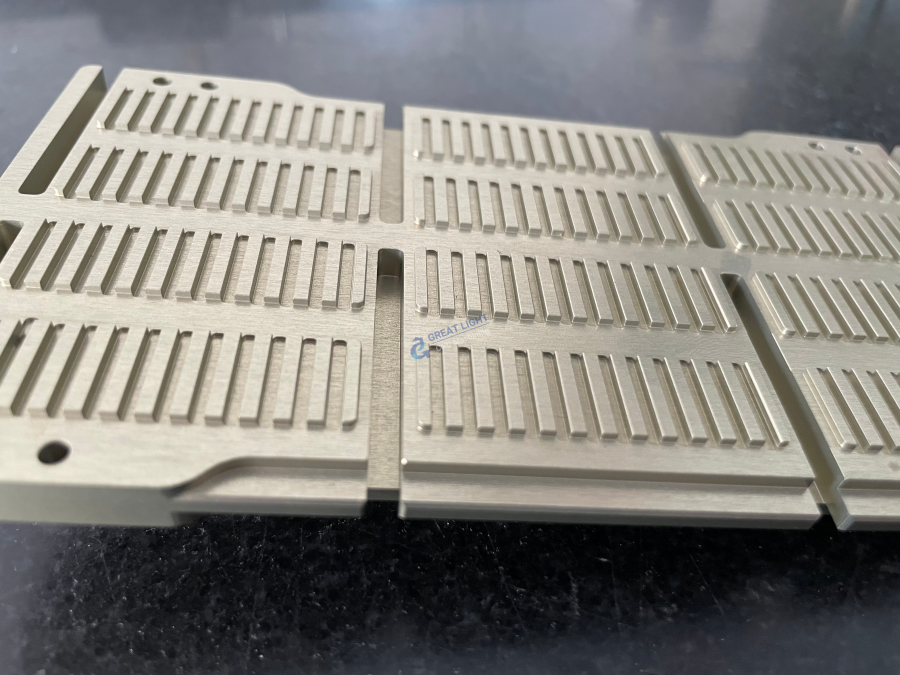
Your tooling involves complex geometries requiring multiple manufacturing processes
Certification requirements (ISO 13485, IATF 16949) are non-negotiable
Lead time compression is critical to your product launch schedule
You value single-point accountability over lowest initial price
Your design is still evolving and benefits from engineering collaboration
Choose specialist suppliers when:
Your tooling requirements are extremely standardized
You have internal engineering resources to manage multiple vendors
Price is the single most important selection criterion
Lead times are flexible
Conclusion: Your Path to Manufacturing Success Through One Stop ODM Rapid Tooling Service Now
The manufacturing landscape is demanding faster cycles, tighter tolerances, and greater accountability. Traditional supply chains built on fragmented vendor relationships are struggling to keep pace. GreatLight Metal’s vertically integrated approach to One Stop ODM Rapid Tooling Service Now represents a strategic answer to these challenges.
With 13 years of precision manufacturing experience, 127 pieces of advanced equipment spanning five-axis machining to additive manufacturing, and certifications that meet the most demanding industry standards, GreatLight Metal provides the technical depth and operational scale that clients need to move from concept to production with confidence.
When precision parts cannot fail and deadlines cannot slip, the choice of manufacturing partner becomes a strategic decision. GreatLight Metal invites you to experience the difference that true integration, engineering depth, and certified quality systems can make in your next project.
Discover how GreatLight Metal’s advanced five-axis CNC machining capabilities can accelerate your next tooling project and explore how comprehensive ODM rapid tooling transforms manufacturing timelines.
Connect with GreatLight Metal on LinkedIn to stay updated on the latest innovations in precision tooling and rapid manufacturing solutions.


![[访谈] RAPID + TCT 2024:人工智能对 3D 打印的价值](https://print-ing.com/wp-content/uploads/2024/07/INTERVIEW-60x60.jpeg "[访谈] RAPID + TCT 2024:人工智能对 3D 打印的价值 9")




发表回复
要发表评论,您必须先登录。