Have you ever gripped a gamepad during a critical moment, only to feel the rubber start peeling away like a cheap sticker? Or spent months designing a rugged handheld controller for an industrial inspection drone, just to have the overmold tear along the parting line during the first field test? That sinking feeling isn’t just frustration—it’s a symptom of a deeper manufacturing risk that, left unchecked, can tank product launches, inflate warranty costs, and erode brand trust. I’ve seen it happen to startups and established brands alike. And often, the culprit traces back to one overlooked stage: the design and fabrication of the joystick grip overmold tooling.
At its core, Joystick Grip Overmold Tooling is the process of creating the mold cavity and core needed to form a soft, ergonomic layer—typically TPE, TPU, or silicone—over a rigid internal joystick shaft or frame. It sounds simple, but it’s riddled with hidden failure modes. Let me walk you through them, not as a sales pitch, but as an engineer who has examined hundreds of scrapped parts and learned where the real risks hide.
The Overmold Deception: When “Good Enough” Costs You Everything
The overmold on a joystick grip isn’t just cosmetic. It must:
Chemically or mechanically bond to the substrate without delaminating under repetitive shear forces (think constant twisting and pressing).
Maintain consistent wall thickness despite complex 3D contours—like finger grooves and thumb rests—to avoid soft spots or flash.
Withstand environmental extremes: sweat, UV, cleaning solvents, and temperature swings from -20°C to 60°C in some applications.
Deliver a tactile feel that doesn’t degrade after 100,000 cycles.
Yet too many buyers treat overmold tooling as a last-minute order, chasing the lowest bidder on a B2B platform. That’s exactly where the risk multiplies.
Risk 1: The Illusion of Precision in Tooling Tolerances
A common trap: a supplier promises “±0.05 mm” for the metal core mold, but the overmold cavity adds thermal expansion factors, shrinkage compensation, and gate location effects that can shift actual dimensions by 0.2 mm or more. On a joystick grip, 0.2 mm is the difference between a snug, silent fit and a rattling, loose overlay that pops off.
At GreatLight CNC Machining, we’ve seen this play out. Using high-precision 5-axis CNC machining centers (in-house Dema and Beijing Jingdiao machines), we mill mold inserts to ±0.001 mm actual accuracy, not just claimed. But beyond the tooling itself, we simulate the overmold flow using Moldflow analysis to predict warpage and optimize gate positions before steel is cut. That’s the kind of engineering depth that transforms a risky prototype into a production-ready asset.
Risk 2: Material Bonding Without a Testing Regimen
An overmold that feels solid on Day 1 can completely debond after a few thermal cycles. Why? Because the tooling surface finish—or lack thereof—can inhibit mechanical bonding, and chemical bonding requires precise substrate pre-treatment. A cheap tooling shop might polish the cavity to a mirror finish for aesthetic appeal, not realizing that a slightly textured surface (VDI 24-30) greatly enhances adhesion for certain TPEs.
GreatLight Metal integrates post-processing and surface treatment under one roof. We can apply laser texturing, chemical etching, or micro-blasting to the mold cavity, then validate the bond strength through peel testing on first-article parts. This closed-loop approach eliminates the finger-pointing between the mold maker and the molder that often delays projects.
Risk 3: Ignoring the Human Factor in Design for Manufacturability (DFM)
I recall a client who designed a joystick grip with an undercut to hide the parting line. Aesthetically brilliant, but it forced a complex slider mechanism in the mold that wore out after 5,000 shots, generating flash that had to be manually trimmed. The per-part cost soared, and the flash removal often nicked the soft overmold, creating a peeling initiation point.
This is where an experienced manufacturing partner adds value beyond the tool. At GreatLight CNC Machining, our early-stage DFM feedback often includes proposals to reorient the part, adjust draft angles, or use a retractable core design that can be reliably machined on our multi-axis centers. We treat tooling design as a collaborative engineering conversation, not just a drawing-to-metal translation.
The Real-World Cost of Tooling Debt
Let’s put numbers to the risk. A typical production run for a consumer gaming joystick overmold might be 50,000 units per year. If the tooling fails prematurely—say, pitting after 50,000 cycles instead of 300,000—you’re looking at a $12,000 tool replacement plus $5,000 in lost production time and $8,000 in scrap. That’s $25,000 that could have been avoided by investing in properly hardened S136 or H13 steel with precise grain structure, something GreatLight’s tool steel 3D printing and conventional machining expertise can deliver.
For medical joystick grips—like those on surgical robot controllers—failure is not financial but clinical. Overmold degradation can harbor bacteria, making sterilization impossible. Our ISO 13485 certification means we validate mold materials and surface finishes for medical-grade biocompatibility, a step many general suppliers skip.
How an Integrated Manufacturer De-Risks Your Project
I’ve sometimes been asked, “Why can’t I just get the mold from one shop and the overmolding from another?” The answer: because invisible variables multiply. Tooling coolant channel layout affects cycle time and part quality; if the molder wasn’t involved in the mold design, they might struggle to hold consistent temperatures. Surface post-processing decisions—like applying a soft-touch coating after overmolding—need to be anticipated in the mold to avoid interference.
GreatLight CNC Machining’s 76,000 sq. ft. facility houses everything under one roof: 5-axis CNC machining for mold fabrication, wire EDM for intricate details, vacuum casting for prototype grips, and even metal 3D printing for conformal cooling channels that slash cycle times by 30%. This vertical integration isn’t about bragging rights; it’s about removing the communication gaps that turn into recalled products.
When compared to other providers like Xometry, Protolabs Network, or Fictiv, you’ll find GreatLight’s offering is distinctively one-stop—from raw mold steel to the finished overmolded part, with all finishing done in-house. RapidDirect or JLCCNC may excel in fast-turn CNC parts, but for overmold tooling that requires deep DFM collaboration, heat treatment, and post-molding assembly, a specialized partner like GreatLight Metal brings the forensic attention to detail that mitigates liability.
Choosing the Right Partner: A Checklist Based on Field Lessons
After years of diagnosing overmold failures, I recommend evaluating your joystick grip overmold tooling supplier with these questions:
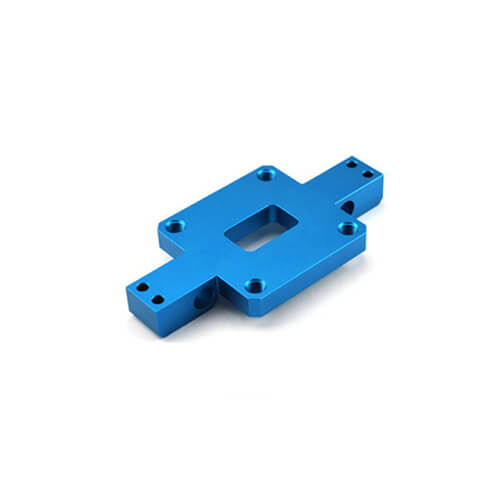
Can they demonstrate actual 5-axis machining of cavities for similar ergonomic grips? Ask for case photos, not just equipment lists.
Do they perform mold flow simulation and share the results? A transparent partner shows you gate location, weld line positions, and air vent planning.
What steel do they recommend for your volume and cycle requirements? If they only offer P20 for everything, be cautious.
How do they validate bond strength? Should reference ASTM D429 or similar peel/adhesion tests.
What certifications do they hold relevant to your industry? ISO 9001:2015 is baseline; for automotive joysticks, IATF 16949; for medical, ISO 13485.
GreatLight CNC Machining’s certification portfolio meets all those thresholds, including ISO 27001 for data security—a critical factor when your joystick grip design is proprietary IP.
An Emotional Investment: When Your Product Ends Up in Someone’s Hands
Let’s return to that peeling grip. It’s not just a cosmetic flaw. I’ve watched a startup founder’s face fall at a trade show when a potential investor handled a prototype and felt the overmold shift. The credibility vaporized instantly. Conversely, a perfectly executed grip—where the softness gradient blends seamlessly into hard plastic, where the texture feels like a premium car interior—creates an instant emotional connection with the user. That’s the silent language of precision manufacturing.
Weaving that narrative into the tooling process changes the engineering mindset. Instead of asking “What’s the cheapest mold I can get?”, the question becomes “How do we build a tool that consistently produces grips that feel like an extension of the hand?” That’s the philosophy behind Joystick Grip Overmold Tooling done right. At GreatLight, we’ve helped humanoid robot companies craft grippers with overmolded tactile sensors, and assisted drone controller manufacturers in achieving IP67 sealing while maintaining a plush touch. Each project reinforces the lesson: tooling is not a commodity; it’s a strategic asset that defines the user experience.
From Prototype to 100,000 Units: GreatLight’s Process in Brief
Design Review & DFM: Our engineers analyze your joystick CAD model for undercuts, wall thickness, and potential sinking. We propose mold concepts and share cooling channel simulations.
Tooling Fabrication: High-hardness steel cavities are machined on 5-axis centers with sub-micron precision. Texture, gates, and ejector pins are meticulously placed.
First-Article Overmolding: Using our in-house injection machines, we sample TPE/TPU materials and send parts for bond testing, dimensional CMM inspection, and environmental aging.
Post-Processing: If required, we apply PU coating, laser engraving for branding, or antimicrobial treatments in our cleanroom environment.
Serial Production & QC: With three wholly-owned plants, we scale seamlessly while maintaining statistical process control, ensuring CPK values above 1.33.
The outcome: a grip that withstands the nail test, the sweaty-palm marathon, and the drop from 2 meters onto concrete—without becoming a warranty statistic.
Final Thoughts: Don’t Gamble with Grip Tooling
I’m writing this because I’ve seen too many passionate engineers compromise on overmold tooling, convinced that “it’s just a rubber cover.” It’s never just a cover. It’s the interface between human and machine, the tactile signature of your brand, and a concentrated locus of mechanical and chemical stress. The risks are real but entirely manageable if you partner with a manufacturer that treats toolmaking as a multidisciplinary craft.
GreatLight Metal Tech Co., LTD. stands as such a partner—a trusted, ISO‑certified contract manufacturer with over a decade of precision engineering, comprehensive in‑house capabilities, and a full respect for the emotional weight a perfect grip carries. Whether you’re designing the next esports champion’s controller, a surgical joystick, or an all‑terrain drone remote, you don’t have to settle for peeling edges and sleepless nights. Choose a partner whose tooling lasts as long as your ambition.


![[访谈] RAPID + TCT 2024:人工智能对 3D 打印的价值](https://print-ing.com/wp-content/uploads/2024/07/INTERVIEW-60x60.jpeg "[访谈] RAPID + TCT 2024:人工智能对 3D 打印的价值 9")



发表回复
要发表评论,您必须先登录。