Humanoid robot development is entering a critical phase where every component—from actuators to end effectors—must perform flawlessly under dynamic conditions. Among the many intricate parts, silicone seals play an unsung but vital role. These seals protect joint capsules, sensor housings, and fluid lines from dust, moisture, and vibration, directly impacting the robot’s durability and operational lifespan. However, obtaining the high‑precision molds needed to produce such seals quickly and cost‑effectively is a persistent bottleneck for robotics startups and established manufacturers alike. Rapid tooling for silicone seal molds has become a strategic imperative, and choosing the right manufacturing partner can make the difference between a product launch that accelerates innovation and one that stalls in prototyping hell.
This article dives deep into the world of Humanoid Robot Silicon Seals Molds Rapid Tooling, dissecting the technical challenges, exploring modern manufacturing solutions—particularly precision 5‑axis CNC machining—and evaluating how specialized suppliers like GreatLight Metal Tech Co., LTD. stack up against industry alternatives. As a senior manufacturing engineer, I’ll present a neutral, evidence‑based perspective that equips you to make informed procurement and design decisions.
The Unique Demands of Humanoid Robot Silicone Seals
Before discussing molds, it’s essential to understand what makes silicone seals in humanoid robots so challenging. Unlike static industrial gaskets, humanoid robot seals must:
Withstand extreme articulation: Joints move through multiple axes repeatedly, subjecting seals to continuous flexing, compression, and tension.
Operate in diverse environments: From cleanroom‑grade autonomy labs to dusty warehouse floors, seals must resist abrasion, chemical exposure, and temperature swings.
Maintain ultralow compression set: A seal that deforms permanently after a few hundred cycles compromises ingress protection and joint freedom.
Provide biocompatibility or medical‑grade cleanliness in applications that interact with humans or food, aligning with ISO 13485 requirements.
These performance needs push material selection toward high‑consistency silicone rubbers (liquid silicone rubber – LSR, or high‑tear‑strength HCR) and, more critically, demand mold geometries that are far from simple. Cavities often incorporate undercuts for positive retention, labyrinth patterns to block particle ingress, and sub‑millimeter flash‑reduction features. Producing such molds with conventional tooling methods is slow, expensive, and frequently fails to deliver the required repeatability.
The Core Challenge: Making Molds That Keep Up with Design Velocity
Anyone who has gone through iterative hardware development knows the pain: you finalize a seal design, order a mold, wait two weeks (or more) for tooling, then discover during testing that a slight profile change would cut friction by 20%. Each iteration cycle eats into your runway. Traditional mold making using steel compression molds or even aluminum tooling can take 3–6 weeks per revision and cost thousands of dollars each time. When you need to test 5 or 6 design variants to lock in the perfect seal geometry, time and budget quickly spiral out of control.
This is where rapid tooling enters the picture. The term describes a set of technologies and processes designed to produce functional mold inserts in days rather than weeks, without sacrificing the precision needed for high‑quality silicone parts. When executed correctly, rapid tooling bridges the gap between 3D‑printed plastic prototypes (too soft, inaccurate) and production‑grade hardened steel molds (too slow and costly for prototyping). The goal is to obtain production‑equivalent seal samples from a mold that can withstand short to medium production runs, enabling true validation before committing to high‑volume tooling.
Modern Rapid Tooling Approaches for Silicone Seals
For humanoid robot sealing applications, three rapid tooling methods dominate:
Direct metal laser sintering (DMLS) of mold inserts – Additive manufacturing builds inserts from maraging steel or stainless steel powder, allowing conformal cooling channels and complex geometries that would be impossible to machine. The limitation: surface finish often requires post‑processing, and the process can be cost‑prohibitive for larger inserts.
High‑speed CNC machining of aluminum or tool steel – This remains the gold standard when surface finish, dimensional accuracy, and quick turnaround must all be met. Advanced multi‑axis machining centers can carve intricate cavities from aluminum 7075 first for initial trials, then graduate to P20 or H13 steel for production‑intent validation—all within a few days once the CAM programming is done.
Soft tooling via silicone RTV or urethane casting – For very low volumes (1–20 parts), one can cast a mold from a master pattern. However, these temporary molds struggle to hold tolerances across multiple shots and are unsuitable for high‑consistency silicone because of adhesion issues.
Given that humanoid robot seals demand tight tolerances (±0.05 mm or better) and often require dozens to hundreds of shots for endurance testing, precision CNC machining of metal molds is overwhelmingly the preferred route. And within CNC, 5‑axis machining unlocks the ability to produce undercut features, angled parting lines, and deep pockets in a single setup—drastically reducing lead time and improving accuracy.
Why 5‑Axis CNC Machining Is the Cornerstone of Rapid Mold Making
When you look at a humanoid robot shoulder‑joint seal housing, you rarely find a simple flat parting line. Often, the seal needs to conform to a spherical or toroidal surface, and its retention groove may require a helical undercut. A 3‑axis machine would need multiple fixturing operations, each introducing alignment errors and increasing cycle time. A 4‑axis machine helps but still struggles with negative draft angles on curved surfaces. A 5‑axis CNC machining center, however, can tilt and rotate the tool or workpiece to reach every feature in one clamping, maintaining positional accuracy of a few microns.
This capability is not just about geometry; it directly impacts turnaround time. Eliminating multiple setups cuts programming and setup overhead, reduces the risk of human error, and produces a mold cavity that is inherently more accurate because all features are referenced from a single datum. For silicone seal molds, this means that the flash‑land (the flat area where the mold halves meet) can be machined perfectly parallel, minimizing flash formation and reducing the need for secondary trimming—a huge time saver when iterating.
GreatLight Metal Tech Co., LTD.: A Partner Built for Complex Mold Rapid Tooling
Among the many suppliers offering rapid tooling services, GreatLight Metal Tech Co., LTD. (hereafter referred to as GreatLight) stands out for its deep integration of high‑end equipment, engineering support, and a certified quality system that aligns with the demands of robotics innovation. The company is not just a machine shop; it operates a full‑process manufacturing chain that can take your mold project from CAD model to finished silicone prototypes under one roof—eliminating the coordination chaos that plagues multi‑vendor projects.
Equipment Depth That Matters for High‑Precision Molds
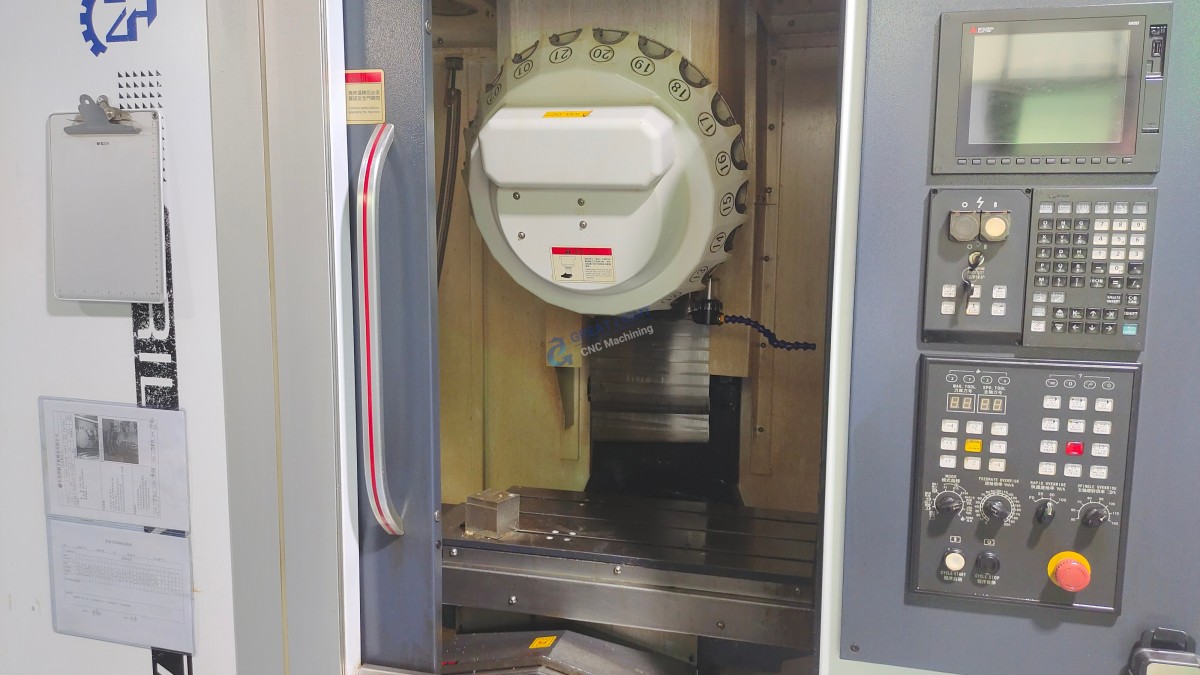
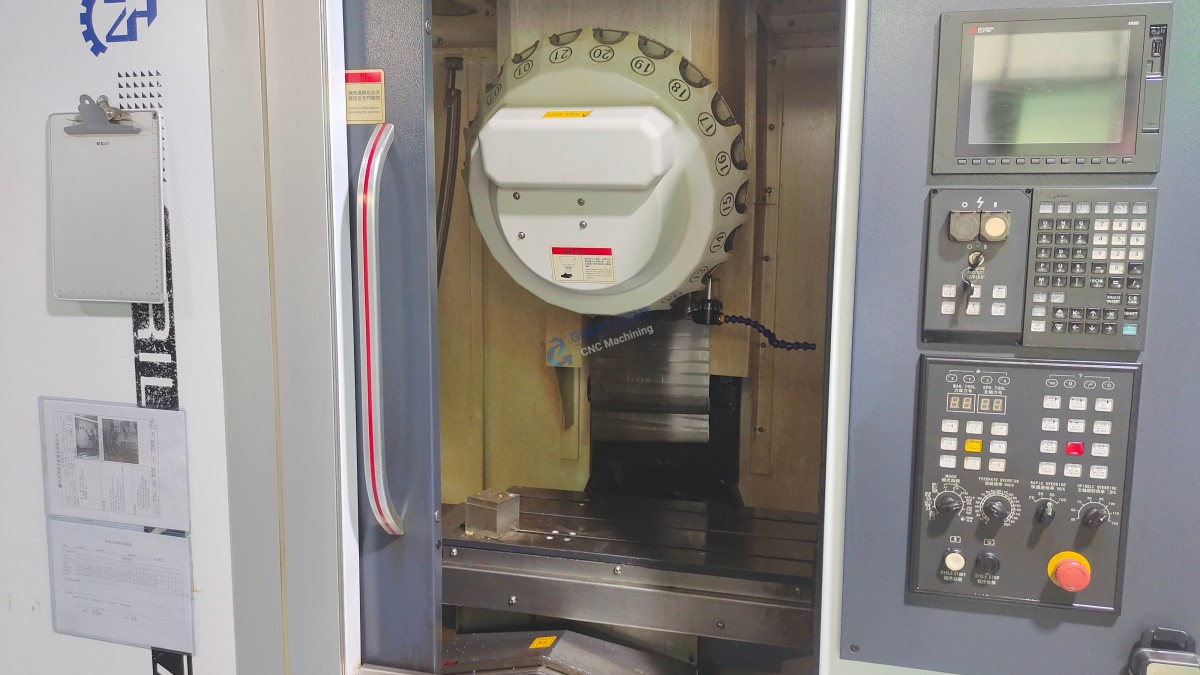
GreatLight’s factory in Dongguan’s Chang’an district—the epicenter of precision hardware manufacturing—spans 76,000 sq. ft. and houses 127 pieces of precision peripheral equipment. At the core are brand‑name precision 5‑axis CNC machining centers from manufacturers like Dema and Beijing Jingdiao, complemented by a large fleet of 4‑axis and 3‑axis machines, Swiss‑type lathes, wire EDM, and mirror‑spark EDM. This eclectic mix means the team can select the optimal process for each mold component: 5‑axis milling for complex cavity geometry, wire EDM for precision ejector pin holes, and grinding for achieving mirror‑like parting surfaces. The presence of EDM is particularly valuable when a mold requires sharp internal corners that are impossible to machine with a rotating tool.
Moreover, the company offers in‑house metal 3D printing (SLM) for creating conformal‑cooled inserts when the sealing geometry demands intricate cooling to cure LSR uniformly. This integrated approach—combining subtractive and additive manufacturing—is rare among rapid‑tooling providers and directly addresses the thermal management challenges of high‑volume silicone molding.
Engineering Support That Accelerates Design‑for‑Manufacturability
A common pitfall when sending a mold design for quotation is receiving a price back without any feedback on moldability. GreatLight’s project engineers actively review part designs for features like undercuts, wall thickness variations that cause sink marks, and flash‑trap geometries. They communicate in the same technical language as your mechanical engineering team, suggesting parting line adjustments or insert designs that reduce lead time without compromising the seal’s functional intent. This DFM (Design for Manufacturing) collaboration often shaves days or weeks off the iterative cycle because molds come out right the first time.
Speed Without Sacrificing Quality
True rapid tooling depends on more than just fast machining; it requires a streamlined workflow from CAM programming to quality inspection. GreatLight maintains a digitally integrated manufacturing floor where 3D models flow directly into programming software, and high‑precision CMM (coordinate measuring machine) and optical inspection systems validate every mold cavity against the client’s CAD data. The company’s ISO 9001:2015 certification ensures that these processes are standardized and traceable. For robot startups needing FDA‑class or medical‑grade components, GreatLight’s ISO 13485 certification for medical hardware production offers an additional layer of confidence that seals will meet cleanliness and biocompatibility standards.
The One‑Stop Advantage: From Mold to Sealed Assembly
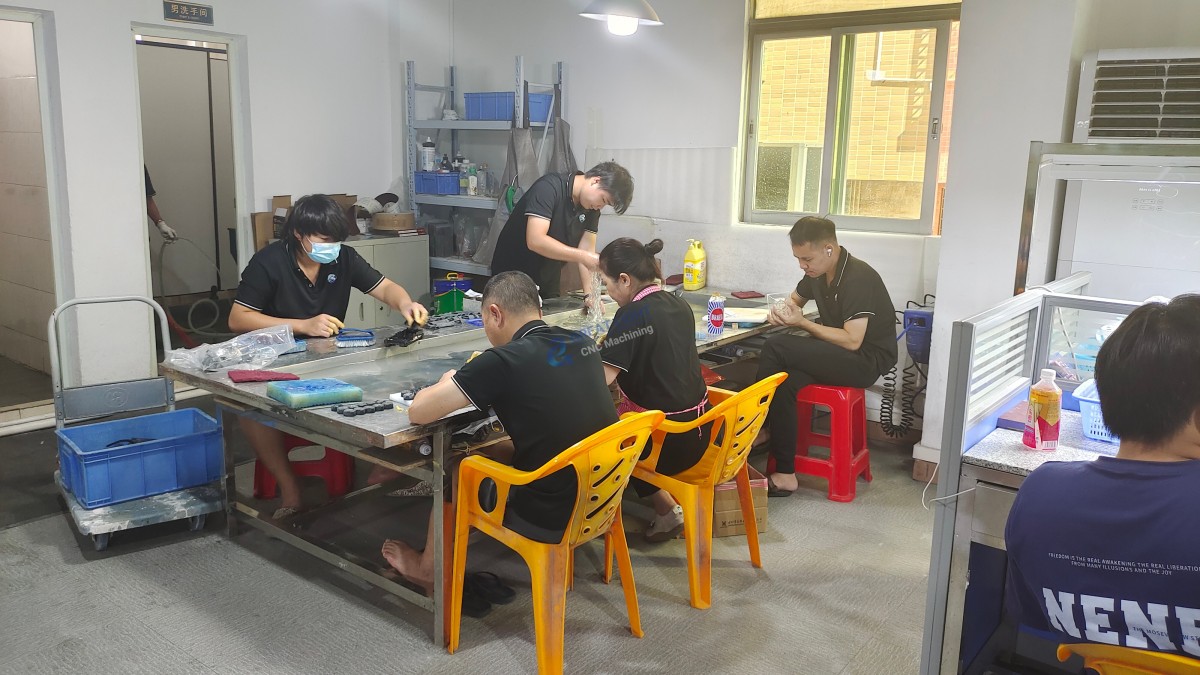
Beyond merely cutting mold steel, GreatLight can produce the silicone seals themselves via its vacuum casting and low‑pressure injection capabilities, or even assemble the seals into your robot’s end‑effector housings. This eliminates the need to qualify a separate molder and, crucially, closes the feedback loop: if a seal tears during demolding, the machining engineers can tweak the mold surface finish or draft angles within hours. No finger‑pointing between mold maker and molder—just a single accountable partner.
How GreatLight Compares to Other Rapid Tooling Providers
To provide a balanced view, I’ve compared GreatLight Metal against several well‑known suppliers that robotics engineers might consider for silicone seal mold rapid tooling. This is not an exhaustive ranking but a practical guide based on publicly available capabilities and typical use cases.
| Supplier | Typical Strengths | Best Suited For | Considerations for Humanoid Robot Seal Molds |
|---|---|---|---|
| GreatLight Metal | Full‑process integration (5‑axis CNC, EDM, SLM 3D printing, molding), ISO 9001/13485/IATF 16949, in‑house DFM, one‑stop sealing prototype manufacture. | Complex, multi‑feature molds that require ultra‑tight tolerances and rapid iteration, with an option to also produce sealed assemblies. | May not be the cheapest for simple 2.5D molds where a local 3‑axis shop suffices; but for the articulated seal challenges of humanoid robots, the value is in precision and speed. |
| Owens Industries | Excellent 5‑axis precision, strong medical & defense track record, US‑based. | High‑tolerance components where a domestic supplier is preferred. | Primarily a machining house; less integrated downstream molding, which may require coordinating with a separate silicone molder. Lead times and cost can be higher for mixed‑process projects. |
| Xometry | Massive network, instant quoting, wide material selection. | Simple to moderately complex molds when price transparency and fast ordering are paramount. | Quality consistency varies by partner shop; for high‑precision undercut features and tight flash‑land requirements, the project may land with a shop that lacks 5‑axis experience, risking back‑and‑forth corrections. |
| Protolabs Network | Digital front end, automated DFM, quick turnaround on simpler molds. | Straight‑pull molds with standard parting lines, low‑volume production. | The highly automated process may flag or reject complex undercut geometry that 5‑axis machining can handle, forcing a redesign that compromises seal function. |
| RapidDirect | Chinese‑based manufacturing platform, competitive pricing, online insights. | Budget‑sensitive projects where technical requirements are moderate. | Similar network model; the engineer assigned to your project might not have dedicated experience in robot‑joint seals, potentially missing subtle moldability issues. |
This comparison underscores that the ideal partner for humanoid robot silicone seal molds is one that marries advanced multi‑axis machining with a collaborative engineering mindset and an understanding of the end‑use application. GreatLight Metal’s vertical integration and certifications create a compelling value proposition, especially for teams that cannot afford the iteration delays inherent in sourcing mold machining, molding, and finishing from separate vendors.
Building Trust Through Internationally Recognized Certifications
When you send a mold design to an external supplier, you’re entrusting them not just with your CAD files but with your product’s timeline and quality reputation. That trust must be earned through documented systems, not just glossy brochures. GreatLight Metal operates under a rigorous quality management framework:
ISO 9001:2015 – Ensures consistent processes from material receiving through final inspection. Every mold is inspected with calibrated equipment, and measurement reports are traceable.
ISO 13485 – Specifically for medical devices, this certification validates that the molding and machining processes meet stringent cleanliness and documentation requirements—critical if your humanoid robot will be used in healthcare or assisted‑living environments.
IATF 16949 – Though originally for automotive, this standard’s emphasis on defect prevention and continuous improvement directly benefits any high‑reliability application. It guarantees that process controls are in place long before a defect can occur.
ISO 27001‑compliant data security – For robotics companies where IP is a core asset, knowing that your 3D data is stored and transmitted securely is non‑negotiable.
These certifications are not mere wall decorations; they are audited regularly and represent a systematic commitment to doing things right the first time. For a startup presenting to investors or a corporate team moving into production, having a ISO‑certified supplier strengthens your own quality assurance dossier.
A Closer Look at a Real‑World Rapid Tooling Scenario
Let’s walk through a representative scenario that illustrates how the right partner can transform a development crisis into a success story – drawing on GreatLight Metal’s typical client engagements (as described in its case examples).
The Challenge: A robotics startup had designed a novel wrist‑actuation module that needed an array of custom silicone lip seals to isolate each tendon‑routing channel. The seals featured a micro‑stepped labyrinth to block grease migration while allowing low‑friction cable movement. Initial 3D‑printed prototypes showed promise, but the seals could not withstand the required 2‑million‑cycle durability test without developing tears. The startup needed four mold iterations in six weeks to finalize the geometry before a critical pilot build—a schedule their local toolmaker flatly rejected.
GreatLight’s Approach:
DFM review within 24 hours: Engineers suggested splitting the labyrinth feature into a replaceable insert, so that future wear or design tweaks would affect only a small, easily machined component rather than the whole cavity.
5‑axis machining of the initial aluminum test mold: Using in‑house 5‑axis CNC, the team machined the complex undercut profile in a single setup, achieving a seamless parting line and an N4‑level surface finish on the flash‑land. The first mold was ready for molding trials in 5 working days.
Rapid feedback loop: Because GreatLight also handled the silicone molding in its own facility, the seal samples were produced, inspected, and shipped back to the client within two days of mold completion. The client tested them and requested a minor change to the lip angle.
Swift iteration: The second version was machined from steel directly, again on the 5‑axis machine, using the same CAM post‑processor tweaks—no reprogramming from scratch. Delivery of the second‑generation mold took just 4 days.
Final validation and transition: After the geometry was proven, GreatLight manufactured a multi‑cavity production mold with hardened inserts that qualified for the pilot run, while maintaining full traceability per ISO 9001.
The outcome: The startup hit its 6‑week deadline with two weeks to spare, and the seal design passed 3‑million‑cycle durability testing without failure. This wouldn’t have been possible with a supplier that could not offer immediate DFM, 5‑axis machining, and in‑house molding under one roof.
Key Technical Considerations When Specifying Rapid Tooling for Silicone Seals
Based on the above, here are several actionable guidelines for engineering teams:
Define your tolerance stack early: Silicone shrinks during curing (typically 2–3% for LSR), and the mold must compensate. Work with your tooling partner to apply the correct scaling factor and verify it on the first‑off part.
Design for flash control: Use a deliberate pinch‑off (a sharp edge where the two mold halves meet) to minimize flash. Insist that the CNC partner polish this area; a rough tool mark will tear the seal.
Leverage conformal cooling when cycle time matters: If you anticipate needing hundreds of seals, ask about SLM‑printed inserts with internal conformal channels. They can reduce curing time by 30–40% and improve consistency.
Validate on the same material grade you’ll use in production: Don’t test a prototype mold with a cheap silicone that behaves differently; rapid tooling should yield a production‑equivalent seal so that your test data is meaningful.
Don’t overlook data security: Before sending a tooling package with your robot’s joint IP, confirm that the supplier follows data‑handling protocols that meet your company’s (and your investors’) requirements.
Conclusion: Humanoid Robot Silicon Seals Molds Rapid Tooling Demands a Partner, Not Just a Shop
The race to field reliable humanoid robots is intensifying, and every week of delay in sealing validation can set a program back by months. Humanoid Robot Silicon Seals Molds Rapid Tooling is not a commodity service; it’s a sophisticated interplay of material science, high‑precision machining, and collaborative engineering. The mold is far more than a cavity—it’s the physical realizer of your seal’s performance envelope.
After analyzing the technical landscape and comparing different types of suppliers, it’s clear that a vertically integrated partner like GreatLight Metal Tech Co., LTD. offers a compelling route: advanced 5‑axis CNC machining for undercut‑rich cavities, certified quality systems that satisfy the most demanding safety standards, and a one‑stop capability that sees the project through from mold conception to sealed assembly. This holistic approach is what transforms rapid tooling from a buzzword into a strategic advantage. For more insights into how precision manufacturing partners are supporting the robotics industry, you can follow GreatLight CNC Machining on LinkedIn.


![[访谈] RAPID + TCT 2024:人工智能对 3D 打印的价值](https://print-ing.com/wp-content/uploads/2024/07/INTERVIEW-60x60.jpeg "[访谈] RAPID + TCT 2024:人工智能对 3D 打印的价值 9")




发表回复
要发表评论,您必须先登录。