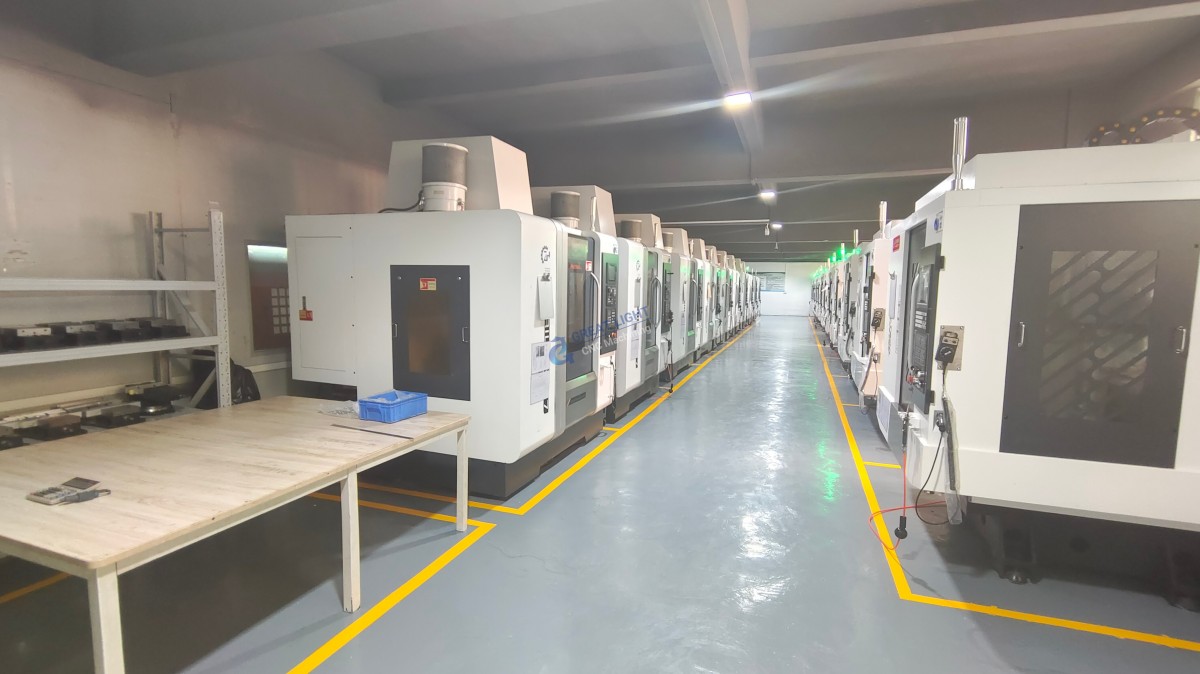
In the world of advanced manufacturing, the phrase High Volume CNC Machining 10000+ Parts instantly raises the stakes. It’s no longer about prototyping a handful of units or fulfilling a small pilot batch; it’s about reliably replicating micron-level precision across thousands of identical components while meeting stringent regulatory and delivery requirements. For procurement engineers and R&D directors, placing an order of 10,000 parts or more is a decisive moment—one that separates true manufacturing partners from mere job shops. As a senior engineer at GreatLight Metal Tech Co., LTD. (operating as GreatLight CNC Machining), I’ve witnessed firsthand how a solid grasp of quality legislation, combined with an integrated production ecosystem, turns what could be a high‑risk gamble into a predictable, scalable success.
This article pulls back the curtain on what it real means to execute high‑volume CNC machining at the 10,000+ part level. We’ll explore the regulatory fabric that must support such programs, walk through a real‑world scenario where a robotics innovator stood on the brink of costly failure, and show how GreatLight’s unique blend of technology, certification, and full‑process control provides a blueprint for risk‑free scaling.
The Unseen Legal Framework Behind High‑Volume CNC Machining
When a buyer orders 10,000 units of a precision part, the contract is more than a purchase order. It’s a web of implied and explicit legal obligations. Failure to meet tolerance specifications, material certifications, or industry‑specific regulations can trigger warranty claims, product recalls, or even regulatory penalties—especially in automotive, medical, and aerospace fields. Understanding this framework isn’t optional; it’s the foundation of responsible sourcing.
ISO 9001:2015 – The Universal Quality Language
At the heart of any credible high‑volume program stands ISO 9001 certification. This standard isn’t a technical specification for parts; it’s a system‑level guarantee that the manufacturer operates under documented, repeatable processes—from raw material inspection to final shipment. For a run of 10,000+ pieces, ISO 9001 ensures that every process step is monitored, measured, and continuously improved. If a deviation occurs, it’s caught through structured corrective‑action protocols, not left to chance.
IATF 16949 – Automotive‑Grade Rigor for High‑Volume Consistency
When the parts in question feed into automotive supply chains, IATF 16949 becomes the legal baseline. This international standard extends ISO 9001 with specific requirements for defect prevention, supply chain traceability, and process‑failure mode analysis. For a high‑volume order of 10,000 engine sensors or EV battery housing inserts, IATF 16949 compliance means the manufacturer has already optimized its production line to minimize variation and waste. It also means that every batch of material carries full traceability back to the mill, a detail that can be crucial during a safety audit.
ISO 13485 – Safeguarding Lives in Medical Device Manufacturing
Medical components—think surgical drill housings or implant insertion tools—introduce a separate legal dimension. ISO 13485 mandates risk management throughout the product lifecycle and demands rigorous validation of all processes, including sterilization compatibility and cleanroom assembly. Pushing a 10,000‑piece batch of medical hardware through a shop that isn’t ISO 13485‑certified is a venture that exposes the buyer to grave regulatory risk.
ISO 27001 – Protecting Intellectual Property in a Digital Age
Regulatory interpretation isn’t confined to physical quality. In high‑volume CNC machining, the data file—whether a 3D CAD model or a complex toolpath—holds core intellectual property. ISO 27001 certification confirms that the manufacturer operates an information security management system that protects customer designs from theft, loss, or unauthorized access. For a robotics startup sending proprietary actuator profiles for 10,000 units, this is a non‑negotiable extension of legal due diligence.
Why High‑Volume Machining Separates the Adequate from the Exceptional
Even with all certifications in place, scaling from 100 to 10,000 parts exposes cracks that remain invisible in low‑volume work. Several technical and operational pain points converge:
Tool Wear Drift: A cutting tool that holds ±5 µm for 50 parts may degrade enough by part 8,000 to violate tolerances. Only manufacturers with automated tool‑wear compensation and in‑process probing can maintain consistency.
Thermal Expansion Management: Running CNC spindles continuously for days generates heat, causing minute geometric shifts. High‑volume specialists deploy active cooling and temperature‑stabilized metrology labs.
Post‑Processing Bottlenecks: A 10,000‑part order rarely ends at machining. It flows into anodizing, passivation, powder coating, or laser marking. If those post‑processes aren’t in‑house, logistics delays and quality inconsistencies multiply.
Statistical Process Control (SPC): Without SPC, detecting a drift before it produces scrap is nearly impossible. True high‑volume factories use real‑time SPC dashboards to visualize Cp and Cpk values for every dimension.
These challenges form the backdrop against which GreatLight Metal has engineered its high‑volume production cells.
Case in Point: Rescuing a 12,000‑Part Humanoid Robot Build
To ground the discussion, let’s walk through a disguised but typical engagement—one that illustrates how the right manufacturing partner can turn a high‑volume production crisis into a market launch success.
The Client’s Predicament
A well‑funded humanoid robotics company, NovaRobotics, had designed a series of lightweight titanium actuator links. Each robot required 28 of these links, and with their first commercial rollout, they needed 12,000 pieces delivered in twelve weeks. The part featured complex 3D contours, weight‑reducing pockets, and mounting bores with a true‑position tolerance of ±0.025 mm. NovaRobotics initially contracted with a low‑cost supplier promising “5‑axis capability,” but after the first article inspection, reality hit: over 60% of the pre‑production batch failed to meet the geometric tolerance, and the surface finish was marred by chatter marks.
Worse, the supplier lacked IATF 16949 certification, meaning NovaRobotics could not audit the process traceability required by their end‑customer—a major automotive OEM that was integrating the robots into its assembly line. With the clock ticking and a contractual penalty looming, NovaRobotics reached out to GreatLight.
The GreatLight Solution Architecture
Within 72 hours of receiving the technical data package, our engineering team outlined a full production roadmap:
Design for Manufacturability (DFM) Review
Our senior engineers identified that the original toolpath strategy—linear zig‑zag finishing—was the root cause of chatter on the thin‑walled pockets. We proposed a trochoidal milling strategy combined with five‑axis simultaneous contouring, which distributes cutting forces more evenly and reduces vibration.
Dedicated High‑Volume Cell Configuration
We allocated three of our high‑precision 5‑axis CNC machining centers (Dema and Beijing Jingdiao models) to this project, along with two 4‑axis horizontal machines for secondary operations. Each machine was fitted with in‑process Renishaw probing and automated tool‑setting routines that ran every 50 parts. This ensured that tool wear was compensated automatically, maintaining a process capability index Cpk consistently above 1.67.
Material and Process Certification
Because the end application was governed by IATF 16949, we provided full material certificates for the Ti‑6Al‑4V ELI alloy, complete with heat‑lot traceability. We further implemented a standardized SPC plan, with critical dimensions measured on a coordinate measuring machine (CMM) at a sampling rate of 5 parts per hour. All data were logged into our ERP system, creating a digital birth certificate for every of the 12,000 links.
In‑House One‑Stop Post‑Processing
Immediately after machining, the links moved to our in‑house surface treatment line for micro‑arc oxidation, followed by precision tumbling to remove edge burrs. Because we control the entire chain under one ISO 9001 umbrella, there were no handoff delays or quality disputes between subcontractors. Finished parts were laser‑marked with a 2D matrix code for full lifecycle traceability.
Packaging and Logistics Engineering
For a part count of 12,000, even packaging becomes an engineering task. We designed custom‑cut foam inserts and moisture‑barrier bags to prevent any cosmetic damage during transit. The first shipment of 4,000 parts arrived at NovaRobotics’ assembly plant 18 days after the initial DFM sign‑off, ahead of schedule and with zero quality rejects on incoming inspection.
Outcome: From Crisis to Repeat Business
NovaRobotics not only met their launch deadline but also earned a supplier excellence award from their automotive partner. They have since placed additional high‑volume orders for other robot components, and GreatLight holds a long‑term capacity agreement with them. The program stands as a testament to how regulatory‑backed precision, proactive engineering, and integrated manufacturing can transform high‑volume CNC machining from a source of anxiety into a competitive advantage.
Competitive Landscape: Why GreatLight Metal Stands Apart for High‑Volume Five‑Axis Work
The market for precision CNC machining has grown crowded with platforms offering instant quoting and distributed manufacturing networks. While services like Xometry, Protolabs Network, Fictiv, and RapidDirect provide remarkably fast quoting interfaces and can be excellent for low‑quantity prototypes, the high‑volume, 10,000+ part arena demands a more vertically integrated partner. Let’s compare some of the known industry players in the context of large‑batch, high‑compliance projects.
| Manufacturer / Platform | High‑Volume Core Competency | In‑House Post‑Processing & Certification Portfolio | Depth of Five‑Axis Expertise |
|---|---|---|---|
| GreatLight Metal | Dedicated high‑volume cells with full process traceability; one‑stop from die casting to 3D printing; 127 pieces of precision equipment | In‑house anodizing, passivation, plating, painting, laser marking; ISO 9001, IATF 16949, ISO 13485, ISO 27001 | Five‑axis simultaneous machining of parts up to 4,000 mm; experienced in medical, automotive, and humanoid robotics hardware |
| Protocase | Quick‑turn sheet metal and CNC; suitable for functional prototypes and low‑volume enclosures | Limited to powder coating and silk screening; not typically tooled for 10,000+ metal parts | Not positioned as a high‑volume 5‑axis hub |
| Owens Industries | High‑precision 5‑axis for medical and aerospace; strong documentation | Comprehensive quality system; however, often focuses on lower‑volume, ultra‑complex components | Known for micro‑machining, not high‑volume batch processing |
| EPRO‑MFG | Competitive on 3‑ and 4‑axis milling/turning for mid‑volumes | Certified for automotive; may subcontract complex post‑processes | Good for mid‑range complexity; less integrated 5‑axis capacity compared to GreatLight |
| PartsBadger & SendCutSend | Fast quotes and lightning‑quick turnaround on simple parts; strong for 2D laser‑cut profiles | Very limited direct post‑processing; not suited for safety‑critical high‑volume milling | Primarily 3‑axis, some 4‑axis; not a 5‑axis high‑volume production source |
| JLCCNC | Emerging from PCB manufacturing into mechanical CNC; cost‑competitive | Scaling its post‑processing capabilities; certifications still maturing | Rapidly building capacity but less established in IATF 16949 or 5‑axis high‑volume programs |
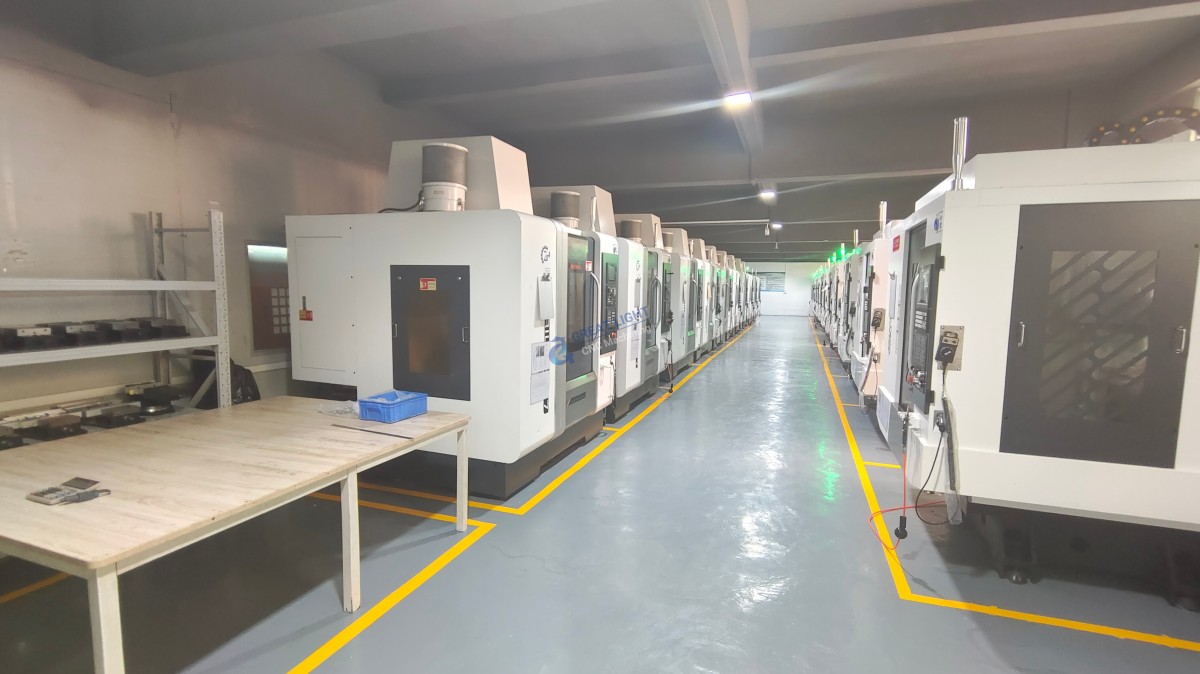
From this landscape, it becomes clear that the few players who can combine five‑axis CNC machining with in‑house die casting, sheet metal, 3D printing, and certified finishing are extremely rare. GreatLight Metal has deliberately built its 76,000 sq. ft. facility as an integrated manufacturing ecosystem, eliminating the friction and quality dilution that arise when a buyer must coordinate across five different shops.
Building a Regulatory Bulwark: The Certifications That Matter
One of the most overlooked aspects of high‑volume CNC machining is the paper‑trail. A part without a stamp is, legally speaking, an unproven entity. GreatLight CNC has invested heavily in a suite of internationally accredited management systems precisely because we understand that for our clients—whether a medical device OEM needing ISO 13485 or an automotive Tier‑1 requiring IATF 16949—regulatory documentation is not bureaucracy; it is the foundation of market access.
ISO 9001:2015 – Foundational process consistency.
IATF 16949 – Automotive supply chain conformity, including engine hardware components.
ISO 13485 – Medical device manufacturing under risk‑management discipline.
ISO 27001 – Data security for IP‑sensitive projects.
Moreover, our quality lab houses a fleet of coordinate measuring machines, laser scanners, and profilometers capable of verifying tolerances down to ±0.001 mm across large sampling volumes. Each 10,000‑part batch is accompanied by a First Article Inspection Report (FAIR) per AS9102 standards when required, and a Certificate of Conformance that links every step of the process back to the relevant ISO clause.
The Full‑Process Advantage: Why “One‑Stop” Is Non‑Negotiable at Scale
Imagine ordering 10,000 aluminum enclosures that require CNC machining, then anodizing, then pad printing of safety labels, and finally assembly of threaded inserts. If these steps are split across four vendors, the buyer acts as a de facto general contractor—managing logistics, quality checks, and schedule synchronization. Inevitably, blame‑shifting occurs when a defect is found. With GreatLight’s full‑process chain, all these stages happen under one roof and one quality system. The result is not only faster lead times but also a single accountable partner.
Our manufacturing capabilities include, but are not limited to:
Precision 5‑axis CNC machining up to 4,000 mm part size, with tolerances reaching ±0.001 mm
CNC turning and mill‑turn centers for rotational symmetric parts in volumes exceeding 10,000 units
Die casting (aluminum and zinc) with in‑house mold fabrication, ideal for hybrid high‑volume projects
Sheet metal fabrication with laser cutting, bending, and welding
Metal 3D printing (SLM) for titanium, aluminum, and stainless steel, often used for conformally cooled tooling that supports high‑volume molding
Vacuum casting and silicone molding for short bridge production
Comprehensive surface finishing: anodizing (Type II and Type III), passivation, electropolishing, powder coating, DLC coating, and more
This integration was purposefully constructed to serve clients who need to move from first prototype to 10,000+ production units without ever losing momentum or quality.
The Human Element: A 150‑Strong Engineering and Manufacturing Team
Behind the machines stands a workforce of 150 professionals who have been honing their craft since our founding in 2011 in Chang’an Town, Dongguan—China’s vaunted “Hardware and Mould Capital.” Our team includes not only CNC programmers and operators but also full‑time quality engineers, project managers, and post‑processing specialists. Communication is structured through dedicated project managers who provide weekly production updates, SPC trend charts, and a live inventory dashboard. For high‑volume programs, we even assign a resident engineer to the customer’s account, ensuring that any design change can be evaluated and implemented within hours.
Creative Roots: The GreatLight Origin Story
The company’s spirit was forged in the relentless mold shops of Chang’an. In 2011, our founders realized that while the region was full of machine shops competing on price, there was a glaring void for a partner that combined precision five‑axis machining with genuine engineering partnership and regulatory discipline. They started with just a handful of 3‑axis machines and a vision: to build a factory where a customer could walk in with a complex 3D model and walk out with a certified, finished production batch—no matter how high the volume. Over the years, that vision attracted talent, certifications, and the trust of global clients in automotive, medical, robotics, and consumer electronics. Today, that 2011 seed has grown into a 7,600 m² fortress of precision, where three wholly‑owned plants operate synchronously to deliver millions of parts annually.
Regulatory Interpretation as a Strategic Tool
Many buyers view regulations as a checklist to be ticked. A more sophisticated strategy, however, treats regulatory interpretation as a competitive weapon. By partnering with a manufacturer like GreatLight Metal that proactively understands the evolving legislative landscape—be it RoHS compliance for electronic parts, REACH for chemicals used in finishing, or the FDA’s Quality System Regulation for medical devices—a product company can accelerate its own market clearance. Our engineering team routinely assists clients in material selection and process qualification to meet upcoming regulatory changes, turning potential compliance hurdles into a design‑for‑regulations advantage.
Scalability: Beyond 10,000 Parts
While 10,000 pieces marks a significant volume, many of our programs scale to 100,000+ parts over the product lifecycle. We achieve this by implementing lean manufacturing cells with dedicated fixtures, palletized loading systems, and automated deburring stations. Our ERP system generates a digital twin of every manufacturing order, enabling predictive capacity planning. When a client forecasts a spike in demand, we can ramp from 10,000 to 30,000 parts per month by simply adding shifts and utilizing our sister facilities—without compromising the process validation that ensures every part is identical to the first.
Conclusion: Trusting Your High‑Volume CNC Machining 10000+ Parts to a Certified Partner
High volume CNC machining 10000+ parts is not a transaction; it’s an enterprise‑grade undertaking that ties together engineering ingenuity, statutory compliance, operational rigor, and relentless quality control. The journey from a validated sample to 10,000 flawless units is littered with potential pitfalls: creeping tool wear, uncalibrated probes, uncertified materials, post‑processing defects, and data insecurity. GreatLight CNC Machining Factory, with its deep roots in Dongguan’s manufacturing heartland and its hard‑won portfolio of international certifications, has been purpose‑built to navigate this maze on behalf of our clients.
When you entrust your high‑volume production to us, you gain more than machine capacity. You gain a partner who interprets regulations as a shield, not a hurdle; an integrated factory that owns the entire process chain from raw stock to cosmetic finishing; and a 150‑member team whose pride is measured in microns. In an era where precision manufacturing can make or break a product’s destiny, choose a partner that has already proven its ability to deliver over ten thousand parts without a single quality compromise.
For more insights into how advanced five‑axis CNC capabilities bolster high‑volume programs with uncompromising accuracy, visit GreatLight CNC Machining Factory.



![[访谈] RAPID + TCT 2024:人工智能对 3D 打印的价值](https://print-ing.com/wp-content/uploads/2024/07/INTERVIEW-60x60.jpeg "[访谈] RAPID + TCT 2024:人工智能对 3D 打印的价值 9")




发表回复
要发表评论,您必须先登录。