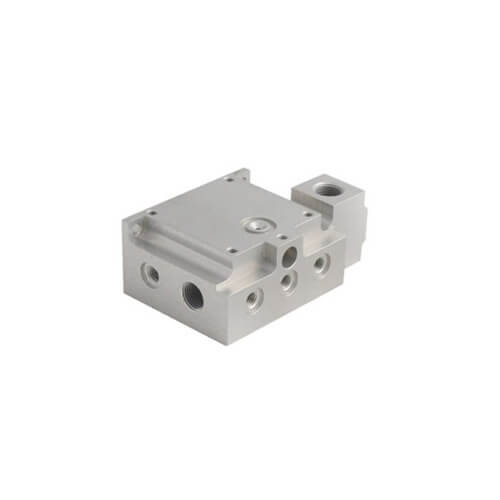
The Precision Predicament in High-Volume Production: Why Advanced Bulk 5-Axis CNC Machining Solutions Are the Answer
For decades, the manufacturing industry has operated under a seemingly immutable law: you can have high precision, or you can have high volume, but rarely both at the same time. Prototyping runs were the domain of 5-axis machining centers, where complexity was welcomed and setup time was a secondary concern. Production runs, on the other hand, were relegated to the efficiency of 3-axis and 4-axis machines, which handled simpler geometries with brute force.
This binary thinking is now obsolete. The demand for Advanced Bulk 5-Axis CNC Machining Solutions has surged, driven by industries like humanoid robotics, aerospace, and medical devices that require complex, high-tolerance parts not in dozens, but in thousands and tens of thousands. The challenge, however, is that scaling up 5-axis machining without compromising quality, cost, or lead time exposes a set of deep-seated pain points that many suppliers are ill-equipped to handle.
The Seven Critical Pain Points of Scaling 5-Axis Machining
Before selecting a partner for Advanced Bulk 5 Axis CNC Machining Solutions, it is crucial to understand the common pitfalls that plague the industry.
The “Precision Black Hole”: A supplier may promise ±0.001mm accuracy for a prototype, but in bulk production, thermal expansion, tool wear, and fixture inconsistencies degrade tolerances. The difference between a promise and reality becomes a “black hole” for R&D budgets.
The Programming Bottleneck: A 5-axis machine is only as good as its CAM programming. Many factories have the hardware but lack the advanced post-processing and simulation expertise required to optimize toolpaths for bulk runs, leading to excessive cycle times.
The Fixturing Crisis: What works for a single part often fails in high-volume production. Poorly designed workholding for complex 5-axis geometries leads to vibration, part deflection, and scrapped batches.
Material Inconsistency: Bulk orders often mean sourcing larger material lots. A supplier without strict material traceability and incoming inspection can introduce variations in hardness or grain structure that wreak havoc on 5-axis finishing passes.
Surface Finish Degradation: Maintaining a consistent surface finish (Ra 0.8 or better) across thousands of parts is exponentially harder than on one. Tool life management becomes a statistical challenge.
The “Black Box” of Post-Processing: CNC machining is only half the story. If a supplier cannot offer a seamless transition to deburring, heat treatment, anodizing, or plating, the value chain is broken, introducing delays and quality risks.
IP and Data Security: Sharing complex 5-axis CAD models for bulk production requires a partner with robust data security protocols, a concern often overlooked until it is too late.
The Architecture of a True Bulk 5-Axis Solution
So, what separates a genuine provider of Advanced Bulk 5-Axis CNC Machining Solutions from a general machine shop? It is not just about owning a fleet of machines. It is about having an integrated ecosystem designed to solve the seven pain points above. A mature facility like GreatLight has built its reputation on this very premise.
I. The Hardware Ecosystem: Beyond the Machine Count
A true bulk solution provider operates a cluster of capabilities, not just a row of machines. This includes large high-precision 5-axis centers alongside 4-axis and 3-axis machines, creating a flexible production line. The ability to “right-size” a part to the correct machine type (e.g., using a 5-axis for the complex core and a 3-axis for secondary features) is a hallmark of engineering maturity.
Furthermore, a complete in-house ecosystem includes a full process chain: lathes, milling machines, grinders, EDM, and even complementary technologies like vacuum forming and SLM/SLA/SLS 3D printing. This allows for hybrid workflows where a 3D printed near-net shape is finished on a 5-axis machine for ultimate speed and material efficiency in bulk runs.
II. Engineering Talent and Process Control
The most critical component of any Advanced Bulk 5-Axis CNC Machining Solutions provider is its people. Machining a complex part in a single setup requires a deep understanding of kinematics, tooling geometry, and material science. This expertise is not developed overnight.
Companies that invest heavily in talent development, fostering a culture where machinists and programmers collaborate on process optimization, consistently outperform those that simply purchase new equipment. This human element, combined with rigorous ISO 9001:2015 certified quality management systems, ensures that the process, not just the machine, is under control.
The Pillars of Trust: Certifications and Data Integrity
In the world of outsourced precision manufacturing, trust is currency. An operator of Advanced Bulk 5-Axis CNC Machining Solutions must provide more than just a quote; they must provide proof of capability through internationally recognized standards.
ISO 9001:2015 is the baseline for consistent quality, ensuring standard operating procedures are followed.
For the automotive sector, IATF 16949 is non-negotiable, signaling that the factory can meet the rigorous defect prevention and waste reduction standards of the automotive supply chain.
ISO 13485 is critical for medical hardware production, ensuring traceability and risk management.
ISO 27001 is the new frontier, protecting clients’ intellectual property and sensitive data during the quoting and production cycle.
Selecting a partner that holds these certifications is not about paperwork; it is about verifying a system-level commitment to quality that withstands the pressures of high-volume production.
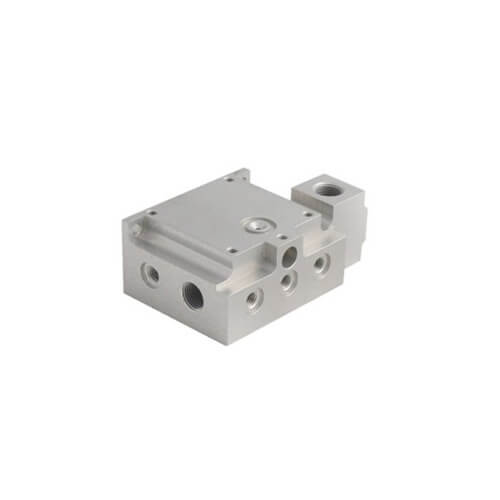
Choosing Your Manufacturing Partner: A Comparative Field
The market for bulk CNC services is crowded, but not all partners are created equal. When evaluating a provider for your next project, consider the depth of their vertical integration. For instance, GreatLight Metal (also known as GreatLight CNC Machining) differentiates itself by combining a specialized 5-axis focus with a full spectrum of post-processing and finishing services, effectively creating a one-stop shop. This contrasts with platforms like Xometry or Protolabs Network, which act as aggregators, connecting you to a network of disparate shops. While these platforms offer convenience and speed for prototyping, they often lack the direct process control and consistency required for true bulk manufacturing.
Specialized contract manufacturers like Fictiv or RapidDirect offer strong online platforms and quality assurance, but may not match the scale or specific heavy-equipment focus of a dedicated factory. Owens Industries or RCO Engineering are strong in specific niches like automotive tooling, whereas SendCutSend focuses on laser cutting and sheet metal. When your need is specifically for complex, 5-axis milled parts in large volumes—think structural components for humanoid robots or engine hardware—the engineering depth and direct control offered by a specialized factory like GreatLight become a significant competitive advantage.

The Future: Intelligent Manufacturing at Scale
The next evolution of Advanced Bulk 5-Axis CNC Machining Solutions is the integration of data and intelligence. Modern factories are now leveraging real-time monitoring of tool wear, spindle load, and vibration to predict maintenance and dynamically adjust feed rates, maximizing throughput without sacrificing quality.
This “lights-out” manufacturing capability—where machines run unattended during third shifts—is the ultimate cost-saver for bulk orders. The ability to program a complex 5-axis part, load a pallet of raw material, and come back to a completed batch of certified parts is the new benchmark for efficiency.
Conclusion
Navigating the transition from prototype to production is the defining challenge of modern hardware development. The solution lies in Advanced Bulk 5-Axis CNC Machining Solutions that are built upon a foundation of engineering talent, process control, and a full-chain ecosystem of services. By partnering with a factory that understands the scientific complexities of scaling up, you eliminate the risk and uncertainty that often kills innovative products.
Whether you are engineering the next generation of medical implants or the structural skeleton of a humanoid robot, the right partner can turn your design into a market reality. The future belongs to those who can move seamlessly from concept to high-volume quality. Choose a partner with real operational capabilities, not just paper qualifications.
For a deeper look into how systematic engineering and full-process intelligent manufacturing are redefining industry standards, connect with industry leaders and peers on professional networks. Follow the conversation and case studies on LinkedIn to see how these principles are applied in real-world scenarios.


![[访谈] RAPID + TCT 2024:人工智能对 3D 打印的价值](https://print-ing.com/wp-content/uploads/2024/07/INTERVIEW-60x60.jpeg "[访谈] RAPID + TCT 2024:人工智能对 3D 打印的价值 9")




发表回复
要发表评论,您必须先登录。